
By the Crown Trim Roofers team · Published · Updated
A brick chimney and a sloped roof do not move together. Brick sits still while the roof framing shifts with heat, moisture and the occasional earthquake, and the flashing between them has to absorb that movement for decades. When it cannot, you get a stain beside the fireplace. This is one of the most frequent calls under roof repair, and our chimney flashing and sealing page covers the fix. This post covers why the leak happens.
How does chimney flashing keep water out?
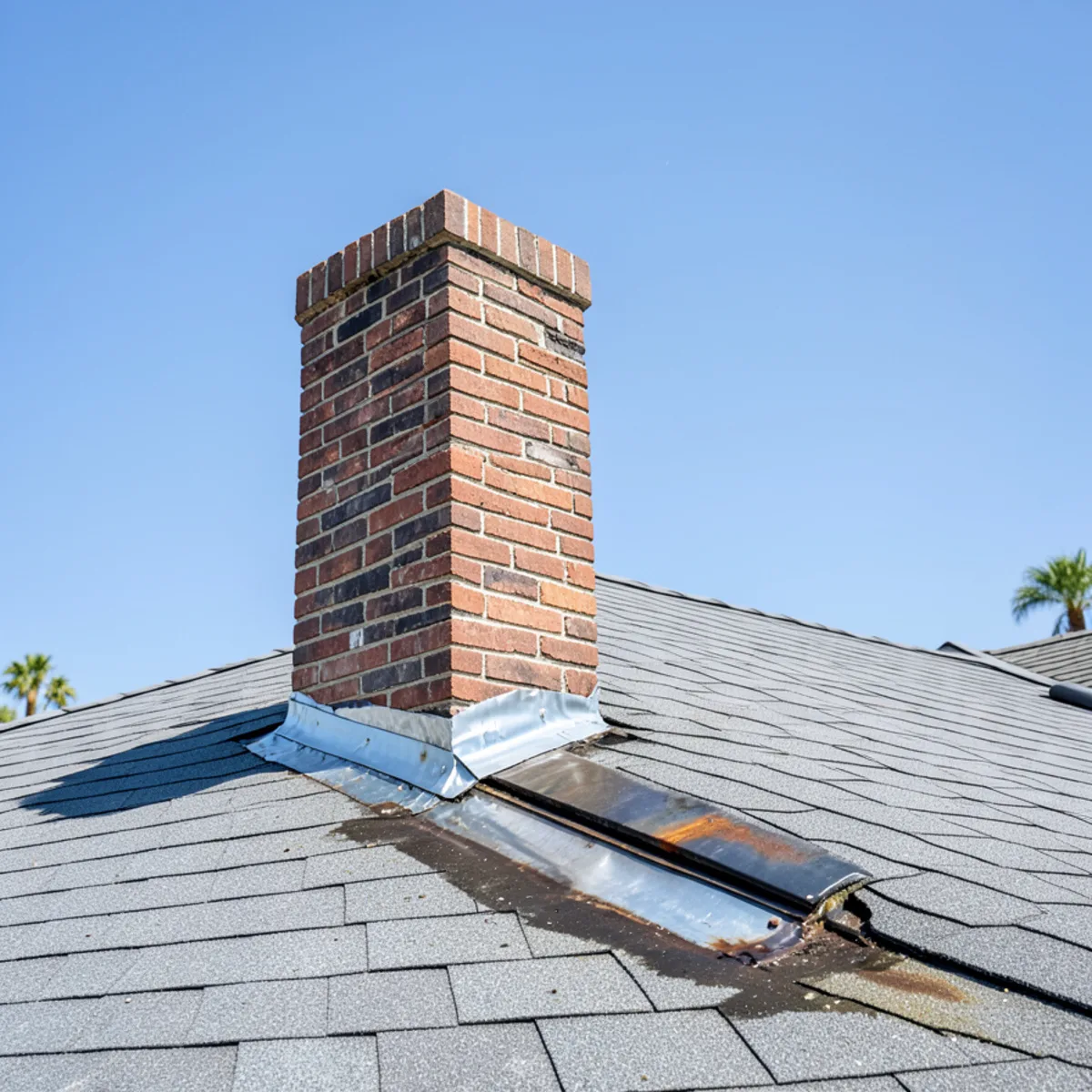
Chimney flashing is a layered system, not a single strip of metal. Each layer overlaps the one below it so water runs down and off.
- Base flashing wraps the low side of the chimney and sheds water onto the shingles.
- Step flashing runs up the sides, one piece per shingle course, tucked under the shingles and up the brick.
- Counter flashing is a second row of metal that sits over the top edge of the step flashing and is cut or set into the mortar joint.
- A cricket sits on the high side of a wide chimney and splits the water so it goes around the brick, not into it.
The leak usually begins where two of those layers meet, or where the counter flashing leaves the mortar.
What does a water stain near a chimney actually mean?
A water stain near the chimney tells you water is entering somewhere along the stack, and the location of the stain narrows it down.
| Where the stain shows | Likely cause |
|---|---|
| Ceiling next to the chimney breast | Flashing seam or counter flashing pulled from mortar |
| Wall below the fireplace | Failed crown, cracked cap or porous brick |
| Attic wood on the high side | Missing or undersized cricket |
| Stain only after wind-driven rain | Gap at one corner of the flashing |
A stain that grows after storms and fades in the dry months is a flashing or crown problem. A stain that stays damp all year can mean water is wicking through the brick.
Why do counter flashing and caulk fail?
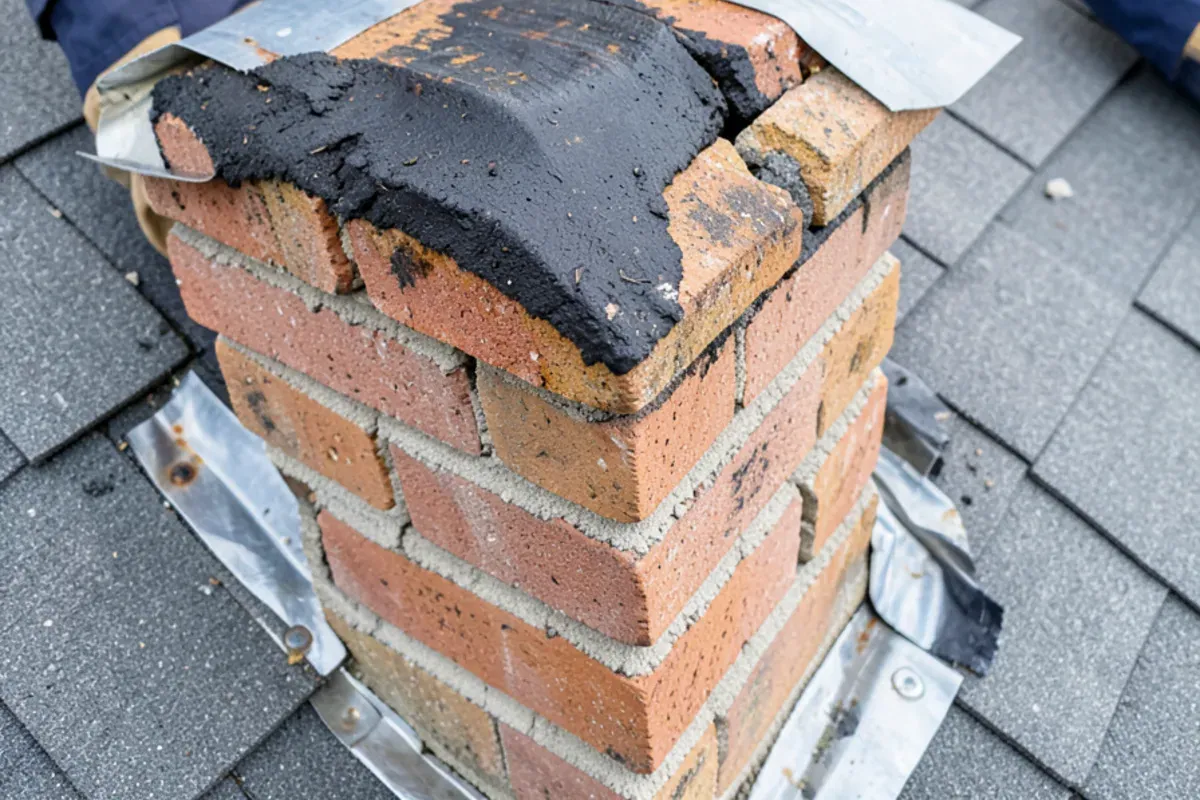
Counter flashing sits in a mortar joint, and mortar softens with age. When the joint crumbles, the metal lifts a little and water runs behind it. Caulk or tar is often applied to cover the gap. It cracks as the metal moves, so the leak returns in the next storm.
Three other problems crop up often:
- Rust. Galvanized steel flashing on older Torrance roofs rusts at the seams and at nail heads, especially near the coast.
- Shingle coverage. After a re-roof, step flashing that was not replaced sits under new shingles it was never fitted to.
- Movement. A chimney that has settled or cracked pulls on the metal fixed to it.
Torrance sits in a low-rain climate, around 14 inches a year, but the rain arrives in bursts from November through March. Even a pinhole in a seam will show up in those storms.
How does a roofer find where the chimney is leaking?
Guessing is how chimneys get re-sealed three times. A methodical test works from the bottom up so the first wet spot is the right one.
- Check the attic first, with a flashlight, for staining, damp insulation or a wet line on the framing beside the chimney.
- Inspect the cap, crown and mortar joints for cracks and gaps, with photos.
- Run water from a hose over the lower flashing only, while a second person watches the attic.
- Move up the sides in stages, then wet the high side and the cricket.
- Wet the crown and cap last, since water there reaches the ceiling by a longer route.
- Stop at the first stage that produces a drip and mark it.
The water test is slow, but it saves money, because it points to one repair and not a guess at several. A roofer should also tell you if rain is forecast, because an open test area has to be covered afterward.
When does a chimney need a cricket?
A cricket, also called a saddle, is a small peaked shelf built on the uphill side of the chimney. Water and debris that would otherwise dam against the brick split and run around it. Without one, the high-side flashing takes the whole load and often leaks first.
The International Residential Code calls for a cricket or saddle on the ridge side of a chimney wider than 30 inches, measured across the slope. Cities adopt their own edition with local changes, so confirm what applies to your address with the building department. Chimneys that rise through the middle of a slope, as on many 1950s and 1960s ranch homes, sit uphill of more roof and gather more runoff than one at the ridge. That is why the high side deserves a look even when the stain is on the low side.
Brick chimney or metal flue: do they leak the same way?
No. The two systems fail at different points.
| System | Where it usually leaks |
|---|---|
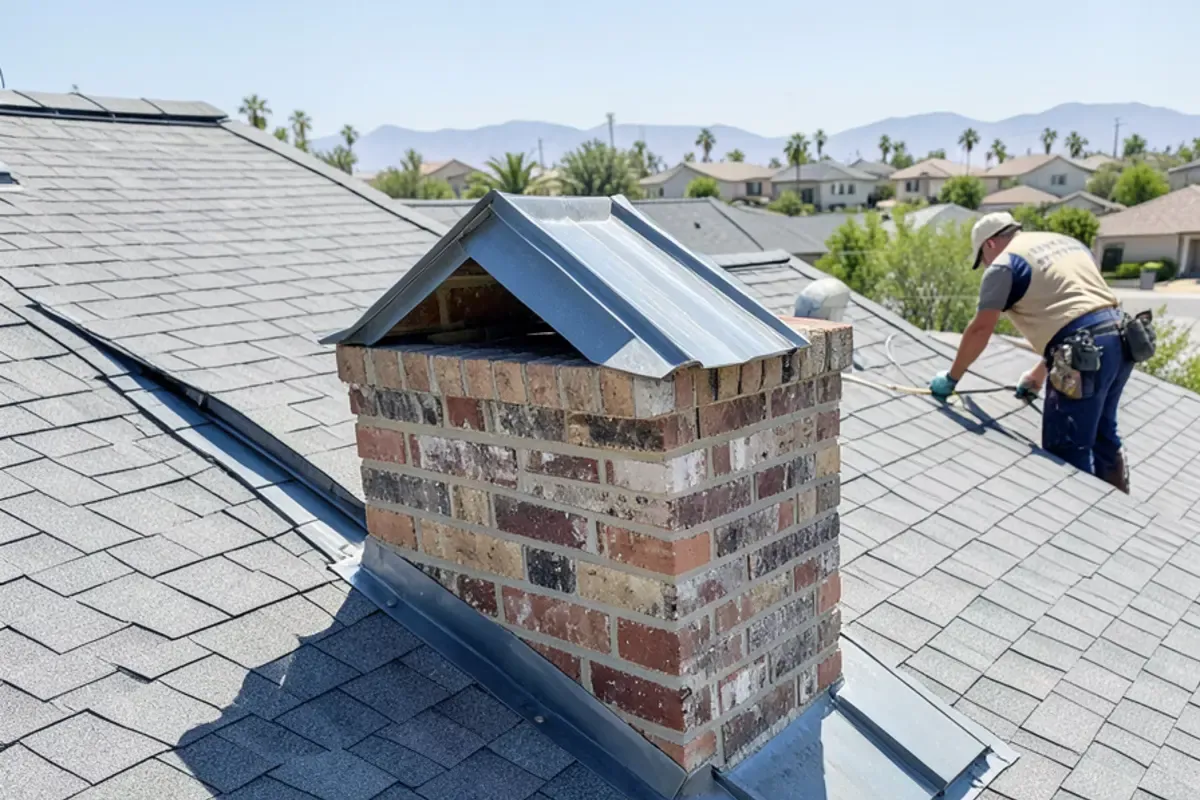
| Brick chimney | Counter flashing pulled from mortar, cracked crown, porous brick |
| Factory-built metal flue | Open storm collar seam, rusted base flashing, loose or rusted cap |
| Both | Missing or undersized cricket, old tar patches |
A metal flue has no mortar joint, so tar-and-caulk fixes tend to fail at the storm collar. If your chimney is a metal stack, the repair is often a collar and cap job rather than a flashing job.
Does the chimney cap or crown cause the leak?
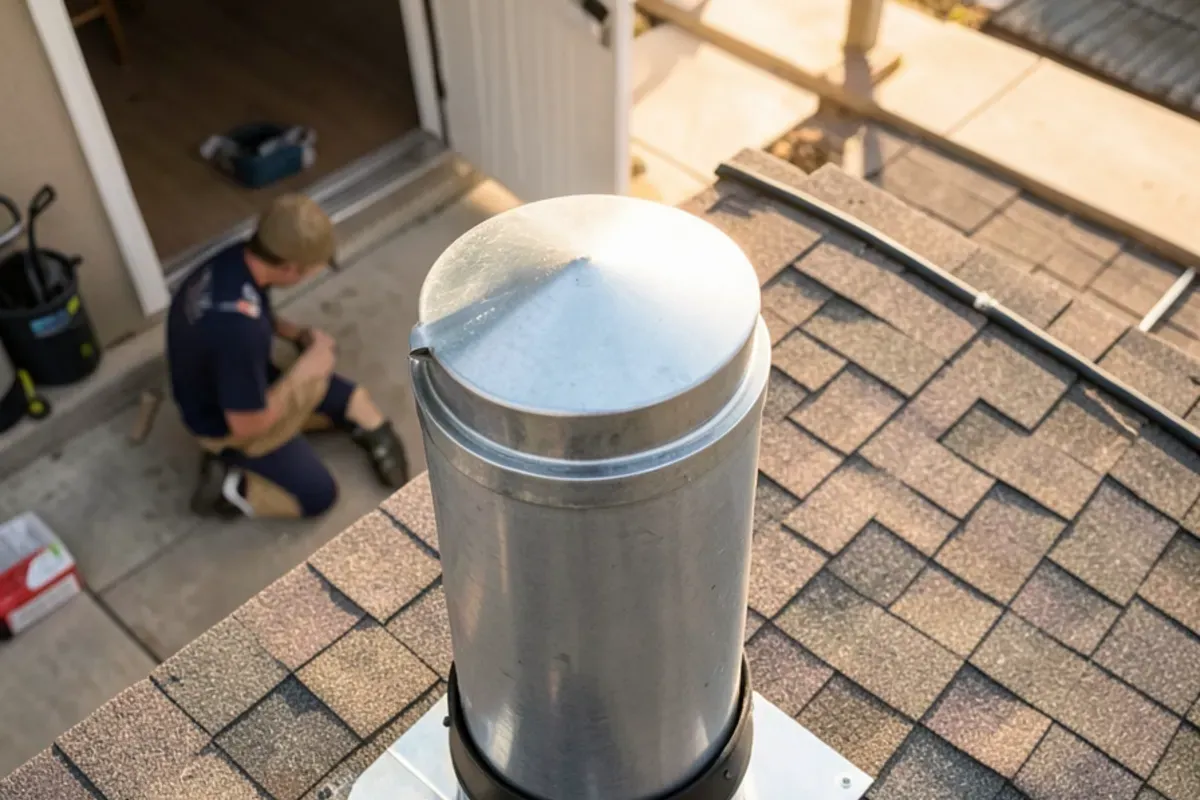
Sometimes. The crown is the slab of mortar on top of the brick. If it cracks, rain runs inside the chimney and into the walls. A metal chimney cap that has rusted through or has a bad weld can drip into the flue and stain the ceiling without any flashing being at fault.
That is why a good inspection does not stop at the roof line. One Google reviewer described a roofer who fixed a leak around a metal chimney cap, and another had a custom chimney cap built after roof leaks were checked. Both were cases where the top of the stack, not the base, needed work.
What roofers tell customers about chimney leaks
Here is what we check and what we say on a chimney call:
- Start at the top and work down. The cap, then the crown, then the mortar, then the flashing.
- Do not trust the first answer. One Google reviewer said that along with loose tiles easy to see from the street, a roofer also spotted problems around the chimney flashing that could have led to more water intrusion. Chimney flashing is often only one of the problems.
- Ask about the cricket. On a wide chimney with no cricket, debris and water pile up behind the brick and push through the flashing.
- Expect a repair, not a rebuild. Resetting counter flashing and renewing the step flashing often solves it without touching the rest of the roof.
We show you photos of what we find and explain the options in plain terms.
What to do now
Check the ceiling and the attic wood on the high side of the chimney after the next rain. Photograph any stain and note the date. Skip the tube of caulk. A free roof inspection from a roofing contractor in Torrance can examine the full stack, show you the cap, crown, flashing and cricket, and tell you which part is letting water in. If the city requires a permit for your repair, confirm with Torrance Building & Safety at (310) 618-5910.