
By the Crown Trim Roofers team · Published · Updated
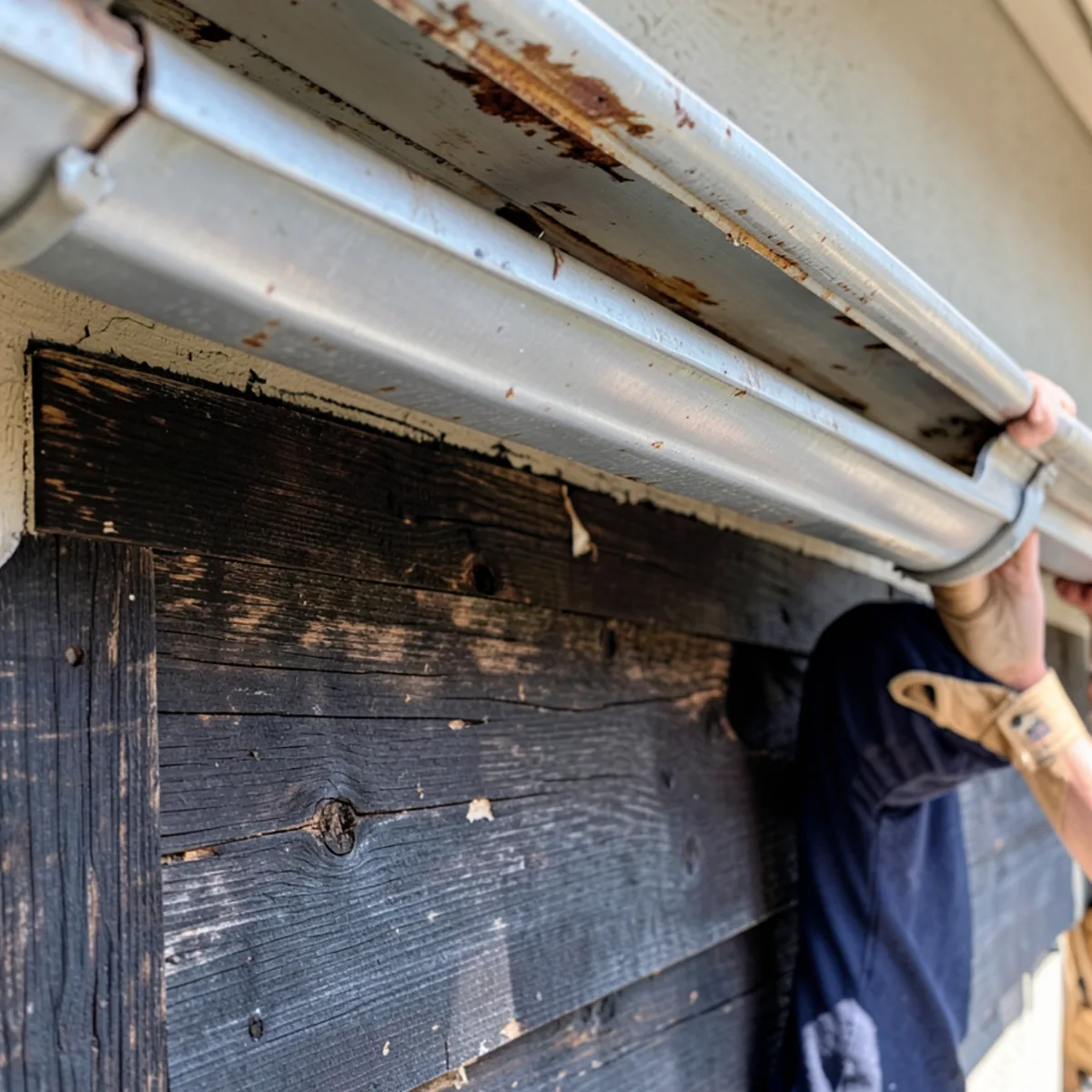
Fascia is the board that runs along the roof edge, and the gutter hangs on it. It sits at the end of a long run of water, which is why it fails first. This guide belongs with our gutters and fascia pages, and the repair is described on our fascia, soffit and roof trim repair page. Here we cover how the rot starts.
How does a rotted fascia behind a gutter start?
Wood rots when it stays wet. Fascia sits at the point where roof water leaves the house, so any gap in the system soaks it. The usual routes in:
- Shingle line that stops short. If the last row of shingles does not overhang the edge, water curls under it and runs onto bare wood.
- Missing or short drip edge. This thin metal strip tips water out and over the gutter. Without it, water follows the underside of the roof deck onto the fascia.
- Gutter overflow. Clogged gutters slop over the front and the back of the trough.
- Gaps behind the gutter. A gutter that has pulled away from the board lets water run behind it where nobody sees.
- Pest and age damage. Termites and old paint failure speed the decay.
The fascia often looks fine from the street because the gutter hides the worst of it.
What does the rot look like before the board fails?
Catch the early signs from a ladder at the eave or from the ground with binoculars.
- Paint peels or bubbles along the board.
- A dark band appears under the bottom of the gutter.
- The gutter sags, shifts or has loose spikes.
- A screwdriver goes into the wood easily.
- Soffit paint stains or lifts near the same spot.
What are rafter tails, and why do they matter?
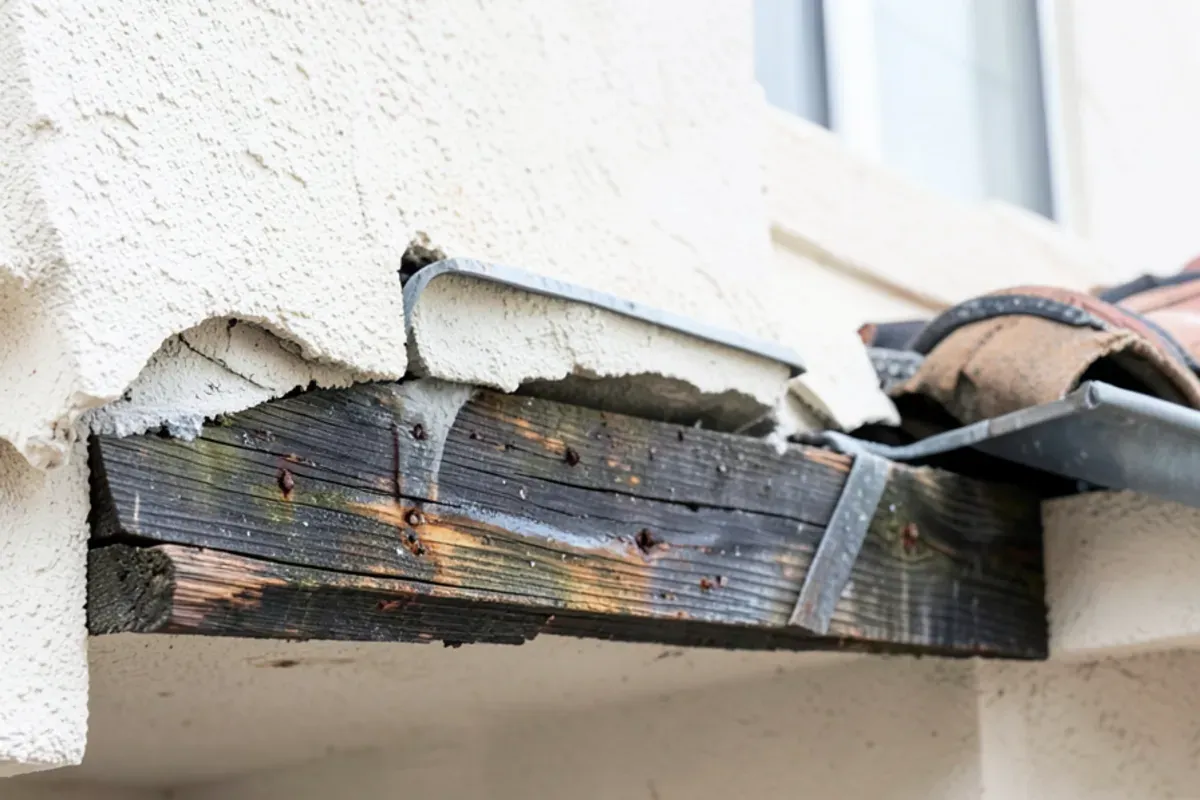
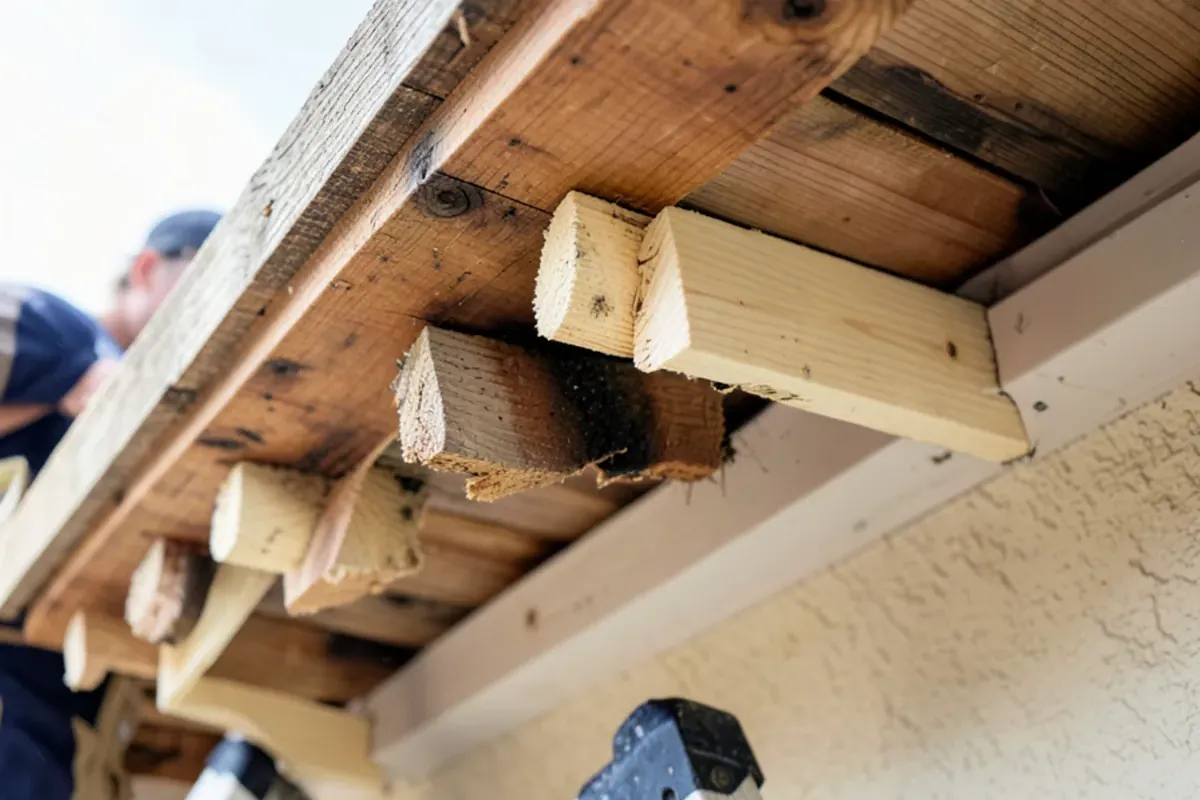
Behind the fascia, the roof framing ends in a row of short wood stubs called rafter tails. They carry the edge of the roof, and the fascia is nailed to their ends. When water gets behind the board, it soaks the ends of the rafters first, because end grain drinks water faster than the sides of a board.
That is why a good look includes the tails. A tail that is dark, spongy or hollow when probed has lost strength. Often the repair is to cut back the rotted end and splice in new wood, called sistering, and replace the fascia and soffit with it. If only the fascia is replaced, the new board gets nailed to wood that cannot hold a nail.
If you also see tiny pellets or a sandy spill under the eave, that can be drywood termites, which are common in Southern California. A roofer fixes moisture damage, not termites, so call a pest professional for those.
Which fascia material should replace the rotted board?
There is no single right answer. Each has trade-offs.
| Material | Strength | Watch for |
|---|---|---|
| Primed finger-jointed wood | Easy to cut and paint, matches older trim | Needs sealed edges and regular paint |
| Rot-resistant wood such as cedar | Handles damp better than pine | Costs more, still needs finish |
| PVC or composite trim | Does not rot, holds paint | Expands and contracts, needs correct joints |
| Aluminum fascia cover over wood | Quick clean look | Can hide rot that is still spreading |
Aluminum wrap over damp, soft wood is the combination to avoid. Ask the roofer to show you the wood before any cover goes on. Matching the existing trim profile matters on older homes, so bring photos of what you have. The gutter repair and gutter-hanging work usually follows the board.
Why does a missing drip edge matter so much?
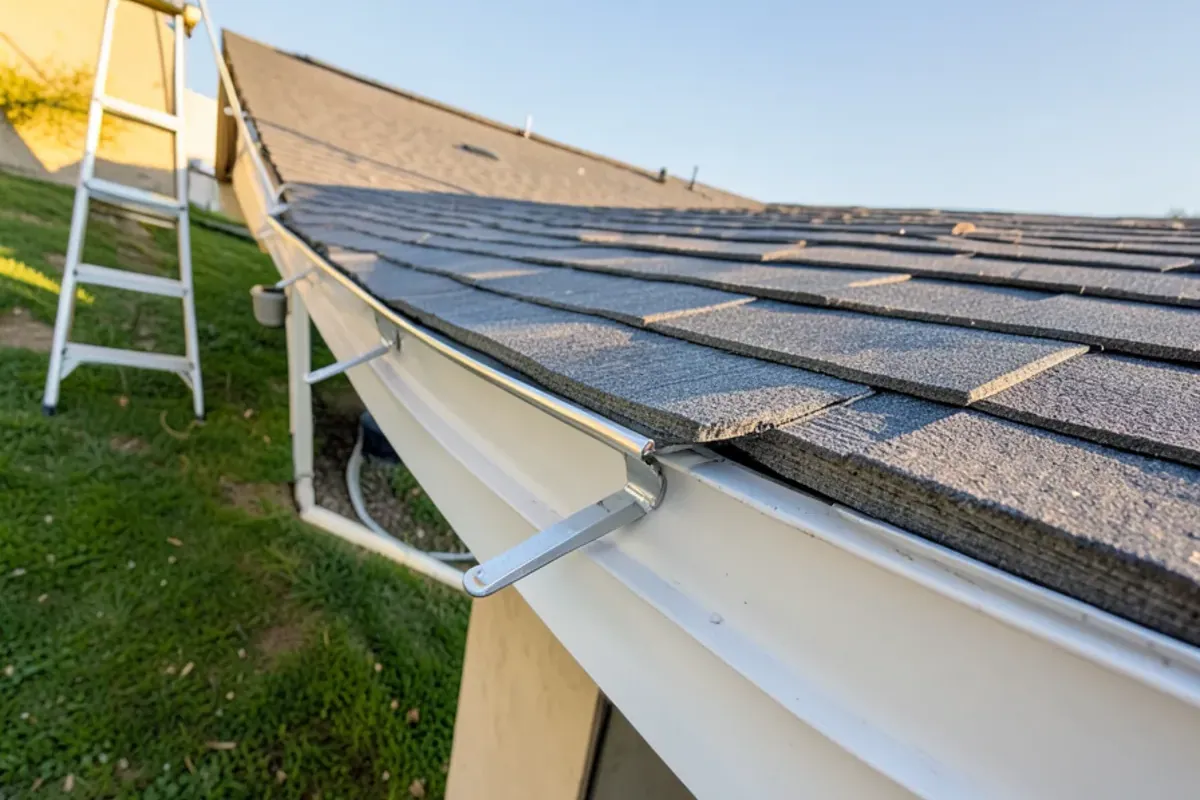
Drip edge is a small L-shaped metal strip along the roof edge. It guides water into the gutter and keeps it off the wood. The International Residential Code calls for drip edge at eaves and rakes under asphalt shingles, and California adopts that code with local amendments, so confirm the requirement for your address with the city building department. In Torrance that is Building & Safety at (310) 618-5910.
Many Torrance homes were built long before drip edge was standard practice. With the median home dating to 1964 and 82.3 percent built before 1980 (US Census, ACS 2020-2024), plenty of roofs have none, or have it only on one edge.
One Google reviewer described a shingle line that had been left too short near the edge, exposing the wood and causing a long section of fascia board to rot. That is the pattern in a sentence: a few inches of missing overhang, repeated every rain for years.
Can the gutter and the rot be separated?
Not always, and they should not be treated apart. A gutter hung on rotted wood will not stay put. The fix has to include the board behind it.
Another Google reviewer said the roofer explained how the gutter system helps protect the roofline, fascia and drainage, which matters in Torrance with strong sun and occasional heavy rain. A tree limb can do the damage in a single day: a third reviewer described a tree hitting the lower front of their roof and damaging the corners and edges of two levels of gutter and soffit.
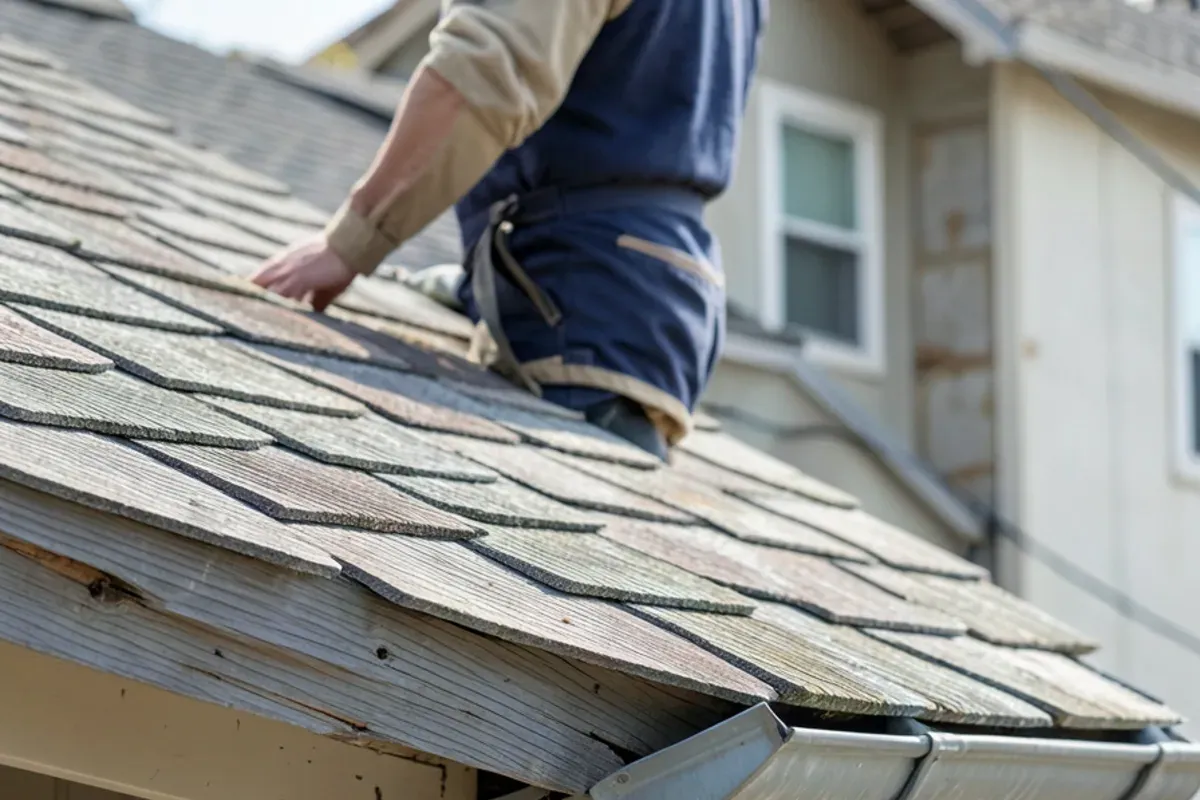
How can you walk the eaves and spot trouble early?
Once a year, before the rainy season, walk around the house and look up. Take your phone.
- Look for peeling paint, dark bands or green streaks on the fascia.
- Check that gutters sit snug against the board with no visible gap.
- Look for water stains on the soffit and wall below the eave.
- Note any sagging section and photograph it.
- Look at the shingle edge: it should overhang the edge slightly, not stop short.
- Clear leaves from gutters you can reach, or schedule gutter cleaning.
Coastal morning fog adds to the problem. Eaves that stay damp from marine layer mornings dry slowly, especially on shaded sides, which gives rot a head start.
How fast does fascia rot spread, and what does it cost to fix?
Slowly at first, then quickly. A damp spot the size of a hand can take years to soften. Once the paint skin breaks, water soaks in every storm, and the rot runs along the grain and into the soffit and rafter tails. Fixing it early means one board and a fresh coat. Waiting means framing repair.
Published 2026 cost guides put roof repairs at roughly $300 to $1,500, a market range and not a quote. The price of a fascia job moves with how many linear feet are rotted, whether rafter tails need work, how high the eave is and whether the gutter has to come off and go back on.
What roofers tell customers about fascia and rafter tails
- Look behind the board. Rot often continues into the rafter tails, the ends of the framing that carry the roof edge. We say so and show you photos.
- Check the drip edge before the paint. Fresh paint over a short shingle line and missing drip edge fails in a season or two.
- Do not re-hang the same gutter on bad wood. The fix is board, drip edge, then gutter.
- Repair what is bad and stop there. A repair comes first when a repair will do, and we explain the options in plain terms.
What to do now
Probe the wood at a few spots along the eave with a screwdriver and photograph any dark stains or sagging. Clear leaves from the gutters if you can reach them safely. A free roof inspection from a local roofing contractor in Torrance can pull back the gutter, show you how far the rot runs and explain whether the fix is a patch, a board, or the board plus drip edge and gutter.