
By the Crown Trim Roofers team · Published · Updated
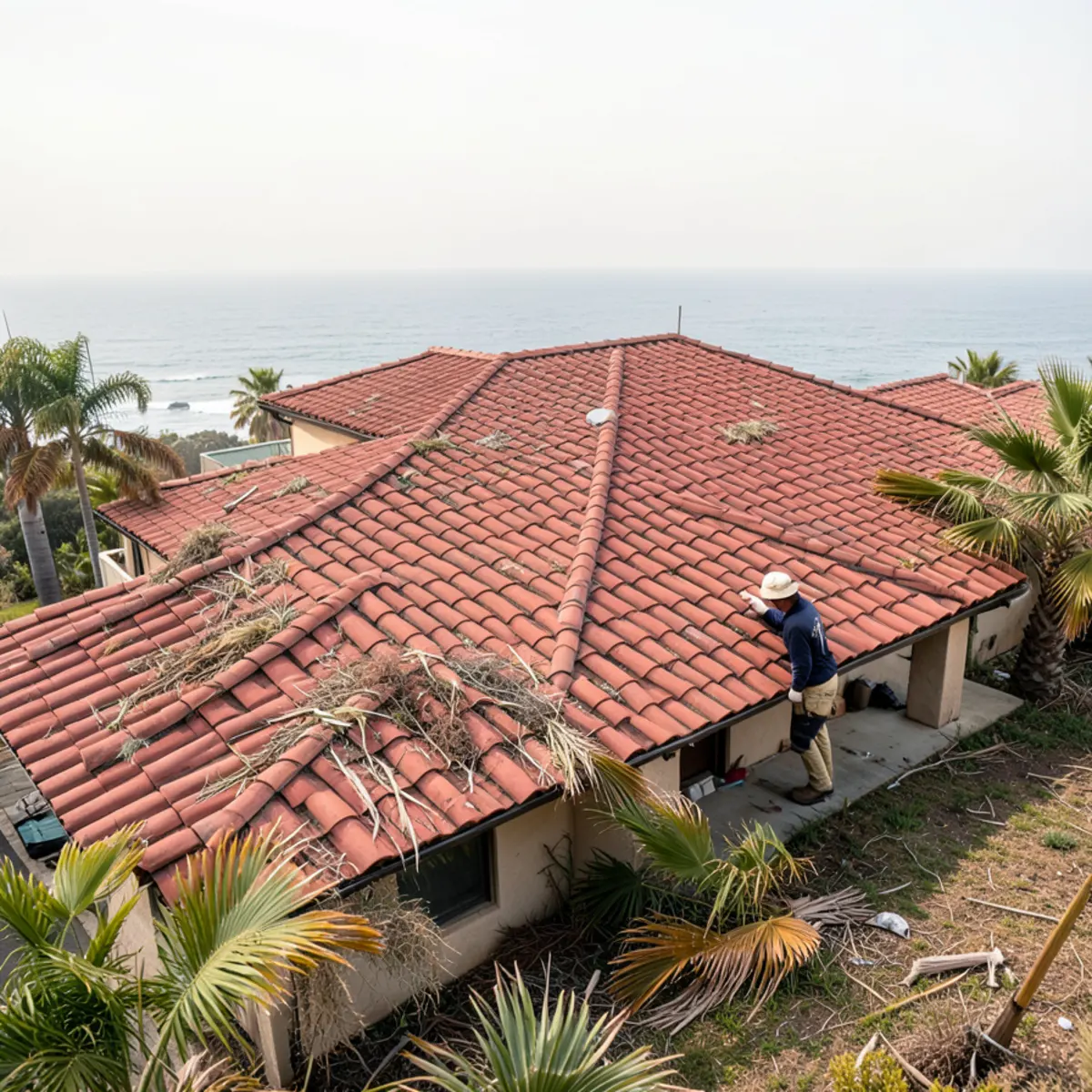
Santa Ana winds come off the desert, dry out everything in their path and then stop. The roof usually does not announce what happened. The damage shows up weeks later as a ceiling stain after the first rain. If you want the full process for a storm or wind event, our emergency roof repair hub and the wind damage roof repair page explains how we inspect and repair.
What does Santa Ana wind roof damage look like?
Wind does not rip off a whole roof in one go. It works edges first, then individual pieces. The common findings:
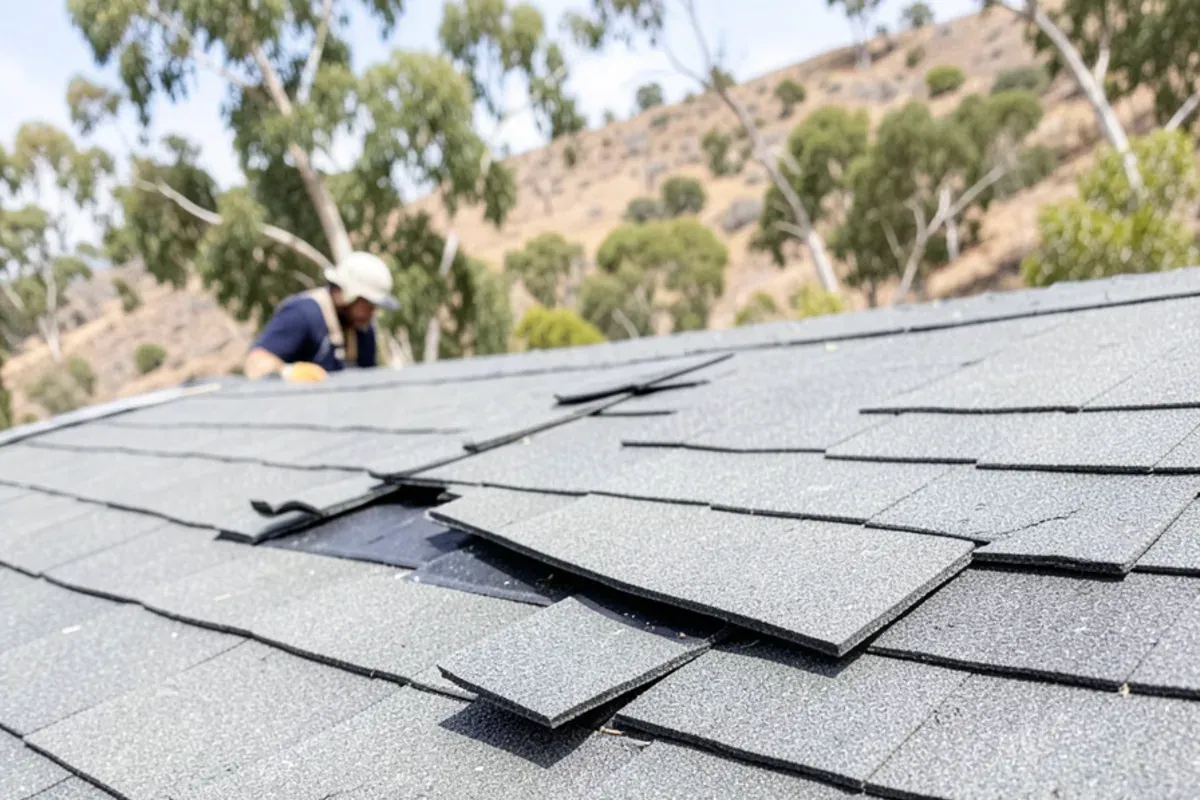
- Lifted or creased shingle tabs. Gusts break the sealant strip, flip the tab up and leave a crease across it. A creased tab cracks and sheds more granules every time it moves.
- Missing shingles. A bare patch exposes the underlayment, which is not meant to be the surface.
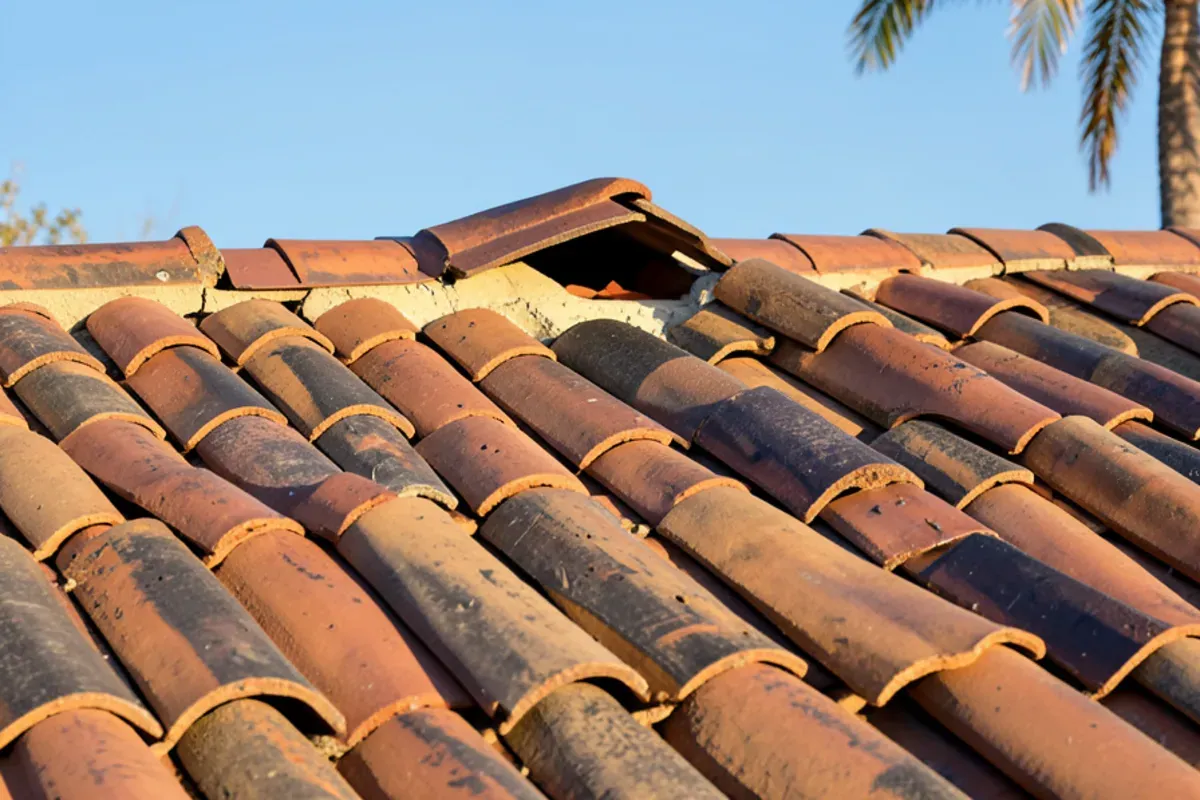
- Slipped or cracked tile. Tiles shift out of their rows or ride up on neighbors. A tile that is sitting a little crooked is a loose tile.
- Ridge and hip caps with gaps. The mortar or fasteners that hold caps can fail on older roofs.
- Bent or lifted flashing along walls, chimneys and roof edges.
- Displaced vent caps and turbines, and debris lodged in valleys.
When do Santa Ana winds blow, and why does it matter for the roof?
The National Weather Service describes Santa Ana winds as dry, offshore winds that are most common in fall and winter in Southern California. That timing is the problem. They arrive after a long dry summer, when sun-baked shingles are at their most brittle, and often just before the first rains of the season.
The same weather brings fire risk. The National Weather Service issues Red Flag Warnings when strong wind, low humidity and dry vegetation line up, and wind-driven embers can travel well ahead of a fire. Cal Fire's home-hardening guidance points to gaps in roofing, such as the open ends of tile courses and loose ridge caps, as places where embers can get in. A wind-shifted tile or a gapped cap is therefore a fire-safety detail as well as a leak risk. Our post on fire-rated roofs on the Palos Verdes Peninsula goes into that side.
How do you check from the ground safely?
Stay off the roof. Walking on tile breaks it, and walking on wind-loosened shingles can tear what is left. Do this instead:
- Walk the full perimeter in daylight with binoculars or a phone zoomed in.
- Look at the ridge line first, then the roof edges, then the areas around vents and chimneys.
- Check the yard, driveway and gutters for shingle pieces, tile fragments or granules.
- Photograph anything out of line, with a wide shot first so the location is clear.
- Look at the fascia and gutters. Wind often bends the lower edge of a roof before the field.
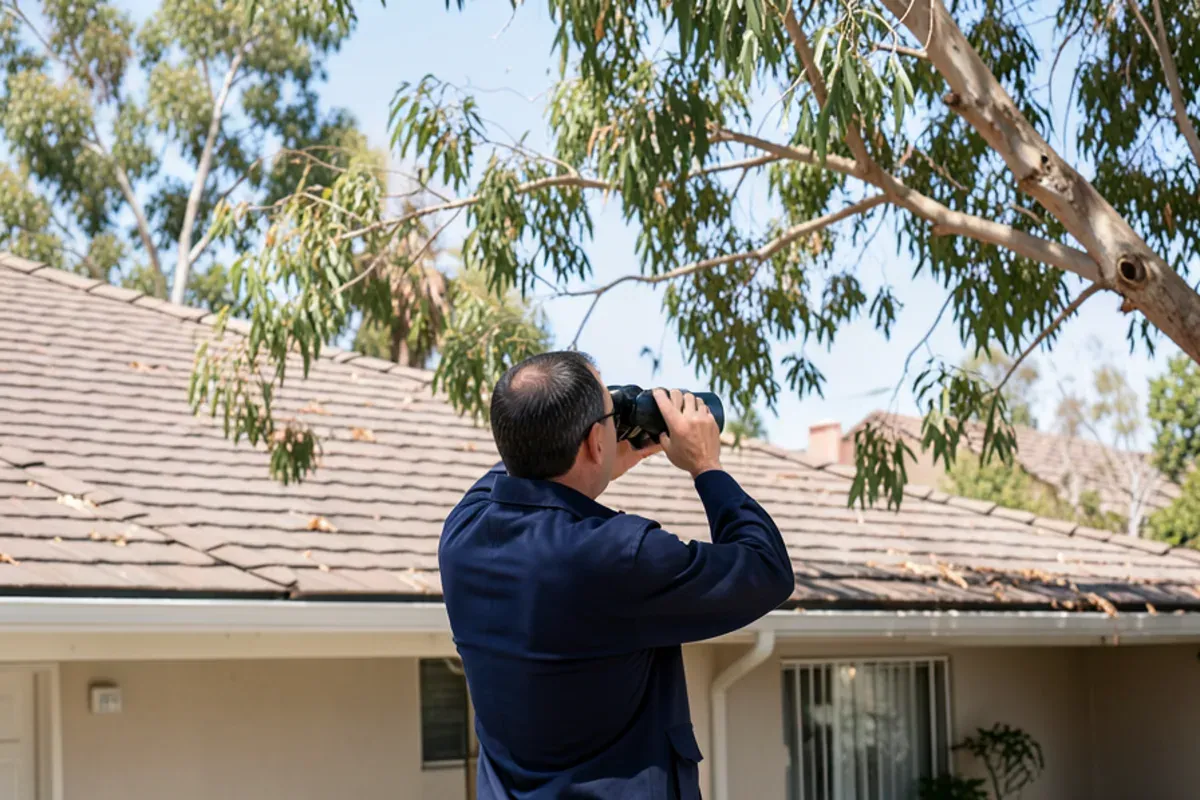
Keep a simple photo log while you walk. For each finding, record:
- A wide shot showing where it sits on the house
- A close-up with the date visible on your phone
- Which slope it is on and which way it faces
- Any debris in the valleys, gutters or yard below it
That log lets a roofer go straight to the spots and gives you a record if you decide to file a claim.
Which roofs are most at risk?
Not all roofs are equal against wind. Here is how the main types usually show wear:
| Roof type | Typical wind finding | How urgent |
|---|---|---|
| Asphalt shingle | Lifted, creased or missing tabs | Soon, especially before rain |
| Concrete or clay tile | Shifted tiles, gapped ridge caps | Soon if underlayment is exposed |
| Flat or low-slope | Lifted edges and flashing, torn membrane | Same week, ponding risk |
| Metal | Loose panels, backed-out screws | Prompt, panels can peel |
Age is the bigger factor than the roof type. In Torrance, 82.3 percent of homes were built before 1980 and the median build year is 1964, so many roofs have been re-covered at least once and carry decades of sun wear. A shingle that is dried out will not flex in a gust, it cracks.
Why do hillsides and ridgelines get hit harder?
Wind speeds up where it is squeezed or exposed. Homes on ridgelines, cul-de-sacs facing open slopes and top-floor roofs with nothing sheltering them get the strongest gusts. On the Palos Verdes Peninsula, the terrain adds exposure on many streets. Our Rancho Palos Verdes page covers what roofs face there.
Tile roofs on hillsides also face a second problem. Tile is heavy and rests on a layer of underlayment. When a tile shifts, the underlayment beneath is what protects the house until the tile is put back, and years of sun age that underlayment. See our guide on slipped roof tiles for what causes the movement.
Why does wind damage turn into a leak weeks later?
Because the roof still looks closed. A lifted shingle tab often settles back down and looks normal from the street. A shifted tile still sits over the underlayment. The gap only matters when water arrives, and after months of dry weather the first real storm can be weeks after the wind.
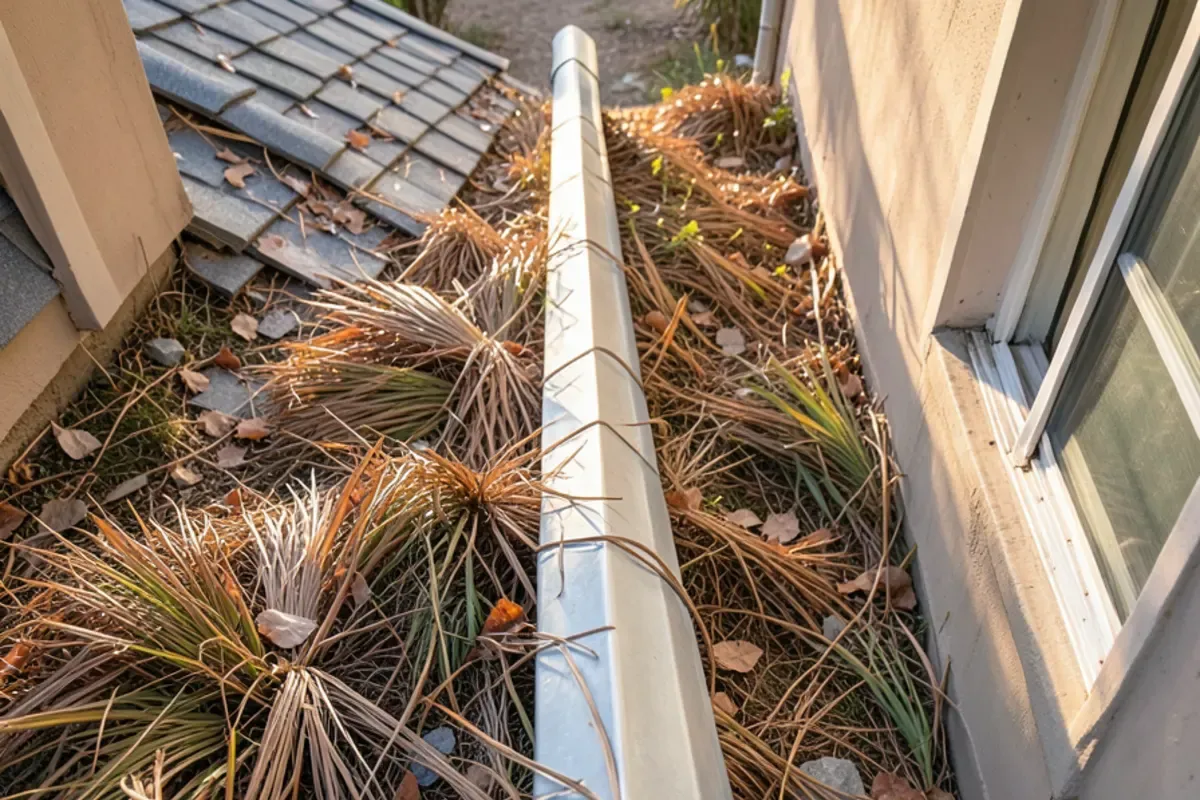
Dry weather makes it worse in two ways. Dust and debris lodge in the gap and keep a lifted tab from reseating, and underlayment that has baked for years can crack where it was exposed. Packed debris in valleys and gutters then holds water against flashing and roof edges.
What roofers tell customers after a wind event
This is what we check and what we say on a wind call:
- Look at the pattern. Damage on one slope and the leading edge points to wind. Randomly spaced marks on every slope point somewhere else, such as hail.
- Check the flashing. One Google reviewer described a roofer who spent a long time looking over the shingles, flashing and other areas, then showed clear photos of wind damage, hail marks and a few missing shingles. That kind of photo record is what we aim for too.
- Test the edges. Rake edges and eaves go first. A drip edge that has lifted a half inch lets wind get under the whole row.
- Look for the wind-and-rain combination. One Google reviewer described a leak that only appeared when wind and rain came from a certain direction. That kind of leak starts at a lifted edge nobody saw.
We show you photos of what we find and explain repair and replacement options in plain terms. A repair comes first when a repair will do.
Is wind damage an insurance matter?
It can be. Wind is commonly a covered cause of loss on homeowners policies, but your deductible, the wording and the age of the roof all matter. Photograph everything before any cleanup. We document damage with photos and can be on site for the adjuster's inspection. We do not negotiate claims or advise on coverage, and you pay your deductible. The California Department of Insurance has plain-language guidance on filing claims.
What to do this week
If you see open spots, tarp or cover them before the next rain. If the roof looks fine but is over 15 years old, schedule an inspection to catch things you cannot see from the ground. A local roofing contractor in Torrance can look at the ridge, flashing and underlayment and tell you whether you need a small repair or a larger plan.