
By the Crown Trim Roofers team · Published · Updated
Most people picture tile as the waterproofing. It is really the armor. The waterproof layer sits underneath, and that layer ages faster than the tile does. When a tile roof leaks and no tile looks broken, the underlayment is the first suspect. This guide explains what replacing it involves and why the price looks the way it does. Our tile roof underlayment replacement page describes the service, and the wider roof replacement section covers other options.
Why does a tile roof leak when the tile looks fine?
Tile sheds most water, but wind-driven rain gets under it, especially at laps, ridges, hips and where tile meets a wall or chimney. The underlayment catches that water and sends it down the slope. In sun-baked Southern California the felt or synthetic layer dries, cracks and curls over time. Once it fails, water finds nail holes and seams and shows up on your ceiling while the tile above still looks perfect.
A ceiling stain is the usual clue, and the post on slipped roof tiles covers the other cause. One Google reviewer, for instance, called us after noticing a few roof tiles slipping out of place. Slipped tiles are a visible problem. A failed underlayment is hidden until you lift the tile.
What is lift and relay, and what is in the price?
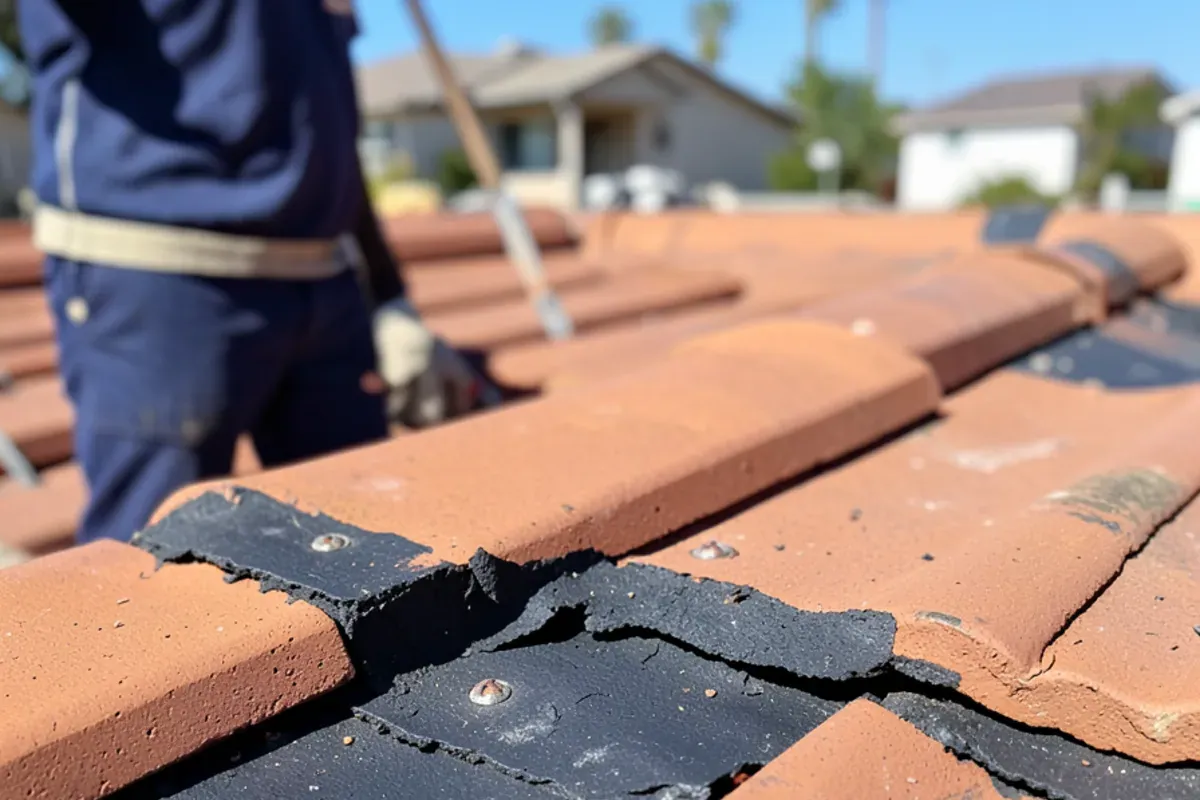
Lift and relay (also called re-felting or resetting) is the standard fix for tired underlayment under serviceable tile. The steps are:
- Photograph the roof and check the attic.
- Remove tile in sections and stack it safely.
- Strip old underlayment, inspect the deck and replace damaged boards.
- Install new underlayment, flashing and any needed battens.
- Reset the tile, replacing broken pieces with matches.
- Clean up, including protecting landscaping and driveways.
Fixr's January 2025 guide puts the work at about $3 to $5 per square foot and about $6,000 to $10,000 for a 2,000 square foot roof, and notes labor for reused tile runs about $2.75 to $3.50 per square foot. These are published market figures, not our quote.
How do you tell failed underlayment from a tile problem?
The clues are usually in the pattern of the leak:
- The stain does not sit under a visible crack. If no tile is broken or slipped above the spot, water is probably getting under sound tile.
- It leaks mostly in wind-driven rain. Light rain sheds off the tile, while a hard, sideways storm pushes water under the laps.
- The trouble clusters at ridges, hips, valleys or wall joints. Those are where the underlayment does the most work.
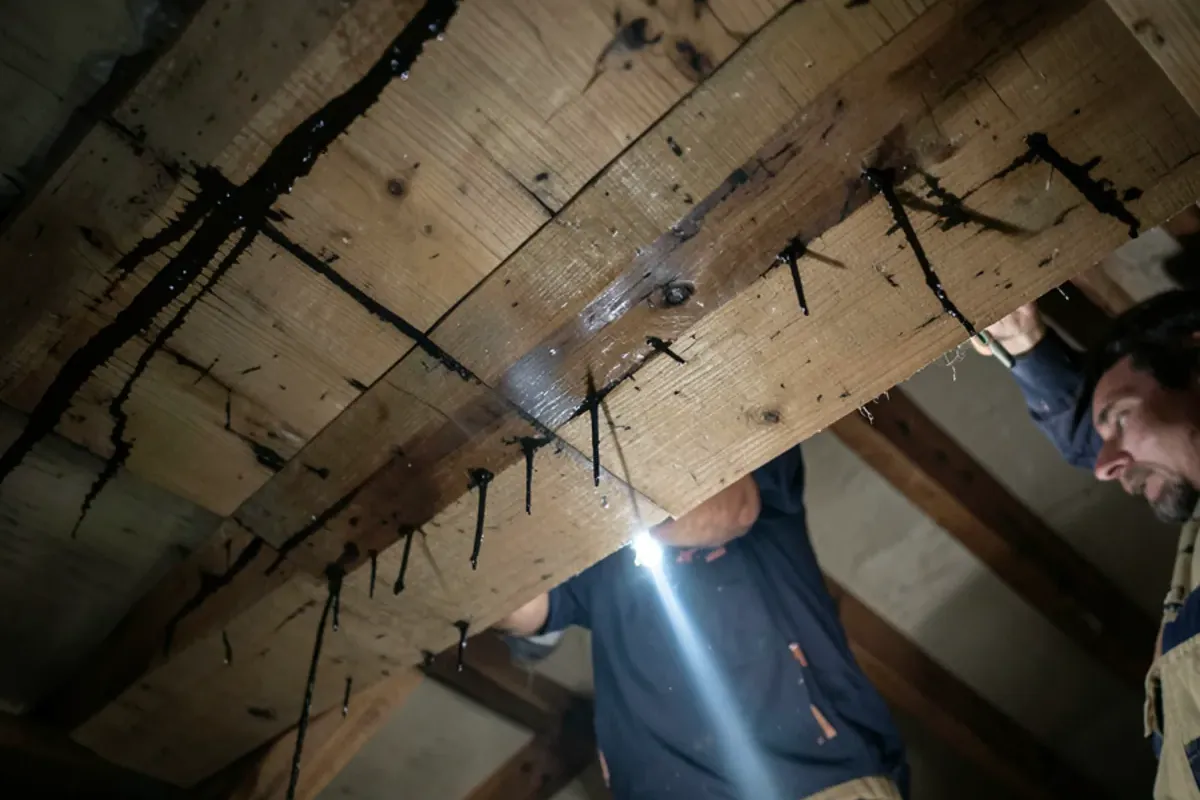
- The attic shows dark trails at nail holes. Water follows fasteners through a failing layer.
- Lifted tiles reveal cracked, curled or brittle underlayment. This is the confirmation.
Two or three of these together point to the underlayment. A single slipped tile points to a smaller repair, and our post on slipped roof tiles covers it.
Which factors push tile roof reset price up or down?
- Break rate. The more tiles crack as they are lifted, the more replacements you buy. Fixr assumes about 10 percent.
- Tile type. Clay barrel and S-tile have different profiles, weights and fragility than flat concrete tile.
- Pitch and access. Steep slopes and tight lots slow tile handling.
- Deck condition. Soft boards need replacement once the roof is open.
- Details. Chimneys, skylights, solar panels and valleys add flashing work.
- Matching. Faded or discontinued tile can take a search to match.
Reuse the tile or replace it all?
Reusing roof tile makes sense when tile is sound and the profile is worth keeping. It saves materials, and the look of the roof stays the same. Full replacement is better when many tiles are cracked, spalled or too fragile to survive lifting. A lift and relay costs less than a full tile reroof in most cases, but not if half the tile has to be bought new. We lay out both paths, show photos, and let you decide.
What do we check on a Palos Verdes Estates tile roof?
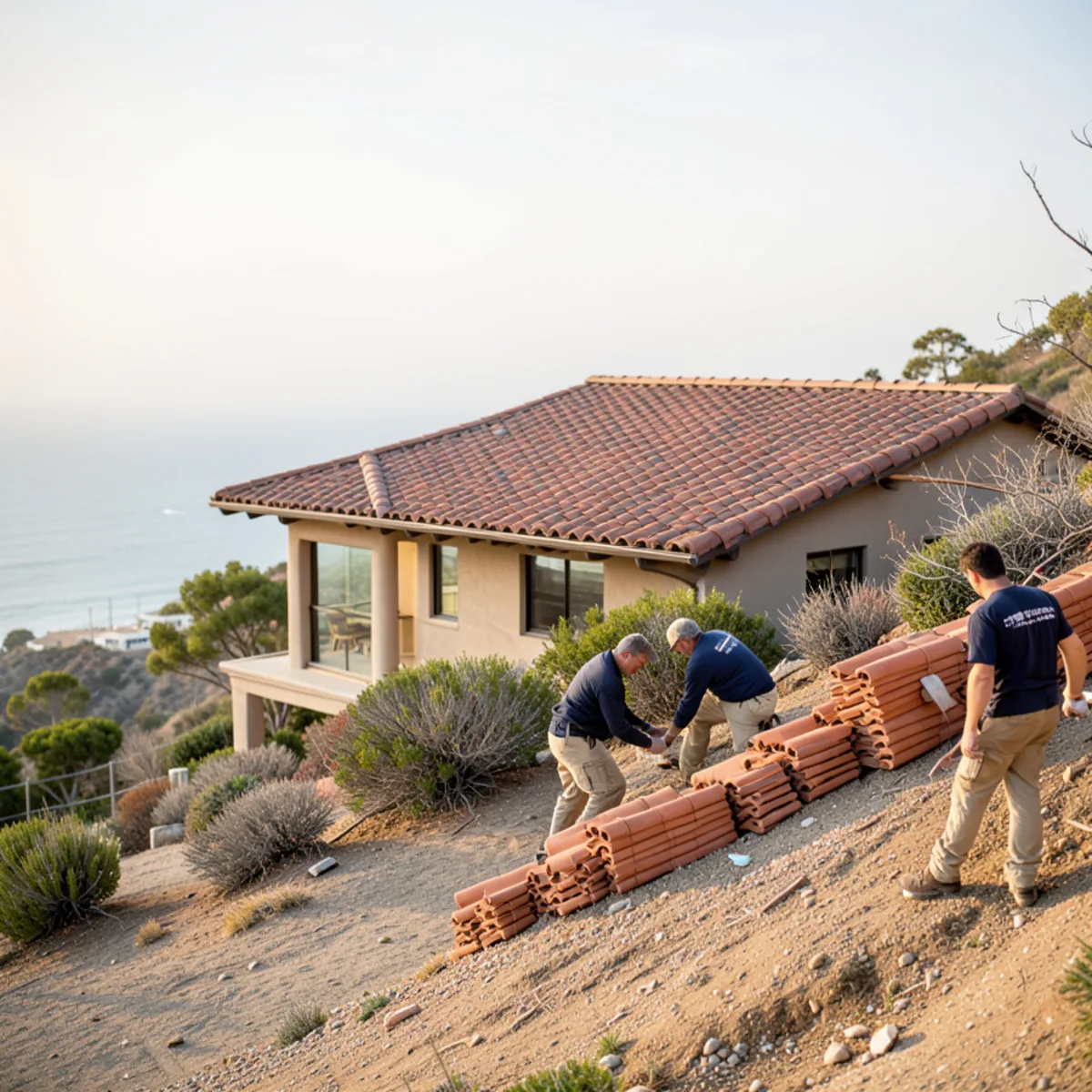
This is the expert-insight section. In Palos Verdes Estates many homes have clay tile that is part of the architecture, so keeping the look matters. Before we price anything we check three things: the attic for stains and dark trails, a few lifted tiles for the underlayment's condition, and flashing at walls and chimneys. Then we tell you whether a section can be re-felted or the whole roof needs it. Exterior changes in the city may go through a design review, so confirm requirements for your address with the city before work starts.

What do framing, design review and sectioning add to a tile project?
Tile is heavy, so the framing and deck get a look when the roof is opened. Rotted boards or a sagging rafter turn a re-felt into a repair project with its own cost line. We photograph the deck so you can see the same thing we see.
In Palos Verdes Estates, exterior changes can go to the Palos Verdes Homes Association's Art Jury for review, so confirm what applies to your address before choosing materials or colors. A like-for-like re-felt that keeps the visible roof the same is a different conversation from a change in tile profile.
Finally, ask how the work is sectioned. A tile roof is re-felted in stages, and each open section should be covered before the day ends. That matters most from November through March, when rain is likely, and it affects scheduling and cost.
When is full tile replacement the better buy?
Sometimes the tile itself is the problem. Signs include tile that crumbles at the edges, flakes off its surface, shows widespread hairline cracks, or breaks when you step near it. If a large share of tile will not survive being lifted, the savings from reusing it shrink, and the price of replacing broken tile can close the gap with a new roof.
Structure matters too. Tile is heavy. If framing or decking has been damaged by years of leaks, repairs go beyond the underlayment. In that case it is worth getting a second opinion and asking for photos of the deck. We explain both options in plain terms and tell you plainly if a section re-felt will not solve the whole problem.
What to ask in an estimate
Ask what break rate is assumed, whether new tile is priced separately, how deck repair is handled and what the plan is for weather. Most rain falls between November and March, so work is often timed for a dry stretch. Bring any ceiling photos, and we will go through the estimate line by line. Also ask whether the estimate covers new battens and flashing metal, since those are often the lines that change once the roof is open. Our tile roof repair service is the smaller option when only a few tiles are the problem.