

By the Crown Trim Roofers team · Published · Updated
A roof is one of the largest repair bills most homeowners face, and the California license record is free, public and fast. This guide shows how to run a CSLB license lookup on any roofer, what each line means and which results should stop you from signing. For choosing among roofers once the license checks out, the page on a roofing contractor in Torrance shows the kinds of estimates and explanations to expect.
How do you check a California contractor license step by step?
- Get the license number. It must appear on the roofer's bids, contracts and ads, according to CSLB. If it is missing, ask for it, or search the CSLB site by business or owner name.
- Run the lookup. Use the Check a License tool on cslb.ca.gov, or call CSLB at (800) 321-CSLB (2752).
- Match the identity. The business name, owner and address on the record should match the contract, the truck and the person at your door. Ask to see a pocket license and photo ID.
- Read the status. You want active. Expired, suspended, cancelled or inactive means the roofer cannot legally contract for your job.
- Check the classification. Roofing work belongs under C-39 Roofing. A different class may be fine for other trades, but not for a roof.
- Confirm bond and workers' comp. Details below.
- Look at disclosures. Read any listed complaints or legal actions and what they say.

What does each part of the CSLB record tell you?
| Record item | What it means | Red flag |
|---|---|---|
| License status | Whether the roofer can legally contract today | Expired, suspended, cancelled or not found |
| Classification | The trades the license covers; roofing is C-39 | No C-39 listed for a roofing job |
| Contractor bond | A $25,000 bond on file for consumer and worker claims | No bond listed; bond cancelled |
| Workers' comp | Active coverage or a self-insurance certificate | None on file; C-39 holders cannot claim an exemption |
| Complaint disclosure | Citations and cases CSLB makes public | Repeated citations or a revoked license |
| Home improvement salesperson | Salespeople who sign contracts must be registered | Salesperson without a registration card |
Why do the bond and workers' comp lines matter on a roof?
The bond is small and limited. It pays out for consumers harmed by violations and for unpaid workers, and CSLB says it does not vouch for a contractor's skill or finances. LLC licenses carry an extra $100,000 bond for workers' wages.
Workers' compensation matters more on a roof. CSLB requires C-39 contractors to carry coverage or a self-insurance certificate even with no employees, and it does not allow a C-39 to file an exemption. A fall from your roof by someone with no coverage can become your problem. Ask the roofer's insurance agent for a certificate sent directly to you, and compare it with the carrier on the CSLB record.

What contract rules protect you before you pay?
California limits home improvement down payments to 10 percent of the contract or $1,000, whichever is less, with rare exceptions. You also have three days to cancel after signing. The contract should list the work, materials, price, payment schedule, who pulls permits, and the license number. Do not sign anything blank or partly blank, and put verbal promises in writing. For re-roofs, ask who handles the permit and confirm requirements for your address with your city, such as City of Torrance Building & Safety at (310) 618-5910.
What we tell homeowners to do with the results
Expert insight from our roofers: look up every roofer you are comparing, including one a neighbor recommends, and do it before the estimate appointment so the answers are in your hand. Remember that the record is only as current as the day you check it, so re-check before the first payment if there is a long gap after the estimate. Then use this simple rule.
- Active, C-39 listed, bond and workers' comp on file, no troubling disclosures: compare estimates.
- Active, but no roofing class or no workers' comp: do not hire for a roof.
- Expired, suspended or cancelled: do not sign.
- No record at all: the job is likely unlicensed. Report it to CSLB.
- Complaints listed: read the status. CSLB notes complaints are allegations, so look for pattern and resolution.
What else belongs in a written roofing contract?
CSLB says a home improvement contract must be in writing once the job passes $500 in labor and materials. Beyond the items listed above, check the following before you sign:
- A payment schedule tied to work done. Payments should never run ahead of the work completed.
- Signed change orders. Any change in price or scope needs a written, signed change order before the work changes.
- A mechanics lien warning. The contract should explain how unpaid suppliers and subcontractors can record a lien on your home.
- The license number and business address. They should match the CSLB record you pulled.
- A three-day right to cancel notice. Required in most home improvement contracts, with a few exceptions.

How do mechanics liens and release forms protect you?
A mechanics lien is the risk most owners never hear about. If you pay your roofer and the roofer does not pay a supplier or subcontractor, that unpaid party can record a lien against your house. CSLB explains that suppliers and subcontractors often send a preliminary notice within 20 days of starting work or delivering material. Read these notices when they arrive instead of tossing them.
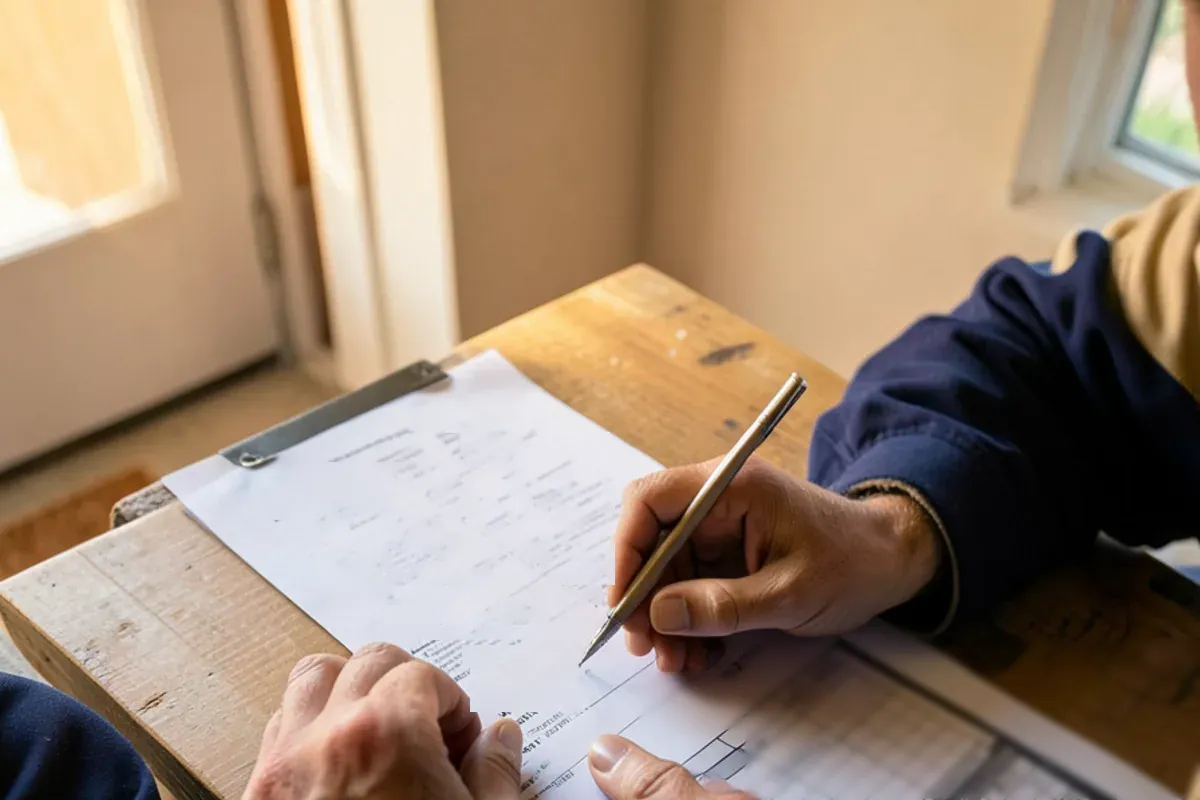
The fix is paperwork. California provides statutory release forms: a conditional release before you pay, and an unconditional release once payment clears. Ask the contractor for the right form with each progress payment and keep copies. CSLB's mechanics lien guide explains which form fits which stage. Collect a final release at the last payment, before you consider the job closed.
Does a clean CSLB record prove the roofer is the right one?
No. The record tells you the roofer can legally contract, not that the work will be good. Treat it as the first filter. Then compare the itemized estimates line by line: tear-off versus overlay, underlayment type, flashing, ventilation and cleanup. Read the warranty terms, using our guide to roof warranties explained as a checklist. Ask who pulls the permit, and look at reviews for patterns in how problems were handled. A roofer with a clean record and a vague estimate is still a risk. A written, itemized estimate for a roof replacement should name each layer of the system and each flashing detail.
Complaint history deserves a careful read. CSLB's authority generally covers four years from the act, and up to ten years for certain hidden structural defects, so an older record may not show the whole story. Look at how many complaints were filed and whether the contractor resolved them, not just the count.
What should you do next?
Pull up the license number on your estimate today and run the lookup. Write down the status, classifications and bond details with the date you checked, since records change. Then request written, itemized estimates from two or three roofers, matching them line by line. Free estimates are standard in this trade, so you should never pay to compare. Our reviews page is a place to see what past customers describe, as one more piece of the picture next to the license record.
Sources
- California Contractors State License Board
- CSLB: Finding the right contractor
- CSLB: Workers' Compensation Requirements
- CSLB: Home improvement contracts
- CSLB press release: Handyperson exemption increases to $1,000 in 2025
- CSLB: Learn about home improvement contracts
- CSLB: Homeowner's guide to preventing mechanics liens
- CSLB: How the complaint process works