
By the Crown Trim Roofers team · Published · Updated
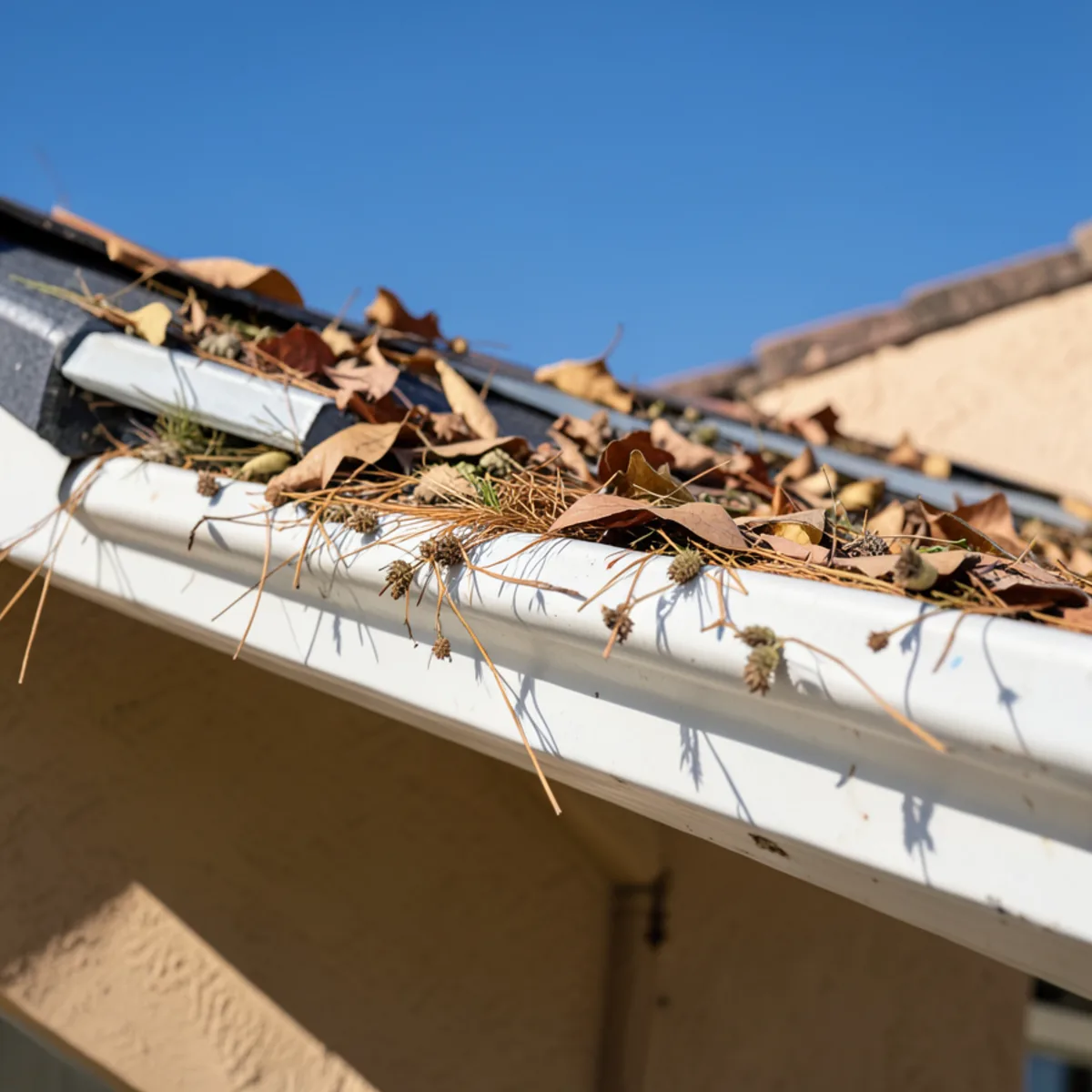
Gutters in Southern California get ignored because it rains so little. Then a storm arrives and a summer of dry debris turns into a plug. If you want a number, start with twice a year and adjust from there. Our gutters and fascia pages cover installation, repair and drainage, and the gutter cleaning page explains what a professional visit includes.
What is a good gutter cleaning schedule for Torrance?
Torrance gets about 14 inches of rain in a typical year, mostly between November and March. That means the dry months are when debris builds up, and the first storms are when it moves. Match your schedule to that cycle.
| Your situation | Suggested schedule |
|---|---|
| Few or no overhanging trees | Early fall and late winter |
| Pine, eucalyptus or ficus nearby | Early fall, midwinter, spring, and after strong wind |
| Gutter guards installed | One inspection a year, rinse as needed |
| Roof in poor shape, shedding grit | Add one check after the first big rain |
| Flat or low-slope edges with small gutters | Twice a year, plus a look after any storm |
Treat this as a starting point. If you see overflow at moderate rain, shorten the gap.
Why do trees change how often gutters clog?
Pine needles slip through gaps and mat together. Eucalyptus sheds bark strips and leaves nearly year-round. Jacaranda, ficus and liquidambar drop flowers, fruit and leaves in heavy bursts. A tree that touches or overhangs the roof also drops branches and twigs, which catch other debris like a net.
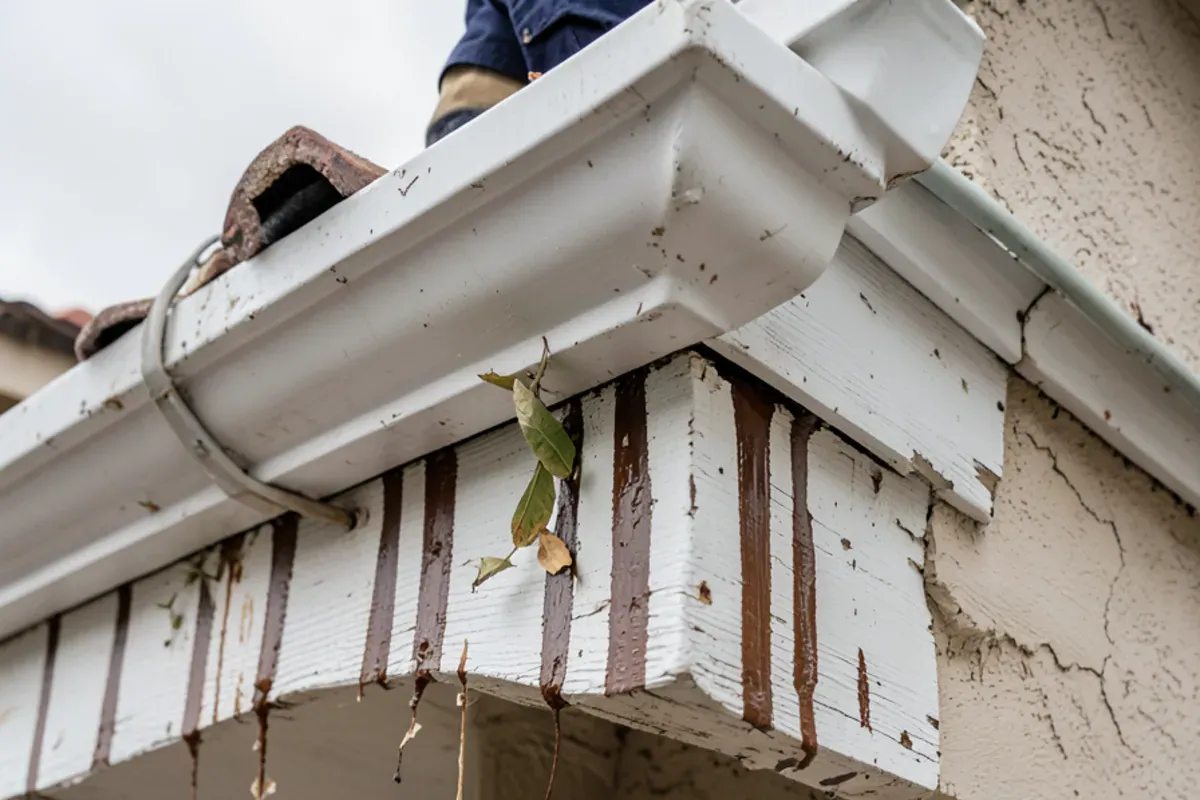
Trees and gutters work against each other in another way. Shaded, damp debris stays wet, breeds moss and rots fascia boards. Our post on fascia rot behind gutters shows what that looks like. If a tree hangs over your roof, trimming it back is the cheapest long-term fix.
What happens to your house when gutters stay clogged?
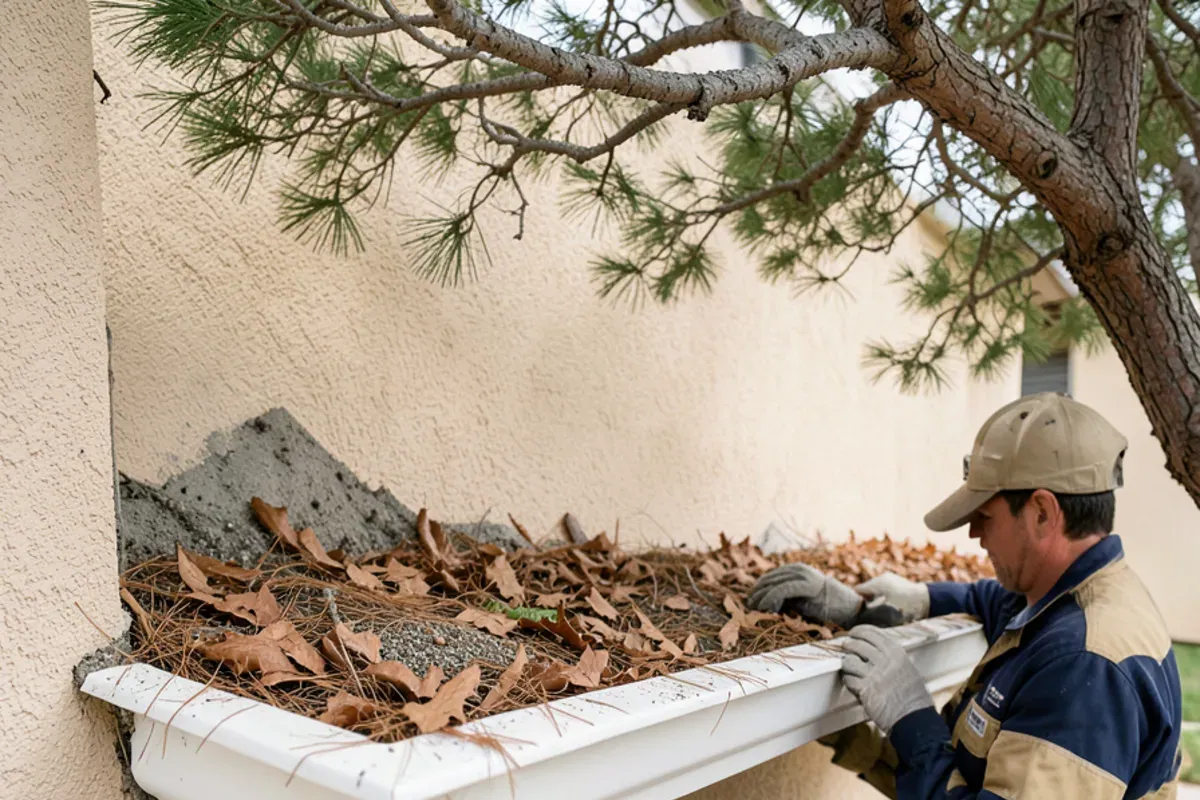
A clogged gutter fails in a predictable order. Water tops the front edge first and runs down the fascia. The board stays wet, the paint peels and the wood starts to soften. Next, water drops straight down along the wall, splashes mud onto the stucco and soaks the soil by the foundation. If the clog sits at a roof valley or a low corner, water can back up under the lowest shingles or tiles and reach the decking.
None of that needs a big storm. In a dry climate the damage tends to build quietly over several rainy seasons, then shows up as rot behind the gutter or a stain on the ceiling near an exterior wall. Fixing a rotted fascia board costs more than the cleaning that would have prevented it.
When should you clean gutters before the rainy season?
Aim for October, ahead of the first real storm. Santa Ana winds in fall also blow leaves and dry branches onto roofs, so cleaning after those wind events, not before, gets you more for the effort. A second pass in February or March clears whatever the winter storms washed down.
Cal Fire also lists clear roofs and gutters among the basics for ember resistance, so a fall cleaning serves two purposes in fire country, including the hillsides of the Palos Verdes Peninsula.
How do you spot clogged downspouts?
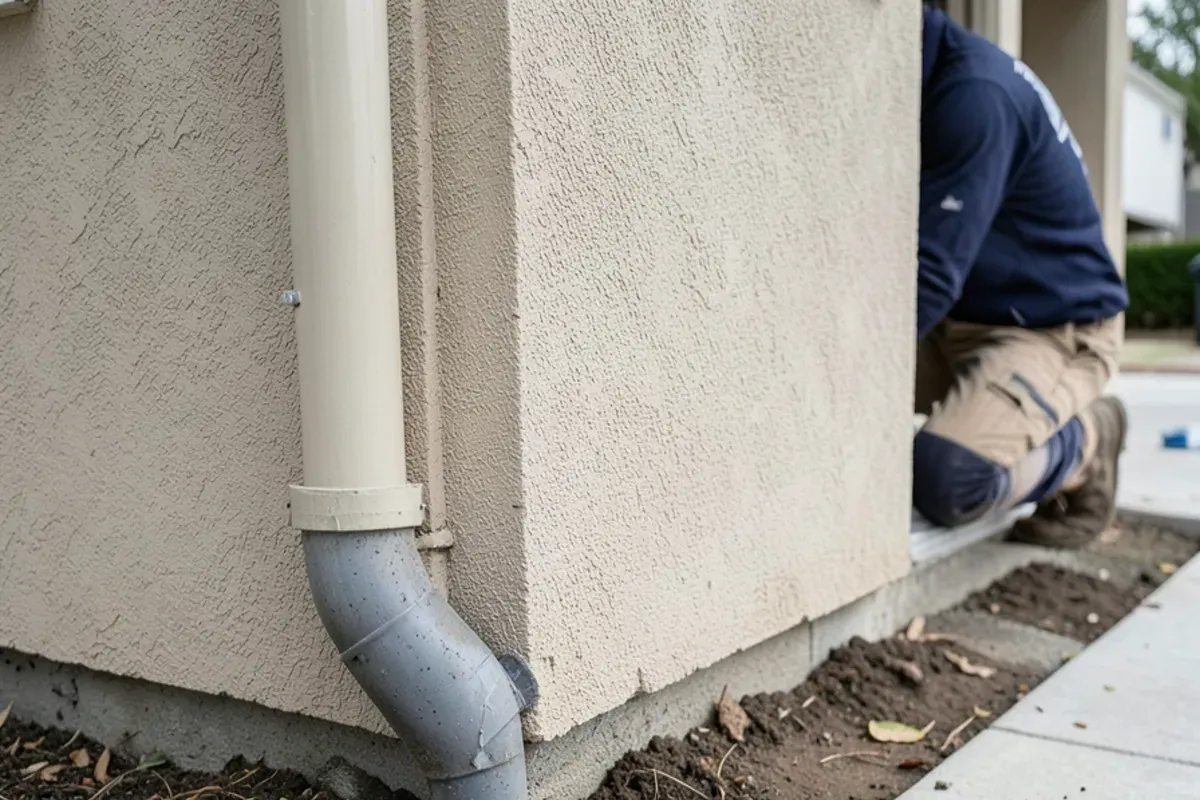
Gutters can look fine from the ground while the downspout is blocked. Watch for these signs during or just after rain:
- Water spilling over the front edge in one spot
- Water pooling or splashing at the outlet instead of flowing out
- A downspout that gurgles, or one that stays dry while another runs
- Stained stucco or siding under the gutter
- Mud splash lines low on the wall
- Erosion or a trench in the planting bed below
A garden hose run from the top tells you quickly. If the water backs up or trickles, the downspout is clogged.
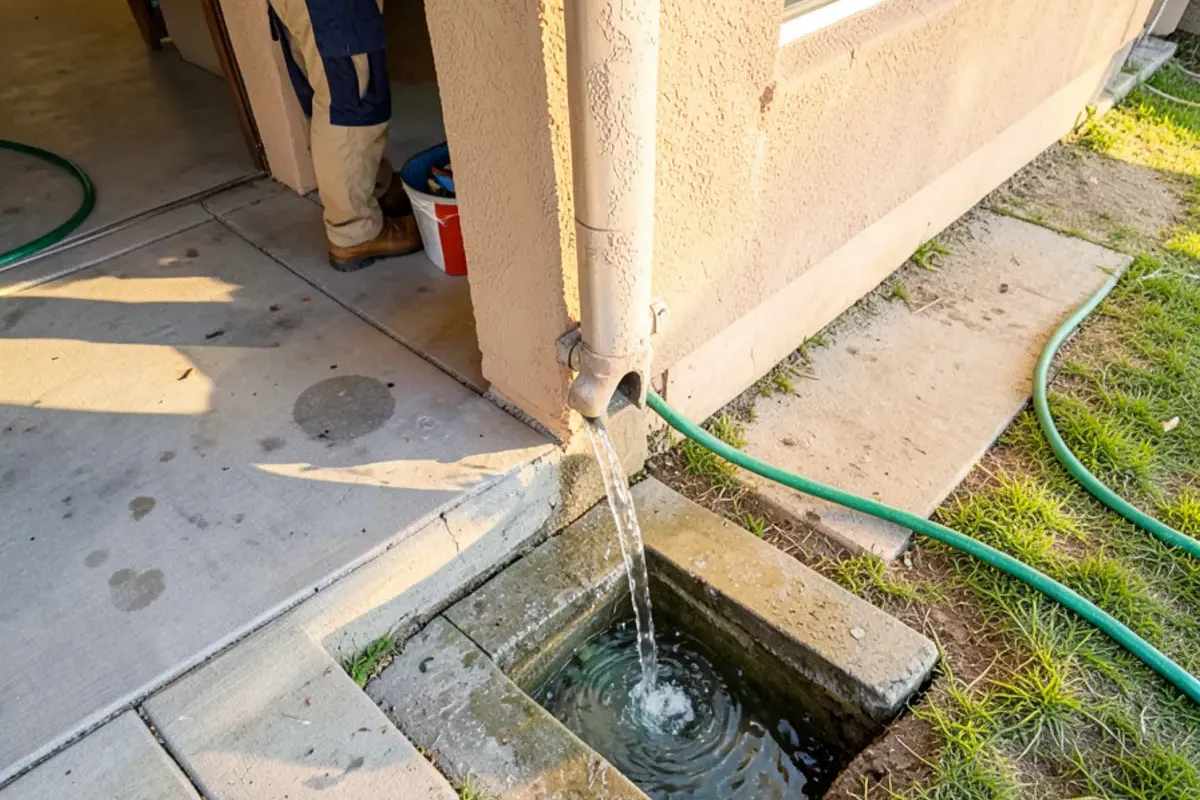
Our downspouts and roof drainage page covers fixes that go beyond a cleaning, such as re-routing water away from the foundation.
What does a safe cleaning visit look like step by step?
If you clean your own gutters, keep it to a single-story eave you can reach from a stable ladder on level ground. Never step from the ladder onto the roof. For two-story homes, tile roofs and steep lots, call a professional. The routine is the same either way:
- Turn off sprinklers and lay a tarp or bucket on the ground to catch debris.
- Scoop the loose material into a bucket, working toward the downspout.
- Rinse the channel with a hose, from the far end toward the downspout.
- Run water into each downspout. If it backs up, clear it from the bottom outlet with the hose or a plumber's snake.
- Watch the flow. Water should move steadily with no pools sitting in the channel.
- Look at the hangers, seams and fascia while the channel is empty, and photograph anything loose, split or soft.
Do not pressure wash a gutter from the roof side or push debris down a downspout that connects to an underground drain without checking where it ends. Many South Bay homes tie downspouts into buried lines, and a plug there needs a different fix.
Does the season matter for each gutter task?
It does. Use this calendar as a template and shift it by a few weeks for your trees.
| Month | Task |
|---|---|
| September or October | Clean gutters, test downspouts with a hose and trim branches touching the roof |
| November to March | Check for overflow during moderate rain, and clear any plug that shows up |
| After strong wind | Clear fresh leaves and twigs from valleys and gutters |
| February or March | Second cleaning to remove what the storms brought down |
| Late spring | Inspect hangers, seams and fascia paint before the dry months |
| Summer | Optional rinse if pines or eucalyptus are dropping needles and bark |
What do roofers notice when we clean gutters?
Cleaning gives us a look at the edge of your roof, and here is what we tell customers we are checking while we are there:
- Granules. A handful of grit in the gutter is normal on shingle roofs. Piles of it can mean the roof surface is wearing. Our post on roof granule loss explains when that matters.
- Pitch. A gutter that holds standing water has lost its slope or has sagged away from its hangers.
- Hangers and seams. Loose spikes, split seams and rust show up quickly when the channel is empty.
- Fascia and drip edge. Soft, dark or peeling boards behind the gutter are an early warning of rot.
We protect landscaping and driveways and clean up thoroughly, so debris does not end up in your planting beds. We show you photos of any problem we find, and a repair comes first when a repair will do.
Can you skip cleaning if the gutters look fine?
Sometimes, but not often. A gutter that looks clear from the ground can hold a layer of sludge you cannot see. If you want to test, wait until the next dry day after a light rain and look at the outlet end. Muddy, slow flow means it is time.
For a local contact, a roofing contractor in Torrance can clean, tune up and flag repairs in a single visit. Book it for early October and you will be done before the storms begin.