
By the Crown Trim Roofers team · Published · Updated
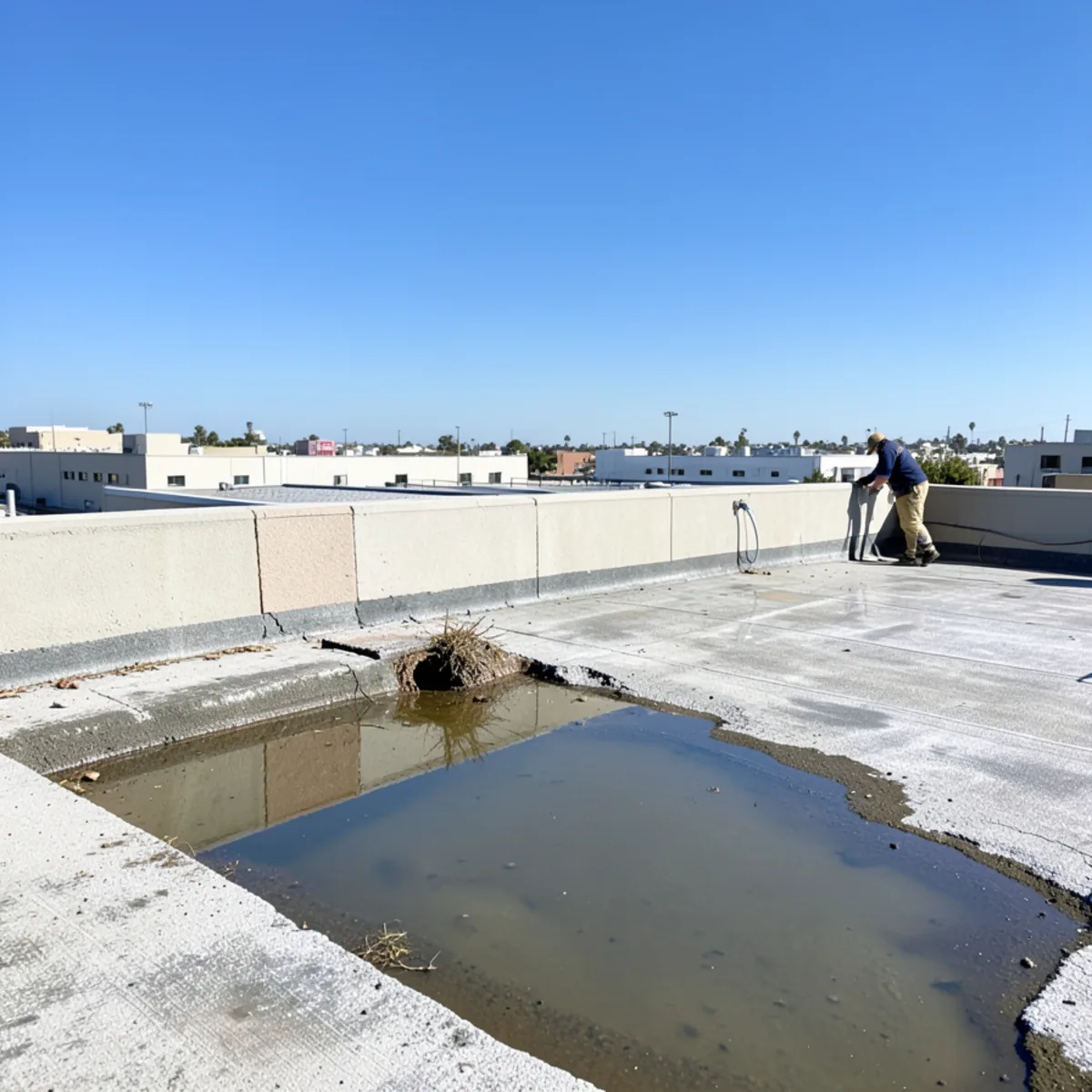
A flat roof is rarely flat. It is built with a slight fall toward a drain, scupper or edge so rain leaves. When water stays, the roof is telling you the slope, the drains or the membrane has changed. This post sits with our flat roofing guides, and the repair work is described on our flat roof repair page.
Is ponding water on a flat roof always a problem?
No. A shallow film that dries by the next afternoon is normal, especially after a long, light rain. The trouble starts when it stays.
A common rule of thumb is to treat water still present 48 hours after rain stops as ponding. That is not a legal line, and membrane makers set their own terms, but it is a useful test. Ask yourself:
- Is the puddle in the same place every time?
- Does it leave a ring of dirt, algae or dried scum when it shrinks?
- Is the water deeper than a half inch, or wider than a dinner table?
If the answer to any of those is yes, the roof is holding water it should have shed.
What causes standing water on a flat roof?
There is almost always a simple reason, and a short list covers most roofs.
| Cause | What you see |
|---|---|
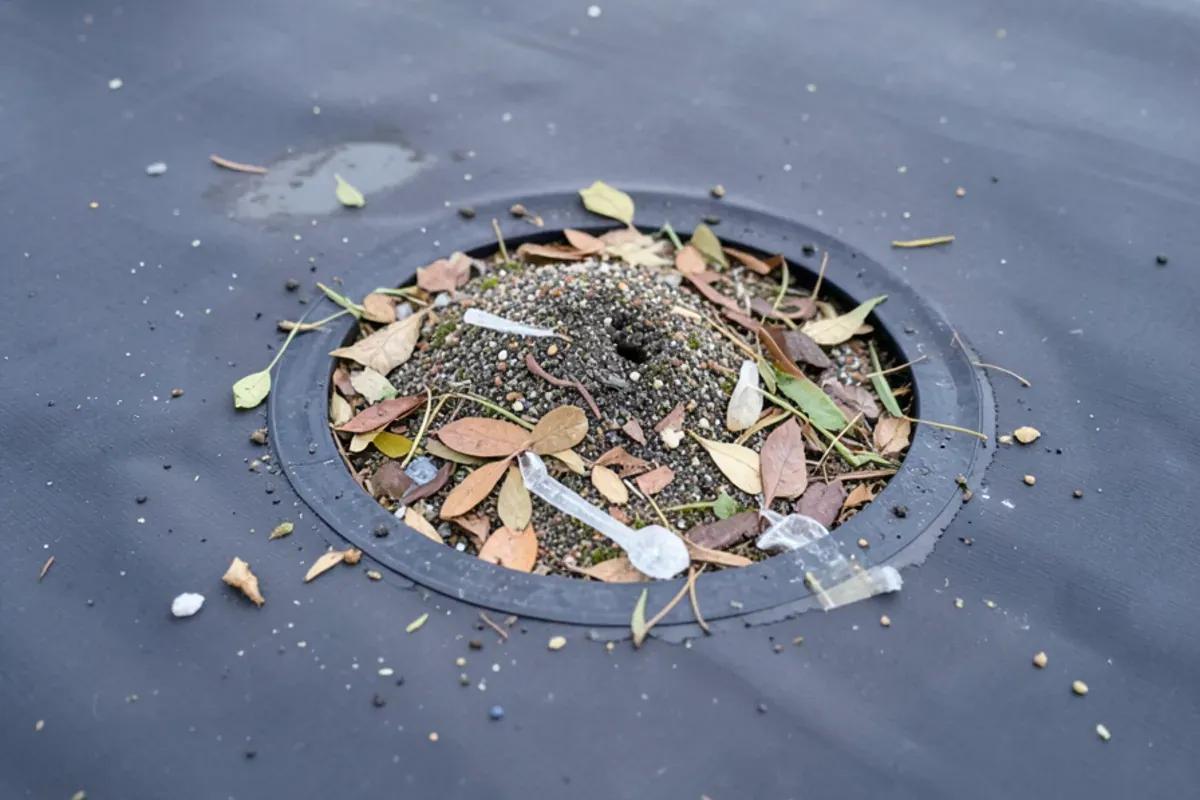
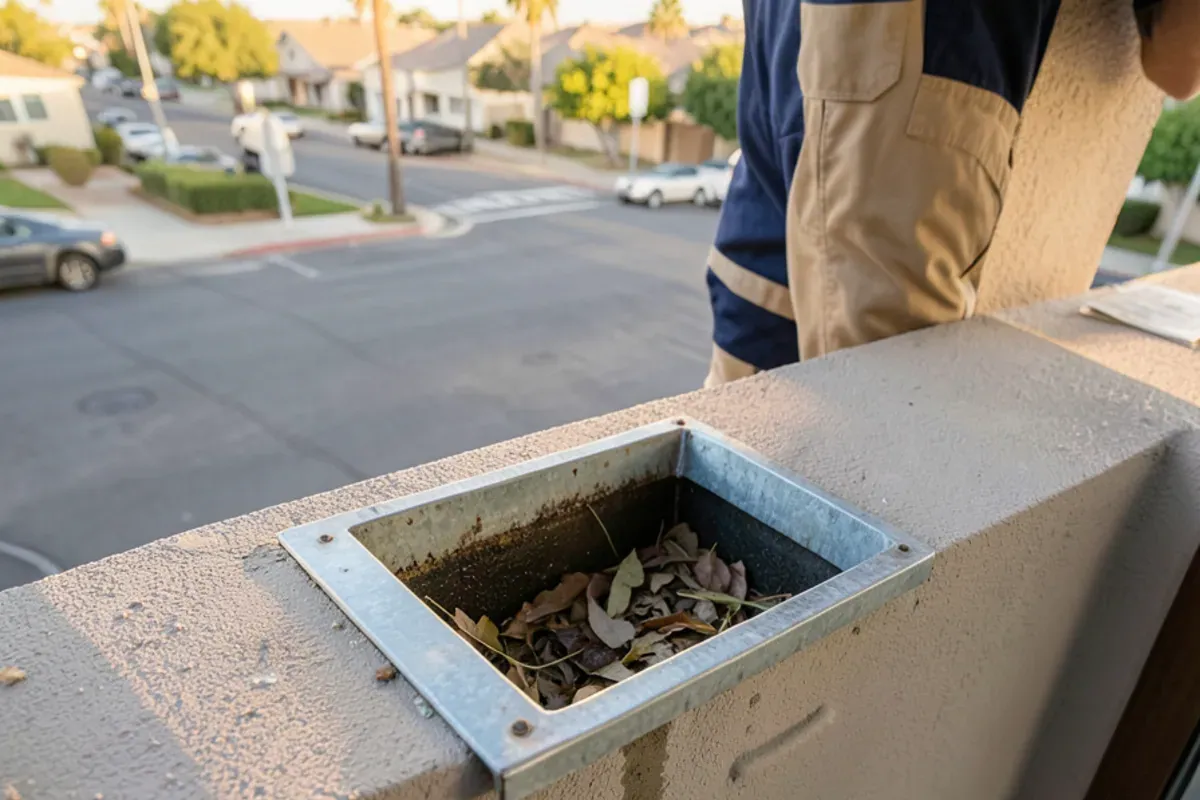
| Clogged drain or scupper | Water pooled around the opening, leaves and grit in it |
| Too little slope | Broad shallow puddles across the middle of the roof |
| Settled or sagging deck | A depression that follows the framing |
| Equipment or vents blocking flow | Water stopped behind a unit or curb |
| Patches built up over time | Humps of material that dam the water |
In the South Bay, flat and low-slope roofs sit on mid-century apartments, additions, patio covers, storage buildings and commercial blocks. Rain is limited, about 14 inches a year in Torrance, but it comes in a rush from November through March, which is when blocked drains overflow.
How do you measure a puddle and what does it weigh?
Measure before you call. A few numbers turn a vague worry into something a roofer can act on.
- Wait two days after rain with no more forecast.
- Mark the edge of each puddle with chalk, or take a photo with something of known size beside it.
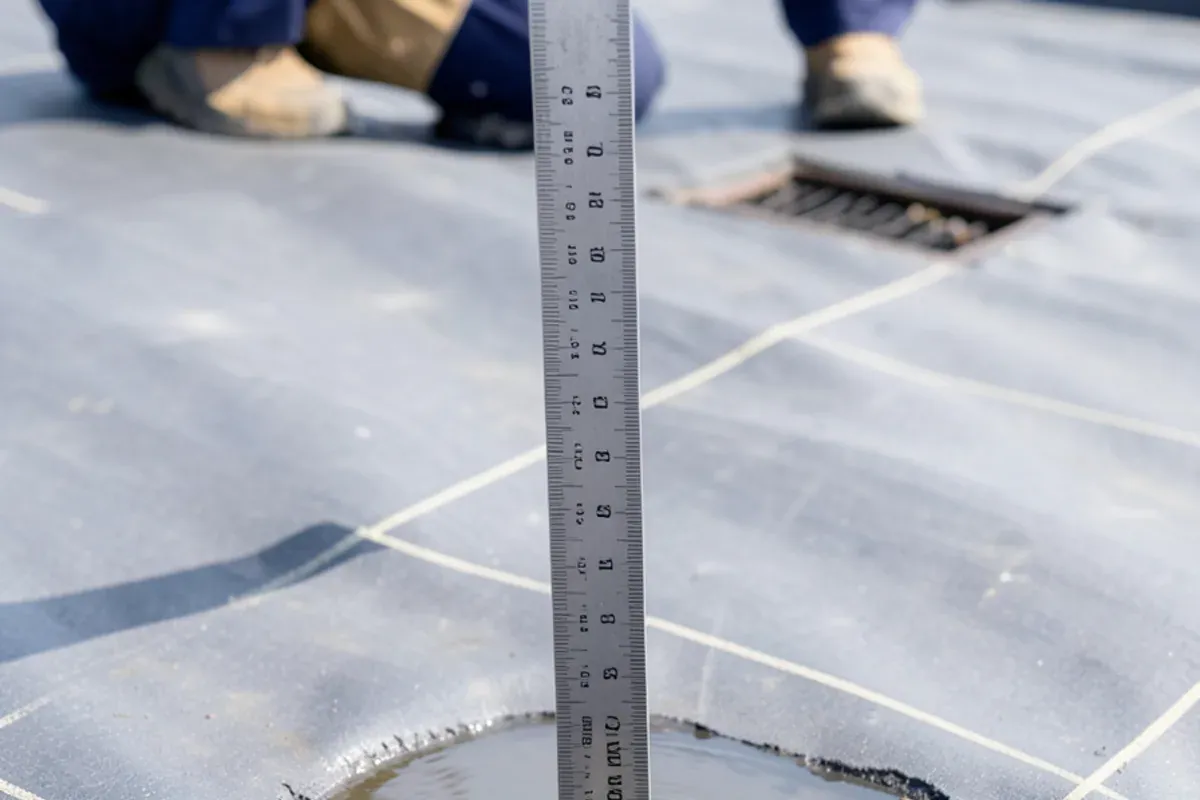
- Stand a ruler in the deepest part and note the depth.
- Estimate the width and length, and note how far the puddle is from the nearest drain.
- Repeat after the next rain to see if it returns to the same place.
Here is the arithmetic. Water weighs about 5.2 pounds per square foot for each inch of depth. A puddle 2 inches deep over 100 square feet is therefore about 1,040 pounds of water sitting on one part of the deck. That figure comes from the physics, not from a code, but it shows why a deep, wide puddle is not just a leak risk.
Why does standing water damage a flat roof?
Water that stays does five things.
- It adds weight. Water weighs about 5.2 pounds per square foot for every inch of depth, so a large puddle loads the deck.
- It speeds membrane wear. Standing water holds heat and ultraviolet light on one spot, and the surface cracks sooner.
- It grows algae and debris. That makes the next puddle deeper.
- It finds seams. A tiny split at a lap or flashing leaks only when it is under water.
- It rots the deck. One Google reviewer described a flat asphalt roof that was rotting and sending water into the gutters, which is where a neglected flat roof can end up.
Hawthorne, just north of Torrance, has many low-slope roofs on apartments and commercial buildings. Our Hawthorne page covers the roofs there.
How do roofers correct ponding?
The fix depends on the cause.
- Clear and test the drains. Debris in a drain or scupper is the cheapest fix. Dye or a hose test shows whether water moves.
- Add a drain or scupper. If water has no way off, one more outlet can solve it.
- Fill low spots with tapered insulation or a cricket. This restores slope without changing the whole roof.
- Re-slope a section. On a larger area, the roof is rebuilt in tapered layers.
- Repair or replace the membrane. Cracks, blisters and open seams need sealing or a new membrane over the wet area.
How do different flat roof systems handle standing water?
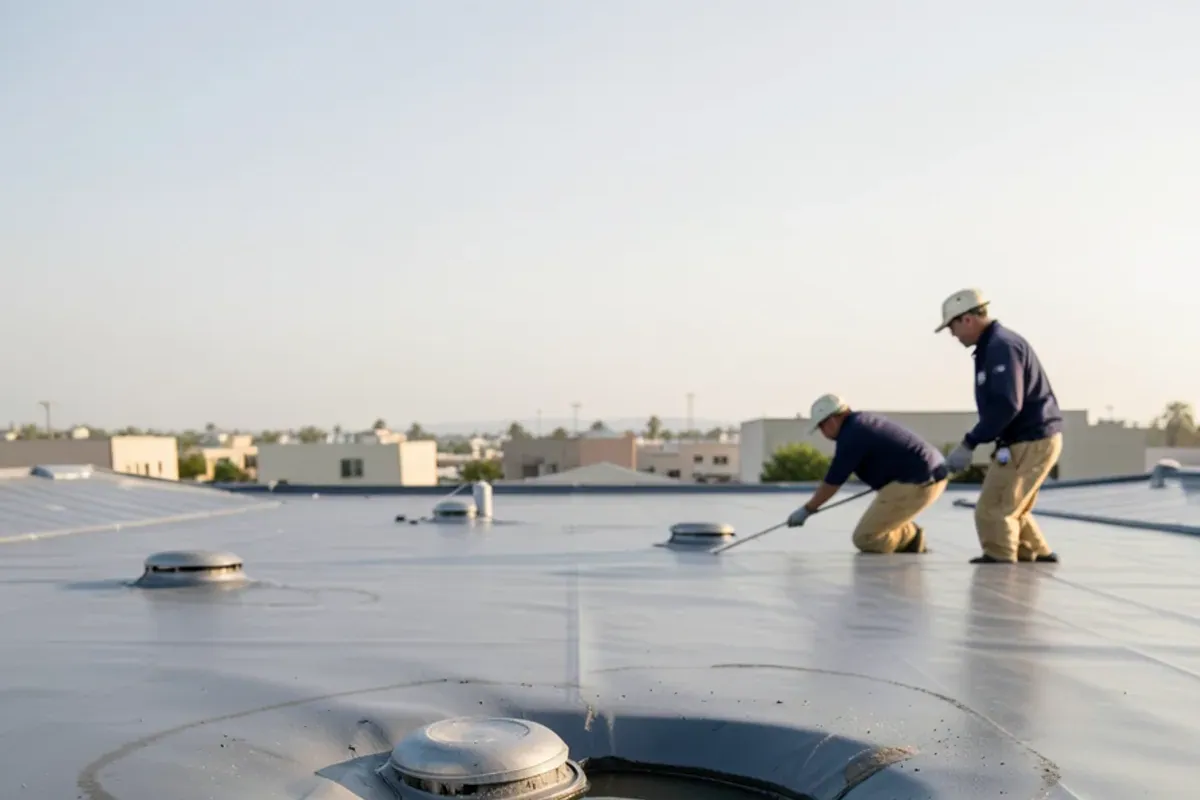
No membrane likes sitting water, but they fail differently.
- Torch down and built-up roofs can blister and open at laps under long-term ponding, and the grit or gravel on top can wash into the low spot.
- Single-ply TPO and PVC have welded seams that resist water well when the weld is good. Weak welds and flashing details are where standing water shows the problem.
- Roof coatings over a ponding area can blister or lift because the coating sits wet. Coatings are not a substitute for fixing the low spot.
Warranty terms matter here. Many membrane makers' warranties exclude damage from standing water, so a roof with a ponding history may not be covered the way you expect. Our pages on TPO and PVC roofing and roof coatings explain each system, and our flat roof replacement cost post looks at what drives a bigger job.
Does your building need an overflow drain?
If a flat roof is enclosed by a parapet, a clogged main drain leaves water with nowhere to go. Model building and plumbing codes call for secondary drainage on roofs like this, usually an overflow scupper or drain set a little above the roof surface. The edition your city adopts, and any local changes, decides what applies to your building, so ask your building department. For a Torrance building, City of Torrance Building & Safety is at (310) 618-5910.
What should an owner check, and when?
| When | What to look at |
|---|---|
| October, before the rainy season | Drains, scuppers, downspouts and gutters clear of debris |
| The day after the first real storm | Any water still standing or overflowing |
| Two days after later storms | Puddles that return to the same spot |
| After high winds | Debris blown onto drains, loose flashing, torn membrane edges |
| Any time a ceiling stain appears | Roof area above the stain, plus the attic or plenum if reachable |
Does ponding on a patio cover or addition matter too?
Yes, and these small flat sections are the ones owners overlook. A rear addition, a carport or a patio cover often has a short run, a hidden drain and almost no slope. Debris collects, nobody looks up, and one low corner holds water for weeks. Because the area is small, a repair here is usually modest if it is caught before the deck or fascia rots. Published 2026 cost guides put roof repairs at about $300 to $1,500, a market range and not a quote.
What roofers tell customers about standing water
- Photograph the roof after a rain, then again two days later. The comparison shows where water stays.
- Look at the underside. A stain on the ceiling directly under a puddle is an early sign the water is finding a way in.
- Ask for an honest scope. We show you photos of what we find, and a repair comes first when a repair will do.
- Include the gutters and drains in the walk. Water that cannot leave the roof is often a drainage problem that began at the gutter or downspout.
When to call about standing water
Check the drains and scuppers from the safest point you have, and take photos of any puddle two days after rain. If the water remains, a local roofing contractor in Torrance can inspect the surface during a free roof inspection, measure the slope and explain whether the fix is drainage, a patch or a larger project.