
TPO & PVC Roofing in Torrance, CA
- 4.8★ from 73 Google reviews
- Free estimates
- Same day or next day service
- Photos of what we find
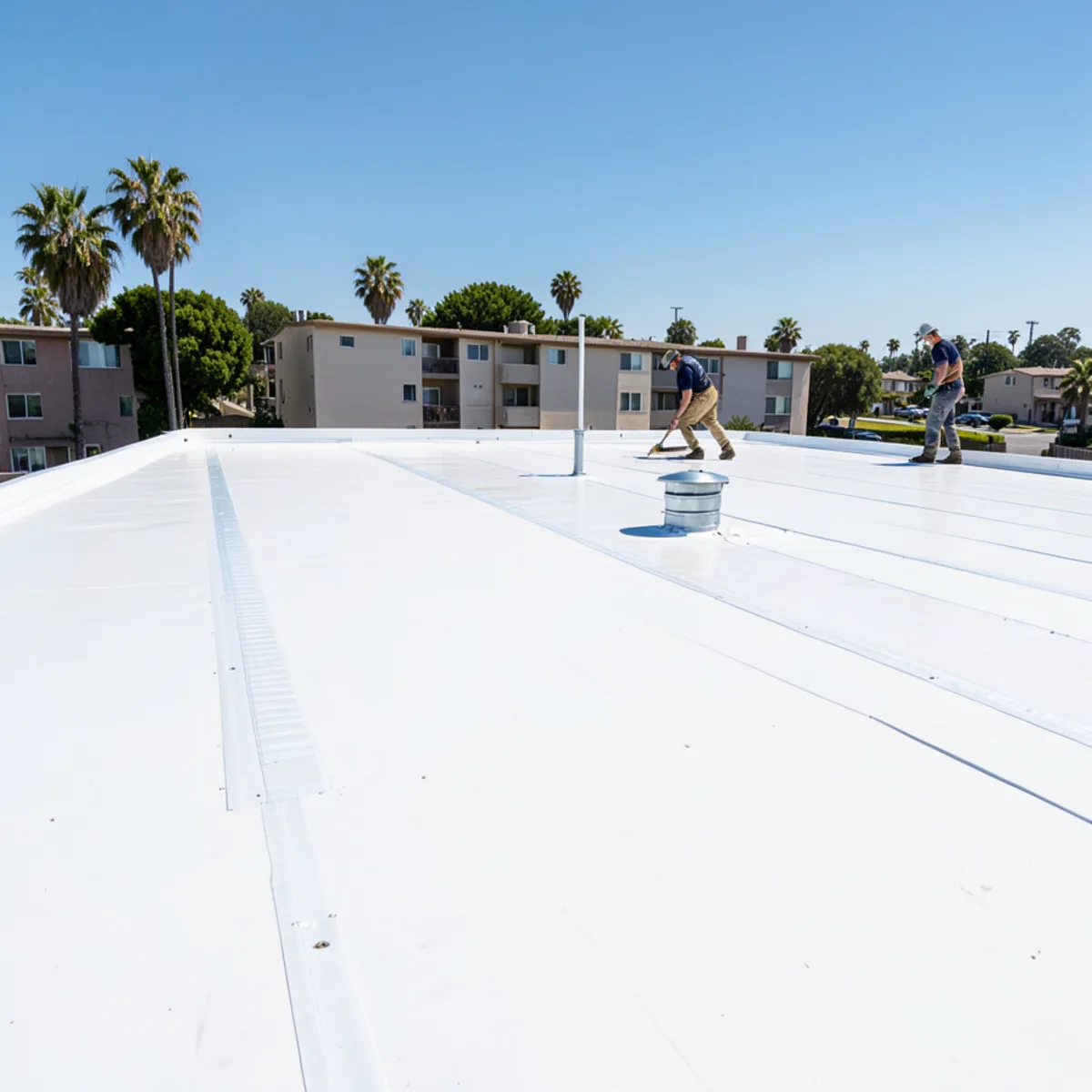
TPO is the membrane you see on big, bright white roofs. On a Torrance home or apartment, it covers a rear addition, a garage deck or a long flat section with a few vents. The material is thin, but the system is not: what matters is the substrate underneath, the welded seams and how the walls and pipes are detailed. This page covers TPO and PVC single-ply roofing, which belong to our wider flat roofing work, and what to expect from a job.
Is TPO or PVC better for a South Bay flat roof?
Both are single-ply sheets, typically sold in thicknesses of 45, 60 or 80 mils, and both join with hot-air welded seams. The differences:
| TPO | PVC | |
|---|---|---|
| Color and reflectivity | White and light colors common | White and light colors common |
| Chemical and grease resistance | Fair | Stronger, suits restaurant exhausts |
| Flexibility | Slightly stiffer | More flexible, easier at details |
| Price | Usually lower | Usually higher |
| Typical use | Homes, apartments, offices | Food service, industrial, complex roofs |
For a typical single-family flat section, TPO is usually the practical pick. We recommend PVC when something on the roof will drip oil or fumes onto the membrane. Our post on TPO vs torch-down vs hot mop compares the families more broadly, and the torch-down page explains the main alternative.
What a TPO or PVC single-ply job includes
Single-ply is a system, so the scope on your estimate should list every layer and detail, not just a square-foot price. Ours covers:
- Tear-off or prep of the existing roof, with wet material removed
- Cover board or insulation, including tapered boards where slope is needed
- The membrane, attached by the method that fits the roof
- Hot-air welded seams, probed afterward
- Pre-formed pipe boots, curbs, wall turn-ups and edge metal
- Photos of seams and flashings, plus thorough cleanup
Because TPO and PVC come in wide rolls, a well-planned roof has few field seams, which leaves the corners and wall turn-ups as the details to inspect.
How does a TPO roof installation go?
- Inspect and measure. Drains, walls, penetrations, deck condition, number of existing layers.
- Prepare the deck. Remove old layers if needed, replace wet insulation or sheathing, fasten the deck.
- Install insulation or cover board. This protects the membrane and sets slope toward drains.
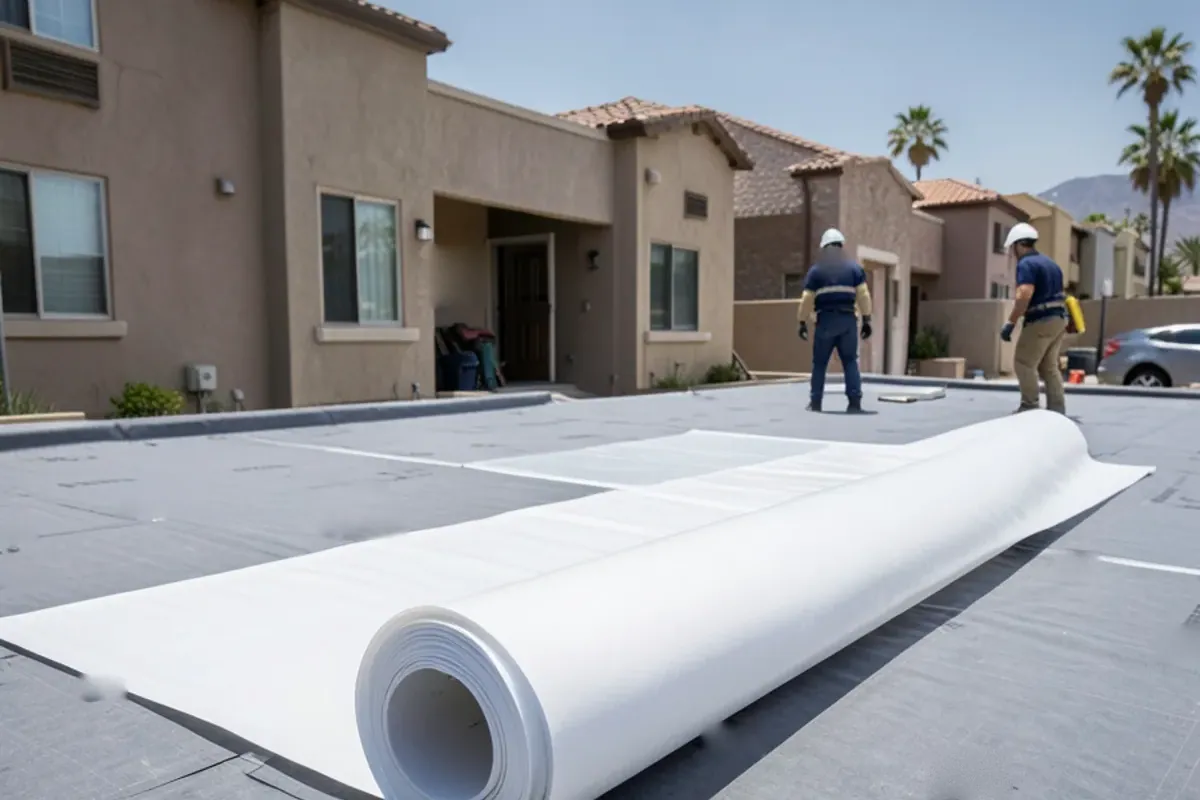
- Lay the membrane. Mechanically attached, fully adhered or ballasted, depending on the roof.
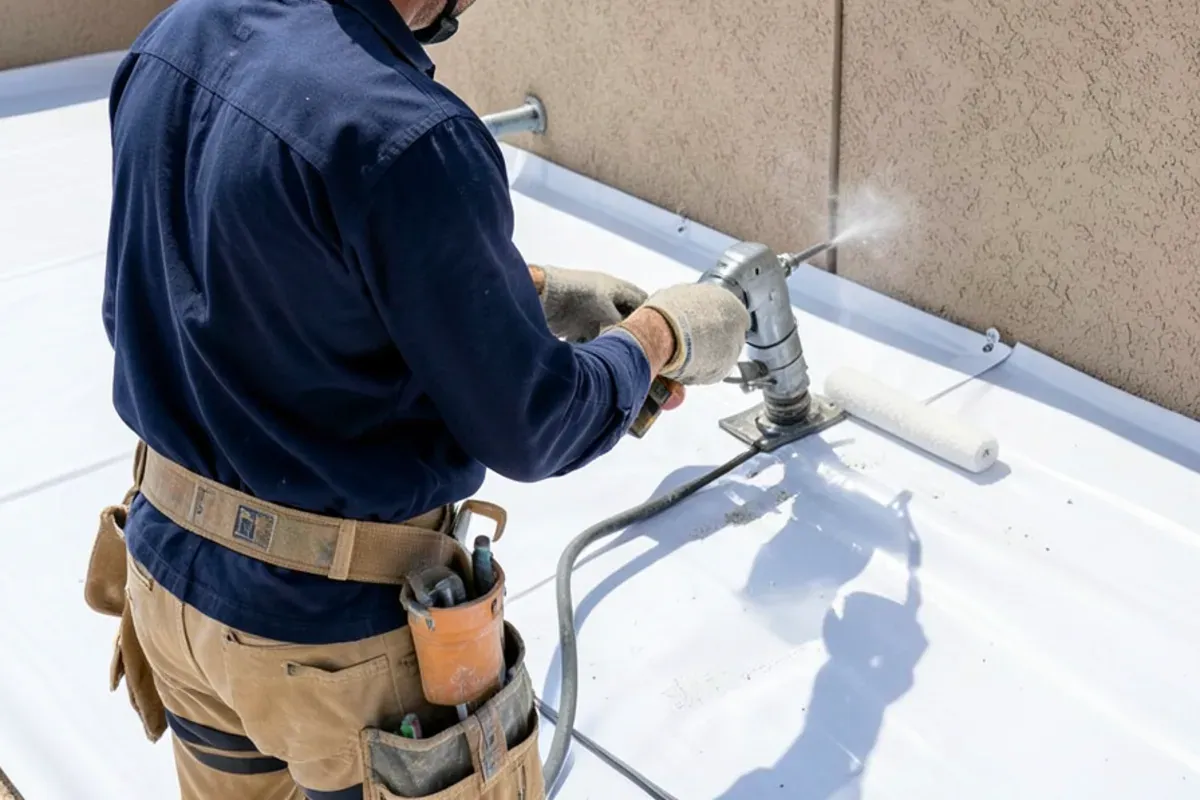
- Weld the seams. A hot-air welder fuses the overlap, followed by a roller. Seams are then probed.
- Flash the details. Pre-formed pipe boots, curbs, corners and wall turn-ups, finished with termination bars and sealant.
- Clean up and walk through. Photos of seams and flashings, magnets for stray fasteners, and a discussion of care.
Signs you are ready for single-ply
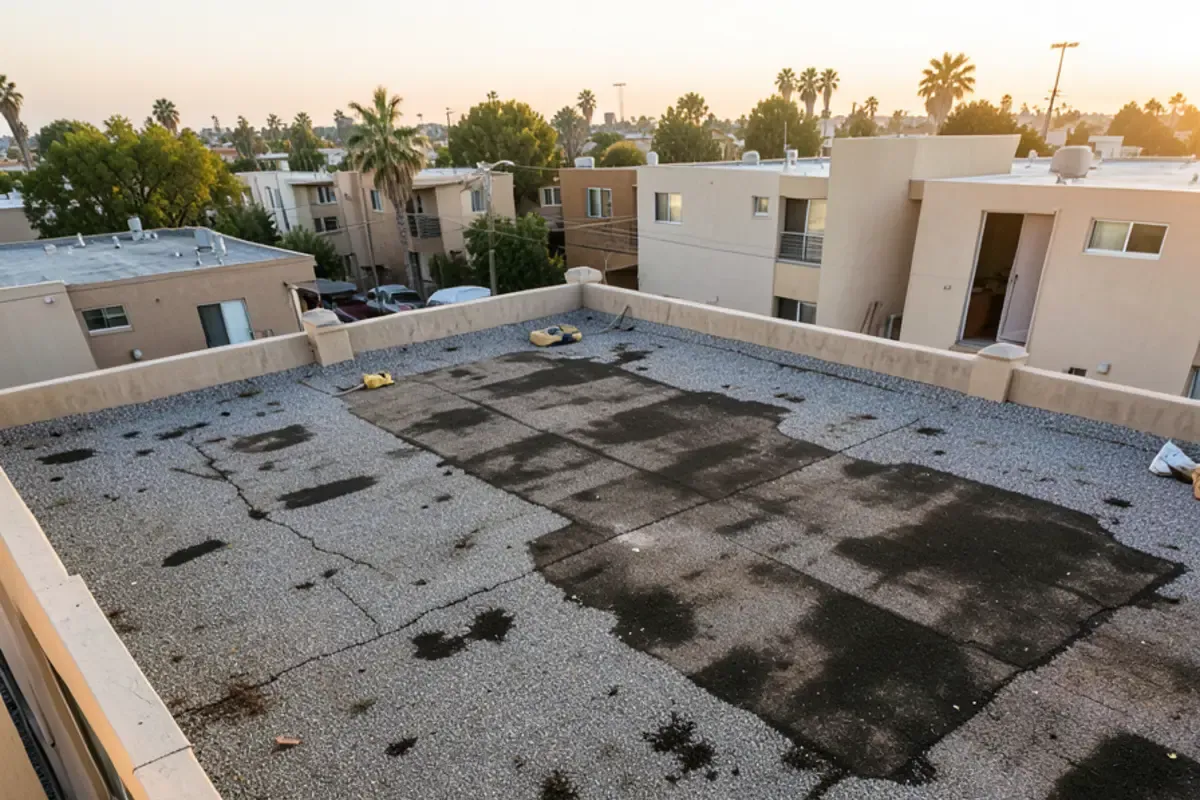
TPO and PVC make sense when the existing roof is past patching. Look for open seams across most of the surface, cracking in a gravel or mineral cap sheet, wet insulation that squishes underfoot, and drains ringed by stained patches. Torrance has few extreme heat days, about four a year over 90°F, so the case for white is more about shedding surface heat and meeting energy rules than saving a big cooling bill. On 1960s buildings, original built-up roofs have usually been patched several times by now, and a single clean membrane often replaces them better than a fifth set of patches.
How long do heat-welded seams last?
A good weld is not glue. The two sheets melt into one, so the seam becomes the same material as the sheet beside it. When seams fail early, the cause is usually on the installation side: dirt or moisture on the overlap, a welder run too hot or too fast, or a rushed finish at a corner. After welding, we check each seam edge with a probe for any gap or skip. Welded seams also tolerate foot traffic better than adhesives, though heavy traffic still belongs on walkway pads.
Ask any contractor to show you photos of the seams and the flashing corners. The field of a TPO roof is easy. The corners are where quality shows.
White roof membrane: does TPO meet cool roof requirements?
A white roof membrane reflects sunlight and sheds heat. Whether it satisfies a particular rule is a separate question. California's Title 24 energy code sets cool roof requirements that depend on slope, climate zone and building type, and compliance depends on the rated reflectance and emittance of the product. The Cool Roof Rating Council keeps a directory of rated products, and the California Energy Commission publishes the code. We do not apply a number to your house here. Ask the city building department, or call Torrance Building & Safety at (310) 618-5910, and we will use that answer when specifying the membrane.
Permits and licensing for a single-ply roof
A new membrane on an existing roof generally needs a permit. City of Torrance Building & Safety, at (310) 618-5910, can confirm requirements for your address, while unincorporated areas use LA County Public Works and the City of Los Angeles uses LADBS. Check any roofer's license on the Contractors State License Board site at cslb.ca.gov.
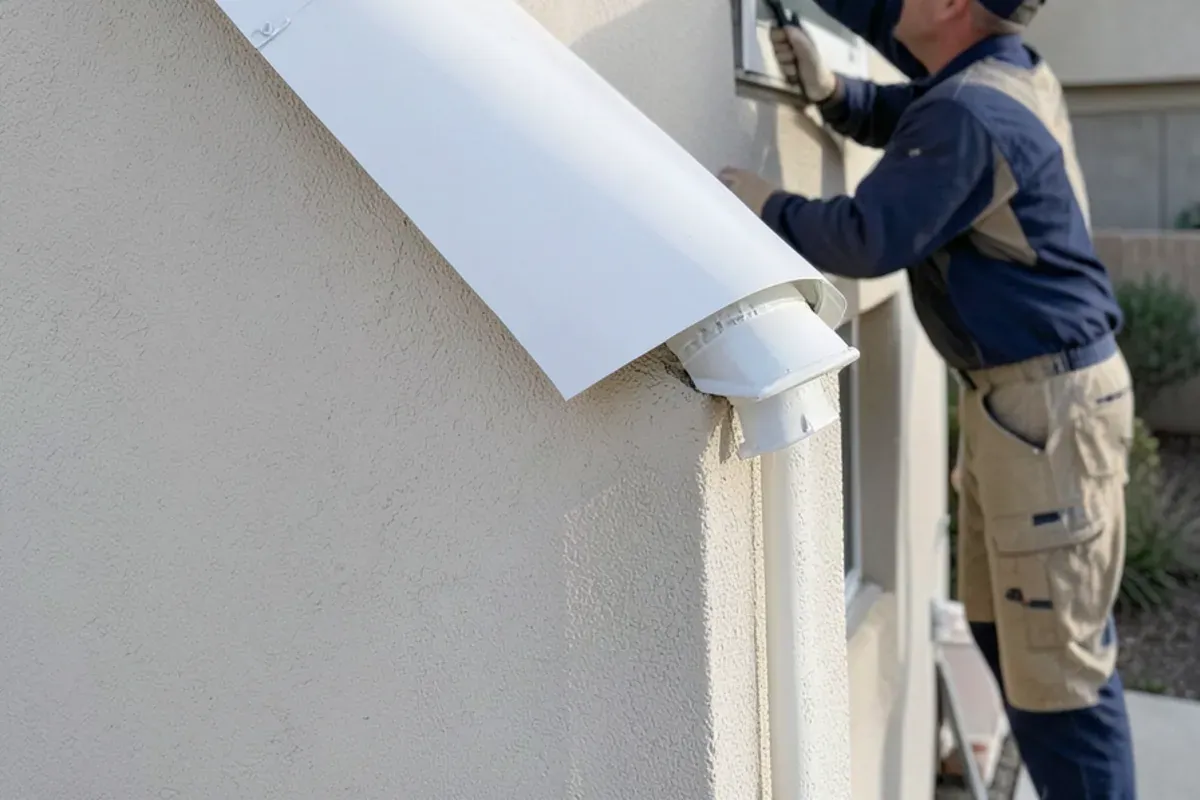
White roofs need cleaning. Dust and soot reduce reflectance, and coastal marine layer leaves film on the surface. An annual rinse is simple maintenance.
What does a TPO roof cost? The factors that move it
We give free estimates and do not post prices. TPO roof cost depends on:
- Roof area and the number of corners, curbs, walls and penetrations
- Membrane thickness and attachment method (adhered costs more than mechanically attached)
- Insulation or cover board and slope work
- Wet or damaged deck repair found during tear-off
- Access, and whether there is a parapet that needs wall flashing
- PVC versus TPO for chemical resistance
For market context only: Homeyou's 2026 listing, based on 7,210 projects, shows the Torrance average roof replacement at about $7,202 to $8,183 across all roof types, which is not a TPO quote. You can ask about financing at your estimate. If your roof only needs a local fix, see flat roof repair.
Why Crown Trim for TPO and PVC single-ply roofs?
- We explain TPO, PVC and other options in plain terms, with photos of the existing roof.
- Free estimates and free roof inspections.
- A repair first when a repair will do, and no push toward a full replacement.
- We handle permit details on re-roofs, and clean up thoroughly, protecting landscaping and driveways.
- Homes, apartments, HOAs, storage facilities and commercial buildings.
- Reviewers rate us 4.8 stars across 73 Google reviews.
Where we install single-ply roofing
From our base in Torrance, we work across the South Bay, including Carson, Redondo Beach and Rancho Palos Verdes. In Carson, larger flat roofs on apartment and light commercial buildings fit single-ply best. In Redondo Beach, salt air makes metal components a priority. On the Peninsula, wind exposure shapes how the membrane is attached. If your building already has a rock-covered roof, we also compare hot mop and built-up roofing before recommending a change.
Where we do tpo & pvc roofing around Torrance
Each place brings its own version of this job.
- Carson: Large clear flat roofs on Carson apartment and light commercial buildings near the 405 suit a welded white membrane.
- El Segundo: Office and light-industrial roofs east of Sepulveda often carry rooftop equipment, so single-ply flashing at curbs matters.
- Hawthorne: Small apartment buildings with long parapets and aging gravel roofs in Hawthorne are common single-ply conversions.
- Gardena: Gardena's small industrial lots have flat roofs where a light membrane lowers rooftop heat and welds around many penetrations.
- Redondo Beach: Salt air near King Harbor spares the membrane but attacks fasteners and edge metal, so corrosion-resistant parts are specified.
- Marina del Rey: HOA-managed condo and apartment roofs in marine air favor a rustproof membrane with carefully detailed edges and drains.
- Inglewood: Apartment blocks near the stadium district and LAX noise area often need whole-roof replacement with energy code review.
- Long Beach: Port-side commercial buildings and Belmont Shore salt exposure make PVC and TPO comparisons routine for flat roofs.
- Rancho Palos Verdes: Wind off the ocean decides how a membrane is attached on Peninsula homes with flat decks or additions.
- Ontario: Vast distribution-center roofs near the airport are low-slope territory, and TPO is one single-ply option we explain for large buildings.
What customers say about this work
Crown Trim Roofers holds 4.8 stars from 73 Google reviews. Read all reviews
“we were looking for a reliable company to fix issues with our flat asphalt roof that was rotting and causing water to drain into the gutters.”
“I had a roof leak, and when Donald inspected the roof, he also found storm damage.”
“Now, our house stands out on the block with a great-looking new roof and gutters.”
TPO & PVC Roofing: common questions
Is TPO or PVC better for a South Bay flat roof?
For most homes and apartments, TPO does the job and is widely used. PVC resists grease, oils and many chemicals better, so it suits roofs near kitchen exhausts or industrial vents, and it often costs more. We look at what is on and around your roof, then explain the choice. Always ask for the manufacturer's written terms for either.
Does a white TPO roof meet cool roof requirements?
White membranes are made for this, but compliance depends on the specific product's rated reflectance and emittance, plus your slope, climate zone and building type. The Cool Roof Rating Council lists rated products, and the California Energy Commission sets the code. Ask your city building department, such as Torrance Building & Safety at (310) 618-5910, what applies at your address.
How long do heat-welded seams last?
A correct weld fuses the sheets into one piece, so the seam can be as durable as the field of the roof. Poor welds fail early, usually from dirt on the overlap, wrong temperature or rushed work. After welding, each seam is probed along its edge to check for gaps. We can show you photos of the welded seams.
Can TPO go over my existing roof?
Sometimes, if the existing roof is dry, flat and the code allows another layer. A separation layer or cover board is usually needed. Wet insulation, a gravel surface or two existing layers rule it out. We check by probing and tell you what we find. Confirm layer limits with your city building department.
How should I clean a white TPO roof?
Rinse off dirt and debris, then use a mild detergent and soft brush or low-pressure wash, and follow the membrane maker's instructions. Avoid solvents and hard scraping. Dirt lowers the reflectance of a white roof over time, which is why an annual rinse after the rainy season helps. Foot traffic should stay on walkway pads.
Does TPO hold up in salt air near the beach?
The membrane itself does not rust, which helps near the coast. The weak points are metal parts: fasteners, termination bars, edge metal and drains. Coastal moisture and salt speed up corrosion on those, so we choose corrosion-resistant components and check them at each inspection, especially in Redondo Beach and other beach cities.
Related services and guides
Torch Down Roofing
Hot Mop & Built-Up Roofing
TPO vs Torch Down vs Hot Mop: Flat Roofs Compared
Flat Roof Replacement Cost in Los Angeles County
Ponding Water on a Flat Roof: How Much Is Too Much?
Where we work: Carson, Redondo Beach, Rancho Palos Verdes, Gardena and the rest of our service areas.
Planning a white membrane roof? Ask for a free estimate.
Call first. A roofer picks it up from there.