
By the Crown Trim Roofers team · Published · Updated
Gutters rarely get attention until they leak, sag or overflow in a February downpour. If you are choosing new ones or deciding whether to fix old ones, the first choice is how many joints you want. Our seamless gutters page describes the installation, and the wider gutters and fascia hub covers the rest. Here is how the two types compare.
What is the real difference between seamless and sectional gutters?
| Seamless | Sectional | |
|---|---|---|
| How it is made | Rolled from a coil on site to the exact length | Pre-cut pieces, often 10 feet, joined with connectors |
| Joints | Corners and downspout outlets only | Every piece, plus corners |
| Leak risk | Low along straight runs | Higher, at sealant joints |
| Repair | Reseal or replace a corner; whole runs are harder to patch | Reseal or swap one section |
| Upfront price | Higher per foot in published guides | Lower per foot |
| Typical life | Longer than sectional | About 20 years for aluminum |
| Best for | Long runs, homes you will keep | Short runs, rentals, quick budget fixes |
Price ranges in published guides overlap a lot, so compare written, itemized quotes from two roofers. Our gutter cost in Torrance post breaks down the variables.
Why do gutter seams leak?
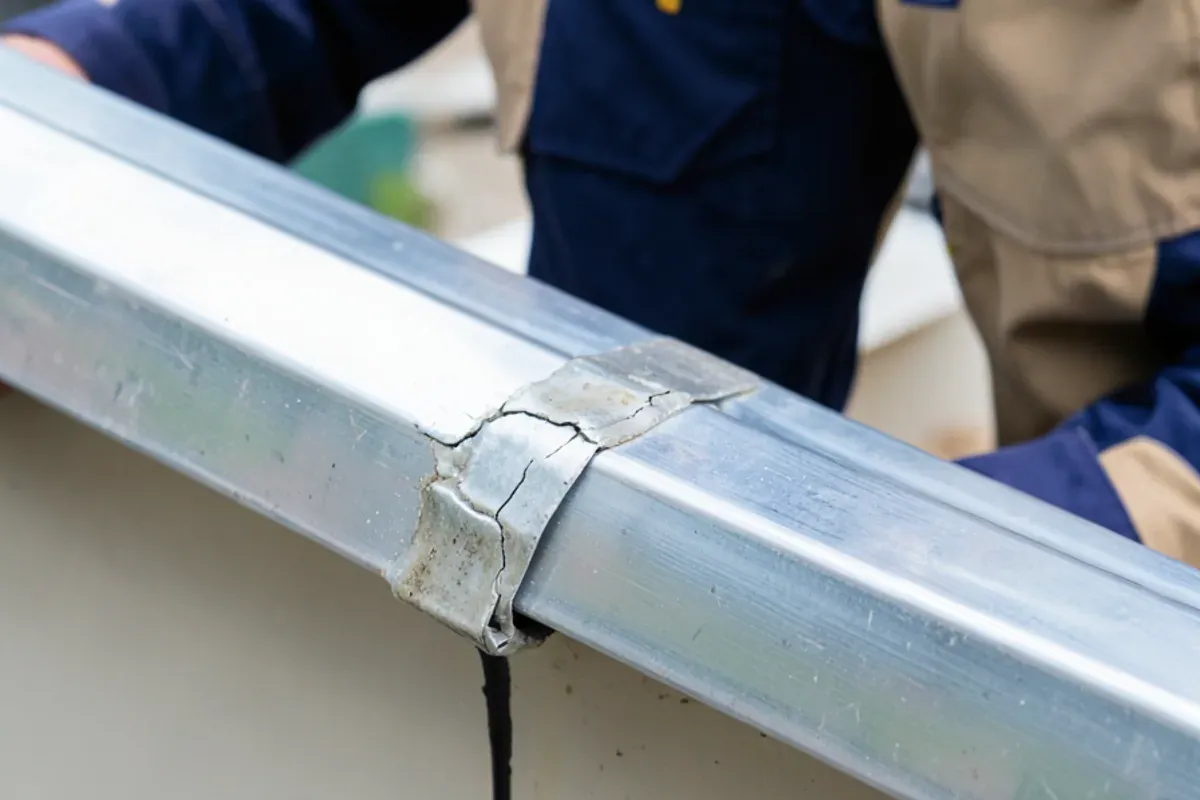
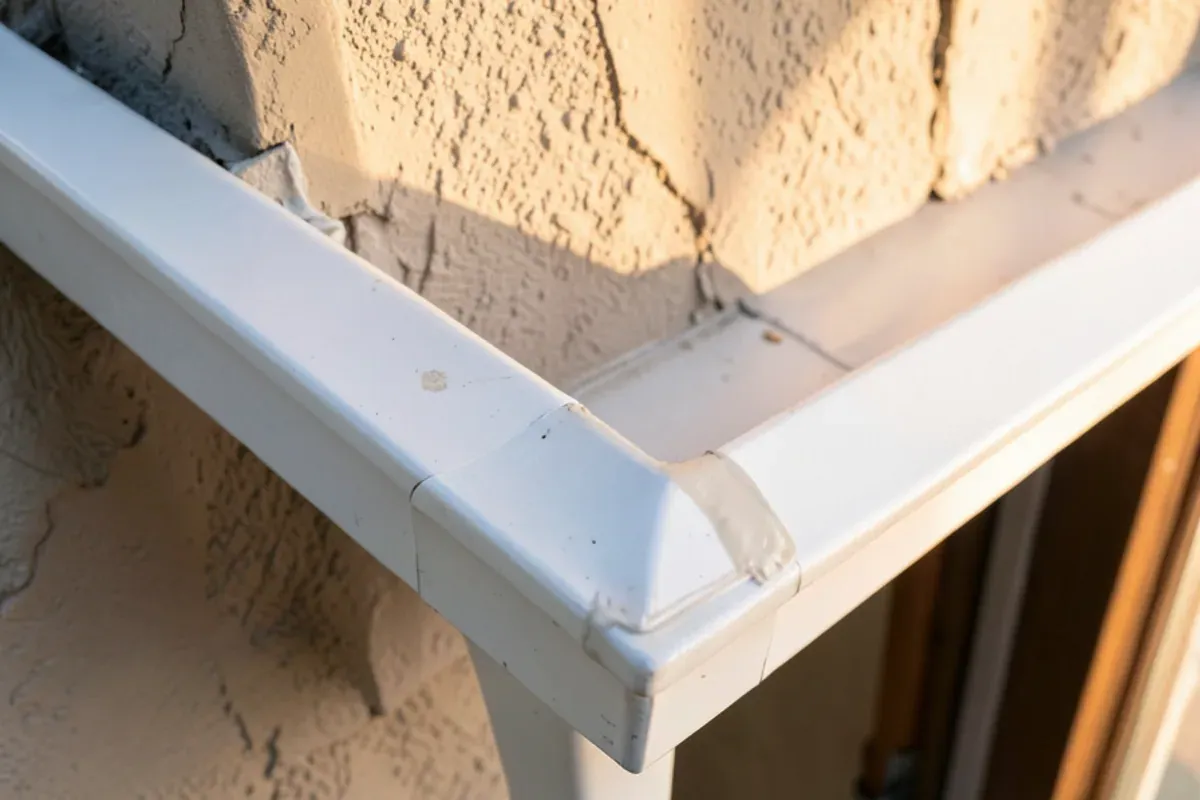
Sectional joints rely on sealant. The sealant cracks and dries in the sun, the pieces shift as the run flexes, and then water finds the gap. You see a drip line on the fascia or water curtaining over the face of the gutter. Our post on fascia rot behind gutters shows what happens when it keeps going. To find a weeping joint, run a garden hose into the high end of the run for a few minutes and watch each connector and corner from below. Water beading at one seam points to the gutter, not the roof.
Seamless gutters still have corner miters and downspout outlets. Those are the spots to check on any run. Fasteners matter too. Hangers spaced too far apart let a run sag, and a sagging run holds water against its seams, which speeds up leaking in either type. Spacing of roughly every two feet is common, but follow the installer's spec and the gutter's weight.
Leaks at joints are also often mistaken for roof leaks. If water stains appear along an exterior wall or on ceilings near the eave, look at the gutter and fascia before assuming the roof is failing. Sorting the two apart is part of what a good inspection does.
How is a seamless gutter installed?
The process explains why joints are so few.
- Check the fascia and roof edge. Soft boards or a sagging eave get fixed first.
- Measure each run. Lengths, corners and downspout locations are marked.
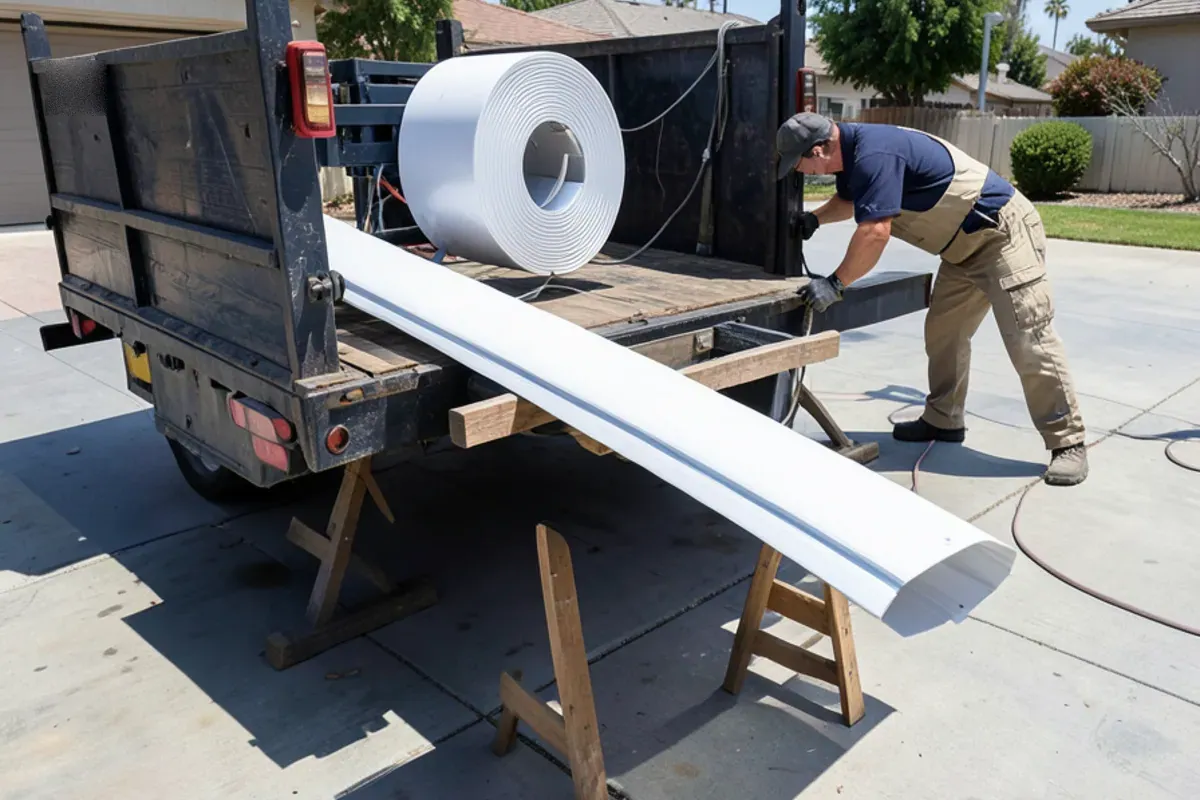
- Roll the gutter on site. A forming machine shapes flat aluminum coil into a gutter profile to the exact length, with no joints along the straight run.
- Cut and seal the corners. Corner miters are cut and sealed, since these stay as joints.
- Hang with proper spacing. Hangers go on at a consistent spacing, and the run is set with a slight slope toward each downspout.
- Fit outlets and downspouts. Outlets are sealed, downspouts are attached and extensions carry water away from the foundation.
- Test with water. A hose test shows slow drains, drips at corners and low spots.
Installers commonly pitch a run a small amount, often about a quarter inch per ten feet, but follow the installer's spec for your roofline. Our gutter installation page covers the full process, and the seamless gutters page covers the product.
Should you pick 5 inch or 6 inch gutters?
Five inch gutters are the long-standing standard and handle most single-story homes. Six inch gutters hold more and shed water faster, which helps on long roof planes, big valleys or two-story walls. Torrance gets about 14 inches of rain a year, and the big winter days dump a lot at once. If your gutters have overflowed in the past, go bigger. Downspout size and number matter as much as gutter width, so read our downspouts and roof drainage page.
When does repair beat replacement?
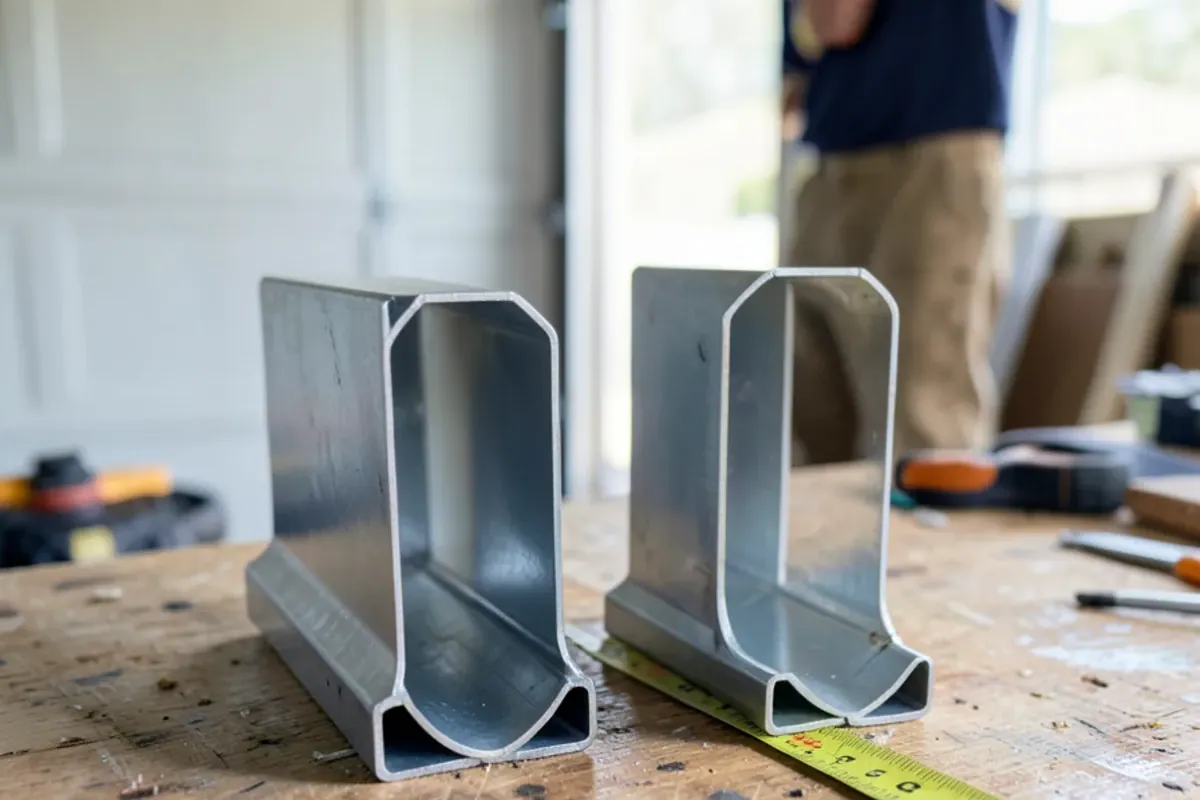
Not every leaking seam means a new gutter. If the run is straight, the fascia is sound and only one or two joints are weeping, resealing is the sensible fix. If seams are leaking along most of a run, if the run is sagging or pulling away, or if the gutter has dents and splits, replacement is better value than chasing individual drips. Replacing sectional with seamless is also a sound upgrade when a run has been resealed more than once.
A useful test is to count how many joints have failed and ask whether the cause is old sealant or a movement problem. Old sealant is a repair. Movement, such as sagging hangers or a settling eave, needs the cause corrected first. Our gutter repair page explains typical fixes.
Do aluminum gutters hold up in the South Bay?
Yes. Aluminum does not rust, which matters near the coast, and it is light enough for older fascia boards. Typical life is around 20 years or more in published guides, though sun, ladders and falling branches shorten that. Steel is stronger, but only with a good coating. Copper is a style choice. Vinyl sectional gutters are the cheapest, but sun makes them brittle, and they are not the first pick for a hot, sunny climate like ours.
What we tell customers about gutters
Expert insight from our roofers: gutters are part of the roof drainage system, not an add-on. We look at the fascia behind them first, since rot there changes what we recommend. One Google reviewer described how the gutter system protects the roofline, fascia and drainage around the house, which matches what we see. A seamless run on rotten fascia is wasted money. The same goes for a run hung on a crooked fascia board: it will never drain cleanly.
The trade-off to keep in mind is that seamless costs more per foot and is harder to patch in the middle of a run, while sectional is easier to repair piece by piece but has more places to leak. We also check slope, hanger spacing and where downspouts land, because pooling water at the foundation is the real damage. On a seamless install we ask how long the longest run is, since very long runs need extra outlets or expansion allowance to handle heat movement.
Which gutter type fits your situation?
- Keeping the house long term, long straight runs: seamless.
- Leaking seams on otherwise sound gutters: reseal the joints, and decide again if it recurs. Our gutter repair page covers it.
- Short run, rental, or selling soon: sectional can be fine.
- Large roof sections feeding one gutter: 6 inch seamless.
- Failing fascia: fix the fascia first, then hang new gutters.
If you want a straight answer for your own eaves, a free estimate from a roofing contractor in Torrance will include the measurements and photos you need to decide.