
By the Crown Trim Roofers team · Published · Updated
A skylight is a hole in the roof with a good-looking seal around it. That seal, plus the flashing, does the real work, and both age in the sun. Our skylights hub covers repair, installation and replacement, and this post covers the upkeep that keeps those jobs rare.
What should a skylight maintenance routine include?
Keep it to four parts, each short.
- Glass. Clean it and inspect it for cracks, haze or fog.
- Seals. Check the gaskets and caulk around the frame.
- Flashing. Look at the metal collar that ties the skylight into the roof.
- Surroundings. Check the roof around the unit and the light well below.
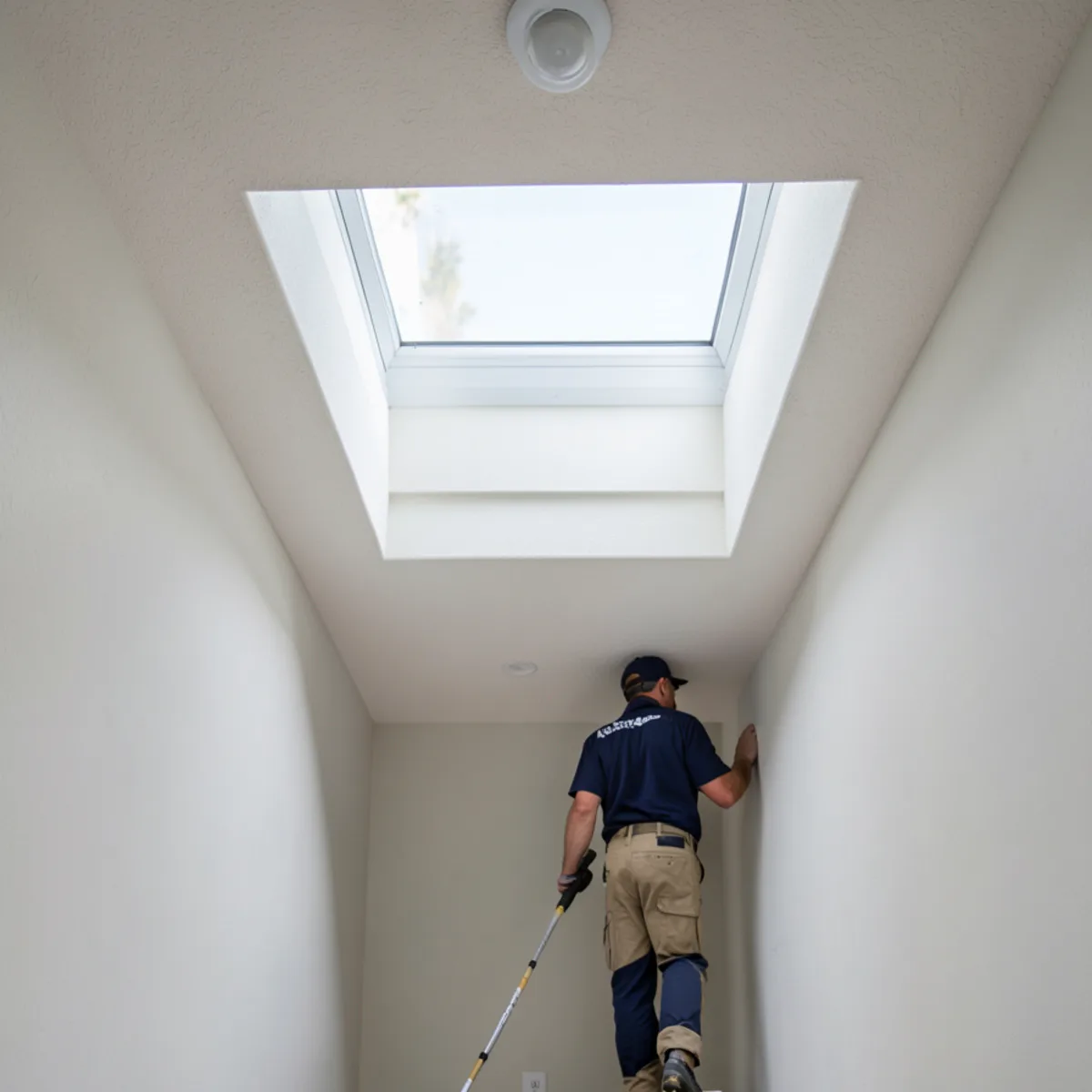
Do the inside work yourself. Do the outside work from the ground with binoculars, or leave it to a professional. Skylights sit on slopes, and wet glass is slippery.
Does the type of skylight change the routine?
It does. Most Torrance homes have one of four kinds, and each fails in its own way.
| Type | Wears out first | Extra check |
|---|---|---|
| Fixed glass | Perimeter seal, flashing | Fog between panes, stains in the light well |
| Opening (venting) | Gasket, hinges or crank | Does it close flush? Any daylight at the frame? |
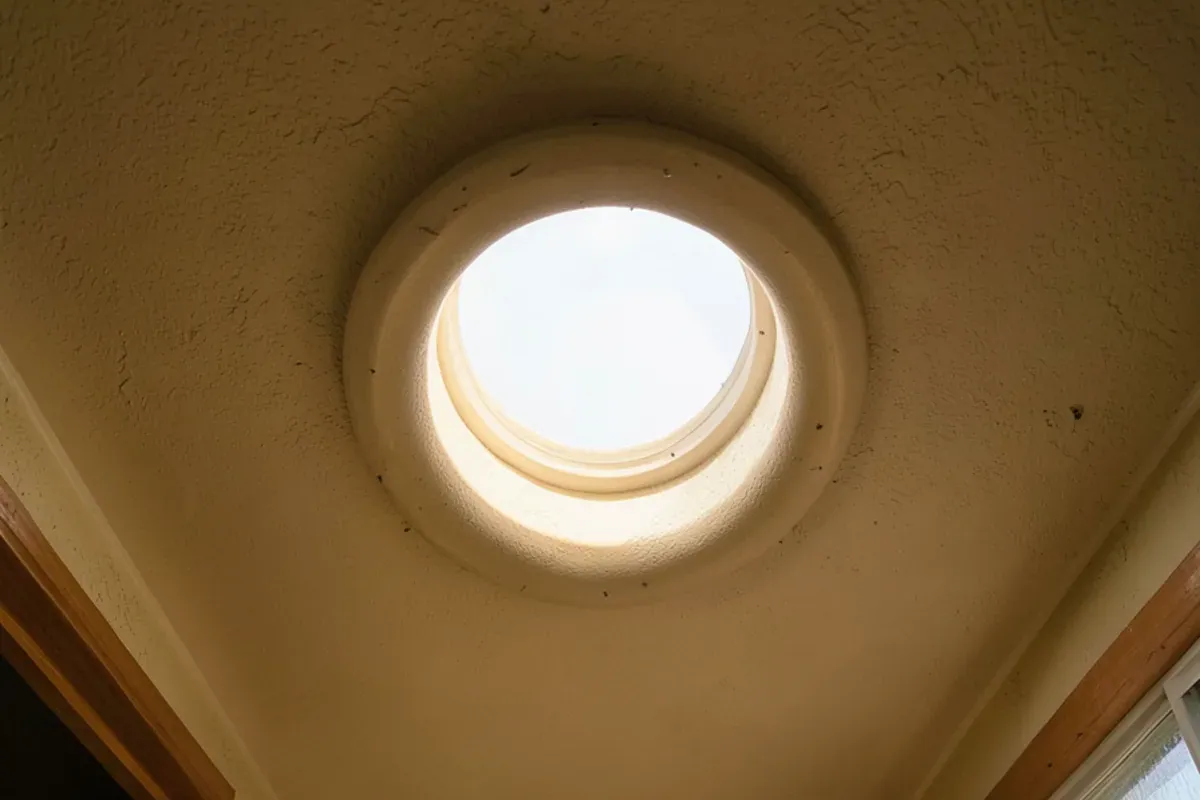
| Plastic dome | The dome itself | Yellowing, crazing, hairline cracks |
| Tubular | Dome, flashing, tube joints | Stains on the diffuser, moisture in the tube |
Older homes more often have domes, which the sun clouds and cracks after many years. Newer retrofits are more often fixed glass or tubular units, and a common issue there is flashing that was never matched to the roof type.
How do you clean a skylight?
Clean the inside with a soft cloth and a mild glass cleaner, using a step stool you trust. For the outside, a long-handled soft brush or a garden hose from a safe spot will do. Do not scrape or use abrasive pads, since scratches cloud the glazing, and do not climb onto the roof to do it.
Plastic domes, common on older Torrance homes, can yellow, craze or crack in the sun. If yours looks hazy or has fine cracks, cleaning will not fix it, and the dome may be due for replacement.
What does a skylight seal check look like?
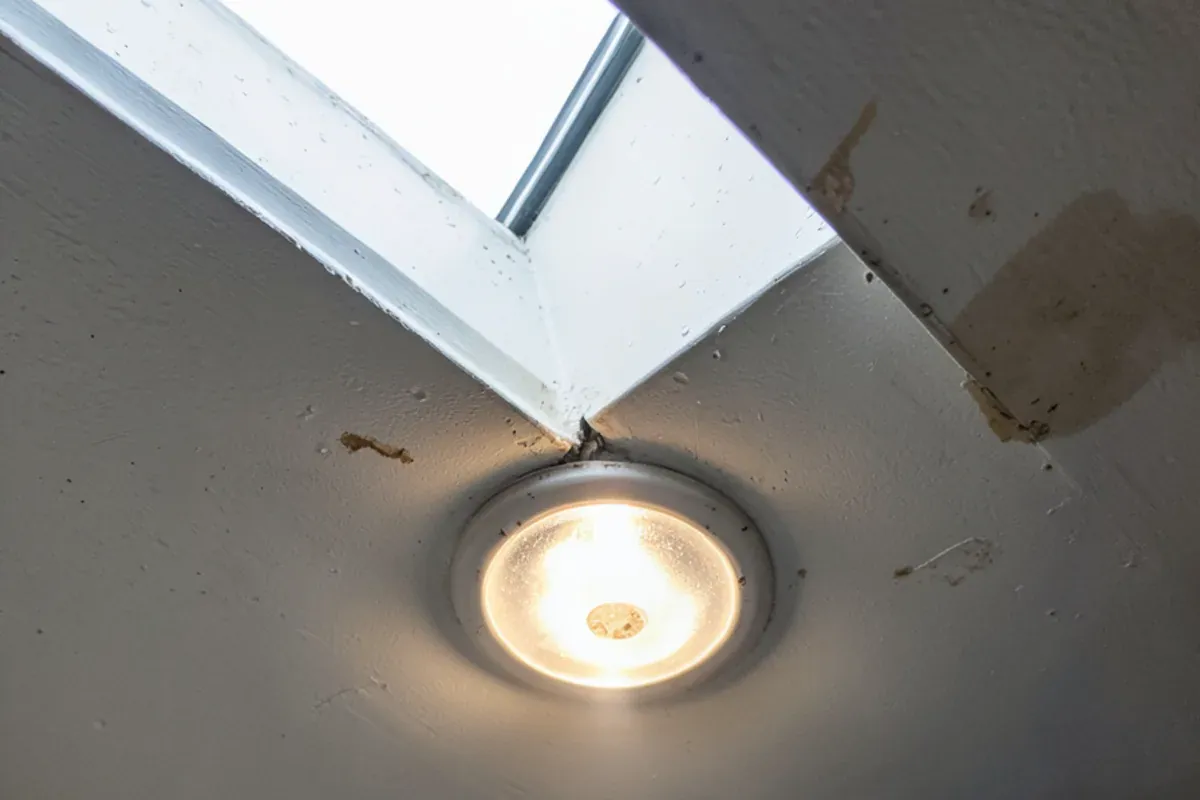
Seals break down quietly. Check them in the morning, while the glass is cool.
- Inside edges. Look for gaps, shrunken caulk or dark lines where the frame meets the drywall.
- Gaskets. Rubber or foam should be flexible, not brittle or cracked.
- Between panes. Fog or droplets mean the sealed glass unit has failed.
- Condensation pattern. Moisture on the inside surface on cool mornings is common. Dripping, or stains below, is not.
- Light well. Press gently on the painted drywall. Soft or bubbled spots mean moisture.
If you see a stain, our guide to skylight leak causes explains how to tell a seal, flashing or condensation problem apart.
What should you look for in skylight flashing?
The flashing is the metal frame around the skylight that directs water around it. It should lie flat and sit snug against the curb. From the ground with binoculars, look for gaps, lifted corners, rust streaks, sealant that has pulled away and shingles or tiles that look disturbed around the unit.
Pay extra attention to the upslope side. Water runs down toward the skylight, so that edge takes the most abuse. A skylight flashing inspection by a professional goes further: we probe the joints, check fasteners and press on the sealant to see whether it is still elastic.
How do you stop debris from causing skylight leaks?
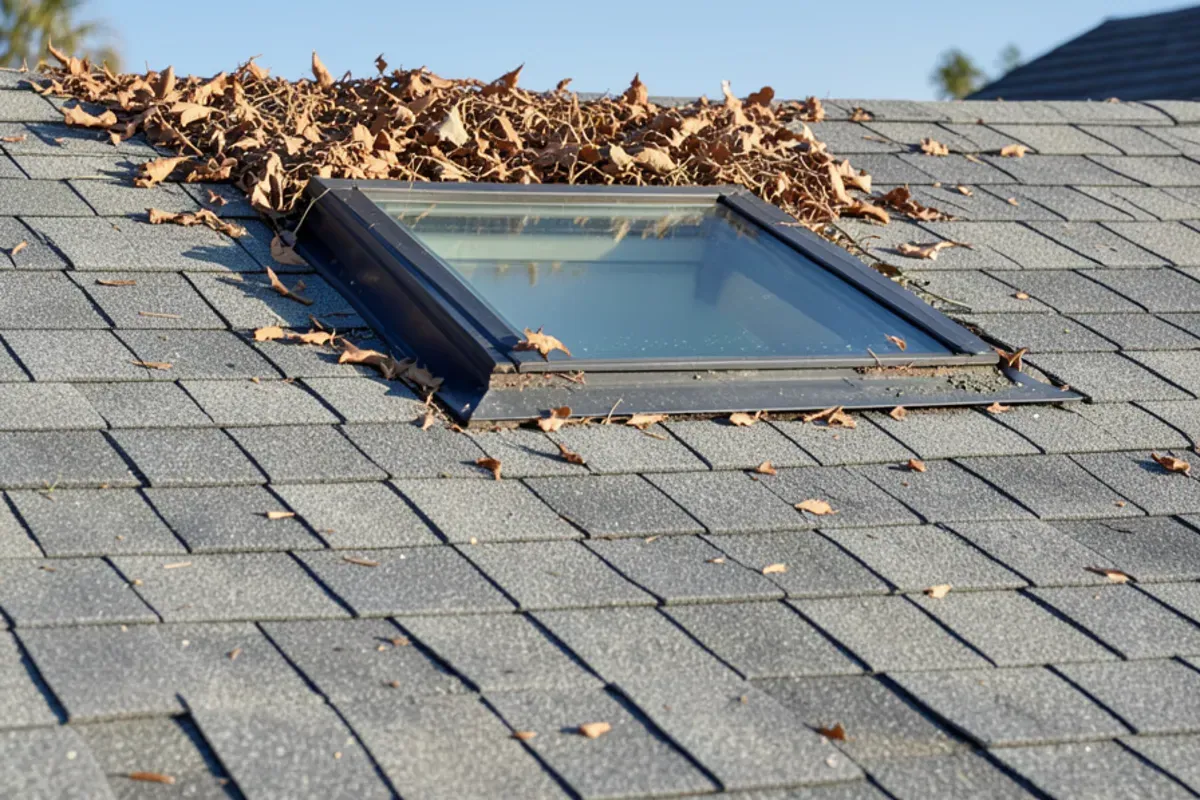
Debris is the quiet culprit. Leaves, needles and grit pile against the upslope curb and hold water against the flashing, so a minor weakness becomes a leak. Prevention is simple:
- Trim branches that drop litter over the skylight.
- Check the upslope side from the ground after windy weeks.
- Keep the roof surface near the unit clear of buildup.
- Keep gutters below the skylight clear so water drains.
- Watch for animal nesting along the curb.
Our gutter cleaning schedule post can help you pair these checks with your seasonal plan.
What is a fifteen-minute check you can do indoors?
This works well on a Saturday morning at the start of each season and keeps you off the roof entirely.
- Switch off the ceiling light and look at the light well from below with a flashlight held low and sideways, which makes faint marks show.
- Check all four corners of the well for brown rings, flaking paint or bubbled drywall.
- Run your hand along the frame to feel for cold drafts or dampness.
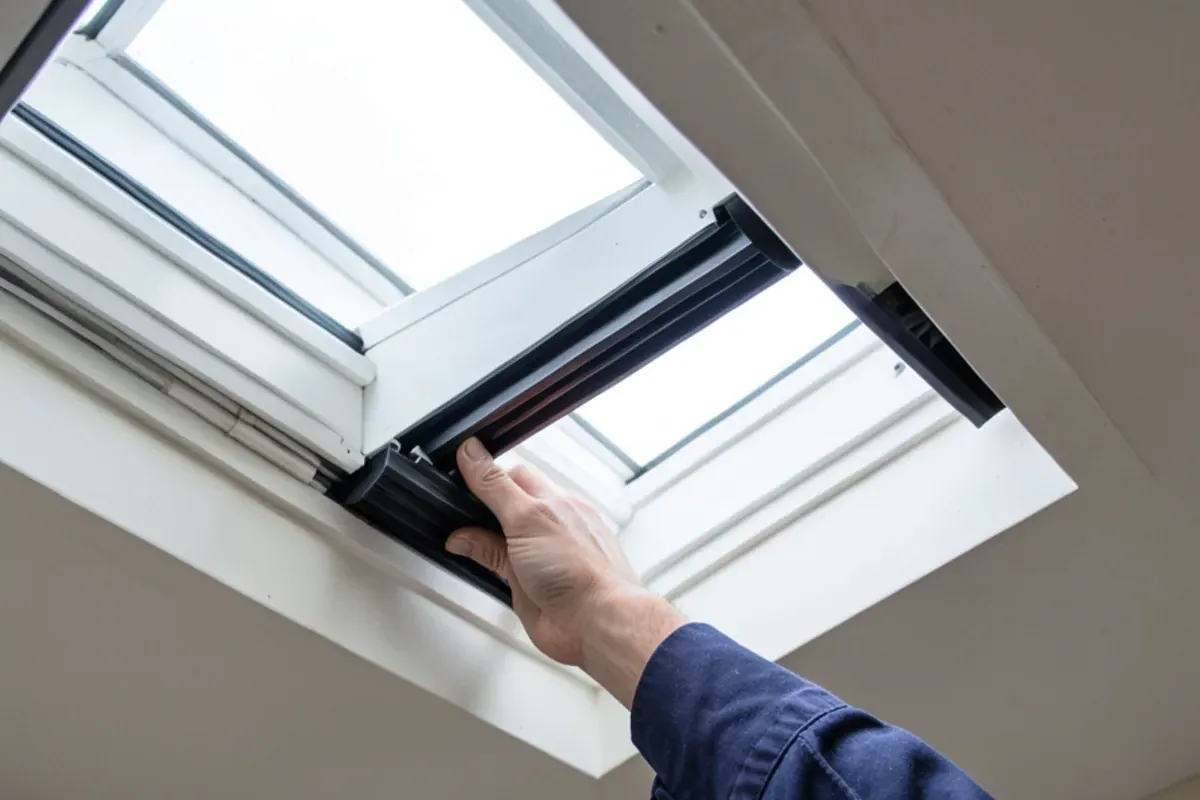
- Open and close an operable unit, and check that the gasket seats evenly.
- Wipe moisture from the glass and see how soon it returns.
- Photograph the glass and light well in the same position and add them to your yearly album.
What should you do after a storm?
Storms are the real test of a skylight. After the first meaningful rain of the season, and after any heavy wind, take five minutes. Look at the light well and the ceiling next to it. Check the attic, if you have access, around the shaft for damp insulation or water marks. From the yard, scan the roof around the unit for debris and lifted shingles or tiles. If something looks off, write the date, take a photo and compare it after the next rain. Active dripping should not wait.
Which skylight checks belong in which season?
| Season | Do this |
|---|---|
| Early fall | Full check inside and from the ground; clear debris before the rainy season |
| Winter | Watch the light well after storms for stains or drips |
| Spring | Clean glass; inspect seals for sun damage |
| Summer | Check for hazing, cracking or fogging after the hottest weeks |
What do roofers tell skylight owners?
This is what we check and what we say when we are called out to a skylight:
- Age matters more than looks. Many skylights on older Torrance homes are over 20 years old, and seals age out even when the glass looks fine.
- Repair first when it will do. A reseal or flashing repair can solve a leak without replacing the unit.
- Replace when the unit is failing. Fogged glass, crazed plastic and repeated leaks are signs the skylight itself is done.
- No pressure. One Google reviewer said we mentioned updating a skylight but were upfront that theirs still had several good years left, with no pressure to upgrade.
We show you photos of what we find and explain repair and replacement options in plain terms. See our skylight repair and skylight replacement pages for details on each path.
When should you call a professional?
Call when you see a stain on the light well, dripping, fog between panes, cracked glazing or loose flashing. Do not wait out a drip, because water that enters at a skylight can reach insulation and drywall quickly. A roofing contractor in Torrance can trace the source, show you photos and tell you whether it is a seal, a flashing fix or the end of the unit. The estimate and inspection are free.
Sources
- US Department of Energy: Skylights
- Best Places: Torrance, California climate
- US Census Bureau: Torrance city, California