
By the Crown Trim Roofers team · Published · Updated
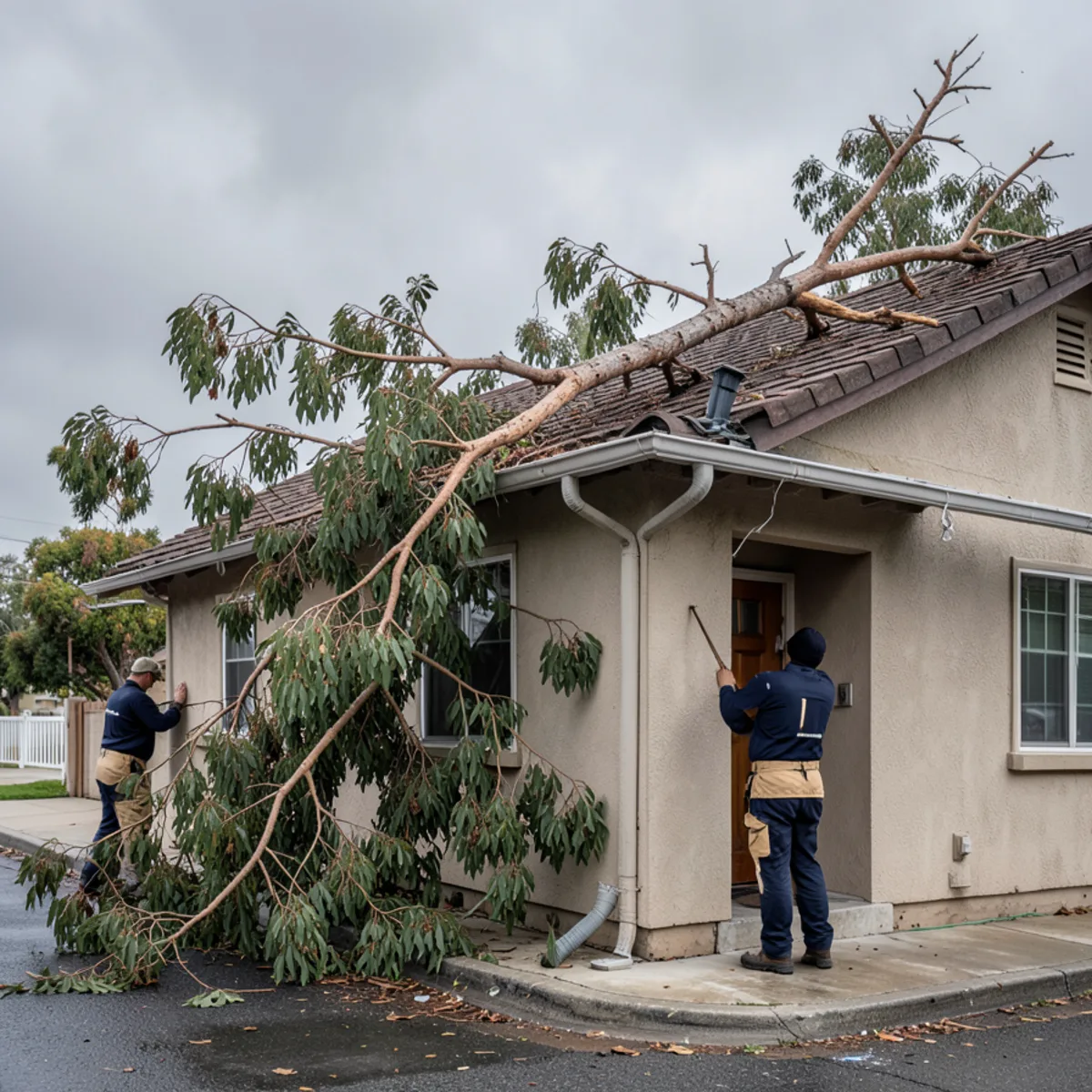
A fallen tree is loud and dramatic, but the damage underneath it is not always obvious. The first day decides whether you end up with a repair or a repair plus water damage. Our fallen tree roof damage page describes how we handle these calls, and the broader emergency roof repair hub covers other urgent roof problems.
Tree fell on roof: what to do in the first hour
Do these in order.
- Get everyone out of the damaged area. If the ceiling is sagging, cracks are spreading or you hear creaking, leave the house. Call 911 for injuries.
- Look for downed lines. If any wire is on the tree, the roof, the yard or the street, stay away and call the utility and 911. Treat every line as live.
- Smell for gas. If you smell gas, leave without switching lights on or off and call the gas company from outside.
- Switch off power to the affected rooms at the breaker, if you can reach the panel safely.
- Do not cut or push the tree. It may be supporting damaged framing.
- Cover what you can from inside. Move valuables, set buckets and lay plastic over furniture.
Once everyone is safe, the question becomes whether the home is open to rain.
Who do you call, and in what order?
Several people have a job here, and calling them in the right order saves a day.
| Order | Who | What they handle |
|---|---|---|
| 1 | 911 | Injuries, fire, a structure that looks unsafe |
| 2 | Electric or gas utility | Downed lines, a smell of gas, a damaged meter or service drop |
| 3 | Your insurer | Opening the claim and telling you what they require |
| 4 | A roofer | Inspection, covering the opening, documenting the damage |
| 5 | A tree service | Removing the tree in sections once the roof's condition is understood |
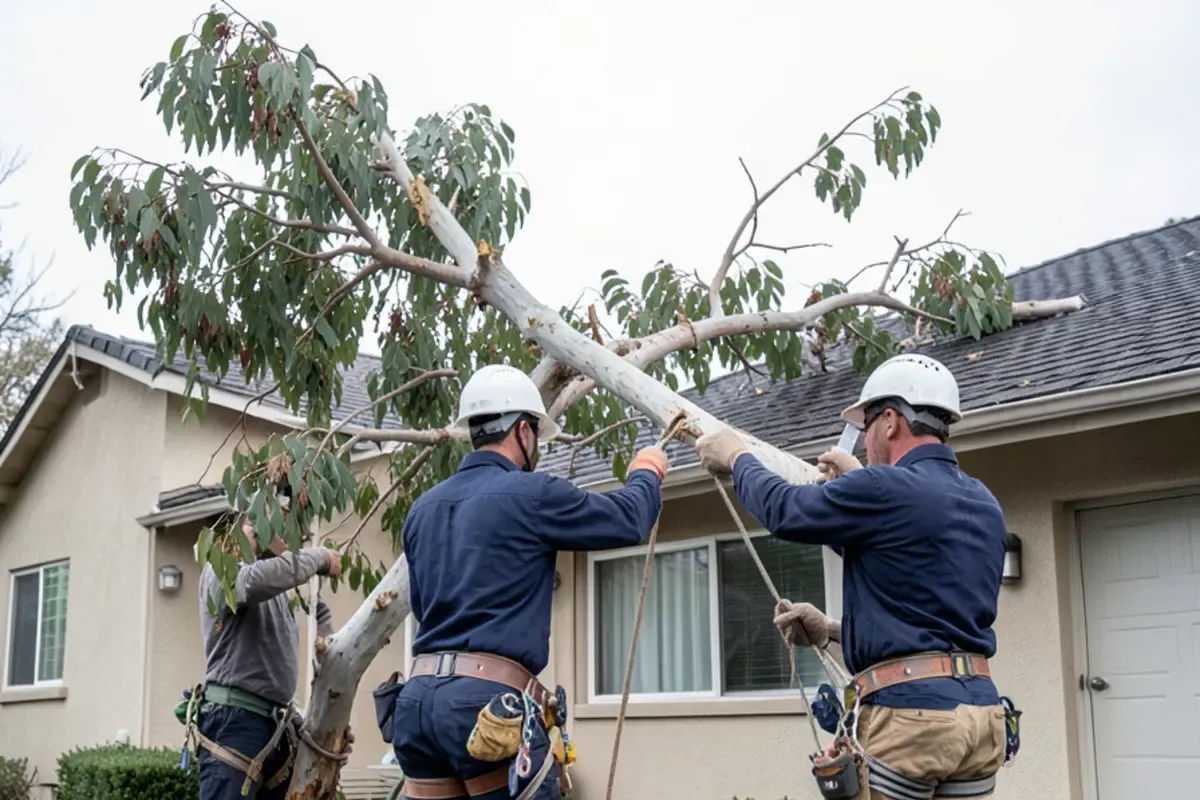
A roofer and a tree service often coordinate on the same visit, because the tree may be holding up what it broke. Tell both what you can see before either one climbs.
How do you protect the home before help arrives?
Water is the second disaster. A hole the size of a window lets in a lot of rain on a bad day, and Torrance gets most of its roughly 14 inches between November and March. Inside, a plastic sheet and a bucket will limit the damage. Outside, a tarp is the right answer, and it should be fastened by someone who knows how to work around broken structure.
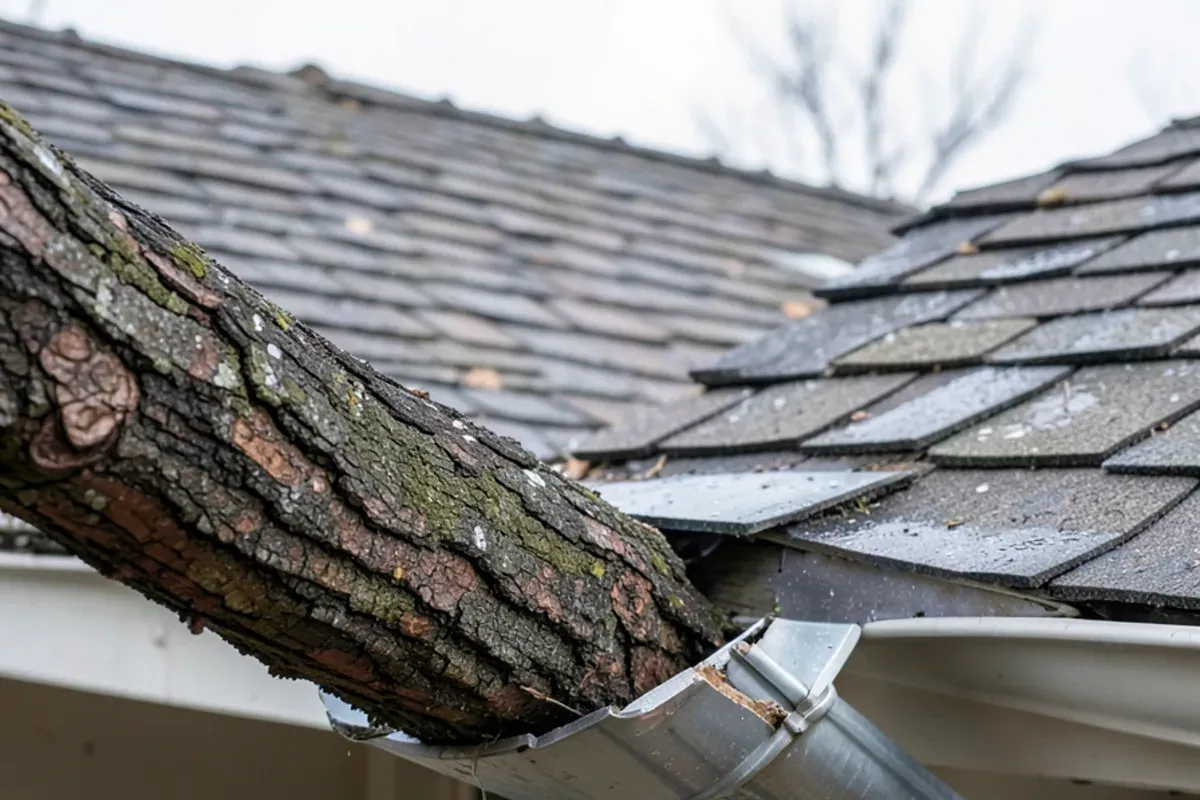
One Google reviewer described a tree hitting the lower front of their roof and damaging the corners and edges of two levels of gutter and soffit. That pattern is typical: impact points land on the roof edge first, so check the gutter line, fascia and soffit along with the shingles or tile. Our fascia, soffit and roof trim page covers that side of the repair.
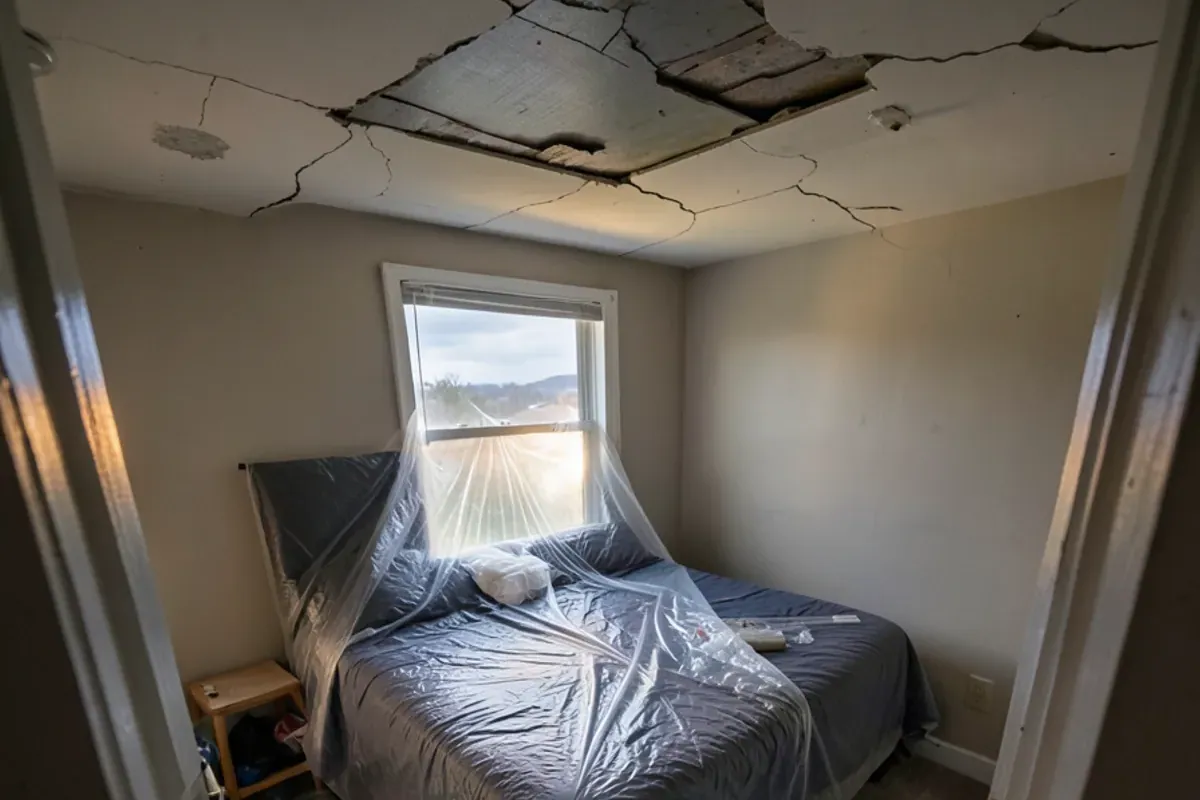
If nobody can come tonight, work from the inside. Close the door of the damaged room, move the bed and electronics out, and lay plastic sheeting over what cannot move. Set a bucket on a towel under any drip and photograph it. Do not staple or screw into a ceiling that is wet or sagging, and stay out from under any bulge.
What should you photograph and write down?
Before anything is moved, record the scene. Insurers want proof of the condition at the time of loss.
- Wide photos of the whole tree and the whole house, from several sides
- Close-ups of the roof surface, broken framing, torn underlayment and any holes
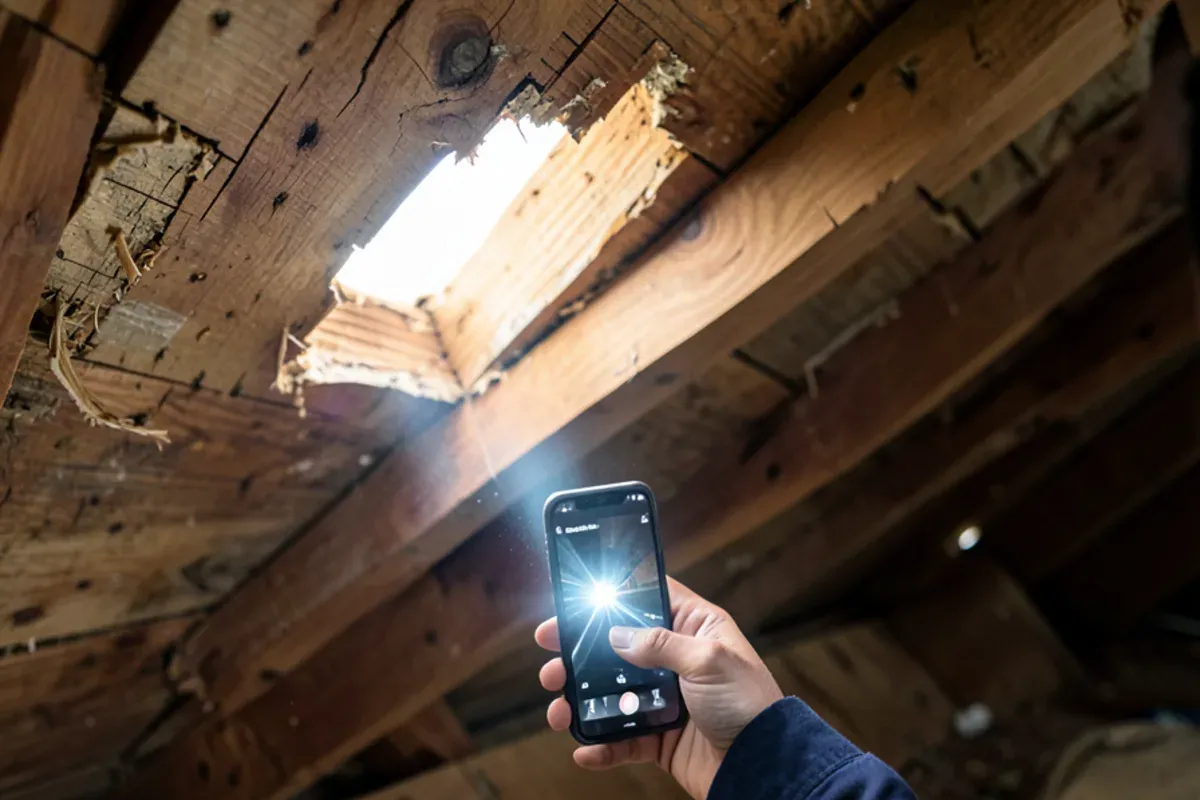
- The attic, if it is safe to enter: cracked rafters, daylight, wet insulation
- Interior ceilings, walls, floors and belongings that got wet
- Date, time and the weather at the time
- Whose land the tree stood on, if known, and whether it looked healthy
We document damage with photos and can be on site for the insurance adjuster's inspection. One Google reviewer said a roofer came out during the insurance inspection so that all the roof damage and exterior issues were noted properly. We do not negotiate claims or advise on coverage. In California only the policyholder or a licensed public adjuster negotiates a claim.
When should you call the insurer?
Call as soon as the home is safe, usually the same day. Most policies treat a falling tree as a covered cause of loss, and the policy generally also covers reasonable steps to stop further damage. Keep every receipt for tarps, emergency repairs and tree removal. The Insurance Information Institute notes that tree-removal coverage often has a dollar limit, so read your policy. You pay your deductible, and a roofer cannot waive it. Our page on roof insurance claims walks through the process.
What should you ask a tree service?
A few questions help protect the roof during removal:
- Will the tree come off in sections, with ropes or a crane, rather than being dropped onto the roof?
- How will they keep debris and equipment off damaged areas?
- Is the work being done before or after the roofer has secured the opening?
- Will they give you an itemized invoice, since your insurer may ask for it?
You can check any contractor's license on the California Contractors State License Board site. Keep the photos you took before the removal, because the damage is harder to read afterward.
What if the tree belongs to a neighbor or the city?
Most of the time, your own policy handles your home. A healthy tree that falls in a storm is generally treated as an accident, not the fault of whoever owned it. The picture changes if a neighbor ignored a tree that was dead, leaning or already cracked and had been warned. If a city street tree is involved, report it to the city. Keep photos of the tree's condition before it fell if you have any.
What an expert roofer checks after a tree strike
This is the list we run through, and what we tell customers:
- The roof deck. Impact often cracks plywood or boards without puncturing the surface. The deck can sag in a way that is hard to see from outside.
- Rafters and trusses. Cracked framing needs a structural fix, and in Torrance that may need a permit. The Building and Safety Division can be reached at (310) 618-5910, and you should confirm requirements for your address.
- Underlayment and flashing. These are torn by branches without being obvious.
- Edges. Gutters, fascia, soffit and rake boards.
- Neighbors' sides. Water often tracks along rafters into rooms you would not expect.
We explain repair and replacement options in plain terms and show you photos of what we find. A repair first, when a repair will do. Some tree strikes end with one section rebuilt, not a whole new roof.
What happens after the first 24 hours
Day two is about sequencing: a tree service takes the tree off in pieces, the roofer inspects what was underneath and confirms the tarp, and the insurer's adjuster visits. Permanent repair follows approval. Dry out wet insulation and drywall quickly, because the EPA recommends drying within 24 to 48 hours to limit mold. If you are in the South Bay and need someone to look at the roof, a roofing contractor in Torrance can arrange a same day or next day visit.