
Fallen Tree Roof Damage in Torrance, CA
- 4.8★ from 73 Google reviews
- Free estimates
- Same day or next day service
- Photos of what we find
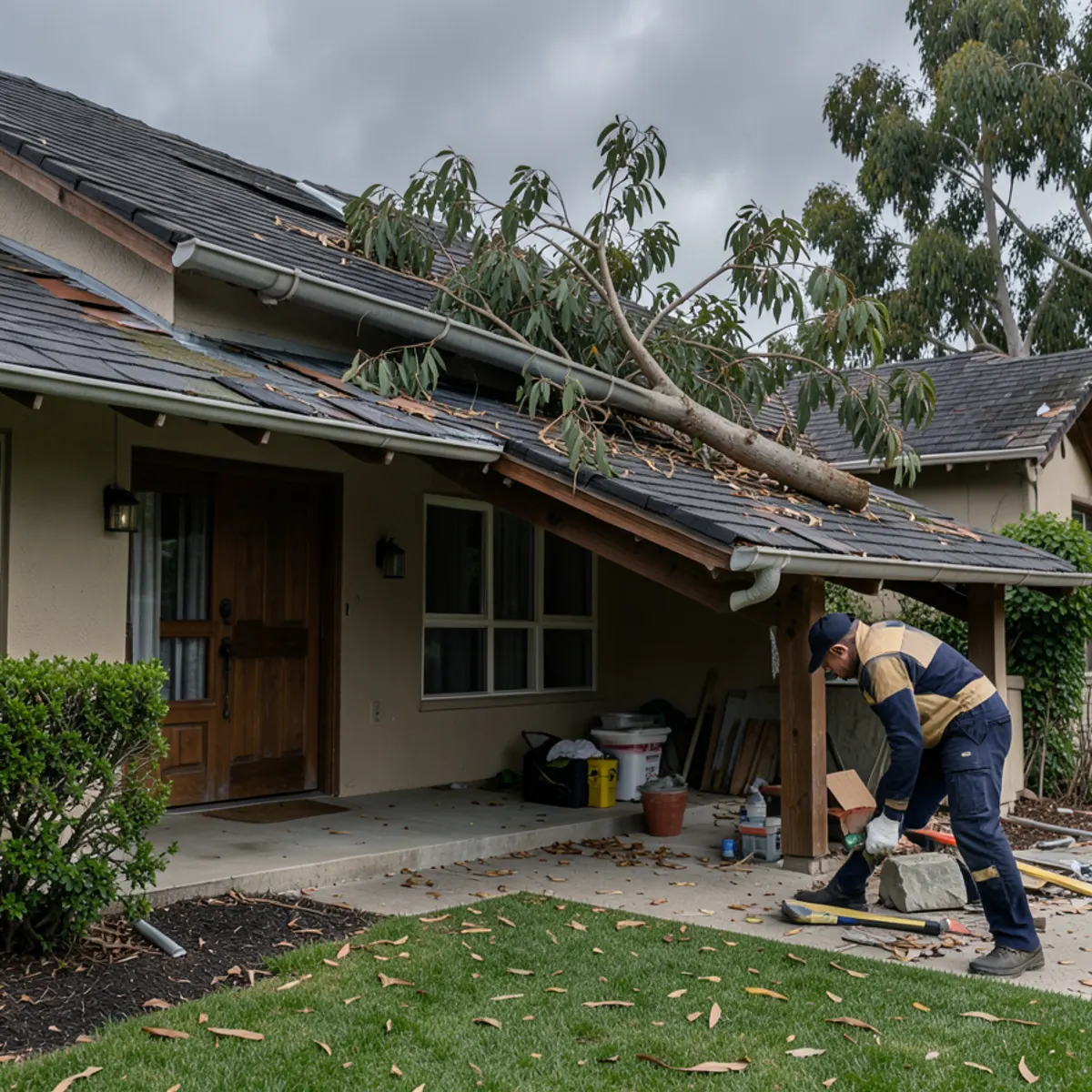
A tree strike is a roofing problem and a structural problem at once. Shingles and gutters are the visible part. Rafters, ridge, soffit and fascia take the load. This page is part of our emergency roof repair service, and it covers the first hours and the repair that follows. For the paperwork side, see roof insurance claims, and for the cover that goes on first, see emergency roof tarping.
Tree on roof emergency: what to do in the first minutes
Safety comes before the roof.
- Move everyone out of the rooms under the damage. A strained roof can shift.
- Keep clear of downed lines. Treat any wire near the tree as live and call 911 or the utility.
- Photograph from the ground, including the tree, the roof and any damage you can see inside.
- Put buckets under drips and move belongings away from wet areas.
- Do not climb up or cut the limb yourself. Cutting a loaded limb can drop it where it should not go.
- Call us for a visit, then your insurer.
Our blog post on the first 24 hours after a tree hits adds a longer checklist.
What are the signs a tree strike did more than break shingles?
In South Bay storms, the usual causes are wind gusts on a tree with a weak limb or a trunk standing in saturated winter soil, and a mature tree overhanging the roofline. Signs that the damage runs deeper than the surface: a sagging ridge or roof plane, doors or windows that suddenly stick, new ceiling cracks, daylight in the attic and a ceiling that drips after the storm has passed. A limb that punches through shingles has usually also hit what is underneath. We look at:
- The roof surface for punctures, torn shingles and cracked tile
- The deck from the attic, for splits, soft areas and daylight
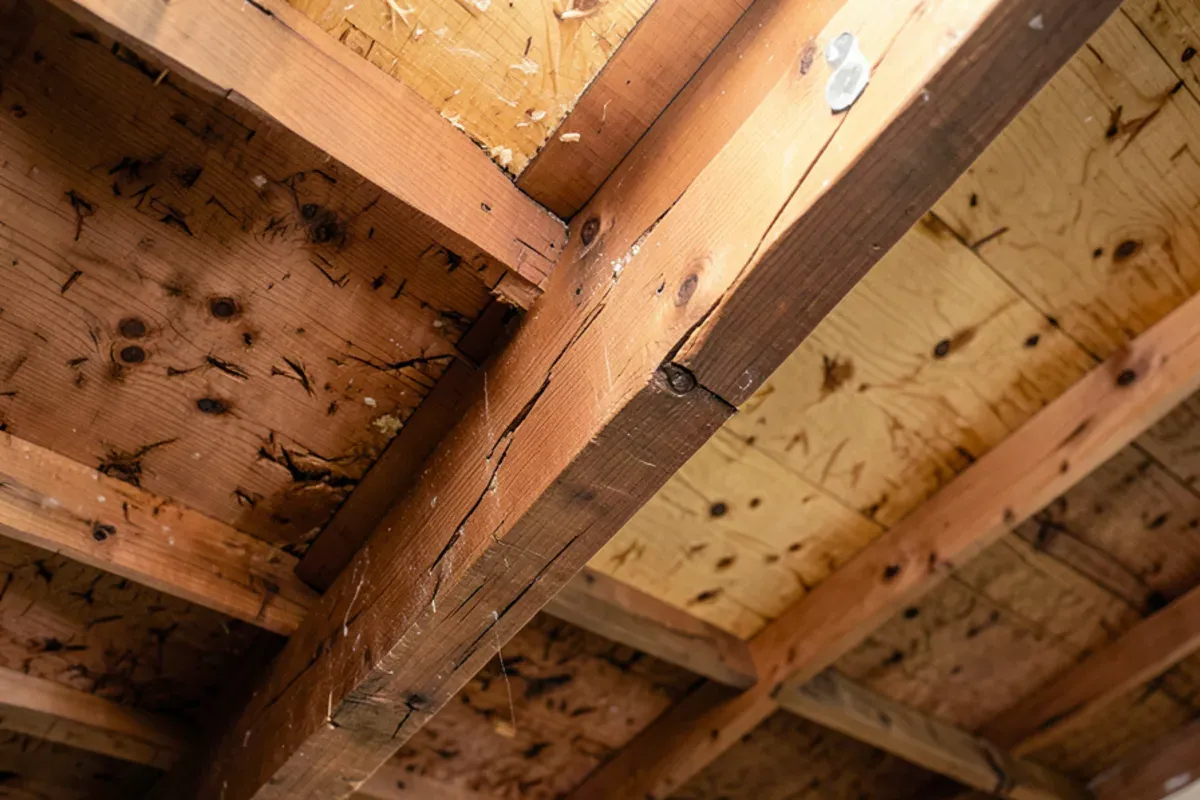
- Rafters and ridge for cracks or sagging
- Interior ceilings and insulation for water
- The area around the strike for secondary damage, such as loosened flashing
Where the structure looks compromised, we say so and recommend a framing repair before any roofing. We do not paper over a cracked rafter with new shingles.
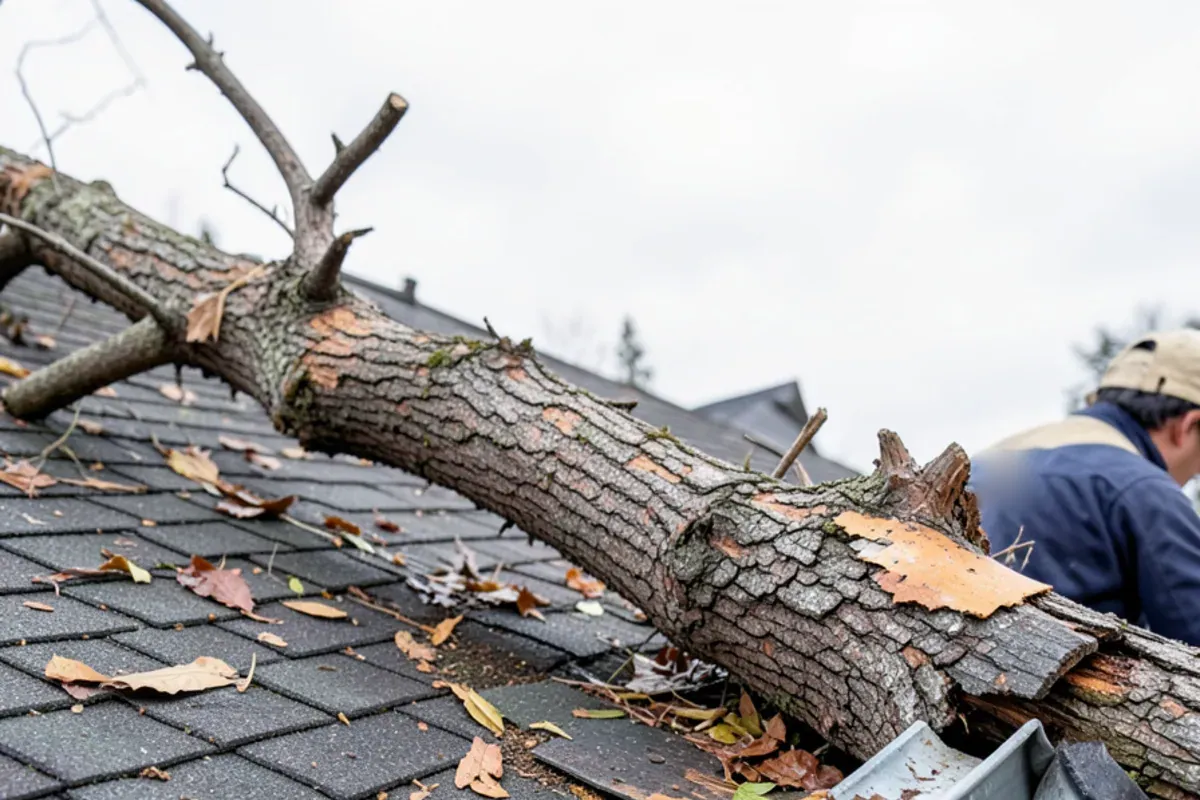
Storm tree damage to the roof: removing the load and covering the hole
The order matters.
- Tree crew first. The limb or trunk comes off with the right equipment. We coordinate timing so our work starts when the load is gone.
- Open the area. Broken shingles, tile and splintered decking are cut back to sound material.
- Cover. If rain is coming and the permanent repair cannot start, we tarp or board up the opening.
- Repair the structure. Cracked rafters are sistered or replaced as needed, and damaged decking is cut out and replaced.
- Rebuild the roof layer. New underlayment goes down, then shingles, tile or metal to match the surrounding material as closely as we can.
- Finish the edges. Flashing, drip edge, fascia and trim are restored.
Because every tree strike is different, the scope comes after the inspection, not before.
What does a tree damage repair include?
A tree strike repair is bigger than a shingle job, so the scope is written out before work starts. Depending on what the inspection finds, it includes:
- Dated photos of the roof, attic and eaves, covering every layer the limb touched
- A temporary cover or board-up while the tree crew works or rain is forecast
- Cutting back broken shingles, tile and splintered decking to sound material
- Framing repair, such as a cracked rafter reinforced with a new board or replaced
- New underlayment, then roofing matched as closely as we can to the surrounding material
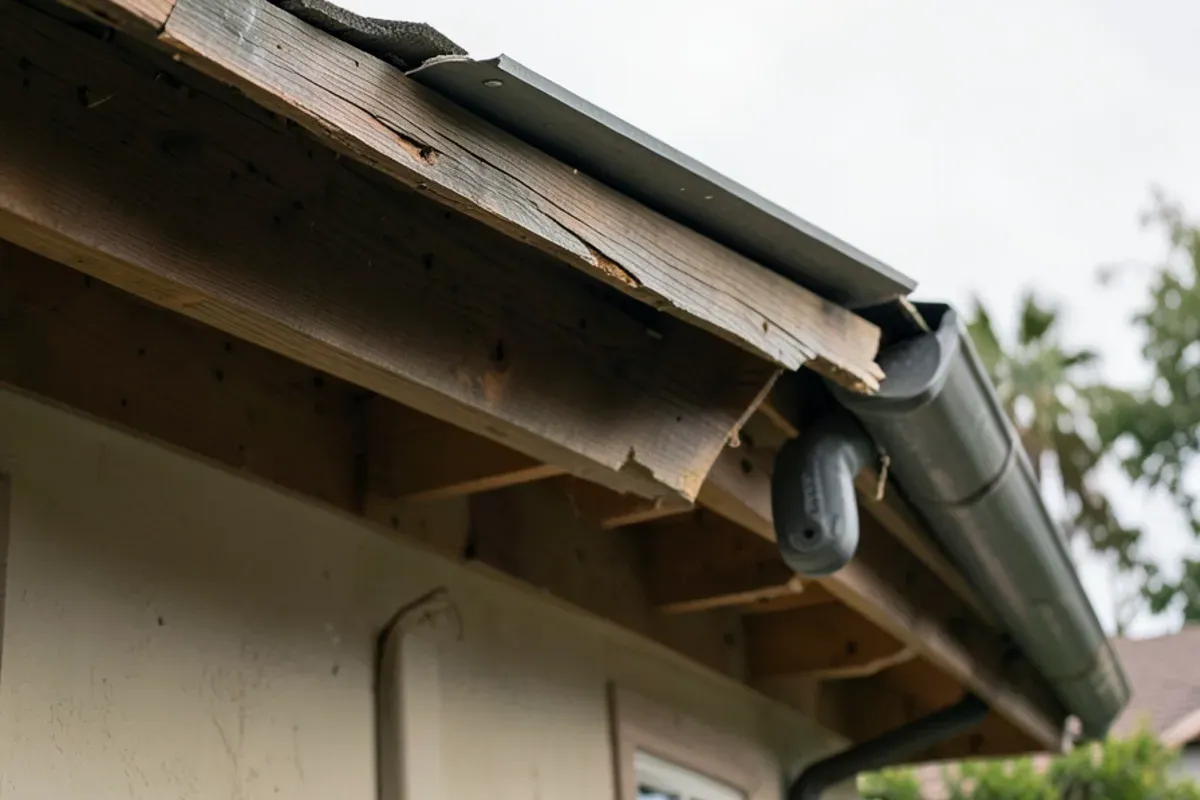
- Gutters, soffit, fascia and drip edge repaired or replaced where the limb hit
- Cleanup of splinters, shingle scraps and leaves, with landscaping and driveways protected
You see the photos and options first. A repair comes first when a repair will do.
Roof and gutter tree damage, and why soffit gets hit
When a tree hits the lower edge of a roof, it takes the eave with it. One Google reviewer described exactly that: "After a tree hit the lower front area of our roof, the corners and edges of two levels of gutter and soffit were damaged." The roof edge is the lowest and most exposed point, and branches often land there.
Typical eave damage includes:
- Bent or pulled-off gutters, and damaged downspouts
- Torn or cracked soffit panels that let in rain, birds and rodents
- Split or rotted fascia boards
- Cracked rafter tails behind the fascia
- Torn drip edge that lets water run behind the gutter
We repair the roof and the eave together, so a new roof does not drain into a broken edge. Our gutter replacement guide explains how gutters are priced.
Fallen tree insurance claim: what we do
Damage from a falling tree is often claimed, and whether and how much is paid depends on your policy and who owns the tree. We photograph every layer of damage, including the roof, attic and eaves, and can be on site for the adjuster's inspection. We do not negotiate claims, advise on coverage or act as an adjuster. In California, only the policyholder or a licensed public adjuster negotiates. You pay your deductible, and we do not waive, absorb or rebate it. Ask the California Department of Insurance if you are unsure of your rights.
What decides the price of tree damage repairs
The estimate is free, and we do not post prices. For context, 2026 published cost guides place most roof repairs between $300 and $1,500, which is market data and not a quote. A tree strike can land above that, because framing and eave work add to it. The cost moves with:
- The size of the opening and the area of roofing that must come off
- Whether rafters, ridge or decking are cracked
- Gutter, soffit and fascia damage
- Roof pitch, access and height
- Whether a temporary cover is needed while the tree is removed
- How closely we can match existing roofing
Two things set a tree job apart from other storm repairs in Torrance. The first is framing, since a cracked rafter or ridge needs repair before roofing goes back on, and nobody can see that until the limb is off. The second is sequence: a tree crew, a roofer and an adjuster may all need access, and a second trip is a real cost. Tile and metal need matching material, which can add time.
Permits and licensing after a tree strike
Roofing repairs that include rafters, ridge or decking replacement can need a permit, even when the cause was a storm. That comes from City of Torrance Building & Safety at (310) 618-5910, LA County Public Works in unincorporated areas such as West Carson, or LADBS in the City of LA. Confirm the rule for your address with the permitting office. Tree removal is its own trade, so confirm that crew's license and any city tree rules too. For roofers, look up the license on the California Contractors State License Board site. State law requires one for most jobs over $1,000.
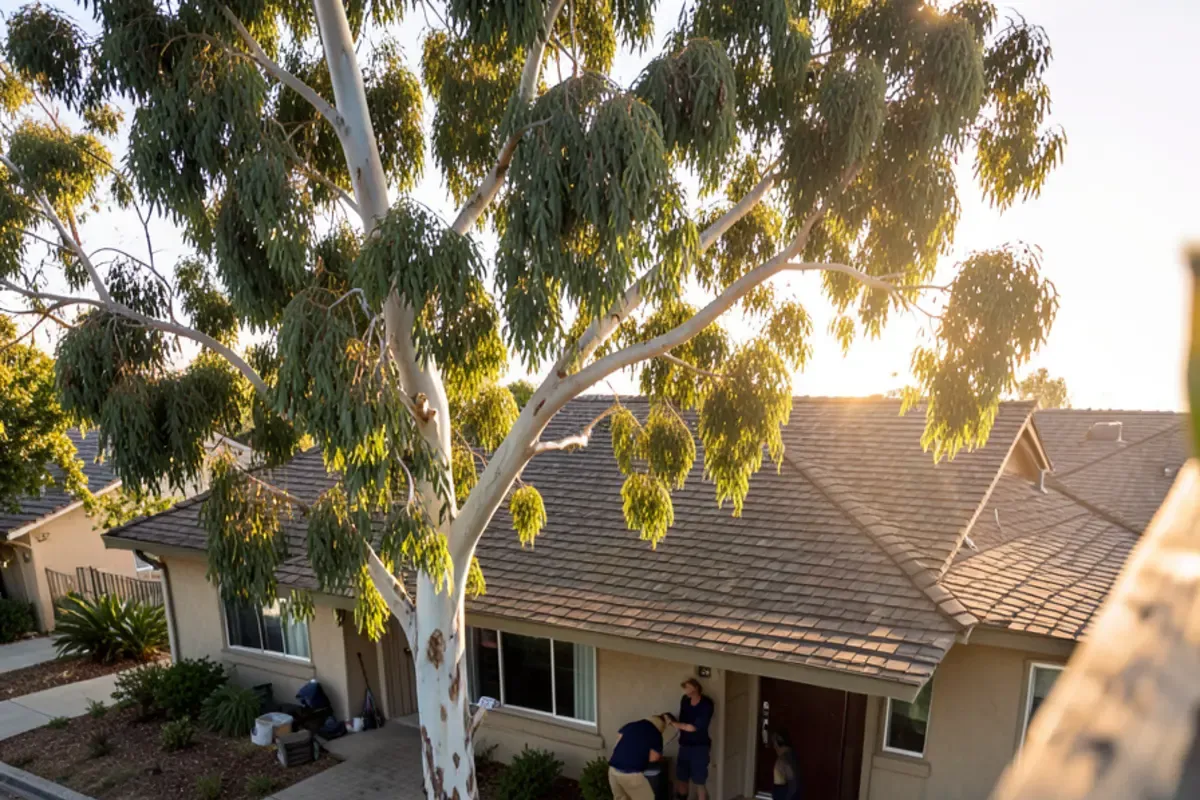
Why Crown Trim for tree damage
- Same day or next day service when a tree has left the roof open, with an honest answer about timing on the phone.
- Free inspection, with photos of the roof, attic and eaves, so you see the full extent before you choose anything.
- We handle the roof, gutters and trim together, so the repair is whole.
- We schedule around the tree crew so the limb is off before we open the roof.
- We document damage and can be on site for the insurance adjuster's inspection.
- Thorough cleanup, protecting landscaping and driveways.
- Reviewers rate us 4.8 stars across 73 Google reviews.
Tree damage across the South Bay
We repair roofs hit by trees in Carson, Redondo Beach and Rancho Palos Verdes, and in Torrance. Older neighborhoods with mature trees growing near rooflines see more strikes in strong wind. Check large limbs over your roof before winter, and see our Santa Ana wind check for what to look at after a blow.
Where we do fallen tree roof damage around Torrance
Each place brings its own version of this job.
- Rancho Palos Verdes: Mature trees and steep hillside lots make tree-crew access and crane placement part of the plan before roofing starts.
- Rolling Hills: Acre-plus lots with mature oaks and long roof runs mean a fallen limb can open a large area and take out outbuilding roofs too.
- Rolling Hills Estates: Horse-property lots with big trees close to ranch rooflines see limb strikes in hillside wind, with long driveways for equipment.
- Palos Verdes Estates: Olmsted-planned streets are lined with mature trees over 1920s clay tile roofs, so a strike needs careful tile matching.
- Lomita: Compact bungalow lots put mature trees within a few feet of eaves, so limbs reach soffit and gutters on contact.
- Carson: Mid-century tract blocks have street trees grown up beside original rooflines, and wind brings limbs onto eaves and carports.
- West Carson: Mid-century homes around Harbor-UCLA sit under LA County permits, which apply when a tree strike reaches rafters.
- Redondo Beach: Older Redondo streets mix mature trees with coastal wind, and salt-weakened fasteners at eaves give way when a limb lands.
- Gardena: Established post-war streets have large trees beside small ranch homes, and limb strikes cluster at the eaves.
- Downey: Large post-war ranch homes under mature tree canopies make limb and branch strikes a recurring risk.
What customers say about this work
Crown Trim Roofers holds 4.8 stars from 73 Google reviews. Read all reviews
“After a tree hit the lower front area of our roof, the corners and edges of two levels of gutter and soffit were damaged.”
“The second time, our main home had storm damage and we needed a new roof.”
“I found roof damage from an old satellite dish that had left a large hole, and since insurance would not pay for it, I was very stressed and worried about the cost.”
Fallen Tree Roof Damage: common questions
What should I do first after a tree hits my roof?
Get everyone out of any room under the damage and stay away from downed power lines. Call 911 if anyone is hurt or lines are involved. Photograph from the ground, shut off water or power in affected areas if safe, and do not climb up or cut the limb yourself. Then call us for a same day or next day visit.
Do you coordinate with tree removal crews?
Yes. We schedule around the tree crew so the limb comes off before we open up the damaged area, and we protect the roof while it is being removed. If you have not arranged a crew yet, we can talk through the order of work. Tree removal itself is a separate trade, and we do not perform it.
Will my insurance cover the roof if a neighbor's tree fell on it?
Coverage depends on your policy and the circumstances, and who is responsible can affect the claim. Photograph everything, report promptly and ask your insurer. We document the damage and can be on site for the adjuster, but we do not advise on coverage. You pay your deductible. The California Department of Insurance has guidance for policyholders.
Can a damaged roof be tarped before the tree is removed?
Sometimes, but not if the limb is still resting on the roof. The tree comes off first, and the tarp goes on right after. In the meantime, we advise on protecting the inside of the house. If rain is on the way and the limb cannot be moved yet, we plan the safest sequence with you and the tree crew.
Can a tree strike damage the house without a visible hole?
Yes. A heavy limb can crack rafters, loosen the ridge, crush gutters and push the soffit or fascia out of line without breaking through the roof. Cracked framing is not always visible from outside. We check the attic and the eaves for splits, sagging and daylight before we call the damage cosmetic.
Related services and guides
Roof Insurance Claims
Emergency Roof Tarping
A Tree Hit Your Roof: The First 24 Hours
Roof Leaking in a Storm? What to Do First in Torrance
Emergency Roof Tarping: How Long a Tarp Really Lasts
Where we work: Carson, Redondo Beach, Rancho Palos Verdes, Gardena and the rest of our service areas.
Tree or branch on the roof? Call before the next rain.
Call first. A roofer picks it up from there.