
Standing Seam Metal Roofs in Torrance, CA
- 4.8★ from 73 Google reviews
- Free estimates
- Same day or next day service
- Photos of what we find
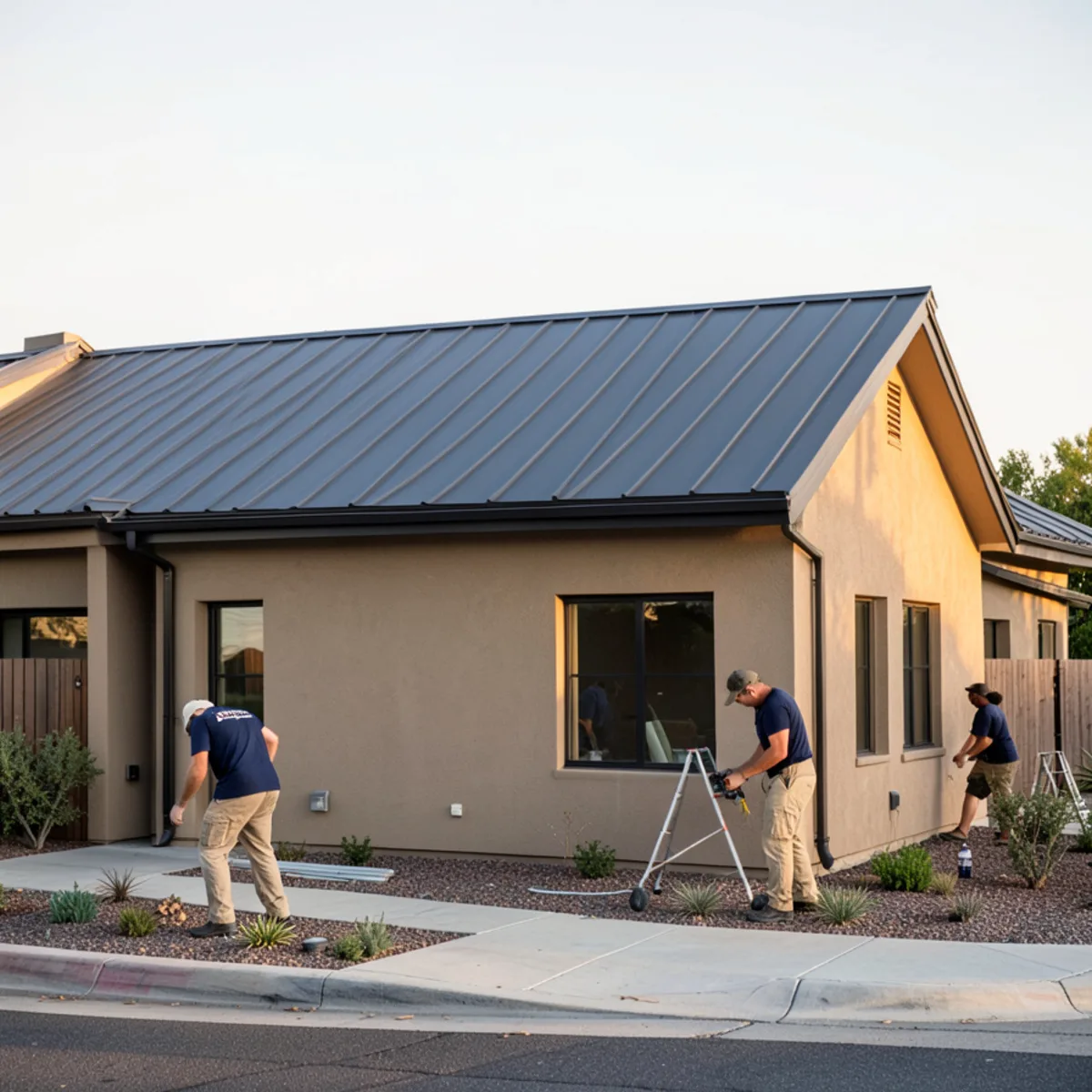
A standing seam metal roof in Torrance is a premium choice, and it suits homes where appearance, leak resistance and solar plans all matter. As a roofing contractor in Torrance, we explain the system, the pitch limits and what changes the price before you commit. This page covers the details, and our general metal roofing page compares the other panel types.
What makes standing seam roof installation different?
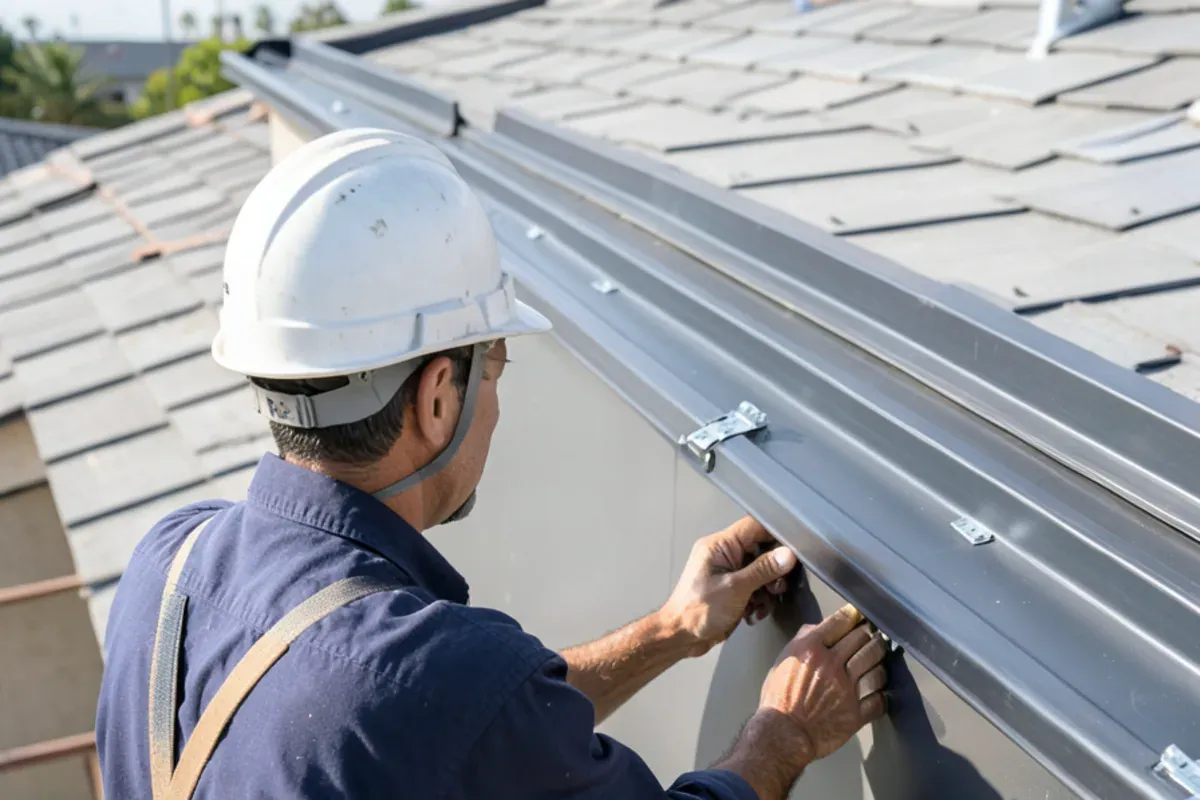
A standing seam panel runs from eave to ridge, with a raised seam along each edge. Panels lock to each other at the seam. They are held down by clips beneath the seam, not by screws through the face. That is the difference: no row of exposed screw heads with rubber washers waiting to age.
Two main seam types:
- Snap-lock. Panels snap together. Faster to install, and fine for moderate slopes.
- Mechanically seamed. A tool crimps the seam closed. More weather-tight, and made for lower slopes.
Panels are formed to the roof length and expand and contract on the clips, so the roof can move with temperature without opening up.
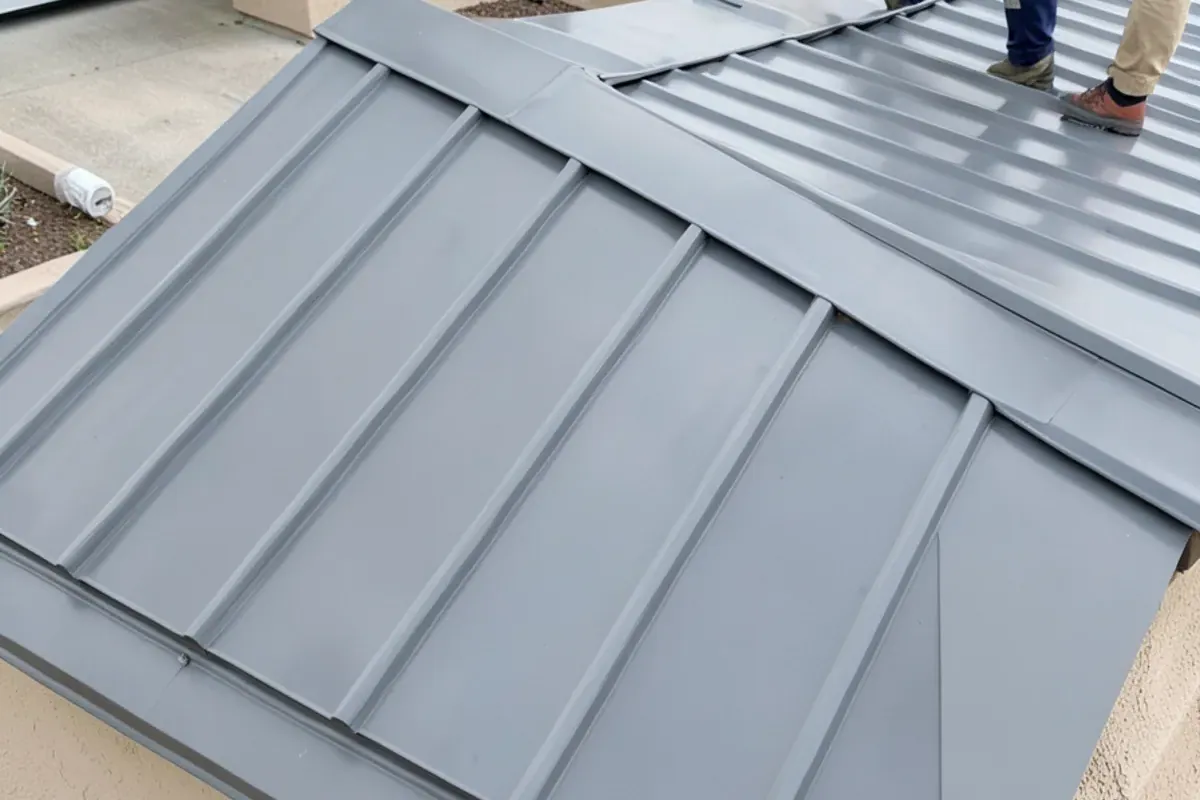
Concealed fastener metal roof: what that buys you
Fewer holes means fewer places to fail. On exposed-fastener metal, the screws and washers take the sun and weather for the life of the roof, and loosening is the usual cause of leaks. On a concealed fastener metal roof, the seam covers the clips, and the roof surface has no penetrations except at pipes, vents and walls.
What it does not remove: leaks at flashings, pipe boots, valleys and where the roof meets a wall. Those details need careful lapped metal and sealant. A clean, modern roof with sloppy flashing still leaks, which is why we show you the flashing plan with the estimate.
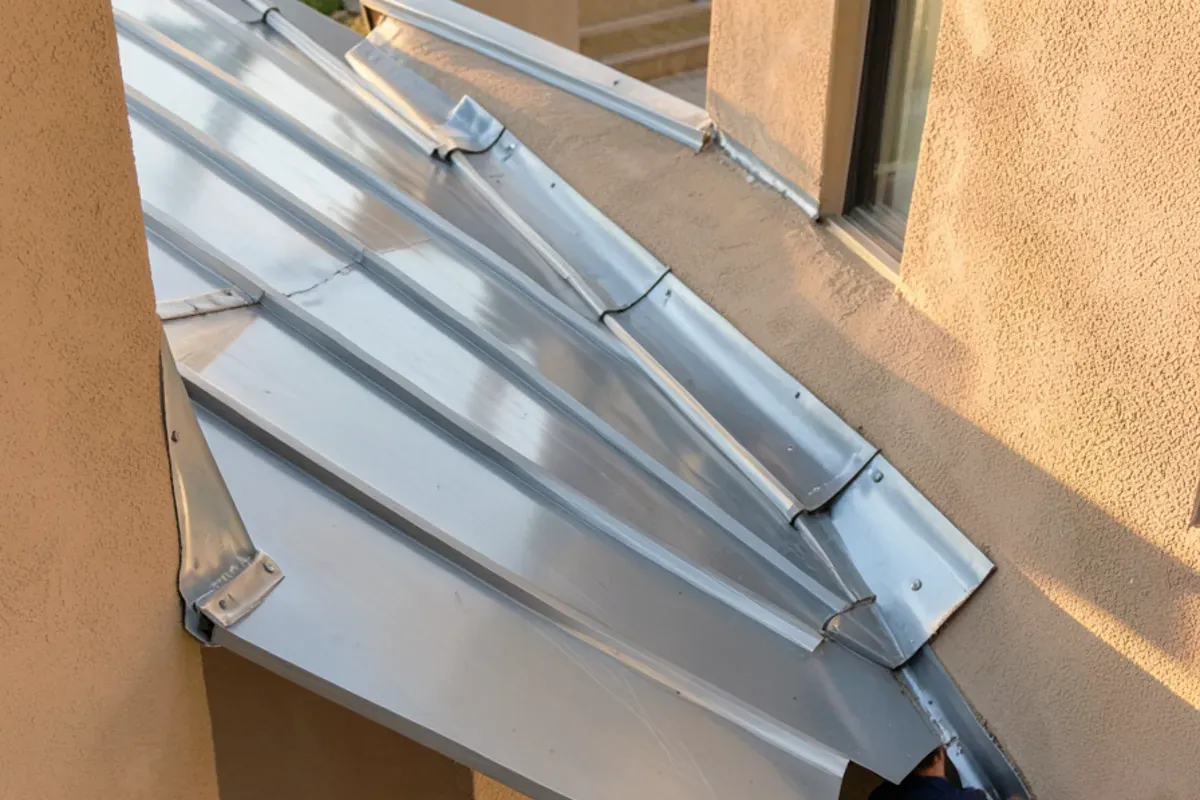
Which Torrance homes are good candidates for standing seam?
Standing seam earns its price in a few situations:
- A shingle roof that leaks along fastener lines or flashing and is due for replacement anyway
- A house with solar, or solar planned, where seam clamps avoid new holes
- A low-pitched ranch roof where a shingle's minimum slope is a concern
- A modern remodel or new ADU where the roofline is part of the design
- A coastal address that benefits from fewer exposed fasteners, with a coastal-rated finish
It is not always the right call. A roof with many small hips and valleys makes hand-formed trim a large share of the cost, and a plain garage often does fine with exposed-fastener panels. We tell you which side of that line your roof falls on.
What roof pitch does a modern metal roof need?
Pitch limits depend on the seam type and the maker. As a general rule, mechanically seamed panels handle lower slopes than snap-lock panels, and both handle less slope than shingles can. Before recommending a system, we measure the pitch and check the manufacturer's published minimum. Flat or nearly flat sections, such as patio covers, may need a different approach altogether. Modern roofs in Los Angeles often combine a gentle slope with a clean fascia, which is where standing seam shines.
Solar on standing seam: how mounting works
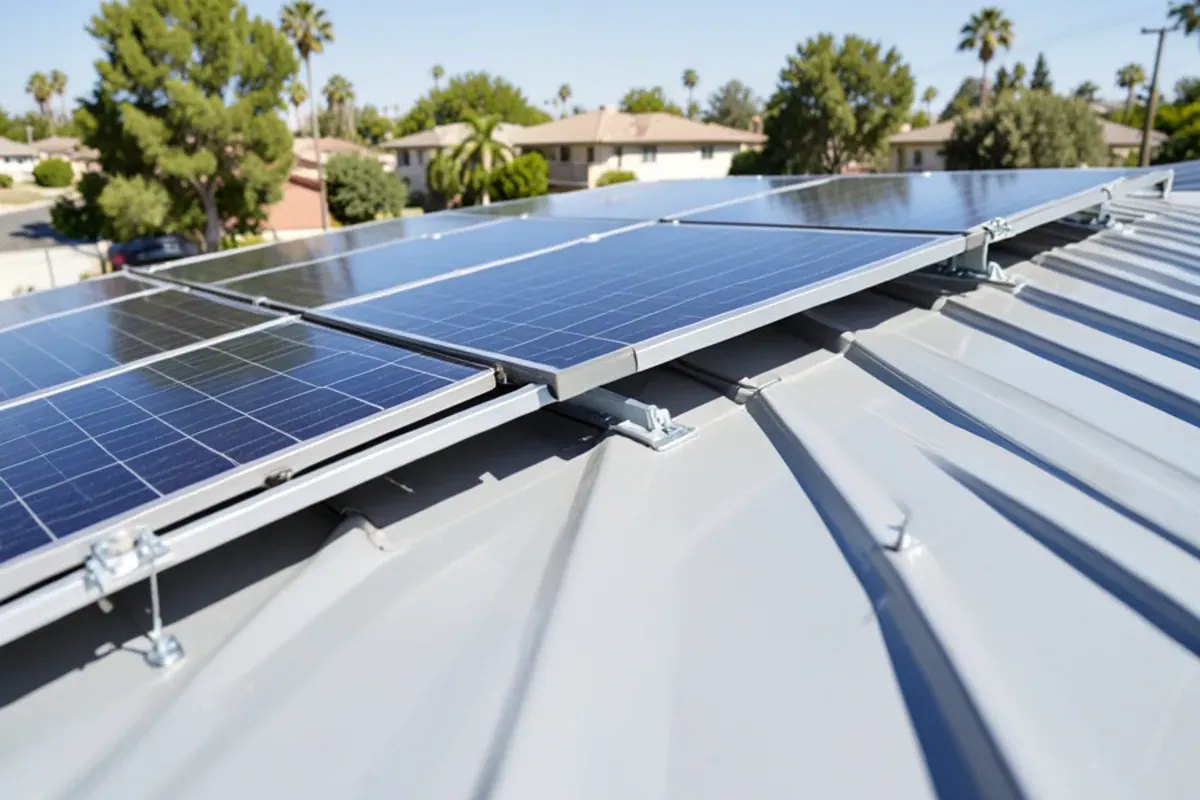
Most standing seam roofs take solar racking by clamps that grip the seam. No drilling through the panel means no new leak points. Things to check:
- The clamp must match your seam profile.
- The panel gauge and clip spacing must carry the array.
- Your solar company approves the design and any load calculation.
- The roof should be finished before the array goes on, since reroofing under panels means detaching and resetting them.
We coordinate solar panel removal and reinstallation timing with your solar company, so the roof is not open longer than it needs to be. If you plan to add solar later, tell us now and we can discuss seam spacing and panel layout. For the process of working beneath an existing array, see the blog on replacing a roof under solar panels.
Standing seam cost per square foot: what drives it
We give free estimates and do not post prices. Standing seam costs more than asphalt shingles and more than exposed-fastener panels, and the range inside standing seam is wide because it is mostly a custom-formed product. The drivers:
- Metal type and gauge: steel, aluminum or other, and thickness
- Finish and color system, especially coastal-rated paint
- Roof complexity: hips, valleys, dormers, chimneys and penetrations
- Deck repair, underlayment and insulation choices
- Panel forming on site versus shipped, and crew time
- Solar removal and reinstallation, access and permits
Panels are formed to the roof's lengths, so a roof with many hips and valleys produces more offcuts and trim work than a plain gable.
If you want market context on metal versus shingles, read metal roof versus shingles cost.
Installation steps for a standing seam roof
- Inspect and measure. We check the deck, the pitch and every roof edge, with photos.
- Plan the layout. Seam lines, trim, flashing and roof penetrations are mapped.
- Tear-off and deck repair. Old roofing comes off, and rotted or uneven decking is replaced or corrected.
- Underlayment. A high-temperature synthetic underlayment goes down, with extra at valleys and penetrations.
- Trim and clips. Eave and rake trim go on, then clips at the maker's spacing.
- Panels. Panels are laid, locked and seamed from one side to the other.
- Flashing and details. Walls, chimneys, vents and skylights get lapped metal flashing.
- Cleanup. We sweep the roof and ground for metal shavings and nails, and protect landscaping and driveways throughout.
What does a standing seam installation include?
- A free roof inspection and measured layout, with photos of the deck and edges
- Tear-off of old roofing and repair of rotted or uneven deck boards
- High-temperature underlayment, with extra layers at valleys and penetrations
- Eave and rake trim, clips at the maker's spacing and panels formed to length
- Lapped metal flashing at walls, chimneys, vents and skylights
- Permit details on re-roofs, thorough cleanup and protected landscaping and driveways
Which permits, rules and approvals apply to a standing seam re-roof in Torrance?
The City of Torrance Building & Safety Division, (310) 618-5910, issues the re-roof permit, and an existing or planned solar array usually carries its own. The California Energy Commission's cool-roof requirements vary with slope and climate zone, and many painted panels carry a Cool Roof Rating Council rating. Cal Fire's hazard maps show where a Class A assembly is required, and the panel and underlayment together set the rating. HOA design review may limit seam profile and color. Rules depend on slope, climate zone and building type, so confirm each one for your address with the city. Check any roofer's license on the Contractors State License Board website before signing.
Why homeowners raise standing seam with Crown Trim
- Rated 4.8 stars from 73 Google reviews.
- Free estimates and free roof inspections, with photos.
- We explain repair and replacement options in plain terms, and tell you when standing seam is more roof than the building needs.
- Thorough cleanup that protects landscaping and driveways.
- We handle permit details on re-roofs.
- We document damage with photos and can be on site for the insurance adjuster's inspection.
We install metal roofs across the South Bay, including Carson, Redondo Beach and Rancho Palos Verdes. Standing seam suits modern remodels in Redondo and Peninsula homes with clean architecture, though HOA design review may apply. For other looks, compare wood shake and cedar roofing or return to our residential roofing overview.
Where we do standing seam metal roofs around Torrance
Each place brings its own version of this job.
- Manhattan Beach: Sand Section rebuilds and Hill Section view homes favor clean modern rooflines, where a coastal-rated seam finish and tidy trim suit the architecture.
- Culver City: Studio-town bungalows, apartments and creative-office conversions mix low-slope sections and rooftop equipment that suit mechanically seamed panels.
- Hawthorne: Aerospace-era city around the SpaceX campus, with 1950s homes and small apartment buildings where low slopes and solar plans make seams worth a look.
- El Segundo: Office and light-industrial roofs east of Sepulveda beside a small-town grid of homes, with LAX overhead and a mix of low-slope and pitched buildings.
- View Park-Windsor Hills: Hillside custom homes above the Baldwin Hills with low-pitched roofs and view decks, where pitch limits and flashing detail decide the system.
- Ladera Heights: Hilltop 1950s-60s custom homes with wide low-slope ranch roofs, a good match for mechanically seamed panels that tolerate low pitch.
- Santa Monica: Strong marine air and the city's own building rules shape metal roof choices on pre-war bungalows and newer remodels.
- Beverly Hills: Flats estates and Trousdale mid-century homes where custom metalwork and clean standing seam lines show up on higher-end jobs.
- Signal Hill: Hilltop condos and townhomes catch wind that lower streets miss, which favors a roof with few exposed fasteners.
- Dana Point: Salt air at the harbor and headlands is hard on fasteners and finishes, so coated standing seam metal is worth discussing for bluff-top homes.
What customers say about this work
Crown Trim Roofers holds 4.8 stars from 73 Google reviews. Read all reviews
“We received a free estimate and the pricing for our new metal roofing system from Crown Trim Roofers felt very fair.”
“After a few storms in Torrance, I started noticing more shingles on the ground instead of staying on my roof.”
“they explained roofing materials in simple terms, shared shingle samples, and answered all of our questions right away, which made the whole roof replacement process easy to understand.”
Standing Seam Metal Roofs: common questions
Why choose standing seam over exposed-fastener metal panels in Torrance?
Exposed-fastener panels rely on hundreds of screws with rubber washers that age in the sun and then leak. Standing seam hides the fasteners under the panel edge and lets the panel expand and contract. It costs more, looks cleaner and usually needs less maintenance. For a garage or shed, exposed fastener may be enough. For a house, we often lean standing seam.
Can solar panels attach to a standing seam roof without drilling?
Usually, yes. Clamps designed for the seam grip it without penetrating the panel, which avoids new holes. The clamp must fit your specific seam profile, and your solar company confirms the load. We coordinate solar panel removal and reinstallation timing with your solar company if you already have an array.
What roof pitch does a standing seam system need?
Standing seam works on lower slopes than most shingle or tile, but every panel has a published minimum pitch. Snap-lock panels often need more slope than mechanically seamed panels, which are made for low slopes. Check the maker's instructions for the exact product. We measure your roof pitch at the estimate and say which systems fit.
Is a standing seam roof noisy or prone to dents?
Over a solid deck with underlayment, rain noise is similar to other roofs. Dent resistance depends on panel gauge and finish. Thicker gauge resists hail and falling branches better, while very thin panels can oil-can, a visible waviness. We discuss gauge and fastening clips so you know what you are buying.
Does a standing seam roof work near the beach?
It can, with the right coating. Salt air attacks exposed edges and fasteners first, and standing seam has few fasteners on the surface. Choose a coastal-rated finish and compatible flashing metals. See our salt air and roofs guide for what to check near Redondo, Hermosa and Manhattan Beach.
Do you handle permits for a standing seam re-roof?
We handle the permit details on re-roofs. Solar, cool roof and fire-rating rules may all touch a new metal roof, and they vary by address. Confirm with the City of Torrance Building & Safety Division at (310) 618-5910.
Related services and guides
Wood Shake & Cedar Roofing
Residential Roofing
Metal Roof vs Shingles: Real Cost in Southern California
Clay Tile Roofs in Palos Verdes Estates: Keeping the Look
Period Homes in Long Beach: California Heights Roof Tips
Where we work: Carson, Redondo Beach, Rancho Palos Verdes, Gardena and the rest of our service areas.
Want clean lines and fewer leak points? Ask us.
Call first. A roofer picks it up from there.