
Roofing Contractor in Huntington Beach, CA
- 4.8★ from 73 Google reviews
- Free estimates
- Same day or next day service
- Photos of what we find
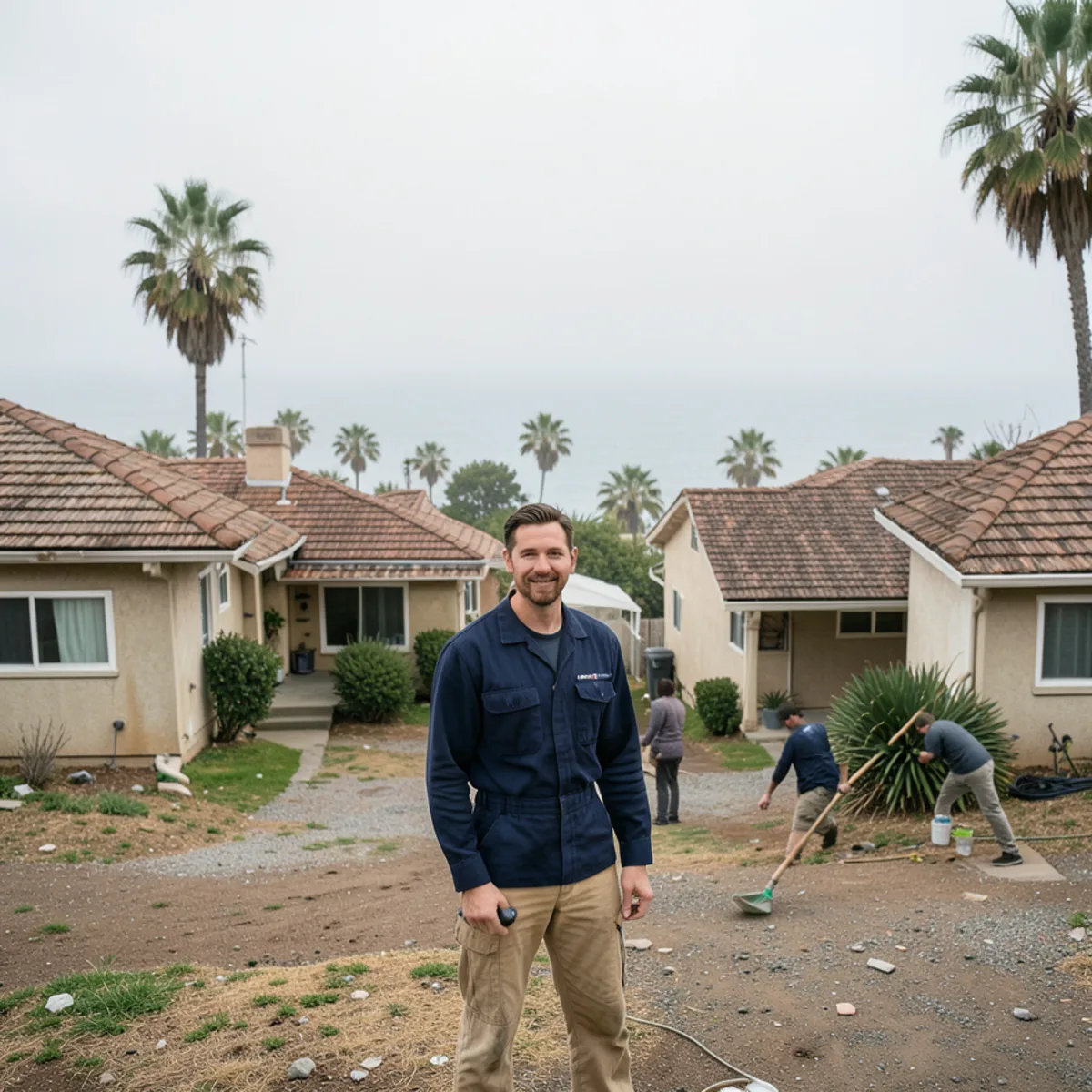
Huntington Beach has a longer salt-air story than almost any other city we reach. The ocean breeze carries it over the pier and Main Street, through the 1960s and 70s tract neighborhoods, and across the canals of Huntington Harbour. Nails, flashing, vents and gutters meet that salt every day. A coastal checklist rides along on the 55-minute, 26-mile trip from our PCH base.
What a roofing contractor in Huntington Beach should check for salt damage
Cards below cover the work coastal homes need most. Corrosion shows up in the small parts first.
Roof Repair
Rusted flashing and fasteners near the coast are small repairs that stop leaks before they reach the deck, and on second-generation tract roofs they are usually the first thing to give.
Roof Flashing Repair
Original galvanized flashing from the 1960s and 70s is often rusted thin at walls, chimneys and valleys, and salt spray speeds it up. Replacing the metal beats caulking over it.
Metal Roof Repair
Galvanized and coated metal roofs, patio covers and rooftop vents near the water show rust at fasteners and seams first, and an early repair keeps the panel itself from corroding through.
Flat Roofing
Harbor-side homes and townhomes with flat deck sections need drains and seams that stand up to salt spray, and standing water after a damp marine-layer morning is the first warning.
Roof Waterproofing
Roof decks and flat sections over living space near the harbor need a waterproof layer that stays sealed at edges, drains and door thresholds where salt and sun break it down.
Gutters & Fascia
Salt rusts gutters and fascia trim from the inside, so material, hangers and fastener choice matter near the water, and clogged seams send water behind the board on single-story tract homes.
Fascia, Soffit & Roof Trim
Fascia and soffit boards on older Surf City homes stay damp under marine air, so paint fails and wood softens. Replacing rot early protects the rafter tails behind it.
Roofing Contractor in Torrance
Our Torrance home page explains the full range of roofing work we bring to coastal Orange County, from shingle and tile to metal and flat roofs, for homes, apartments and commercial buildings.
Permits, the Coastal Zone and who to ask in Surf City
Huntington Beach has its own building division. Part of the city falls in the California Coastal Zone, so ask the city whether your address needs more than a standard permit. Permit details on a re-roof are in our hands. Permit offices differ across the county, as our Orange County page shows.
Why Huntington Harbour and the pier district age roofs faster
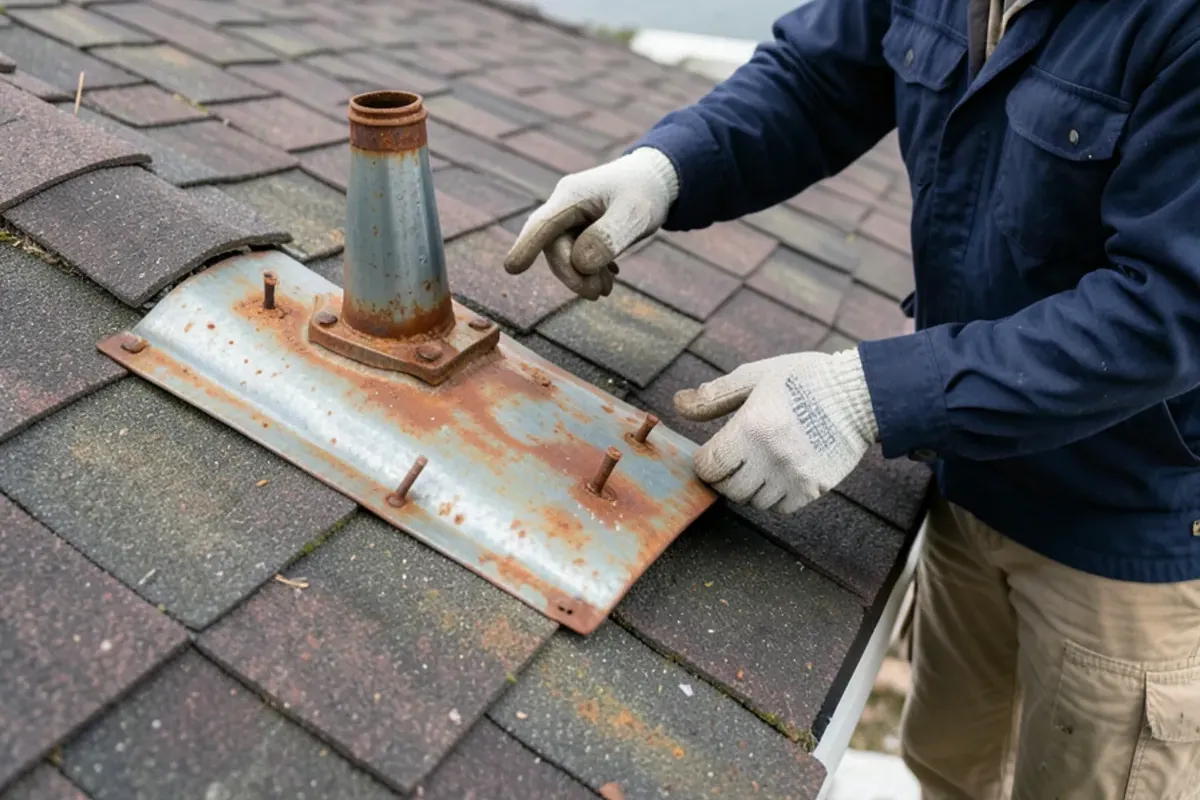
Waterfront homes catch wind and spray directly. Galvanized flashing rusts, painted vents chalk and peel, and fasteners loosen as the rust swells. Newer townhomes near downtown and some harbor homes have flat deck sections, where salt and standing water attack seams and drains.
Inland, many 1960s and 70s tract homes are now on their second or third roof. Composition shingle and tile roofs there usually fail at flashing, pipe collars and valleys before the field of the roof gives out. Seams on the gutters of single-story homes often rust through, and a clogged section sends water behind the fascia board.
Redondo, Hermosa and Manhattan Beach see the same effect, covered in our salt air and roofs guide, and our coastal moss and algae guide helps with streaked or mossy roofs near the water.
Second-generation tract roofs, harbor townhomes and the afternoon sea breeze
Huntington Beach grew fast in the 1960s and 70s, and many of its single-story stucco tract homes are now on a second or third roof. Their low pitches shed water slowly, so leaks usually start at pipe collars, valley metal and the shingle edge rather than in the middle of the roof. Original galvanized flashing from that era is often rusted thin where it meets a chimney or wall.
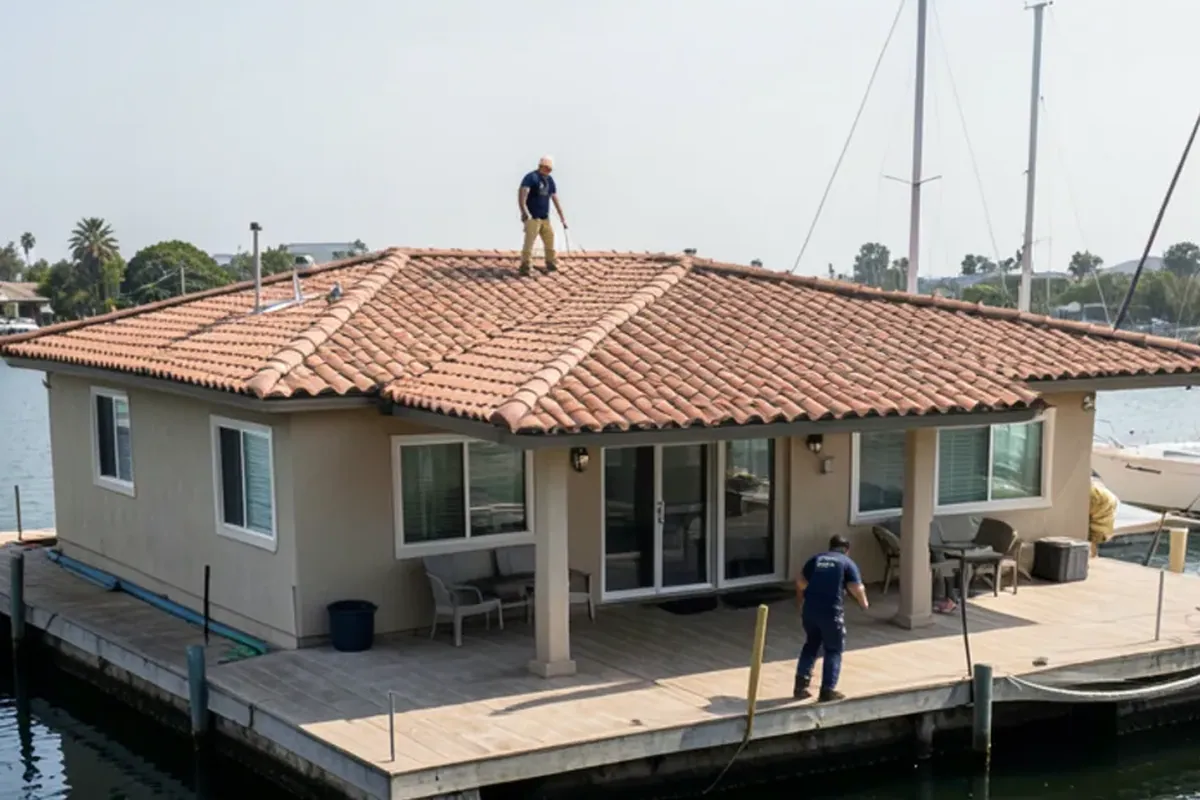
Near the water the pattern shifts. Huntington Harbour's canal-front houses are two-story, with tile roofs or flat deck sections, and the sea breeze that builds most afternoons pushes salt spray onto roof edges, gutters and vents. The morning marine layer keeps surfaces damp for hours, which holds salt against metal instead of letting rain wash it off. Flat decks pond at drains, and fasteners at the membrane edge rust and back out.
On coastal metal we check the small parts first: fasteners, drip edge, pipe flashing and gutter hangers. Corrosion-resistant versions of those parts are worth pricing at a re-roof. A patch of rust at one vent is a repair. A roof whose nails have rusted through is a replacement conversation, and our photos show which one you have.
Main Street, the pier and Beach Boulevard: local knowledge for Surf City
Pacific Coast Highway runs along the beach side of the city, and Beach Boulevard crosses it inland. Downtown streets around Main Street and the pier have limited, often time-restricted parking, so a truck and ladder need a plan before the day. Harbor-side streets are narrow and many lots back onto water, which affects where a debris bin can sit.
The city's Local Coastal Program governs the Coastal Zone, and the Huntington Harbour and Bolsa Chica side of town falls in or beside it. Ask the city whether your address is inside the zone before you choose a material or a color. Harbor-side and townhome communities often have associations with their own roof rules, so ask for those before the estimate, not after the order.
Booking a Huntington Beach visit from Torrance
We aim to arrive the same day or the next for a free estimate or roof inspection. Photos of what turns up are shared, metal parts and fasteners get checked, and repair versus replacement is put in everyday words. Selling a new roof when a patch would do is not how we work here.
Beach-area lots are tight and parking is limited near the pier, so tell us about driveway and street access. We clean up thoroughly and protect landscaping and driveways.
Our base and how to reach us from Huntington Beach
Crown Trim Roofers, 2765 Pacific Coast Hwy, Torrance, CA 90505. Approximate drive: about 55 min (26 mi).
Roofing questions from Huntington Beach
Does salt air shorten the life of a roof in Huntington Beach?
It can. Salt speeds up rust on galvanized flashing, nails and gutters, and it dulls paint on fascia and vents. Roofs closest to the water, including Huntington Harbour, show it first. We check metal parts and show you photos. How coastal homes in nearby beach cities compare is in our salt air and roofs guide.
Do I need a coastal permit to re-roof in Huntington Beach?
Usually a standard building permit is the starting point, but parts of the city lie in the California Coastal Zone, and rules can differ by address. Re-roof permit details are ours, and we ask the city which approvals apply to your home. Confirm current requirements with Huntington Beach before work starts.
Can you repair a flat deck or low-slope roof on a harbor home?
Yes. Flat decks and low-slope sections are where standing water and failed seams show up first, especially with salt spray. Drains, seams and edge metal get a look, then we explain whether a repair or a new membrane makes sense, and the repair goes first if it can do the job. See flat roofing.
Nearby areas we serve
More in Orange County and across all service areas.
Salt rust on your roof? Get it checked early.
Crown Trim Roofers · 2765 Pacific Coast Hwy, Torrance, CA 90505 · (209) 563-1278