
Roof Waterproofing in Torrance, CA
- 4.8★ from 73 Google reviews
- Free estimates
- Same day or next day service
- Photos of what we find
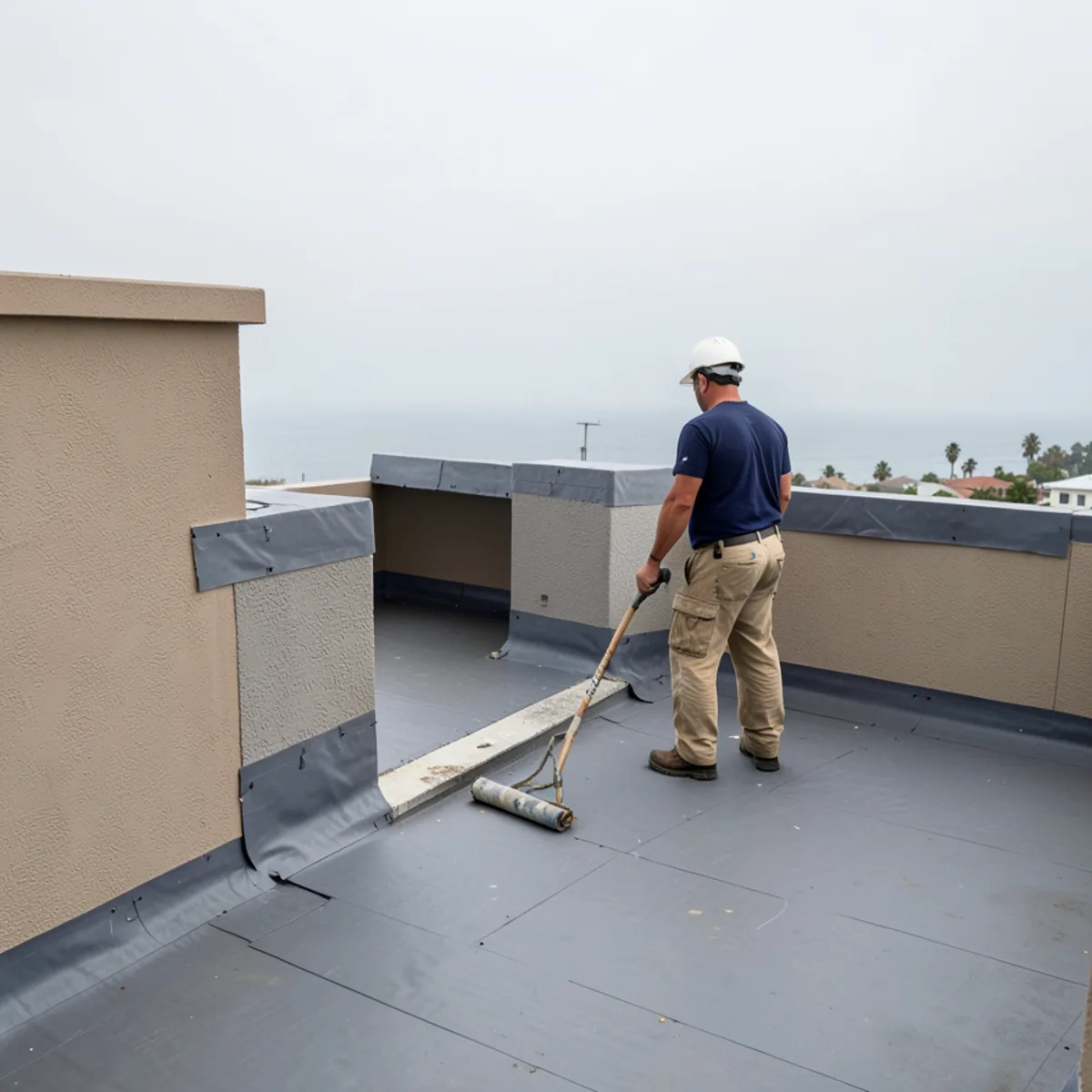
Most leaks on a house are roof leaks, and a patch often cures them. Decks, balconies and parapet walls are different. They are horizontal surfaces or tall walls that take water from every direction, with doors, railings and stucco in the way. Roof waterproofing replaces the weak layer with a continuous membrane and rebuilds the details around it. It is one of several approaches we use on flat roofing, and it pairs closely with flat roof repair and flat roof replacement.
What roof and deck waterproofing includes
Waterproofing is a rebuild of the layers that keep water out, not a coat of paint. The scope on your estimate should list each item, and ours covers:
- Probing of the deck, framing and stucco as far as access allows
- Replacement of rotted sheathing and failed railing-post bases
- Slope correction toward drains or scuppers
- A continuous membrane suited to the surface and foot traffic
- Metal flashing, coping caps and counterflashing at walls, doors and rails
- Photos of the layers before they are covered, and cleanup
Because there are rooms below most decks and balconies, we photograph the structure before the membrane goes on, so you can see what is under the finish.
How do you waterproof a rooftop deck over living space?
A deck over a room cannot be forgiven the way a shed roof can. A leak drips onto a ceiling, so each layer has to work. A typical build, from the bottom up:
- Structure and sheathing. Checked for rot and sag, and replaced where soft.
- Slope. The surface falls toward a drain or scupper, generally at least a quarter inch per foot as building code expects for low-slope surfaces. Confirm for your address with the city.
- Membrane. A continuous layer such as liquid-applied coating, sheet membrane, single-ply or modified bitumen.
- Flashing. The membrane turns up walls and door thresholds, with metal flashing where needed.
- Wearing surface. Pavers, a traffic coating or a protective layer so foot traffic does not cut the membrane.
On beach-city townhomes with roof decks, such as in Redondo Beach and Hermosa Beach, salt air adds a reason to choose corrosion-resistant fasteners and metal parts. The deck height at the door threshold decides how much room there is for those layers, so we check it before choosing a system.
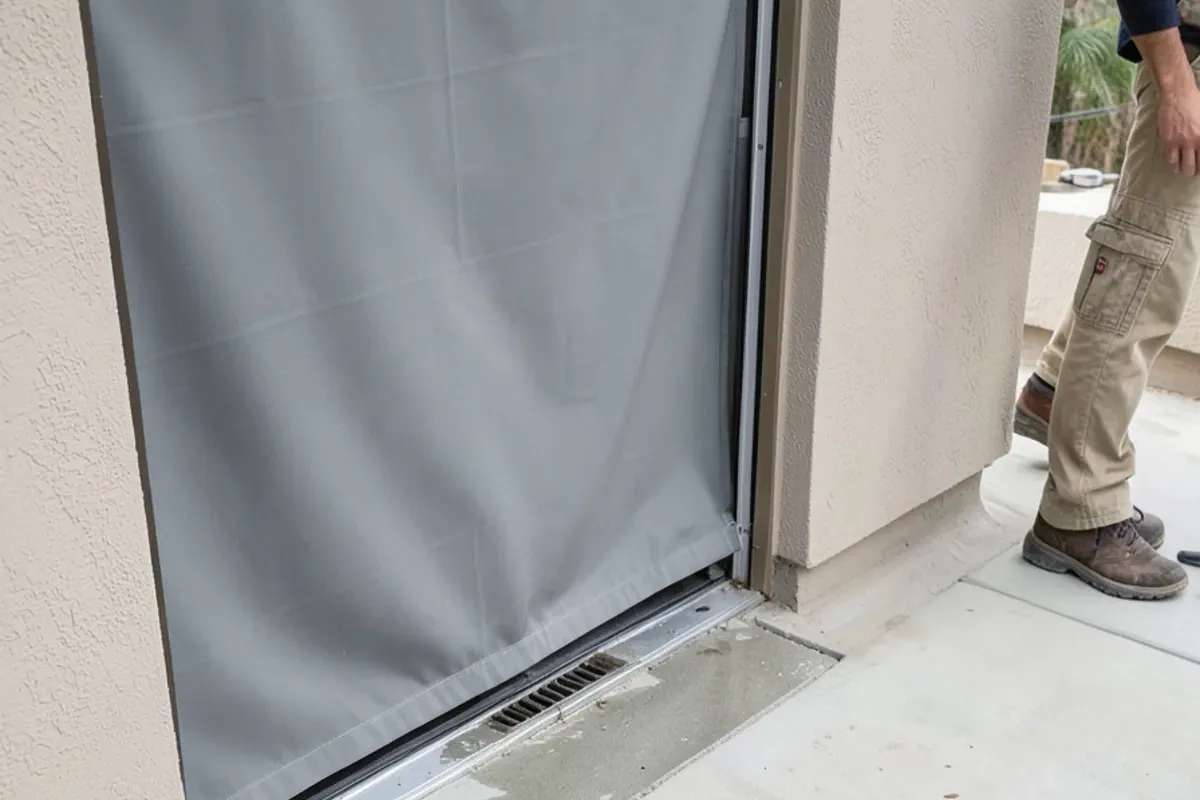
Balcony waterproofing in Torrance: where water gets in
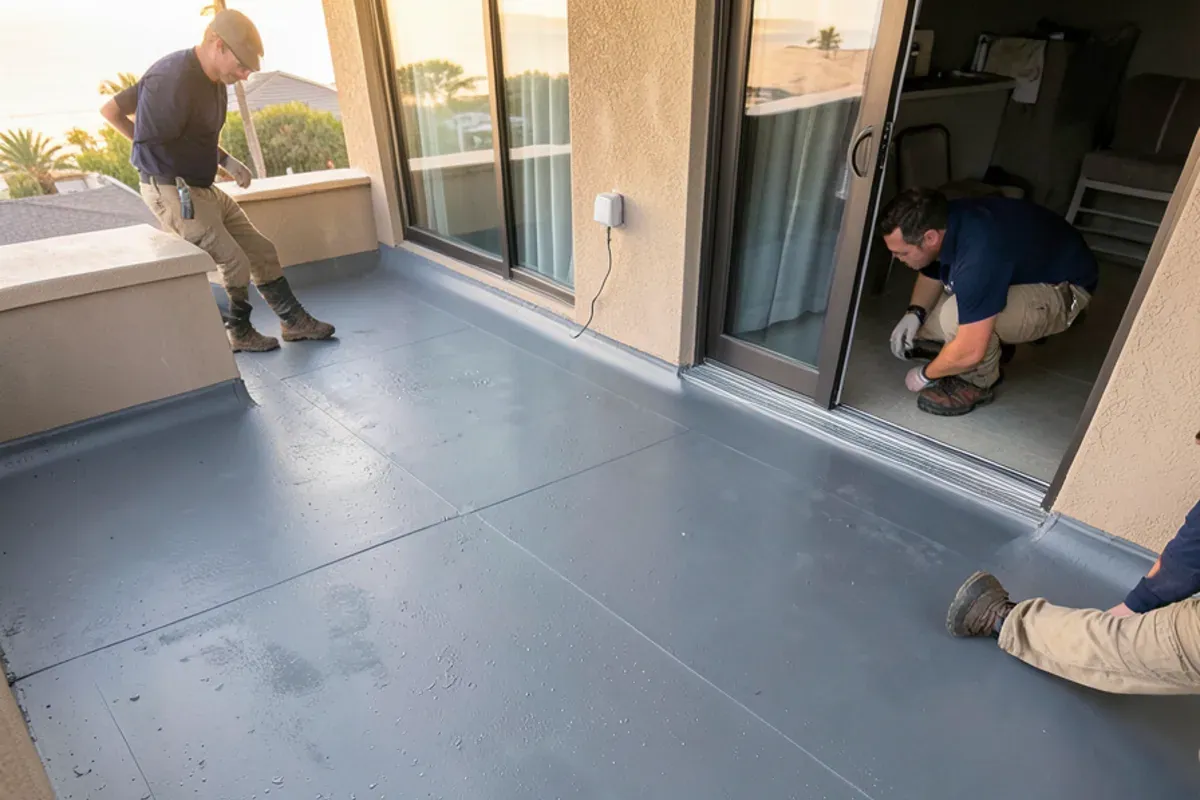
Balconies are small, but they fail in predictable places: the edge where the deck meets the stucco wall, the door threshold, cracks in the surface coating, the railing posts and the drain or the edge where water should leave. Wood-framed balconies can rot quietly under stucco and coating, so the inspection includes probing the deck and framing as far as access allows.
Signs a deck or balcony is leaking
Look for brown stains on the ceiling beneath, stucco streaks below the edge, bubbled or cracked coating, rust at railing posts, and soft spots in the floor. Water that has gotten behind stucco can rot framing for years before a stain shows. In Torrance's 1960s housing, older balconies and decks may have been recoated more than once without anyone checking the wood beneath, and the winter rains from November through March find every gap.
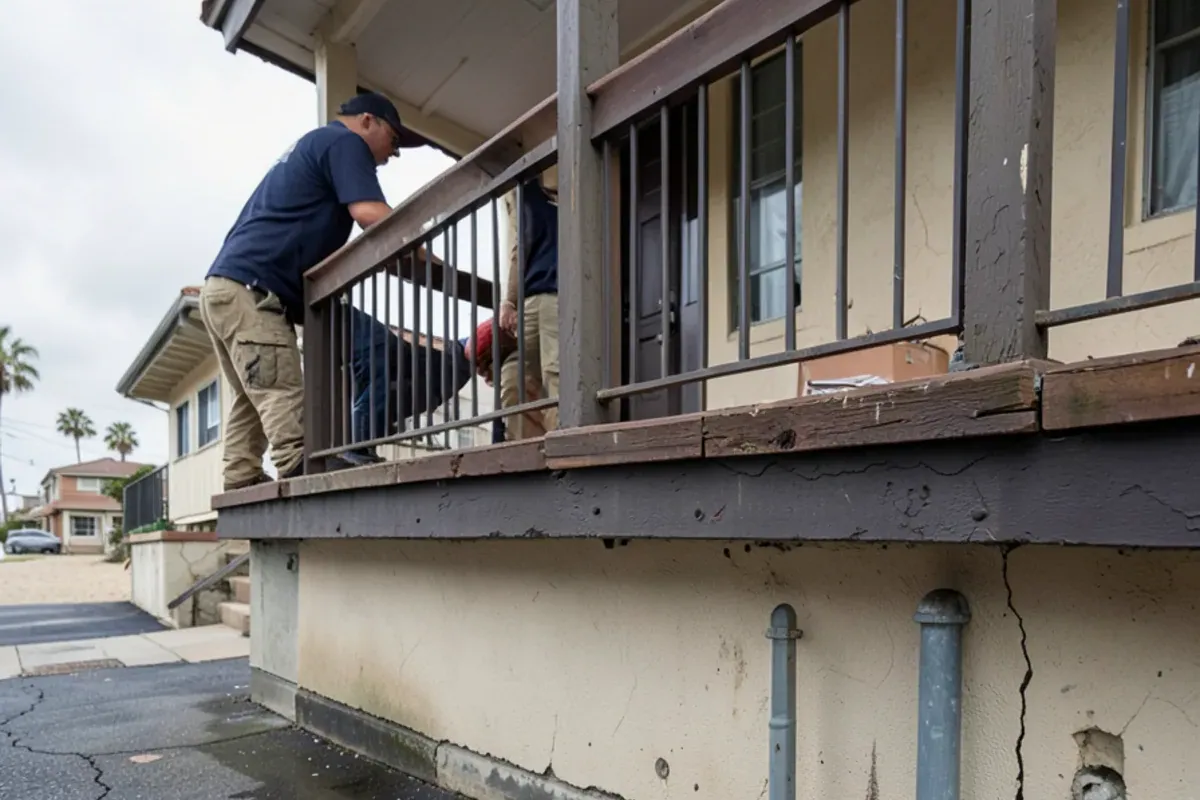
Where the surface is solid, a new membrane or traffic coating with proper flashing can restore it. Where wood is soft, we open the area and rebuild first. One Google reviewer described a project that included "new plywood where needed, better insulation, improved waterproofing under the roofing system", which is the right order: structure first, then waterproofing.
Why do parapet walls cause so many leaks?
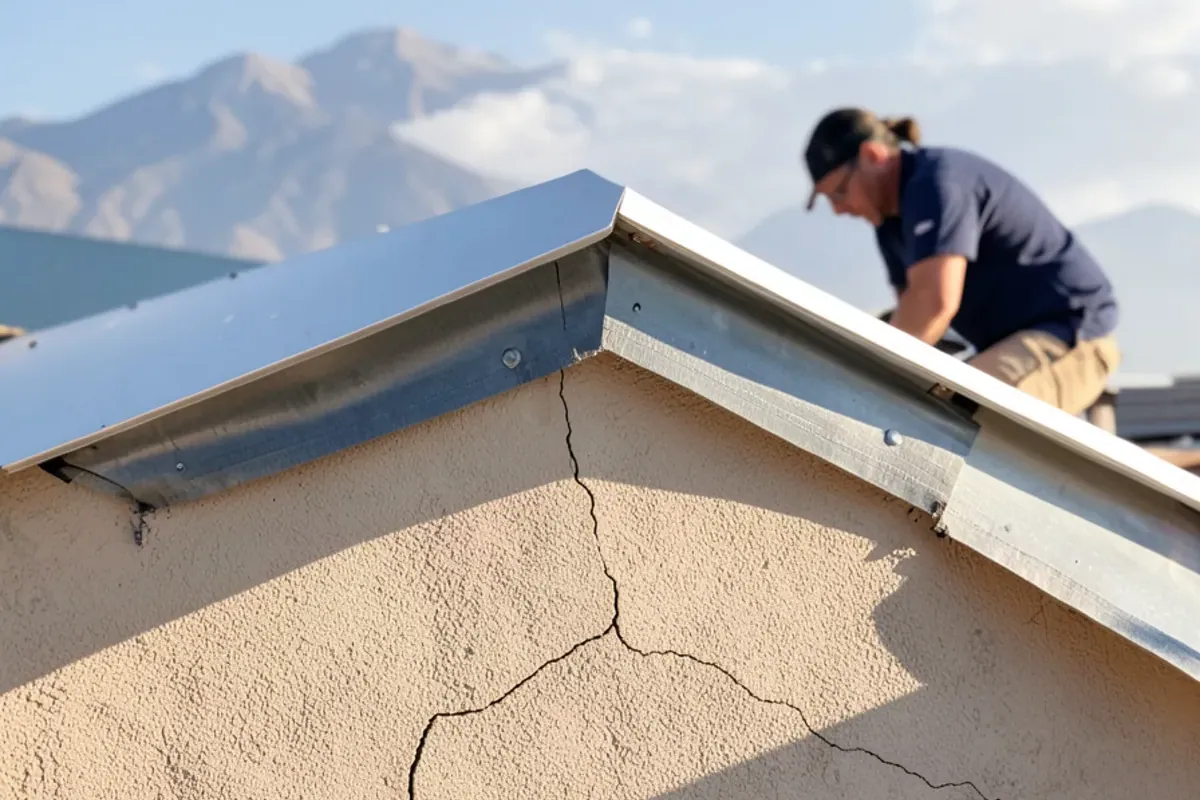
A parapet is a short wall that rises above the roof edge. Water attacks it from three sides: rain falling on the top, water running down the stucco face, and water collecting at the base where the roof membrane meets the wall. Add hairline cracks in old stucco and tired sealant, and the wall lets water into the framing below.
A proper fix addresses all three:
- Top: a metal coping cap or a sealed membrane across the top
- Face: crack repair and sealing on the inside face
- Base: membrane turned up the wall, finished with a counterflashing or termination
Skipping the base and sealing only the top is a common reason parapet leaks return.
What is ice and water shield doing on a Southern California roof?
It is a self-adhered, rubberized asphalt waterproof underlayment. In colder climates it stops ice dams. Here it protects against wind-driven rain. We use it at valleys, around penetrations, along eaves and on low-slope sections of a pitched roof. Under tile, it is a stronger backup layer than standard felt, because it seals around fasteners. It is not a roof by itself: it sits under the tile or shingles as a second line of defense, which matters most where rain gets pushed sideways under the laps. Waterproofing under tile is covered further on our tile roof underlayment replacement page.
Waterproofing systems compared
| System | Best use | Trade-off |
|---|---|---|
| Liquid-applied membrane | Balconies and decks with many corners | Needs thickness control and dry cure |
| Sheet membrane (TPO or PVC) | Large, clear decks | Skilled welding at details |
| Modified bitumen | Roofs and decks with foot traffic | Heat or adhesive method choice |
| Traffic coating over membrane | Walkable decks | Surface wears and needs maintenance |
| Self-adhered waterproofing | Valleys, curbs, under tile | A backup layer, not a finished surface |
Permits, licensing and building rules for waterproofing
Replacing a membrane may be treated differently from changing the structure, so ask your building department what applies. In Torrance, City of Torrance Building & Safety at (310) 618-5910 can confirm your address. Unincorporated LA County uses LA County Public Works, and the City of Los Angeles uses LADBS. HOA or condo buildings often add their own rules for balcony and deck work, so check with the board before scheduling. Check any roofer's license on the Contractors State License Board site at cslb.ca.gov.
What drives the price of roof waterproofing?
We give free estimates and do not post prices. For context, 2026 published cost guides place most roof repairs between $300 and $1,500, which is market data and not a quote, and waterproofing a large deck can run past that. The price moves with:
- Area, plus the number of walls, drains, rails and thresholds
- System chosen and wearing surface
- Rot and deck repairs found during the inspection
- Stucco crack repair on parapets
- Access, such as a rooftop deck with limited stairs
- Whether pavers or finishes have to come up and go back
Why Crown Trim for roof and deck waterproofing?
- We photograph the layers before they are covered, so you can see what is under your deck.
- A repair first when a repair will do, and replacement only when the evidence supports it.
- Free estimates and free roof inspections, with same day or next day service.
- We handle permit details on re-roofs, and clean up thoroughly, protecting landscaping and driveways.
- Reviewers rate us 4.8 stars across 73 Google reviews.
We work across the South Bay, including Carson, Redondo Beach and Rancho Palos Verdes. Carson buildings often have parapet walls, Redondo Beach townhomes have roof decks, and Peninsula homes bring balconies with ocean exposure.
Where we do roof waterproofing around Torrance
Each place brings its own version of this job.
- Redondo Beach: South Redondo townhomes and King Harbor condos have roof decks and balconies where salt air demands rustproof fasteners and tight threshold details.
- Hermosa Beach: Tight lots near The Strand mean roof decks, shared walls and balconies, so waterproofing at doors and walls matters more than curb appeal.
- Manhattan Beach: Rooftop decks on rebuilt Sand Section homes and Hill Section view houses depend on a continuous membrane under pavers or coating.
- Marina del Rey: Mid-rise condos and apartments on county-leased land have HOA-managed decks and balconies in constant marine air.
- Carson: Older Carson apartment buildings have parapet walls with cracked stucco and failed base flashing that let water into the framing.
- Hawthorne: Aerospace-era Hawthorne has many small apartment buildings with parapets and walkways over living units that need new membranes.
- El Segundo: Small-town grid homes near LAX and office buildings east of Sepulveda carry parapets and flat decks that leak at the wall base.
- Palos Verdes Estates: Olmsted-planned hillside homes with decks and balconies need waterproofing that keeps visible finishes within neighborhood review.
- Rancho Palos Verdes: Ocean-facing balconies take wind-driven rain and salt, and ground movement near Portuguese Bend stresses deck edges and flashing.
- Laguna Niguel: Hillside villages with ocean exposure on the west side, where flashing, valleys and penetrations need sealing against wind-driven rain and salt air.
What customers say about this work
Crown Trim Roofers holds 4.8 stars from 73 Google reviews. Read all reviews
“we were looking for a reliable company to fix issues with our flat asphalt roof that was rotting and causing water to drain into the gutters.”
“I highly recommend this company for any roofing job, whether you need a quick leak fixed or a whole new roof put on.”
“The new roof they put on earlier was finished quickly, and my neighbor even commented on how fast and organized the crew was.”
Roof Waterproofing: common questions
How do you waterproof a rooftop deck over living space?
The deck is built to fall toward a drain, covered with a continuous membrane that turns up walls and door thresholds, and then protected with a wearing surface such as pavers or a traffic coating. Because there are rooms below, we check the deck for rot first and photograph each layer before covering it. Details at doors and drains matter most.
Why do parapet walls cause so many leaks?
Water can enter through the top of the wall, cracks in the stucco on the inside face, or the joint where the wall meets the roof. A wall is a long, exposed edge with many places to fail. Proper repair means capping the top, sealing cracks, and carrying the membrane up the wall with a counterflashing.
What is ice and water shield doing on a Southern California roof?
It is a self-adhered waterproof membrane. We use it at valleys, penetrations, eaves and low-slope sections, and sometimes under tile, because it seals around fasteners and holds up to wind-driven rain. There is no ice here, but a storm can push water under shingles or tile laps. It is a backup layer, not a replacement for good roofing.
How long does balcony waterproofing take?
Small balconies can be done in a few days, depending on prep, repairs to the deck and curing time. Larger decks over living space take longer. Weather matters, because membranes and coatings need a dry surface. We give you an expected schedule at the estimate and tell you if rot or deck repairs add time.
Can waterproofing fix a leak that keeps coming back after patches?
Sometimes, if the real problem is a surface-wide failure at a deck, wall or low-slope section. Repeated patches usually point to the wrong entry point, a flashing that cannot be sealed, or water traveling from a wall. We trace first, then decide between a repair, a membrane or rebuilding the detail.
Do I need a permit for deck or balcony waterproofing?
It depends on the scope. Replacing a membrane may be treated differently from repairing framing or changing the structure. Your city building department decides, so confirm for your address. In Torrance, you can call Building & Safety at (310) 618-5910. We handle permit details on re-roofs and tell you what we find at the estimate.
Related services and guides
Flat Roof Repair
Flat Roof Replacement
Flat Roof Replacement Cost in Los Angeles County
Ponding Water on a Flat Roof: How Much Is Too Much?
TPO vs Torch Down vs Hot Mop: Flat Roofs Compared
Where we work: Carson, Redondo Beach, Rancho Palos Verdes, Gardena and the rest of our service areas.
Deck or balcony leaking? Book a free estimate.
Call first. A roofer picks it up from there.