
By the Crown Trim Roofers team · Published · Updated
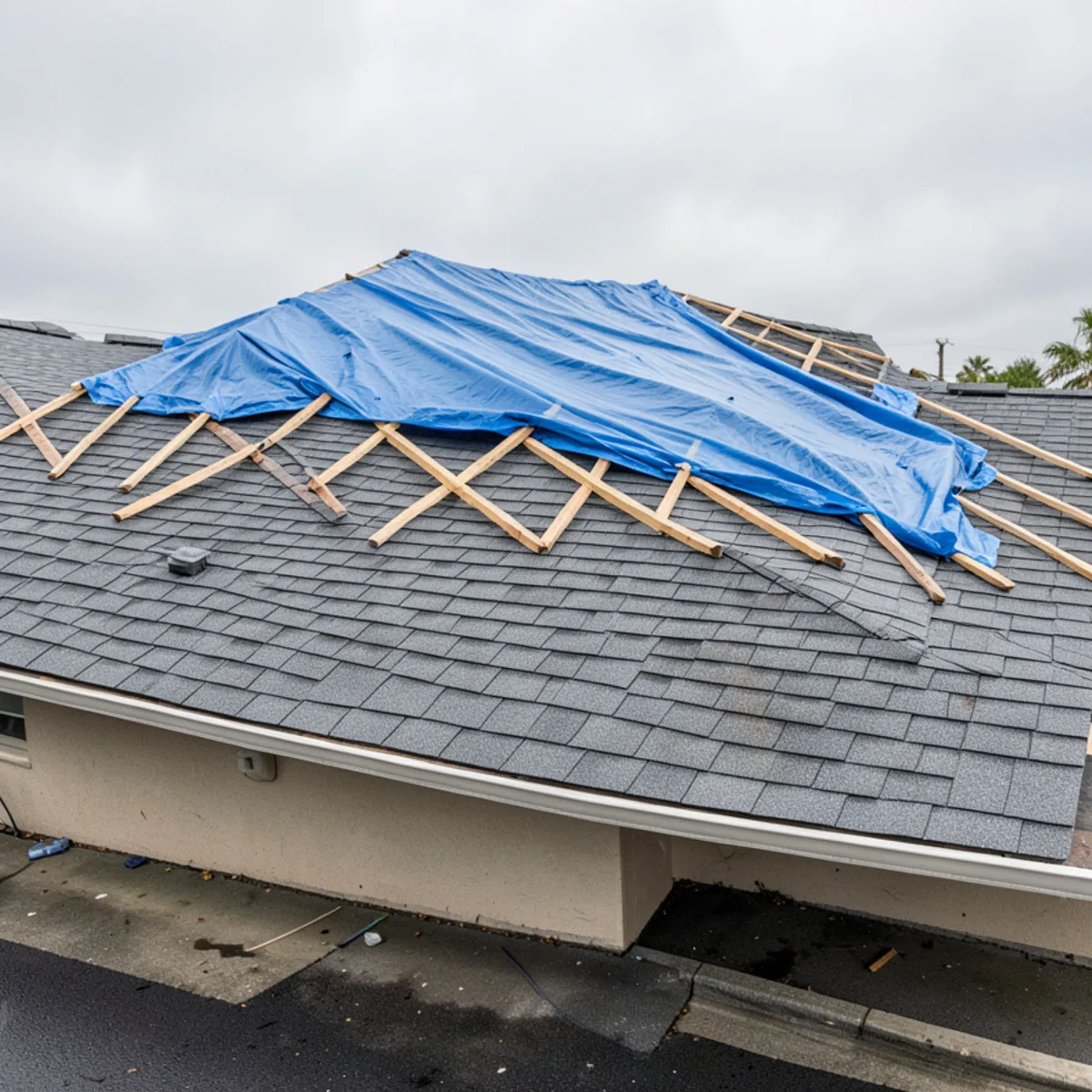
A tarp is a temporary roof, and temporary is the key word. It is the first step in most emergency roof repair work, never the last. Done well, it keeps a leak from soaking your ceilings while the weather clears and a repair is booked. Done badly, it flaps loose in the first gust. If you are weighing whether you need one right now, our emergency roof tarping page describes the service itself. This article answers the question people actually ask.
How long does a roof tarp last?
Think days to a few weeks. A tarp that is properly fastened, on a roof with little wind exposure, in a mild stretch of weather, can hold for a few weeks. The same tarp on an exposed hillside during a Santa Ana wind event can fail overnight.
No honest roofer promises a number, because the answer depends on conditions we cannot control. What we can say is that a tarp should always be paired with a plan for the permanent repair. If the tarp is still up after a month, it is overdue for replacement or the roof is overdue for work.
What shortens a tarp's life?
| Factor | What happens |
|---|---|
| Wind | Gusts lift edges, then slap the sheet until the fasteners tear free |
| Sun | Ultraviolet light makes polyethylene brittle and chalky |
| Fastening method | Nails through the sheet alone pull out; battens spread the load |
| Roof surface | Smooth shingles shed water fast; curved tile makes a tight seal harder |
| Slope and height | Steeper and taller roofs catch more wind |
| Tarp grade | Thin hardware-store sheeting tears far sooner than heavy-duty sheeting |
Torrance sun is strong even though extreme heat is rare, with only about four days a year over 90 degrees. Coastal wind adds to it. Older, drier sheeting fails first at the folds and grommets.
How is an emergency roof tarp fastened properly?
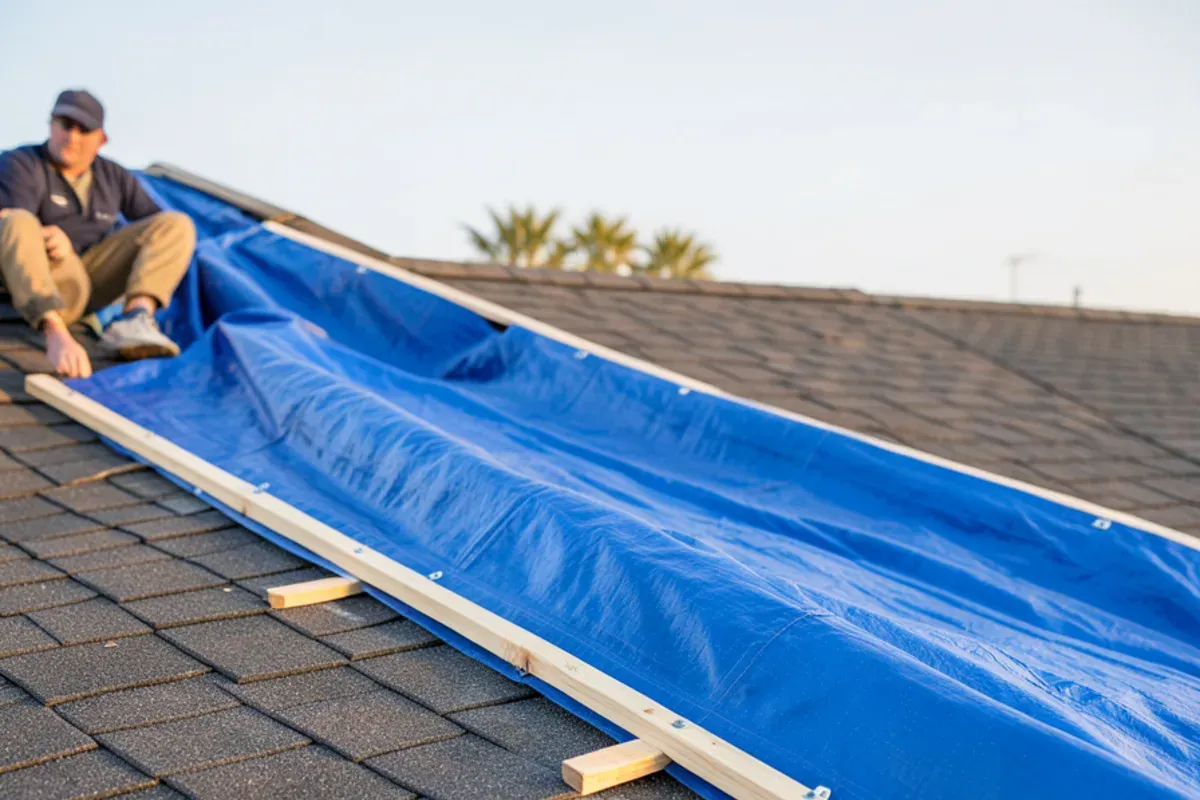
The method matters more than the material. A professional install usually looks like this:
- Clear debris and sharp edges. Broken tile, nails and splintered wood can puncture a sheet.
- Size the tarp generously. It should extend well past the damage and, where possible, over the ridge so water cannot run in at the top edge.
- Fold the edge around a board. Wrapping the tarp around a lumber batten spreads the pull so it does not rip at a single nail.
- Fasten the batten to solid framing or deck. Going into the deck means small holes that are patched later.
- Work from the ridge down. Upper sheets overlap lower ones the way shingles do, so rain runs over seams, not into them.
- Tension it flat. Pockets and slack let wind get under the sheet and flog it.
Sandbags and loose weights are not a method on a sloped roof. They slide, and they fall on people and cars.
What does a tarp not fix?
A tarp covers a hole. It does not repair one. Under the sheet, the broken tile, lifted shingle or failed flashing is still there, and the tarp only keeps rain off it. Water that already got in stays in the insulation and decking until someone dries it. A tarp also cannot make a tired roof watertight if the damage is wider than the sheet, and it can hide a second, smaller opening from view until the next storm finds it.
There is a timing trap as well. A tarp that works on a calm day can fail in the first strong gust, which in the South Bay often arrives with the same storm that caused the damage. Treat it as protection for a few days while parts, a dry day and an adjuster's visit are lined up, and keep the interior covered until the repair is done.
Can any roof be tarped, including tile?
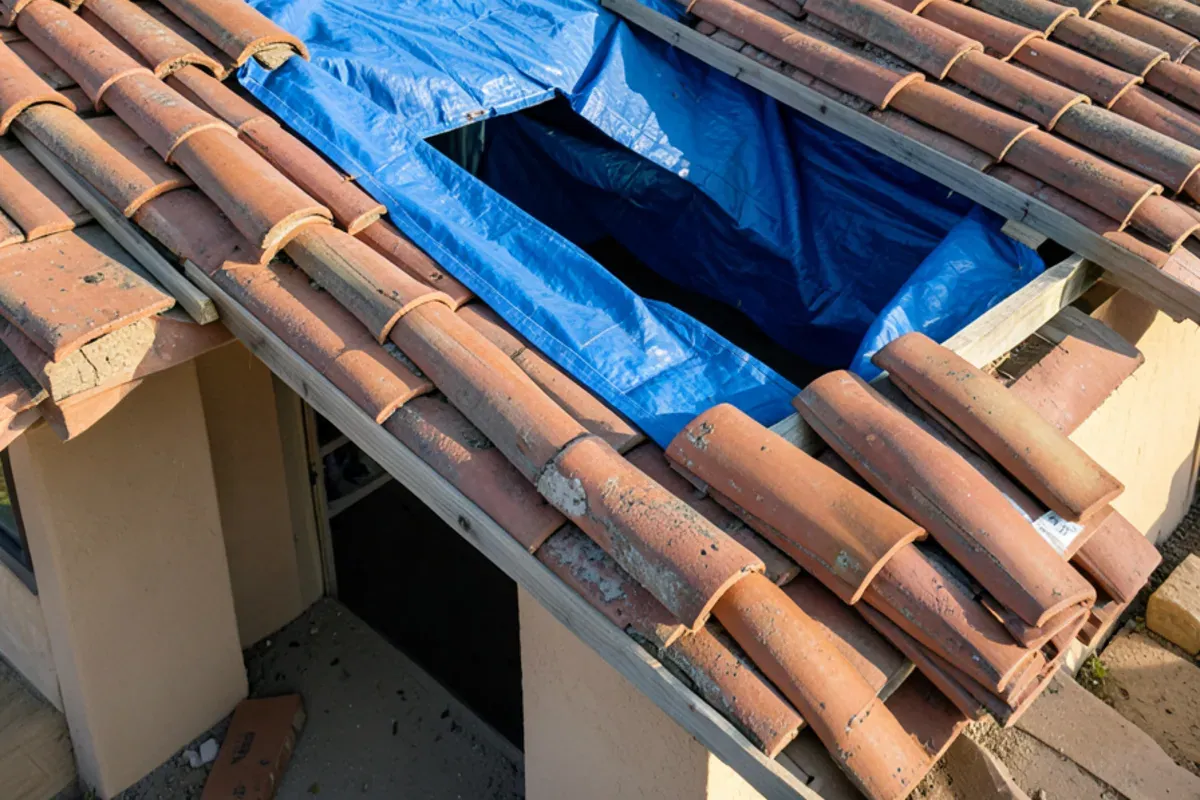
Mostly yes, but tile is harder. Curved tile does not give a flat surface for battens, so crews may remove a few tiles around the damaged area, lay the sheet on the underlayment and fasten to the deck. Walking on tile also breaks it, so a poorly planned tarp visit can create more damage than it covers.
Shingle and flat roofs are simpler. One Google reviewer described a roofer arriving, inspecting a damaged area and placing a tarp over it to protect the roof until the repair could be done.
What does a roof tarp cost?
We do not quote prices in articles, and a tarp price depends on a handful of things you can see for yourself: the size of the area, the roof pitch and height, the roof material, the weather and how hard access is. A small patch over a vent is a short visit. A full-slope cover on a steep two-story home is not. Ask any company what is included, whether the tarp is a single-use cover or one that gets re-fastened, and what happens if it fails before the repair date.
Is a tarp covered by insurance?
Often, when the underlying damage is covered. Most homeowners policies expect you to take reasonable steps to prevent further damage after a loss, and the cost of reasonable emergency protection is commonly part of the claim. Keep the receipt and photograph the roof before and after. California's claims-handling regulations (Title 10 of the California Code of Regulations, section 2695) set deadlines for insurers, including acknowledging a claim within 15 calendar days and accepting or denying it within 40 days of proof of claim. Confirm the current rules and your policy terms with the California Department of Insurance. Because a claim can take longer than a tarp lasts, book the repair without waiting for the final decision. The California Department of Insurance explains policyholder rights if your claim is delayed or disputed.
We document damage with photos and can be on site for the adjuster's inspection. We do not negotiate claims or advise on coverage, and you pay your deductible. Our roof leak repair page covers the repair that should follow.
What roofers look for on a tarp visit
Here is what we check when we put a tarp on or return to look at one:
- The actual opening. Is it a missing tile, a lifted shingle, failed flashing or a puncture? The tarp should cover the opening, not just the stain's surroundings.
- Water that already got in. Wet insulation and damp deck boards need drying. The EPA's guidance is to dry wet materials within 24 to 48 hours.
- Whether the permanent fix is simple. Many tarp jobs end with a small repair, not a roof replacement. We show you photos and explain the options. A repair comes first when a repair will do.
How can you check a tarp between visits?
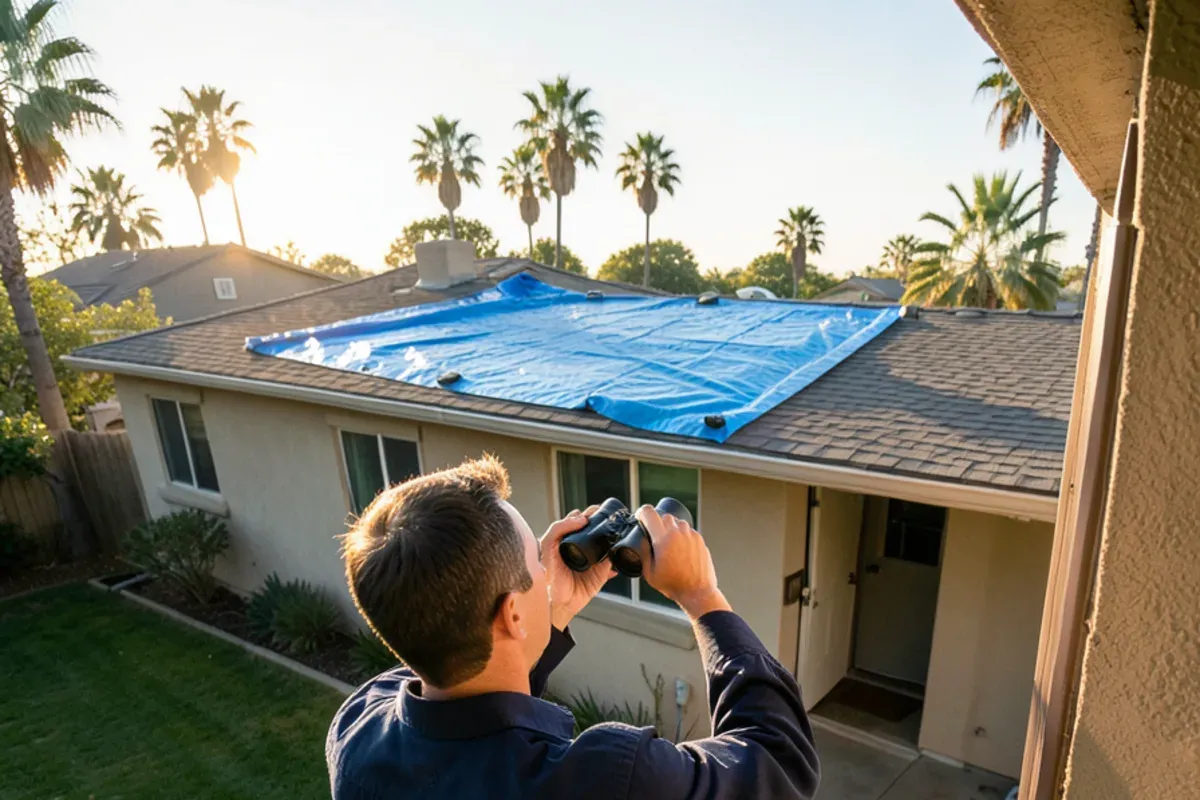
Check from the ground, in daylight, after every wind or rain event. Binoculars or a zoomed phone photo are enough. Look for:
- An edge that lifts or flaps, or a sound you can hear from inside the house
- Water pooling in a fold, which adds weight and pulls on the fasteners
- A battened edge that has shifted or lost its screws
- A sheet that has gone chalky, faded or split at a grommet
- New stains on the ceiling underneath
Take a dated photo each time. If something has moved, call the roofer who placed it. Do not climb up to retie it.
When to replace the tarp with a real repair
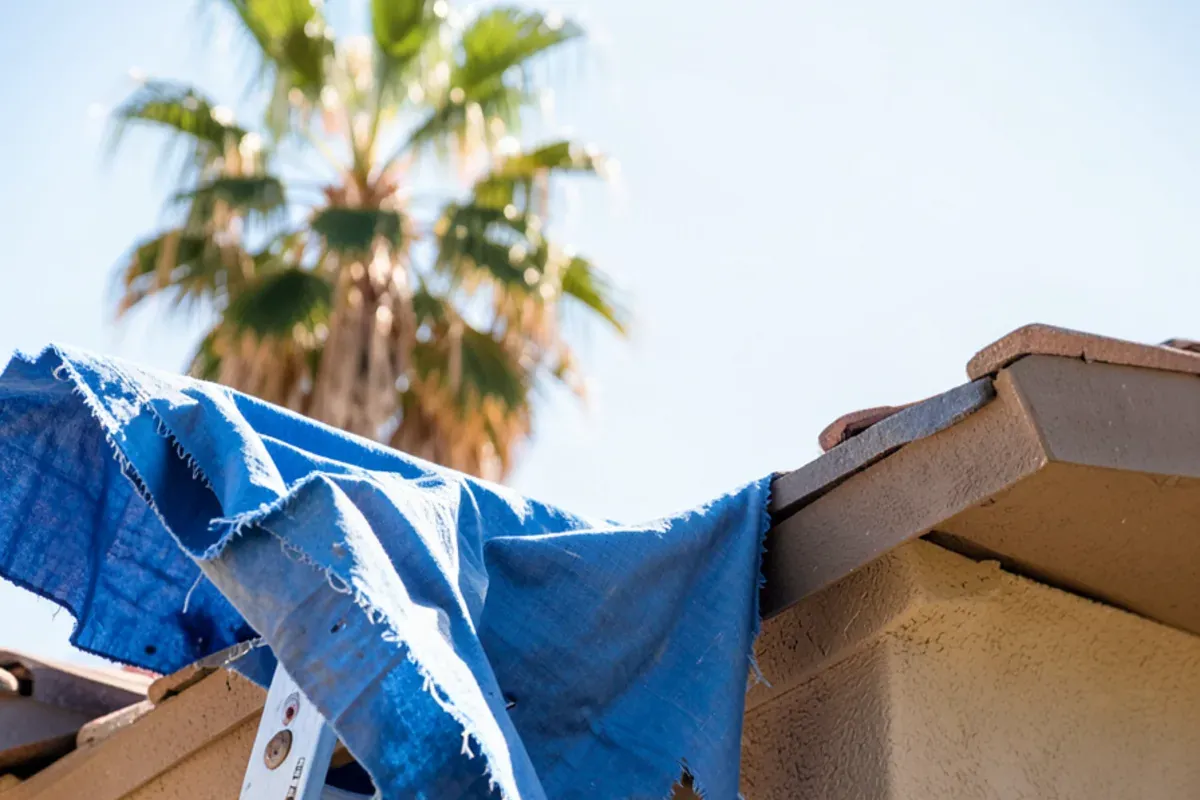
Book the permanent work as soon as the roof is dry. Signs your tarp has run out of time: torn grommets, a faded and chalky sheet, water pooling in the folds, or a flapping edge you can hear from inside. If rain is forecast and the tarp looks tired, call a roofing contractor in Torrance before the front arrives. For the first-hour checklist before any tarp, see what to do when your roof leaks.