
By the Crown Trim Roofers team · Published · Updated
A leak in a storm feels like an emergency, and sometimes it is. Most of the damage, though, comes from what happens in the next few hours inside the house, and that part is in your hands. If the leak turns out to need a tarp or a repair, our emergency roof repair page explains how that visit works.
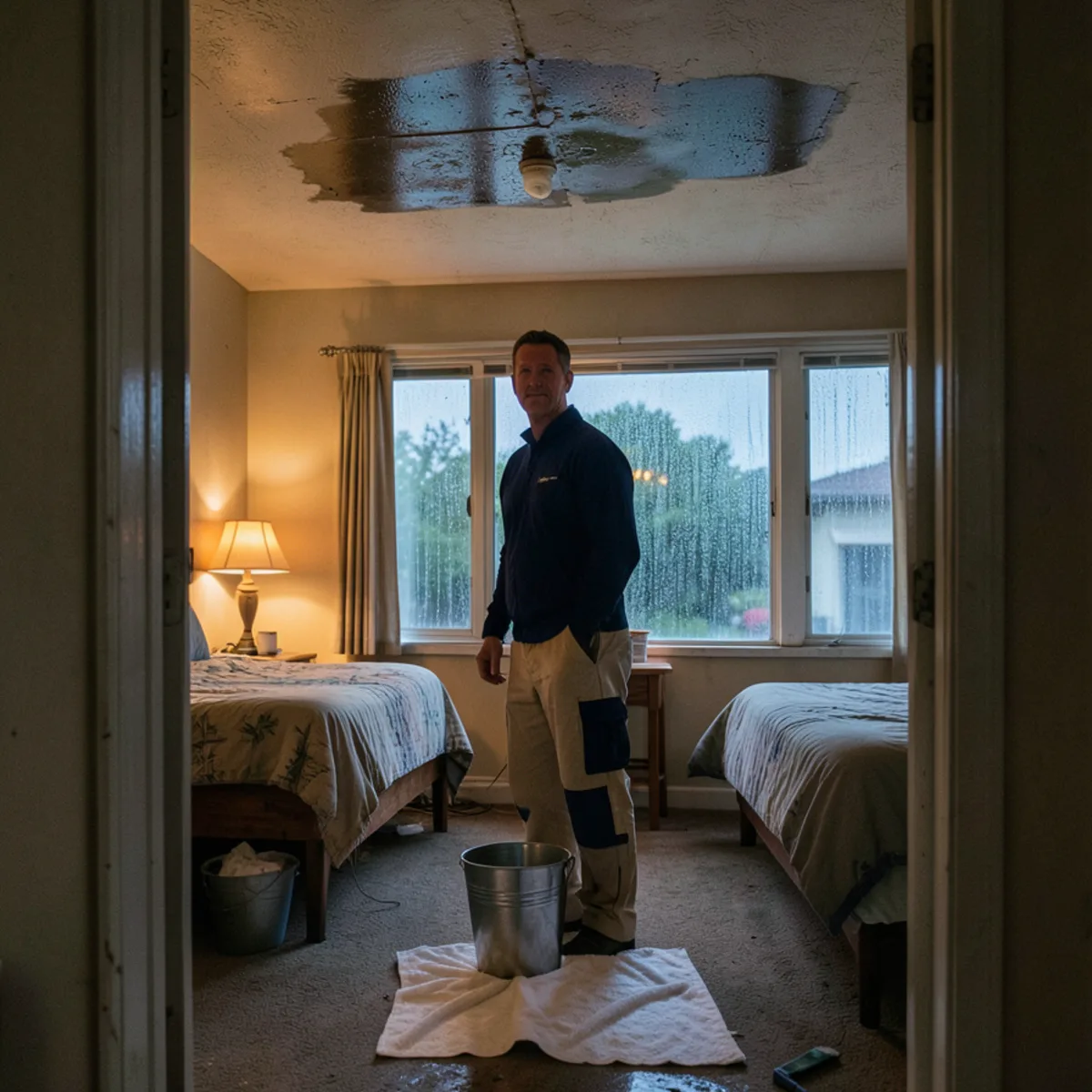
What to do when a roof leaks in rain, step by step
Work through this list top to bottom. Each step protects something more valuable than the one after it.
- Check the electrics. If water is near a light fixture, ceiling fan, outlet or smoke detector, switch off that circuit at the breaker panel. Do not stand under a ceiling that is bulging or sagging.
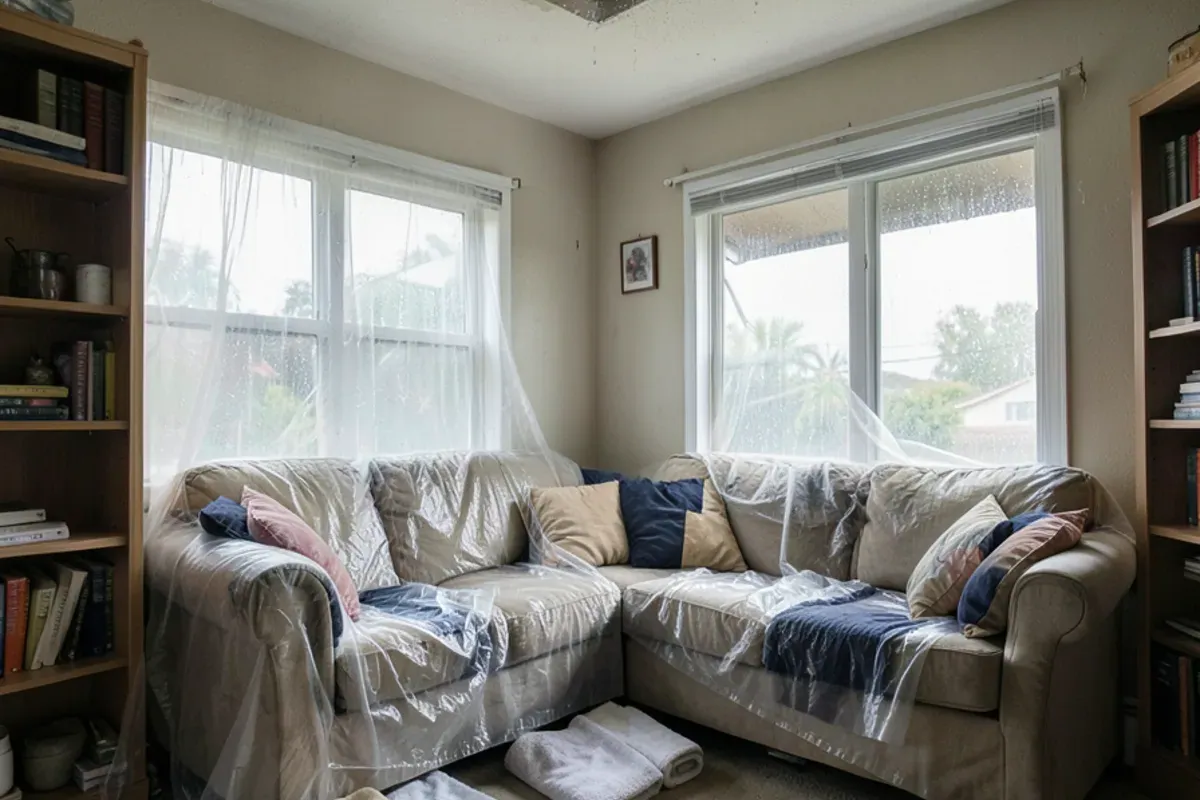
- Clear the floor. Move rugs, electronics and furniture out from under the drip zone. Water follows gravity but also travels sideways along framing, so clear a wider area than the stain.
- Catch the water. Use a wide bucket or storage tote on a folded towel. The towel stops splashing, which is often what ruins a hardwood floor.
- Relieve a bulge, if there is one. See the next section.
- Photograph everything. Take wide shots and close-ups of the ceiling, walls and belongings, with the date visible if you can. These matter later whether or not you file a claim.
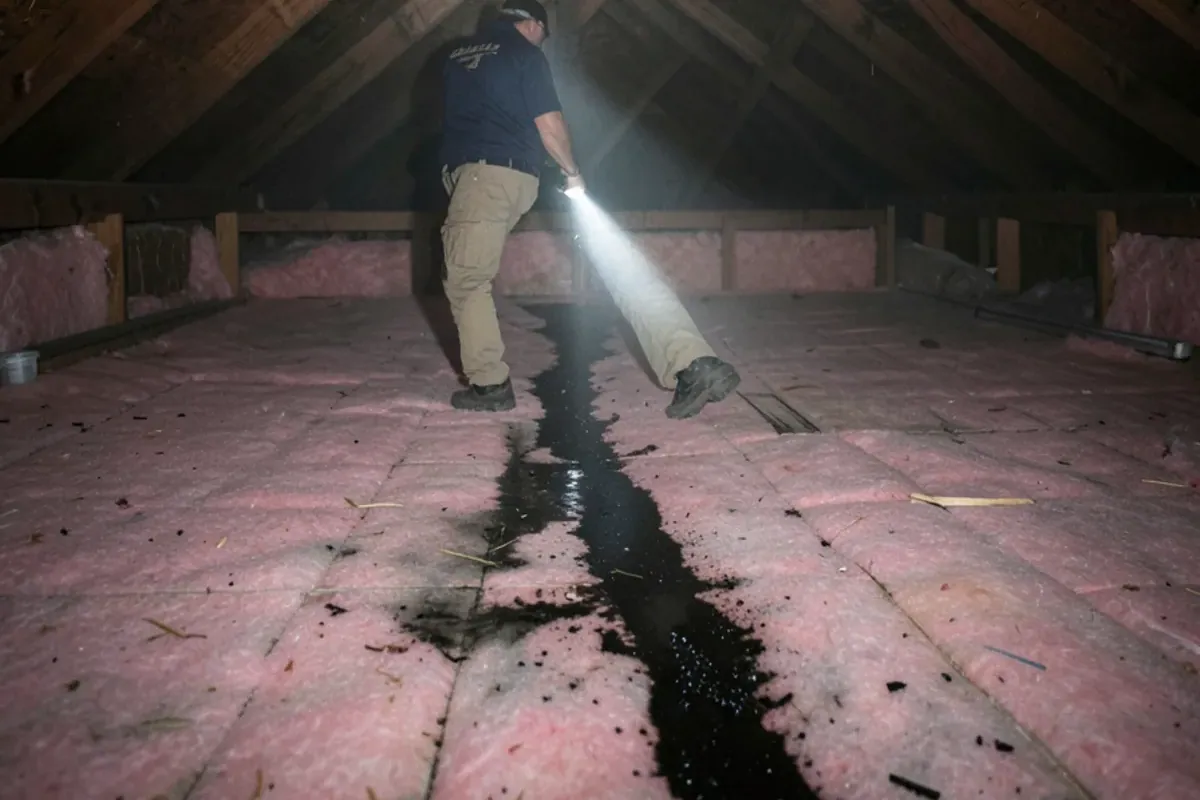
- Look in the attic if it is safe. You are looking for dark trails on rafters, wet insulation or daylight where there should be none.
- Call a roofer. Give the address, what you see inside and whether rain is still falling.
Should you poke a hole in a bulging ceiling?
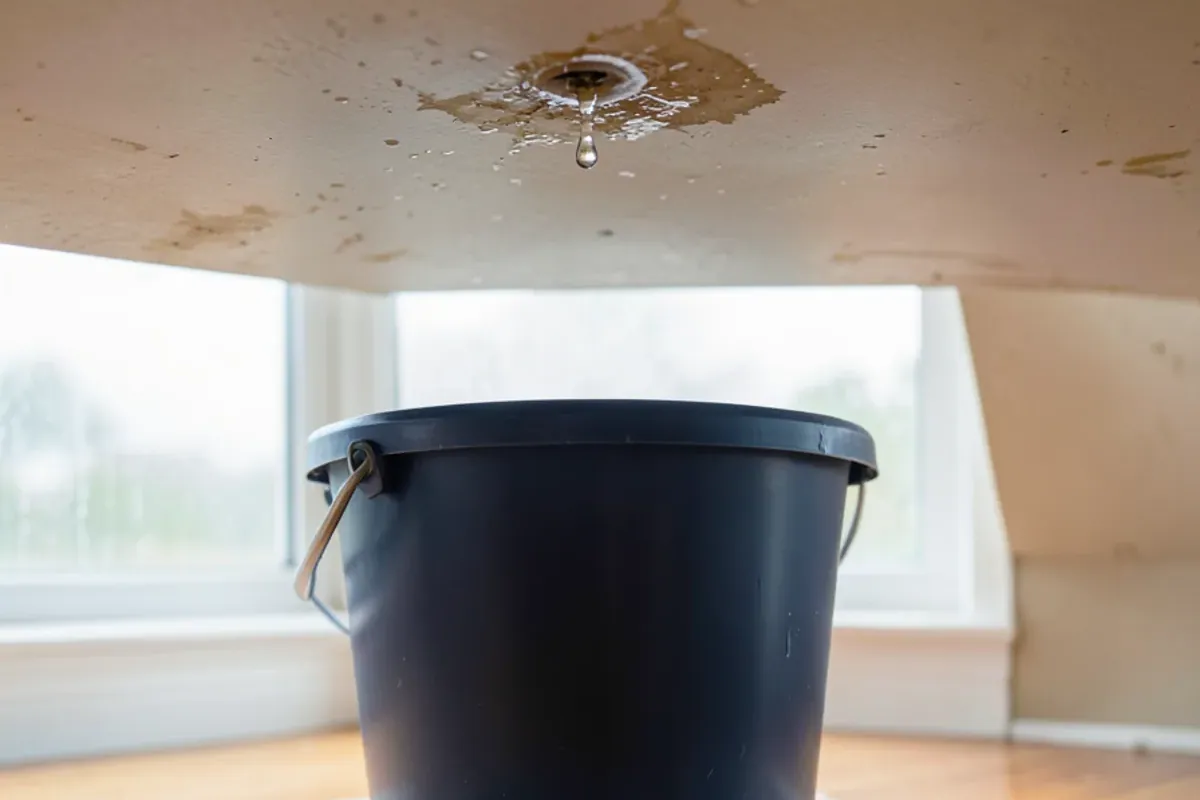
Sometimes, yes. Water that pools above drywall has nowhere to go, and it adds weight until the ceiling lets go all at once. A small controlled hole at the lowest point of the bulge drains it into your bucket instead.
Do it carefully. Stand to the side, not directly under the bulge. Use a screwdriver, not a knife, and make a hole about the width of a pencil. Never do this near a light fitting or wiring, and switch the circuit off first. If the ceiling is already cracking, sagging in a large area or dripping from a fixture, stay out of the room and call.
Where is the water really coming in?
The stain is rarely under the hole. Water enters the roof, runs down the underlayment or along a rafter, and drips from the first low point it finds. The opening is usually uphill from the stain, sometimes by several feet.
Some patterns we see over and over:
| Where the stain shows | Common entry point |
|---|---|
| Next to a chimney or fireplace wall | Chimney flashing or a cracked cap |
| Under a plumbing vent or bathroom | A cracked rubber vent boot |
| Along a ceiling line where two roof planes meet | A roof valley |
| Under a skylight | Skylight flashing or seal |
| Only during wind-driven rain | Lifted shingle edge or slipped tile |
That last row matters in the South Bay. One Google reviewer described a leak that only showed up when wind and rain arrived from a certain direction. Leaks like that are hard to find in a dry-day inspection, which is why your photos and notes about the weather at the time help.
Is it okay to call a roofer during a storm?
Yes. Calling during rain is the right time to make contact, even if the roof work itself has to wait for a gap in the weather. Describing the leak now gets you a place in the schedule and lets the roofer plan for a tarp.
One Google reviewer described thanks for prompt help with a roof leak after a major storm. Another said the crew came out quickly and handled it right away. We offer same day or next day service, and when the roof is too wet or windy to work on safely, the plan is to protect the interior and cover the opening as soon as conditions allow. See our page on roof leak repair for how the permanent fix works once the rain stops.
What should you never do while the roof is leaking?
Most storm-night mistakes come from wanting to fix the leak right now. A few common ones make the situation worse:
- Climbing up to look. Wet tile and granule-covered shingles are slick, and ladders sink into saturated ground. Nothing useful gets repaired in a downpour anyway.
- Smearing roofing cement or caulk on wet roofing. Sealant does not bond to a wet, dusty surface. A blob over the wrong spot can also trap water and hide the real opening from the person who comes to fix it.
- Treating a stopped drip as a fixed leak. A ceiling that stops dripping may still be holding water above the drywall.
- Throwing out the evidence. Wet carpet padding, stained boards and ruined belongings are part of the record if you file a claim. Photograph them before they go to the curb.
- Aiming a space heater at a wet ceiling. Heat near damp fixtures and wiring is a bad idea. A fan and a slightly open window dry a room more safely.
What a roofer checks first on a leak call
This is what we look for, and what we tell customers to expect:
- The interior evidence. Where the water shows, how far it has spread and whether the drywall is still firm.
- The attic. One Google reviewer noted we checked the attic for other spots that had started to leak, which they had not seen during a roof inspection before. Attic checks often find a second, smaller leak nearby.
- The usual suspects. Flashing, vent boots, valleys, ridge caps and any slipped or cracked tile or shingle uphill of the stain.
- The age of the roof. A leak on a roof near the end of its life is a different decision from a leak on a roof with years left. Most Torrance homes are older, with a median build year of 1964, so original or second-generation roofs are common here.
We show you photos of what we find and explain repair and replacement options in plain terms. A repair comes first when a repair will do.
How far can a small leak spread inside the house?
Farther than the stain suggests. Water that gets in at a flashing joint runs along the underlayment, drops onto insulation or drywall and wicks sideways through the framing. Wet fiberglass insulation mats down and stops insulating until it is replaced. Decking and rafter ends that stay damp through several storms soften, which is how a small flashing problem turns into a decking job. On older homes with board decking, a slow leak can also pass through the gaps between boards and show up in a different room from where it entered.
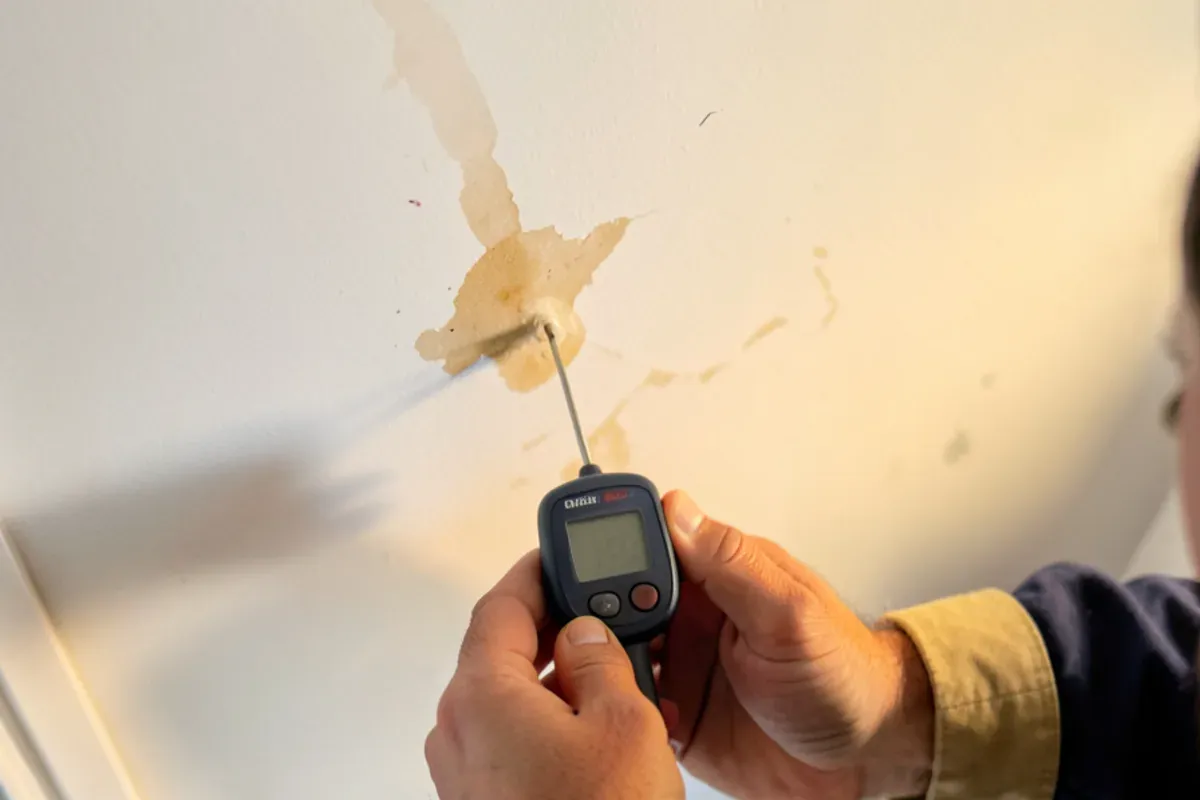
That is why a dry-looking ceiling is not proof of a dry house. A roofer or a water-damage technician can use a moisture meter to find damp drywall past the visible edge. If the stain keeps growing after the rain has stopped, water is still arriving from somewhere: a pocket pooled above the ceiling, a plumbing line or condensation. Our guide to a water stain on the ceiling after rain shows how to separate those causes.
Do you need to tell your insurer?
Photograph first, then read your policy. Sudden storm damage is often covered, but gradual leaks from long-term wear usually are not, and the line depends on your policy wording. The California Department of Insurance publishes guidance on how claims work and your rights as a policyholder. We document damage with photos and can be on site when the adjuster inspects. We do not negotiate claims or advise on coverage. You pay your deductible.
After the rain stops
A tarp or temporary patch buys days, not seasons. Book the permanent repair while the evidence is fresh, dry out the affected area, and replace any wet insulation. If the ceiling stain is old and you are unsure whether it is still active, our guide to a water stain on the ceiling after rain walks through how to tell. For a lasting fix on a Torrance home, start with a call to a local roofing contractor in Torrance who will show you the opening in photos before recommending anything.