
Roof Leak Repair in Torrance, CA
- 4.8★ from 73 Google reviews
- Free estimates
- Same day or next day service
- Photos of what we find
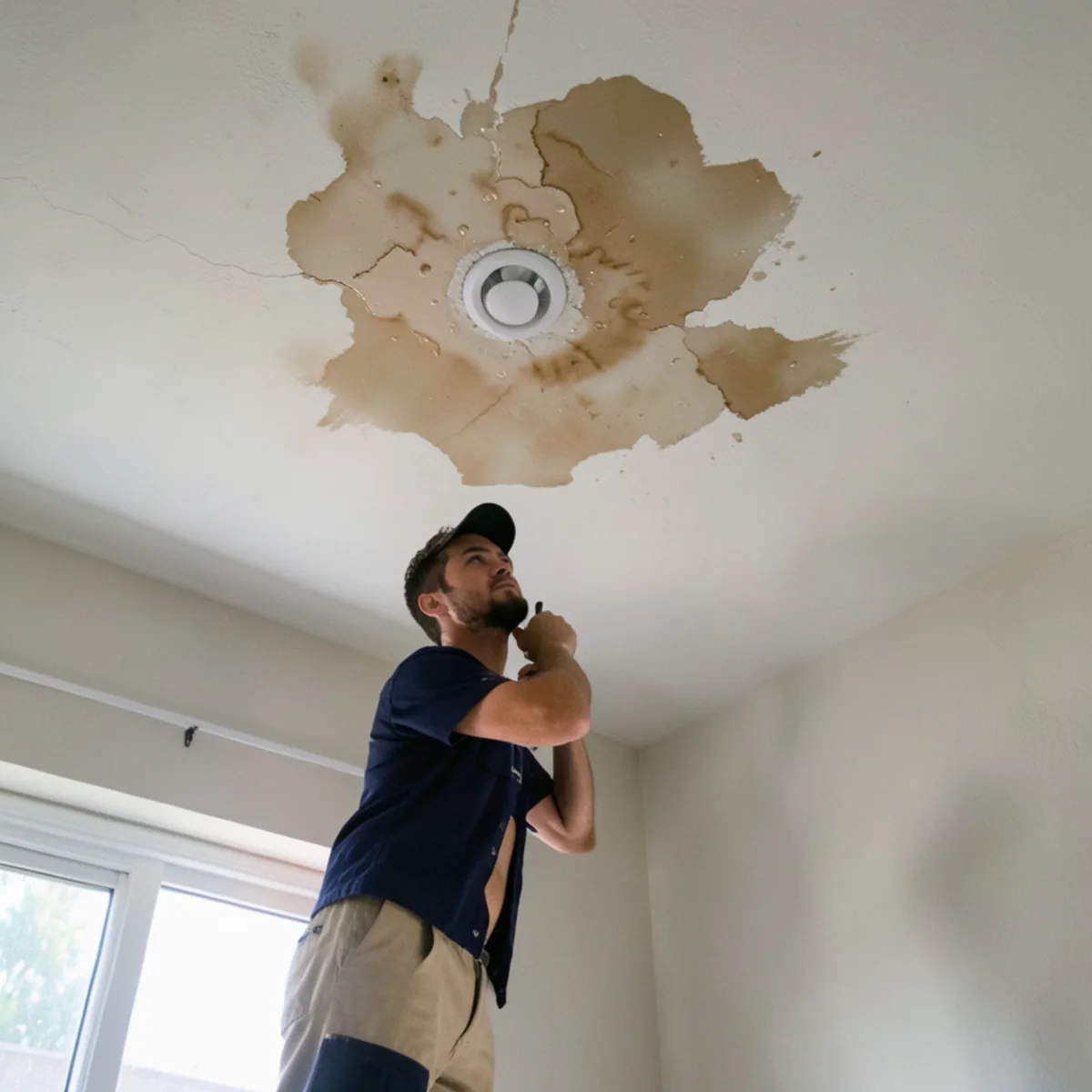
A leak is a path, not a point. Water gets into your roof in one place, travels along the underlayment and framing, and shows up somewhere else. That is why the best first move in roof repair is to follow the path backward instead of patching the stain's neighbor.
Why is there a stain on my ceiling when the roof looks fine from outside?
Because the roof surface is only the top layer. Under shingles or tile sits underlayment, then plywood or plank decking, then rafters, then your attic floor and drywall. Water that gets past the top layer slides downhill along that stack until it finds a seam, a nail hole or a light fixture cut-out. The stain can sit six feet or more from the entry point.
Signs that the leak is real roof water:
- A brown ring that darkens or grows after rain and dries between storms
- Bubbled or peeling paint on the ceiling, often around recessed lights or at the wall joint
- Musty smell in a closet or hallway under the roof
- Dark trails on attic rafters, or rusted nail tips poking through the deck
- Damp or flattened insulation
Signs it may be something else: a stain that appears in dry weather, or one under a bathroom, kitchen or ductwork. A loose bathroom fan duct can dump steam onto cold decking and drip like a leak, and sweating air conditioner ducts do the same. The attic visit sorts those out.
Our post on ceiling stains after rain explains how to judge urgency. If water is actively coming in, our emergency roof repair service covers the temporary protection step.
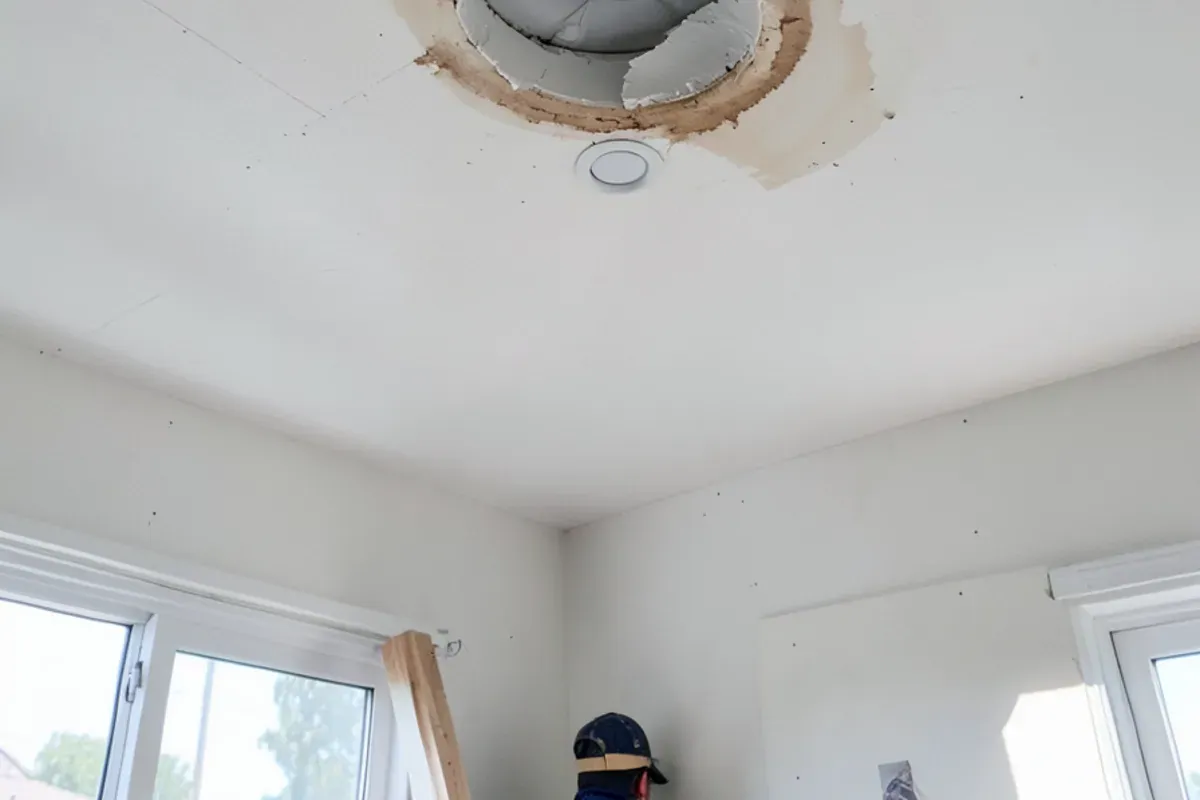
Why does my Torrance roof only leak when rain comes from one direction?
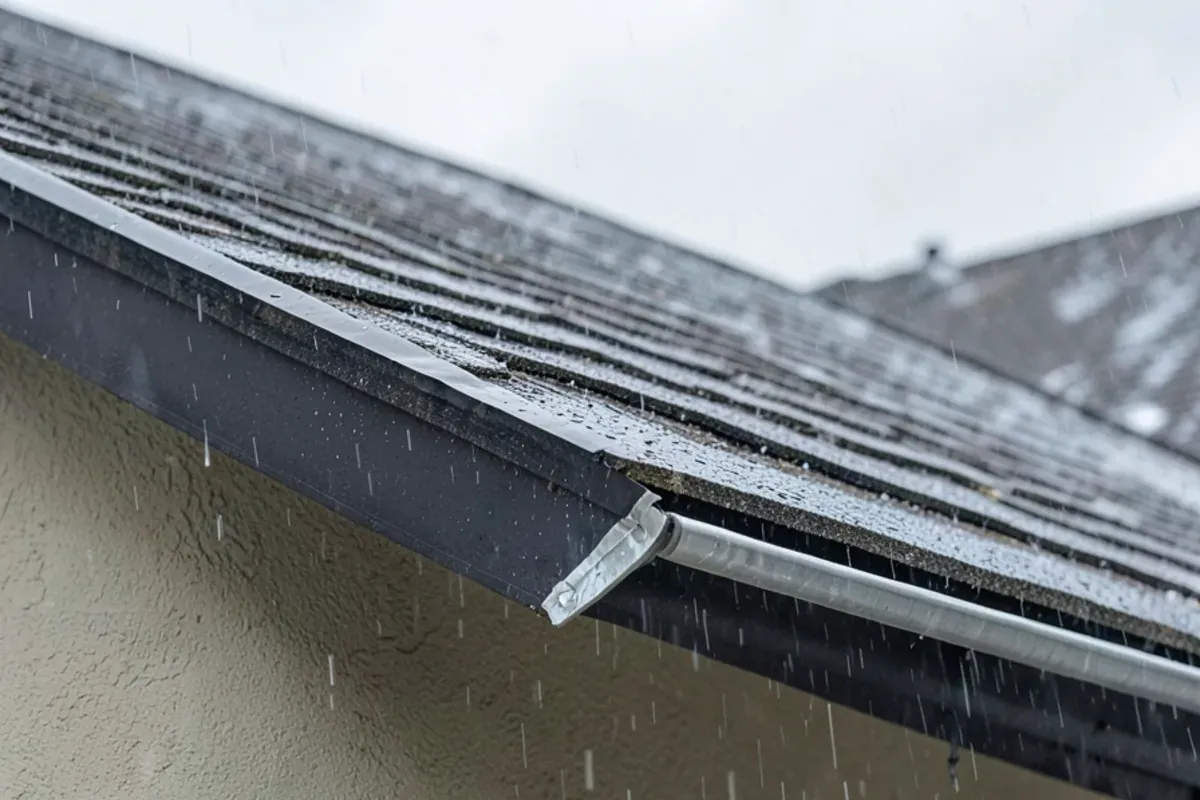
Straight-down rain behaves. Rain driven by wind does not. Pacific storms commonly arrive with wind from the south or west, and that pushes water sideways and up under the edges of things that only shed water from above. One Google reviewer described exactly this: "The leak was tricky because it only showed up when the wind and rain hit from a certain direction."
The usual suspects for a direction-specific leak:
- Wall-to-roof joints. On Torrance stucco homes, the counterflashing where a roof meets a wall is often just sealant over the stucco. When that sealant opens, wind-driven rain walks in.
- Step flashing and headwall flashing. The top edge of the metal is a few inches high. Gusts can push water over it.
- Tile laps and vent louvers. Water blown up-slope under a tile or through a gable vent lands on the underlayment or the attic floor.
- Exposed nail heads and old sealant. Patchwork from a previous repair can crack open on one exposure only.
The fix is rarely more sealant. It is usually a taller, properly lapped flashing or a replaced boot on the exposed side. Our flashing repair page covers those details.
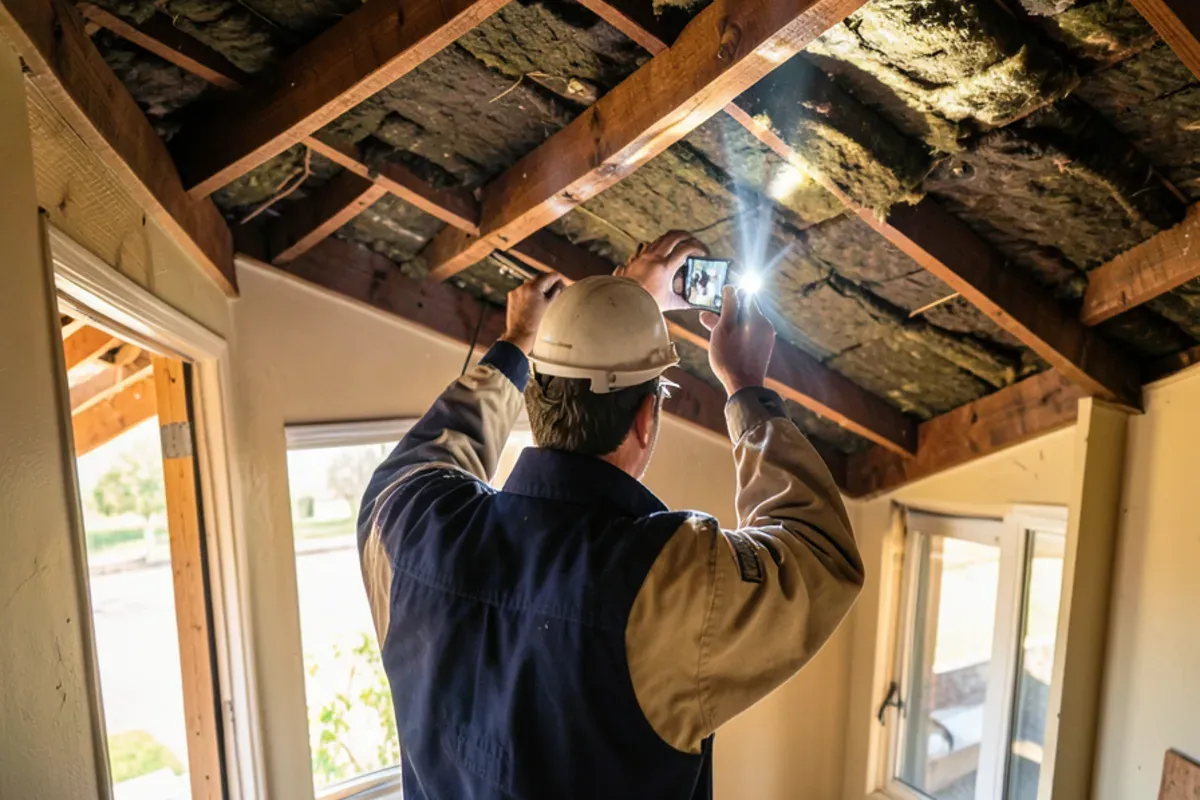
How do we find the source of a roof leak?
We follow the same order every time, because skipping steps is how leaks come back.
- Talk first. Where is the stain, when did it show up, does it follow rain from one direction, has anyone patched the roof before?
- Attic. We trace stains on the underside of the deck back uphill, look for wet insulation and rusted nail tips, and take photos. One Google reviewer noted that the roofer "checked the attic to see if any problem spots had started leaking," and called it something they had not seen before during a roof inspection.
- Roof surface. We inspect penetrations, flashings, valleys, ridge, and fasteners along the line the attic evidence points to.
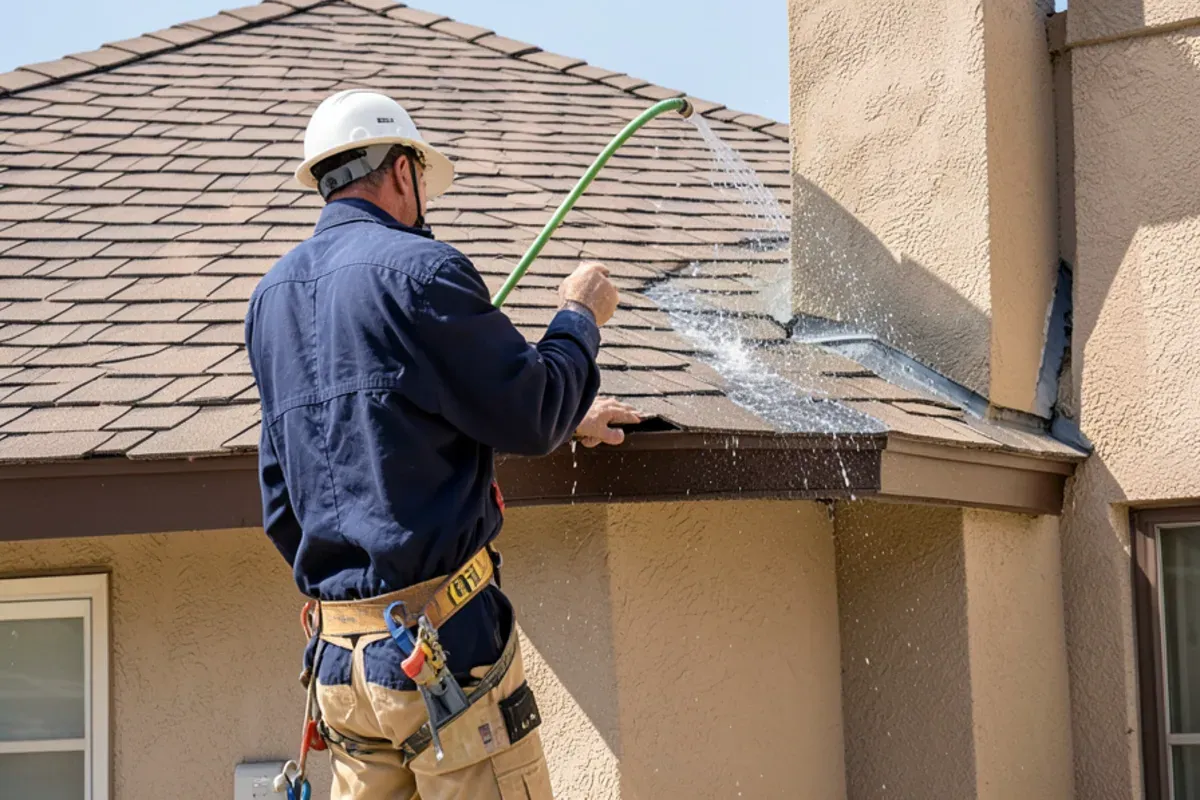
- Water test when needed. With someone inside, we run a hose on a small section, starting low and working uphill, long enough for water to travel through. Then we move up one section at a time. If we spray everything at once, we learn nothing.
- Photos and explanation. You see the entry point, the attic stain and the proposed fix.
Some leaks take more than one visit, such as one that only shows in a certain wind. We say so up front.
Repair methods and their trade-offs
| Cause found | Typical repair | Trade-off |
|---|---|---|
| Cracked rubber vent boot | Replace the boot or collar (see vent boot repair) | Cheap and lasting; sealant over a cracked boot is a stopgap |
| Opened wall or chimney flashing | Replace with new metal, lapped and tied into the roofing | More labor than caulk, but caulk reopens |
| Slipped or cracked tile | Reset or replace, and check the underlayment | Underlayment may need a patch, not only a tile |
| Lifted or missing shingles | Replace and re-seal | Brittle old shingles may crack during repair |
| Rotted valley or soft deck | Open up, replace the damaged material, rebuild | Costs more, but stops repeat leaks |
| Exposed nail heads | Seal or replace fasteners | Quick, but only a small share of leaks come from here |
Our pages on shingle roof repair and tile roof repair go further into those two materials. A dab of roof cement might stop the drip tonight, and we sometimes use it as first aid, but we say clearly when it is temporary.
What does a roof leak repair visit look like?
A simple leak, such as a failed vent boot, is usually fixed in the same visit as the diagnosis. A hidden one takes two visits: one to find it and one to fix it once the roof is dry. Sealants need a dry surface, and much of our rain arrives between November and March, so permanent work sometimes waits for a break in the weather.
We protect landscaping and driveways, clean up thoroughly, and tell you when the ceiling is dry enough to repair. Drywall and paint are a separate trade. Seal the stain with a stain-blocking primer before painting, or the brown ring will bleed through.
What decides the price of fixing a roof leak?
We give free estimates and do not post prices. For context, 2026 published cost guides place most roof repairs between $300 and $1,500, which is market data and not a quote. Your number moves with:
- How many entry points there are, and whether they are on one slope or several
- Roof material and pitch, and how easily we can reach the area
- Whether the underlayment or deck is damaged and needs replacing
- Whether the leak is old, with rot or mold-prone insulation to deal with
- Whether the roof is open to weather and needs temporary protection first
Why Crown Trim for roof leak repair?
- Same day or next day service when water is coming in.
- We climb into the attic as well as onto the roof, and you see photos of the stain and the entry point.
- The estimate and the roof inspection cost nothing.
- If one boot or one flashing is the cause, that is what we fix. A full replacement comes up only when the evidence supports it.
- For storm leaks, we document damage and can be on site for the adjuster's inspection.
- Reviewers rate us 4.8 stars across 73 Google reviews.
What a roof leak repair includes, and which rules apply
A leak repair is written up as a list of deliverables, so you can see what each line covers. Every leak call starts with the trace, because a patch on the wrong spot only moves the stain. Then we replace the failed part instead of smearing sealant over it, and we fasten and re-seal around the new part so it sheds water for the long term. If the deck under the entry point has gone soft from repeated wetting, that repair is priced as its own line, so the leak fix is not padded with it. The scope of a typical leak repair includes:
- Tracing the entry point, with attic and roof photos
- Replacing the failed part: boot, flashing, tile, shingle or a section of valley
- Re-sealing and fastening around it
- Patching damaged decking, priced as its own line
- Cleanup and haul-off
- Photos of the entry point and the finished repair
Small like-for-like repairs often need no permit, but larger work can. Torrance permits go through City of Torrance Building & Safety, (310) 618-5910. Unincorporated LA County uses LA County Public Works. Confirm the rule for your address. California requires a state contractor license for most roofing work, so verify any roofer on the CSLB site, cslb.ca.gov.
How to keep it from coming back
Look at the roof before the first rain, not after. Clear leaves from valleys and gutters. Check the rubber on vent pipes. Trim branches that scrape the roof. After a big storm, walk the house and look at ceilings in each room. An annual roof inspection catches failing details before they drip.
We repair leaks across the South Bay, including Carson, Redondo Beach and Rancho Palos Verdes. Coastal homes near Redondo see more salt air on metal parts, and Peninsula hillsides see more wind, so where we look first differs by address.
Where we do roof leak repair around Torrance
Each place brings its own version of this job.
- South San Gabriel: Post-war homes in this small unincorporated pocket beside Monterey Park and Rosemead leak at aging flashing and vents, and county permits apply.
- Rancho Palos Verdes: Ocean-facing roofs catch rain from the south and west, and hillside movement can open flashing joints that stay tight on flat ground.
- Lomita: Small post-war roofs on their second or third layer often leak at vent boots and old patches, a quick find once we are in the attic.
- Hermosa Beach: Roof decks, flat sections and shared walls near The Strand mean many leaks start at a waterproofing joint, not at the shingles.
- Lawndale: Low-slope additions on small-lot homes along Hawthorne Boulevard are a frequent leak source where new roofing meets the old.
- Del Aire: 1950s homes near the 105/405 interchange are on second or third roofs, and the leak is often at a flashing that survived the last re-roof.
- Alondra Park: Mid-century single-story homes beside the park, where a hidden attic leak can run a long way along the framing before it stains.
- El Segundo: Early and mid-century homes east of Sepulveda plus flat commercial roofs, so we trace leaks on both pitched and low-slope surfaces.
- Signal Hill: Hilltop condos and townhomes catch wind that lower streets miss, which makes direction-specific leaks and window-line seepage more likely.
- San Fernando: Pre-war homes in this independent city surrounded by Los Angeles need leaks traced through old roofs, and the city runs its own building department.
What customers say about this work
Crown Trim Roofers holds 4.8 stars from 73 Google reviews. Read all reviews
“We had a small leak in our roof and searched for roofing companies online.”
“He also shared helpful advice about regular roof maintenance, flashing checks, and keeping the roof system in good shape to help prevent future leaks.”
“kingston, the estimator, really knew his stuff and helped guide us through the insurance estimate, making the process much easier.”
Roof Leak Repair: common questions
Why does my Torrance roof only leak when rain comes from one direction?
Wind-driven rain is pushed sideways and up-slope, so it reaches places gravity-fed water never touches: the top edge of step flashing, the laps of tile, vent louvers and the gap where a roof meets a stucco wall. If the leak only appears with rain from the south or west, we start with the walls, flashings and penetrations facing that direction.
How do you find a roof leak that takes several visits to locate?
We work by elimination. We document the stain, inspect the attic, then test one roof section at a time with a hose while someone watches inside. We avoid sealing everything at once, because then you never learn what fixed it. If the leak only shows in certain weather, we plan a return visit for those conditions and tell you why.
Why is there a stain on my ceiling when the roof looks fine from outside?
Water runs along the underlayment, down rafters and across the top of walls before it drips. The entry point can be several feet uphill from the stain. Condensation, a loose bathroom fan duct or a plumbing line can also stain a ceiling. The attic usually tells us which it is. See our guide to ceiling stains after rain.
Can you fix a roof leak without replacing the roof?
Most leaks come from one failed detail, such as a vent boot, a flashing joint or a few slipped tiles, and those are repaired in place. We recommend replacement only when the leak is a symptom of widespread failure, like brittle shingles or underlayment that has aged out across the whole roof. You see the photos and decide.
What should I do while I wait for the roof leak to be fixed?
Put a bucket under the drip and move furniture and electronics. If the ceiling bulges with water, a small hole at the lowest point lets it drain in a controlled way instead of letting the drywall collapse. Photograph everything with dates. Stay off a wet roof, since both shingle and tile are slippery. Then call for a visit.
Will a leak repair be covered by my homeowners insurance?
Coverage depends on your policy and what caused the damage. Sudden storm damage is treated differently from long-term wear. We photograph the damage and can be on site for the adjuster's inspection. We do not negotiate claims or advise on coverage. You pay your deductible. See roof insurance claims for the process.
Related services and guides
Shingle Roof Repair
Tile Roof Repair
Roof Leaking in a Storm? What to Do First in Torrance
Ceiling Stain After Rain: Emergency or Wait and Watch?
Roof Repair Cost in the South Bay: Small Fix or Big Job?
Where we work: Carson, Redondo Beach, Rancho Palos Verdes, Gardena and the rest of our service areas.
Water on the ceiling? Get it traced before the next rain.
Call first. A roofer picks it up from there.