
By the Crown Trim Roofers team · Published · Updated
A tile roof is the one most likely to outlive the person who bought it, with one catch: the layer you cannot see has a shorter lifespan than the tile. Keeping a tile roof going means watching that hidden layer and keeping people off the surface. Our roofing contractor in Torrance pages cover every material, and the tile and slate roofing page covers this one in depth.
How long does a tile roof last?
Published guides typically put clay and concrete tile at 50 years or more, and some cite far longer. Treat that as a typical range, not a promise. The tile itself is fired clay or cured concrete. It does not rot, rust or lose granules. What fails is everything around it.
| Part | Typical behavior |
|---|---|
| Clay or concrete tile | Often described as 50 years or more |
| Underlayment beneath the tile | Commonly wears out sooner, often in the middle decades |
| Flashing and sealant | Needs periodic checks and resealing |
| Fasteners and mortar | Can loosen with age and movement |
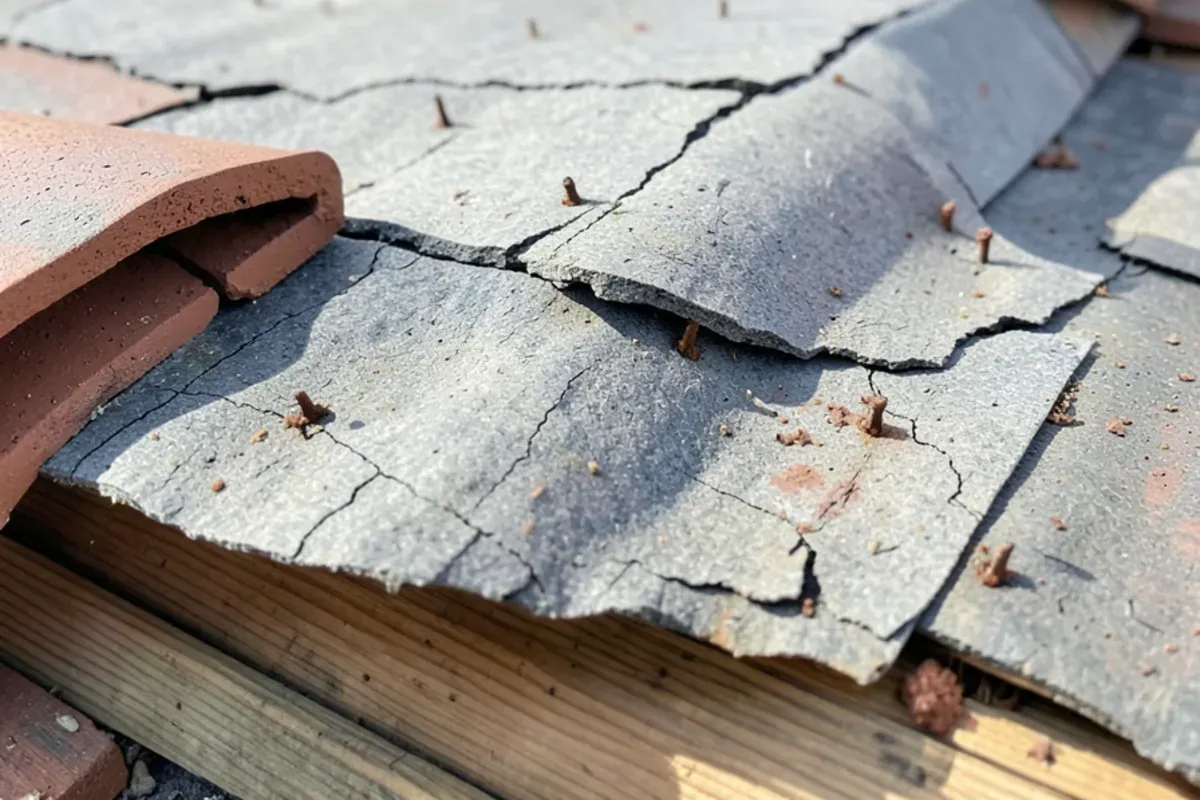
The reason the underlayment matters is simple. Tile sheds most water, but wind-driven rain gets under it, and the underlayment is the actual waterproof layer. When it cracks, the roof leaks even though the tile looks perfect. Our post on tile roof underlayment cost goes into the repair.
What should you check on a tile roof from the ground?
Use binoculars and look at each slope in morning or evening light, when shadows show uneven tiles.
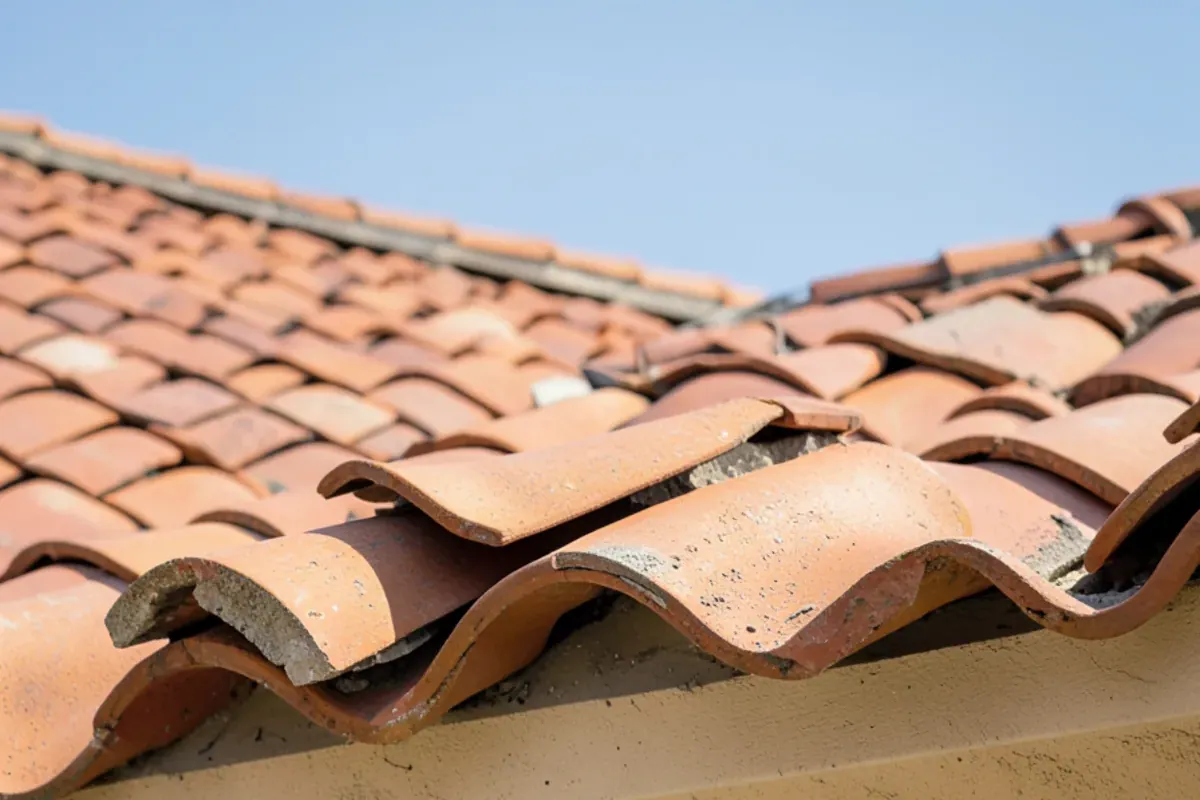
- Slipped tiles. One that sits crooked or lower than its row has lost its hold. Our post on slipped roof tiles covers causes.
- Cracked or chipped tiles. Look for a dark line, a missing corner or a broken piece.
- Ridge and hip caps. Cap tiles set in mortar can crack or shift.
- Rake and eave edges. Wind loosens the outer tiles first.
- Debris and plant growth. Needles and leaves in valleys hold water.
- Staining inside. Ceiling marks beneath a tile roof often mean underlayment failure, not tile failure.
Take photos each year. A change from last year's picture is easier to spot than a flaw.
How does a tile roof age over the decades?
The life of a tile roof is really two lives running side by side. Tile can last for generations, while the layers beneath follow a shorter clock. Ranges below are typical and vary with exposure, installation and maintenance, so they describe what is common, not what will happen to your roof.
| Roof age | What commonly happens | What to do |
|---|---|---|
| Years 1 to 15 | Occasional slipped or cracked tile after wind or foot traffic; sealant at chimneys and walls begins to age | Yearly ground check, photos, prompt tile resets |
| Years 15 to 30 | Flashing and sealant need resealing; felt underlayment may start to dry and crack, with synthetic layers often lasting longer | Add an attic check, ask for a professional look |
| Years 30 and beyond | Older underlayment is commonly at or past its useful life even when the tile looks fine | Plan underlayment replacement before leaks set the schedule |
For many South Bay tile roofs built in the 1960s and 1970s, the tile is still sound while the underlayment has been working far longer than it was designed to. Our tile roof underlayment replacement page explains what that project involves.
What can you check from the attic?
If you have attic access, go up on a cool morning with a flashlight and a mask. Step only on joists or a plank laid across them.
- Scan the decking for brown rings or dark trails, especially near chimneys, valleys and walls.
- Look for daylight at the roof surface where the tile has no gap to let it in.
- Look at the insulation below any stain for clumps or color change, without pressing on it.
- Shine the light down each rafter bay near the eaves, where wind-driven rain tends to enter.
- Photograph any stain with a coin or tape measure for scale, and date it.
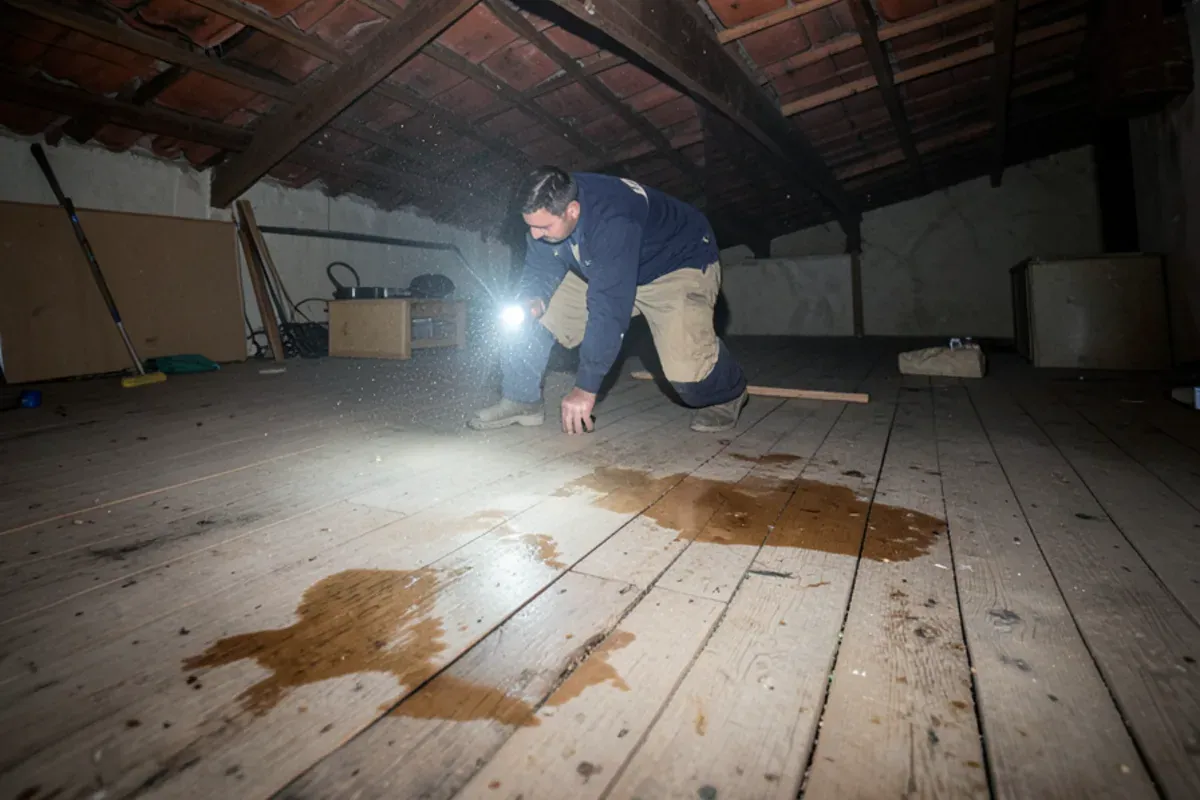
Stains that appear after rain and dry out between storms often mean the underlayment is leaking at a lap or fastener. That is the signal to plan, not to panic. Our roof inspection checklist covers the full walk-through for ground, attic and ceilings.
Why is walking on a tile roof so risky?
Tile is strong when loaded properly and fragile when stepped on in the wrong place. A footstep on the middle of a tile can crack it. Cracks are often invisible from above and show up months later as a leak. A trip up to clean a gutter, adjust an antenna or retrieve a ball is an easy way to crack tiles without noticing.
For your own safety and the roof's, stay on the ground. If something must be done up there, whoever goes should know where to step and carry the weight on foot pads, not on tile centers. A roofer who inspects tile will lift, not crush.
Can you keep a tile roof going with maintenance?
Yes, and a small amount of work goes far.
- Replace cracked tiles promptly. A broken tile is an open door to the underlayment.
- Reset slipped tiles and re-secure them.
- Reseal flashing at chimneys, walls and vents.
- Clear valleys and gutters of needles and leaves.
- Trim branches that touch or hang over the roof.
- Keep people off unless they have a reason and know how.
- Plan the underlayment before it fails, ideally at a time that suits you.
One Google reviewer described noticing a few tiles slipping out of place and calling for an estimate. The visit also turned up chimney flashing problems that were easy to miss from the ground. That pairing is common. Another described a visit that replaced several damaged S tiles and included a full roof tune-up. See our tile roof repair page for what that involves.
What does a tile roofer check?
This is what we check and what we tell customers when we look at a tile roof:
- The underlayment condition, where tile can be lifted to see it, because that sets the roof's remaining life.
- Flashing and mortar, since these details leak first.
- Tile match. We match existing tile as closely as we can, which matters when older tile is no longer made in the same profile.
- Weight and decking. Tile is heavy, so we look for soft decking or sagging rafters before planning any work.
We show you photos of what we find and explain your options in plain terms. A repair comes first when a repair will do, and we do not push a full replacement.
How do wind, trees and hillsides affect tile?
Strong Santa Ana winds loosen tiles at edges and ridges, and falling limbs crack tiles on impact. On hillside lots, branches overhang more roofs and valleys fill with needles, which hold water against the underlayment below. Cutting back overhanging limbs and clearing valleys from the ground, with a pole or a professional, keeps the surface drier. Hot, dry weeks also let sealant at flashing shrink and split, so look for new gaps after summer.
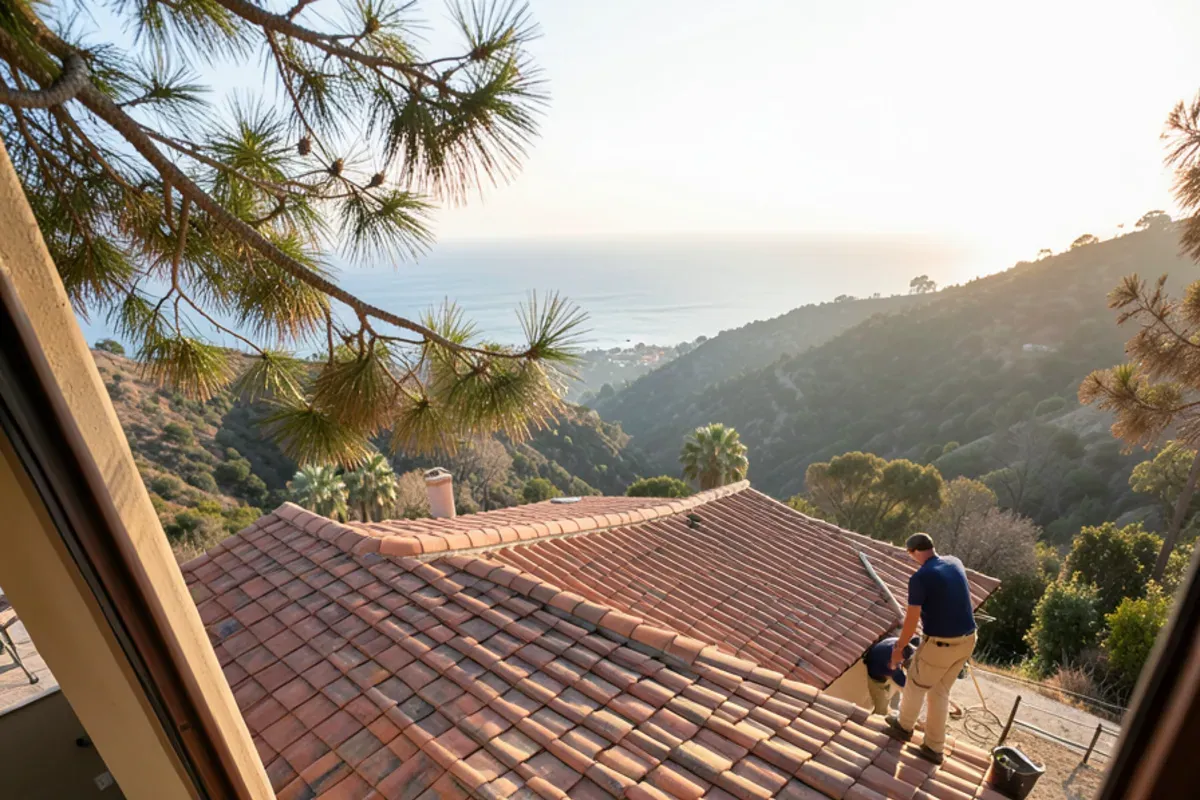
Do Palos Verdes Estates tile roofs have special concerns?
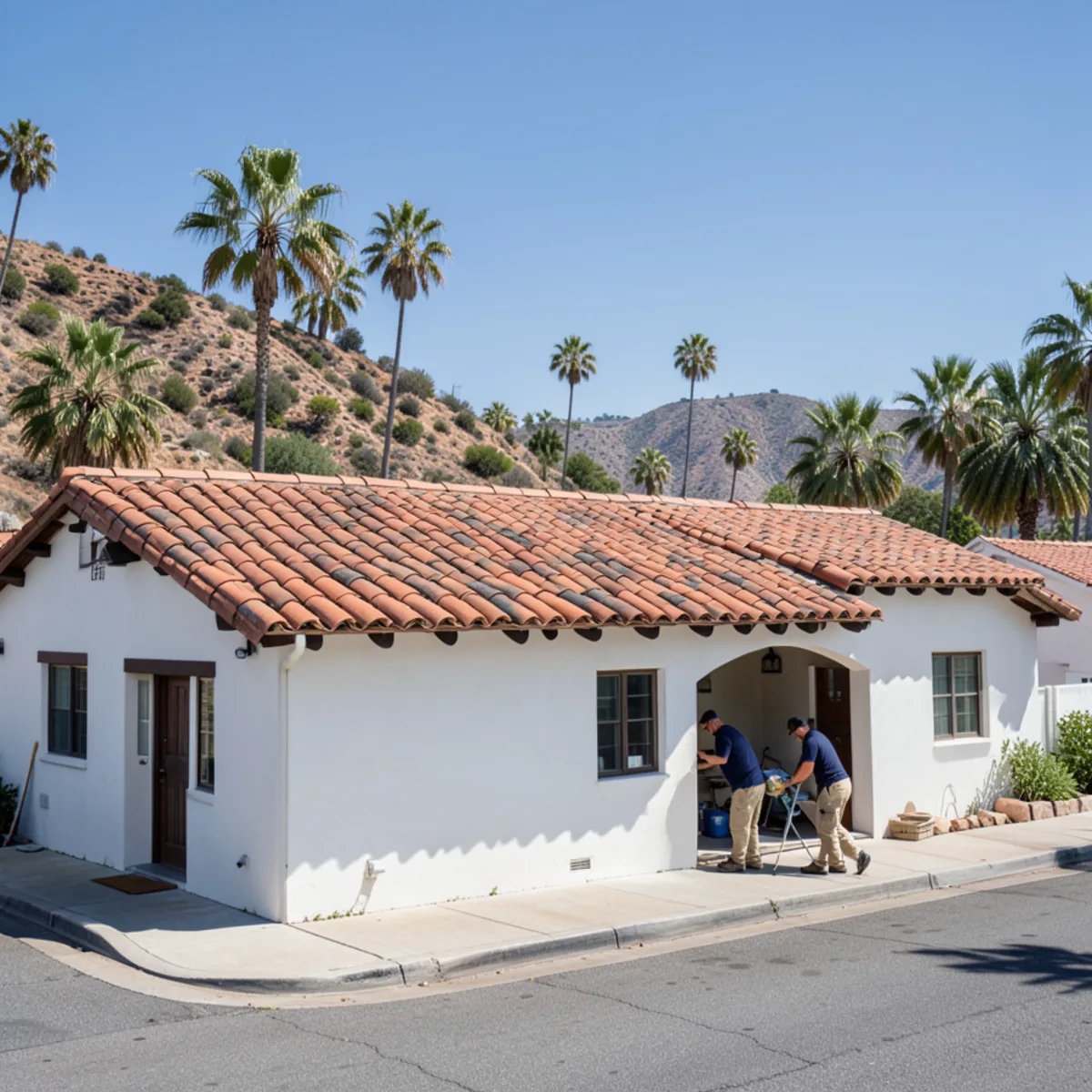
Clay tile is part of the look of many homes in Palos Verdes Estates, where Mediterranean and Spanish Revival styles are common. Hillside lots can make access harder, and the city has a design review process for exterior changes, so confirm requirements with the city before planning work that changes the appearance. Matching the existing tile profile and color matters to both the roof and the neighborhood.
If your tile is fine but the underlayment is aging, plan it before a leak forces the schedule. A free estimate will tell you where the roof stands.