
By the Crown Trim Roofers team · Published · Updated
Every roof has a typical lifespan, and every owner wants a number. The honest answer is a range. Our roof replacement hub covers what happens when a roof reaches the end, and this post helps you guess how close yours is.
How long do different roofs last in Southern California?
These are general ranges drawn from published inspector and trade guides. They are typical, not promised, and different sources disagree.
| Roof type | Typical range | What usually limits it |
|---|---|---|
| Three-tab asphalt shingle | About 15 to 20 years | UV wear, granule loss, brittleness |
| Architectural asphalt shingle | About 20 to 30 years | Sun, heat, attic temperature |
| Concrete or clay tile | Often 50 years or more | Underlayment, flashing, broken tiles |
| Metal (standing seam or panels) | Often 40 to 70 years | Fasteners, sealant, coating wear |
| Flat roofing (built-up, modified bitumen, single-ply) | Roughly 15 to 30 years | Ponding, seams, sun |
Our pages on asphalt shingle roofing, tile and slate roofing, metal roofing and flat roofing explain each material.
Why does the same roof last 15 years on one house and 28 on another?
Four things change the outcome more than the brand on the bundle.
- Sun exposure. South and west slopes get the most UV and heat. They typically age first.
- Attic ventilation. A hot attic bakes shingles from below. Our post on signs of poor attic ventilation lists what to look for.
- Installation. Nailing, flashing and underlayment details decide how a roof behaves in year 15.
- Maintenance. Clear gutters, resealed vents and prompt repairs add years. Ignored ones remove them.
Trees, roof pitch, wind exposure and layers of old roofing also play a part.
How does Southern California weather affect roof life?
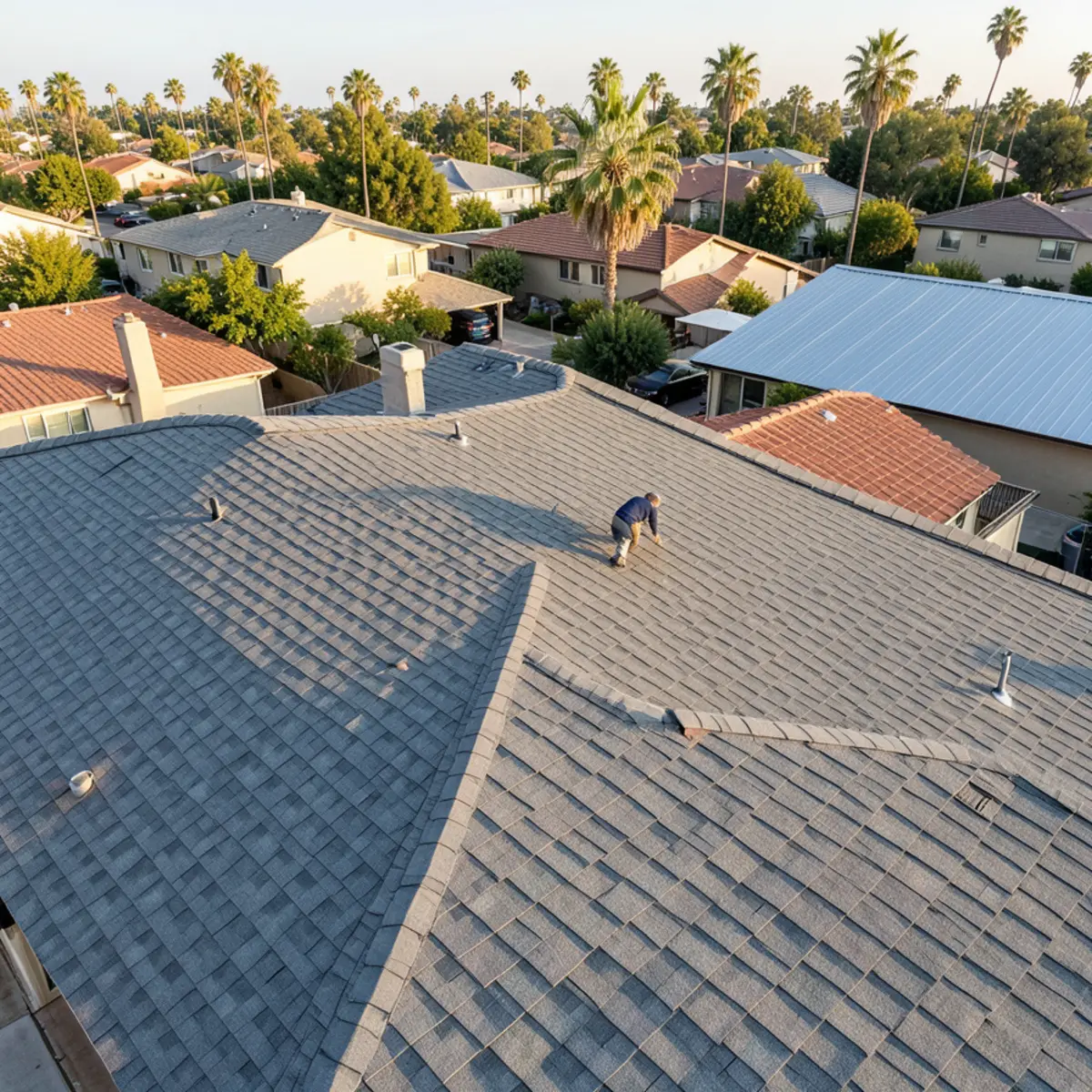
Southern California is not hard on roofs because of rain. It is hard because of the sun. Torrance sees only about 4 days a year over 90°F, which is mild, but the UV is steady all year and cools only a little at night. Sun dries out asphalt, cracks rubber vent boots and sealant, and breaks down coatings on flat roofs. The wet season is short, about 14 inches a year, so the roof is stressed in bursts. A roof with weak flashing may look fine for years and then leak in one February storm.
Coastal neighborhoods add moisture and shade. Hillside areas add wind. Fire areas bring ember rules that influence material choices. Check your own address with the city or county building department, because requirements depend on where you live.
How can you work out your roof's age?
Start with paper before you guess from the surface. Work down this list:
- Permit records. Re-roofs in Torrance generally need a permit, so the city's Building & Safety division at (310) 618-5910 can tell you what is on file for your address. Confirm requirements with the city.
- Invoices and warranty cards in the closing papers from your purchase.
- Solar paperwork. Panel installers often record roof condition and age.
- Neighbors on the same tract. Homes built together are often re-roofed in the same period.
- Seller disclosures and inspection reports from the sale.
- A shingle sample or label found in the garage or attic.
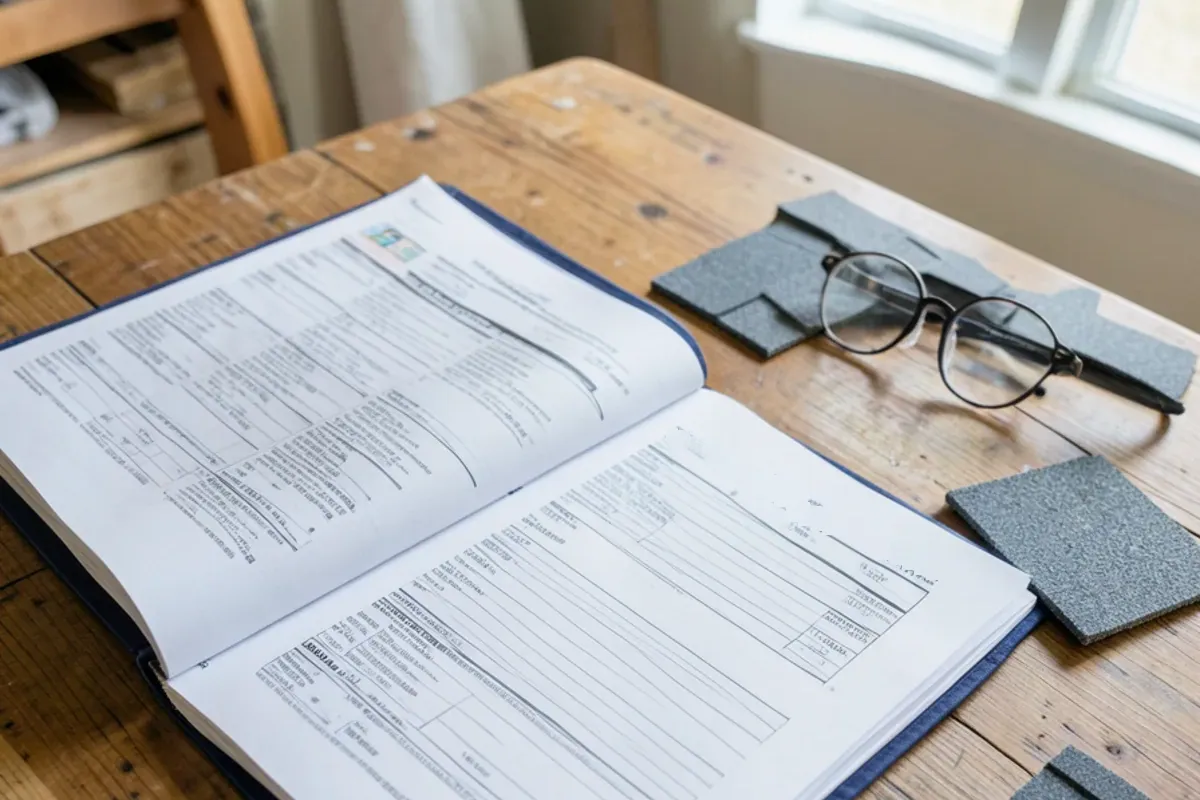
If none of it turns up, a roofer can estimate from granule wear, curling and decking condition, and the answer will come as a range. If you do find a permit date, photograph it and keep the image with your house records. A permit shows when a re-roof happened, but it may not say whether the old layer was removed, so ask a roofer to check the layers at an eave or an attic penetration.
How old are Torrance roofs likely to be?
The median Torrance home was built in 1964, and about 82% were built before 1980, according to the Census Bureau. Many have been re-roofed once or twice already. That means the age of the roof you see is often not the age of the house. Look for permits, sales paperwork or past invoices. If you cannot find a date, a roofer can estimate from the surface and the decking.
What does roof age mean for your decision?
Think of age as a trigger for a closer look.
- Under 10 years. Check after storms and clear debris. Early failures usually point to flashing or installation.
- 10 to 20 years. Time for a yearly check. A tune-up often makes sense. See our post on what a roof tune-up includes.
- 20 years and up on shingles. Inspect closely and start planning. Costs rise when you wait for a leak.
- Tile and metal past mid-life. Focus on underlayment, sealant and flashing, not the visible surface.
One Google reviewer said they accepted a free roof inspection even though their roof was only around 15 years old, and were glad they did. We show you photos of what we find, and a repair comes first when a repair will do.
What signs show a roof is near the end of its range?
You can often see the later stages from the yard. This table lists what to look for, by material.
| Roof type | Late-life signs visible from the ground or attic |
|---|---|
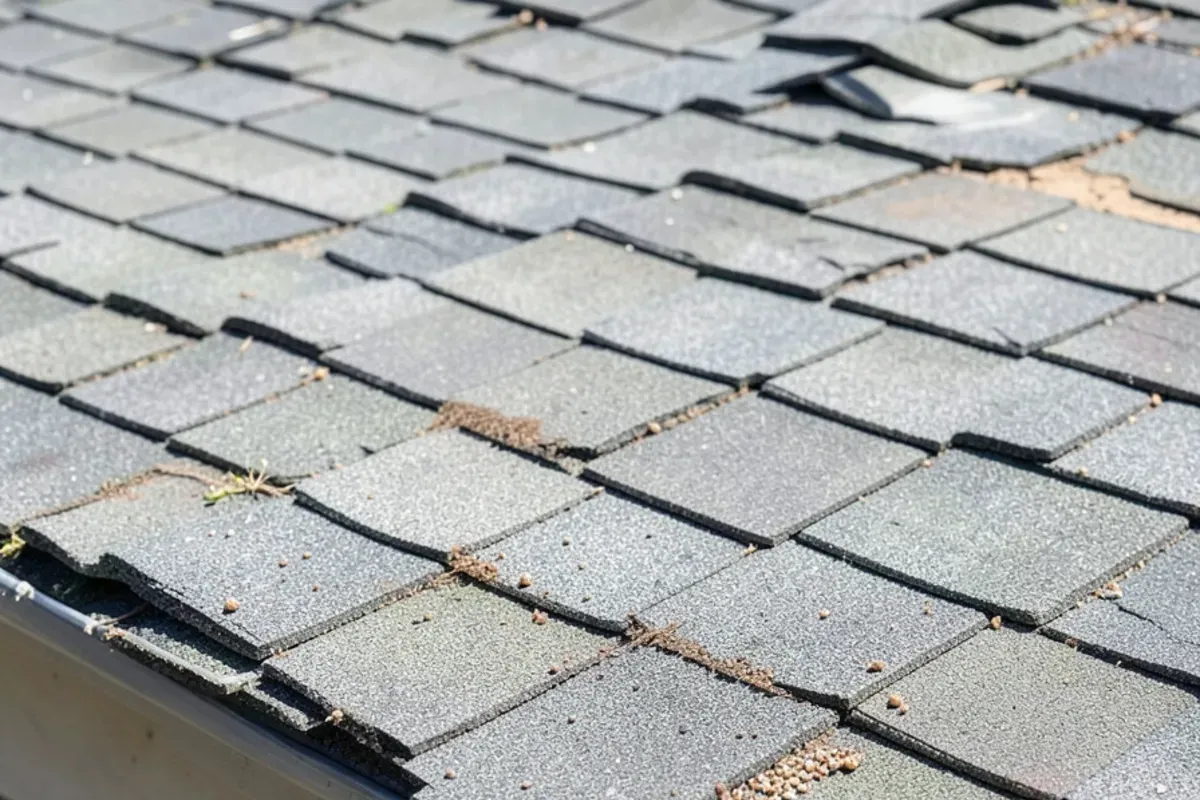
| Asphalt shingle | Widespread curling, bare patches, granules in gutters, cracked tabs, daylight in the attic |
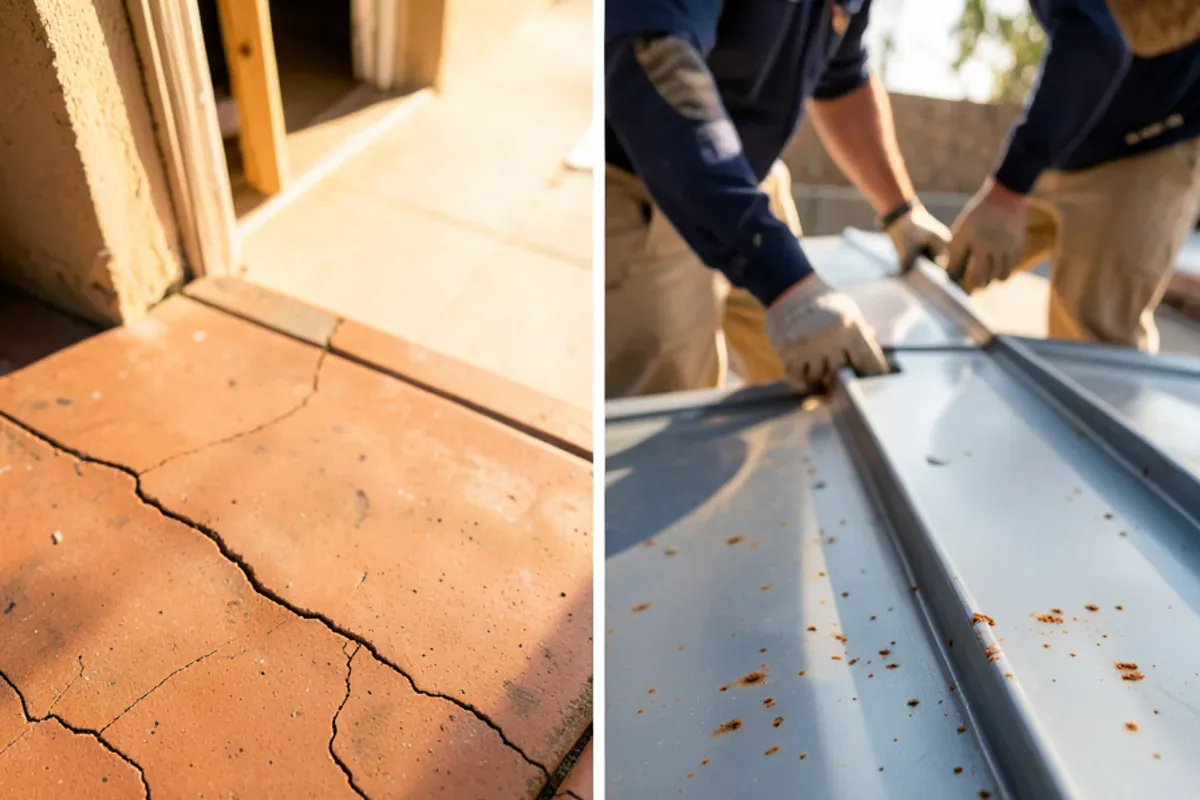
| Tile | Many cracked or slipped tiles, brown stains on attic decking, dried sealant at flashing |
| Metal | Rust at fasteners and seams, loose or backed-out screws, chalking coating, leaks at laps |
| Flat | Blisters, open seams, repeated ponding, patches over patches |
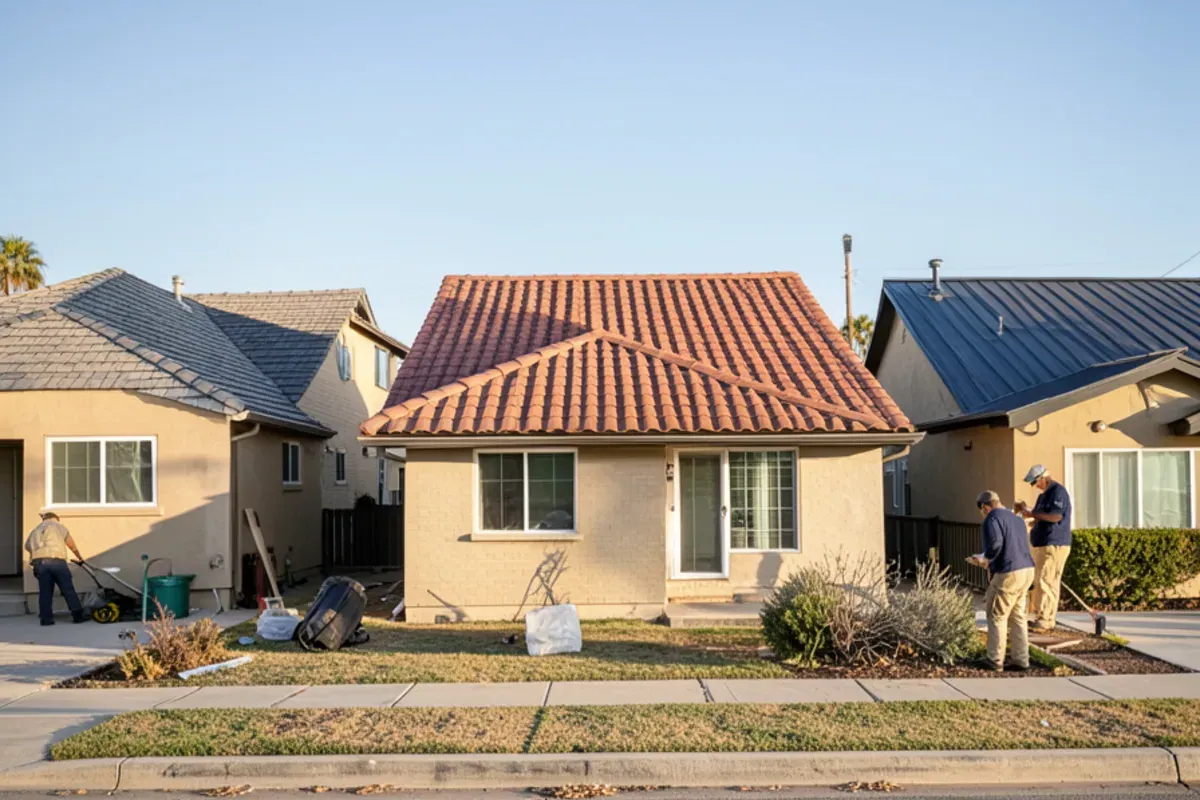
One sign alone rarely means the end. Several together, especially with repeat leaks, usually do. Take ground-level photos from the same spots each spring, so a change in curling, staining or gutter granules shows up beside last year's picture instead of in memory.
What do roofers look at to judge remaining life?
This is what we check and what we tell customers:
- Granule loss and curling on shingle roofs. See roof granule loss for when it matters.
- Cracks, slips and underlayment on tile.
- Fasteners, seams and coating on metal.
- Ponding, blistering and seams on flat roofs.
- Soft decking under any material.
When the signs add up, the better move is a new roof, not another patch. Our guide to the signs you need a new roof lays them out.
What does a new roof cost compared with a repair?
Published market data helps put it in context. Homeyou's 2026 listing puts the average Torrance roof replacement at about $7,202 to $8,183 based on 7,210 projects, while 2026 published cost guides put typical roof repairs at roughly $300 to $1,500. Those are market figures, not quotes, and your roof's size, material and condition change the number. Ask about financing at your estimate if a replacement is on the table.
For a local read on your roof, a roofing contractor in Torrance can inspect it for free and tell you what you have left. Get a date for the roof, a set of photos and a plan, and you will know whether this is a repair year or a replacement year.