
By the Crown Trim Roofers team · Published · Updated
A stain on the ceiling is a message from the roof, but not always an urgent one. Before you call anyone, a short check can tell you whether you have a live problem. Our roof repair hub covers the full range of fixes, and the roof leak repair page explains how a leak is traced and fixed once you know you have one.
How do you tell a ceiling stain from an active roof leak?
Check these five things, in this order.
- Touch. Press gently on and around the stain. Damp, cool or soft drywall means the area is wet now. Dry and firm means it dried out.
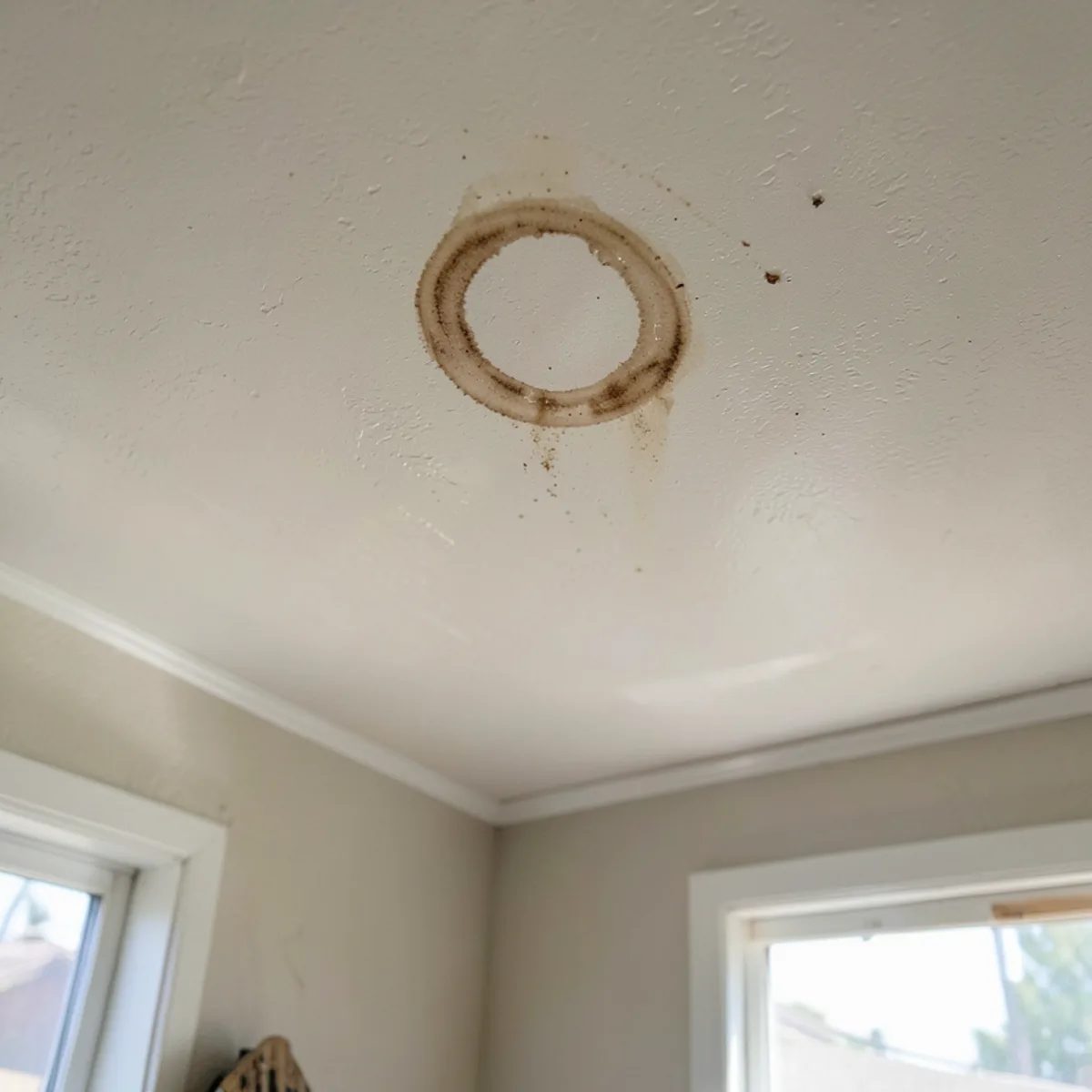
- Edges. A fresh stain has a soft, darker boundary. An old stain has a hard brownish ring.
- Paint. Bubbling, peeling or a sagging patch means water is sitting behind the paint.
- Smell. A musty odor points to repeated or lingering moisture.
- Timing. Does it appear only after rain, or in dry weather too?
If any of the first three says wet, treat it as active. Put a bucket under it, photograph it and follow the steps in our guide on what to do when a roof leaks in rain.
Is the stain old, new or from something else?
| What you see | Most likely cause | Urgency |
|---|---|---|
| Dry, firm, hard-edged ring | Old leak that stopped or was fixed | Low, but get it checked |
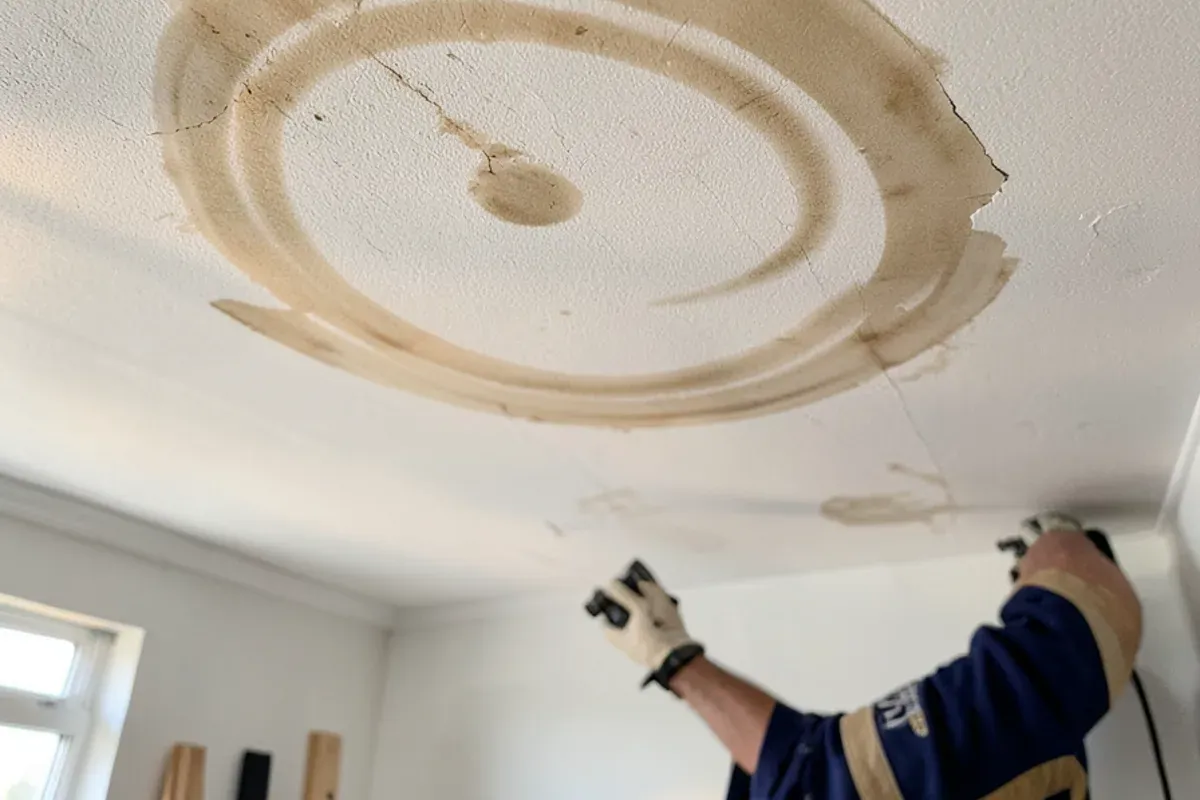
| Several rings of different shades | Repeated leaks, drying between storms | Medium, fix soon |
| Damp, soft or dripping | Active roof leak | High, same day |
| Appears in dry weather near a duct or fan | Condensation | Medium |
| Appears in dry weather, grows steadily | Plumbing or AC drain leak | High |
| Stain near a chimney, vent or skylight | Flashing or seal failure | High after rain |
What does a roof leak stain look like?
Roof leaks leave tan to brown stains with a darker outer ring. Rings are a record. Each time the area gets wet and dries, the edge moves a little and leaves a new line. A single ring points to a single event. A stack of rings points to a recurring leak, often in a spot that keeps getting a small amount of water in each storm.
Position helps. A stain near the ceiling-wall junction can come from a roof edge or a wall. One in the middle of a room can come from the attic. A stain next to a chimney is worth special suspicion. One Google reviewer described noticing water stains on the ceiling near the chimney after a roof installed several years before, and that led to a closer look at the flashing. Our guide on chimney flashing leaks covers that pattern.
Does the time of year change how you read a stain?
Yes. In Torrance the rainy season runs roughly November through March, with February the wettest month. A stain that appears right after a winter storm and not before it points to the roof. The first rain of the season is a special case, because it washes months of dust and debris into valleys and flashing joints and finds every weak spot at once.
A stain that shows up in a dry month needs a different suspect. Warm-weather stains often trace to an air-conditioning condensate line or drain pan, a bath fan that vents into the attic, or plumbing. Humid, cool mornings can also drive condensation in an attic with poor airflow, which our post on signs of poor attic ventilation covers.
Is it safe to wait and watch?
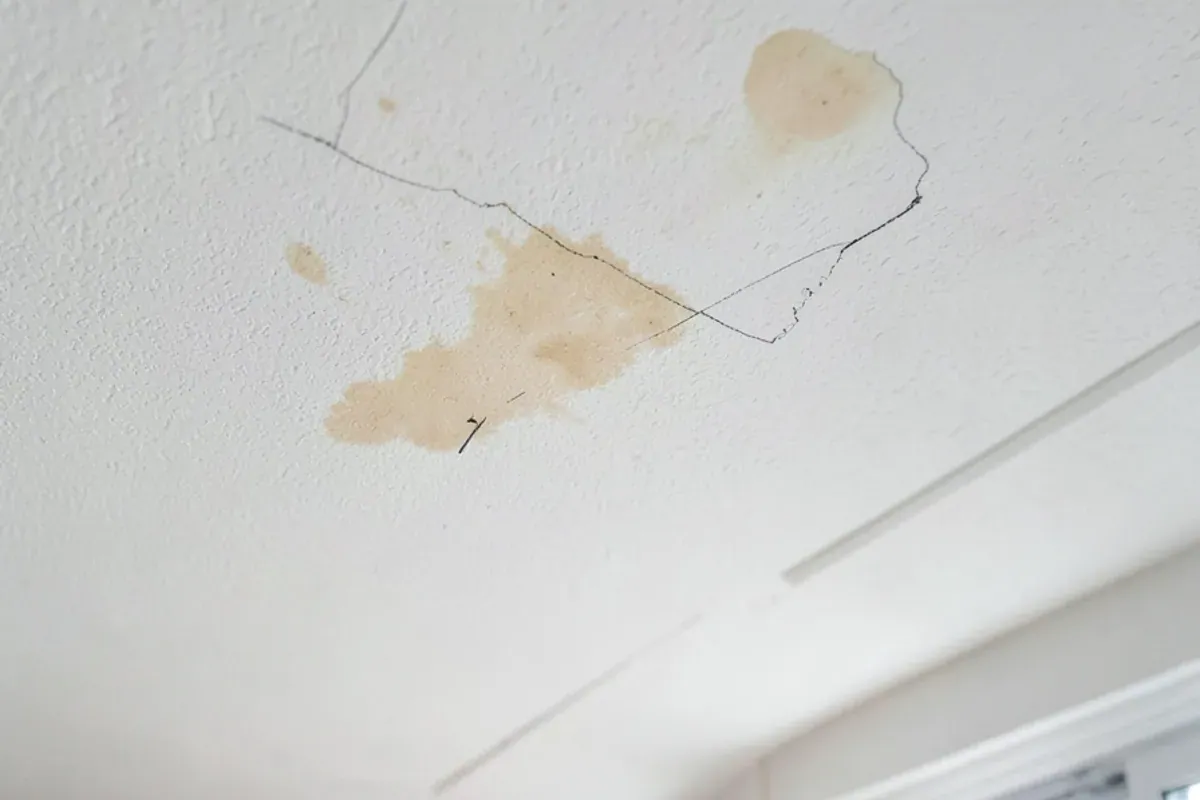
Sometimes. If the stain is dry, firm, not growing and the ceiling is not sagging, waiting through one rain with a pencil outline is reasonable. Draw around the stain, date it, and check after the next storm.
Do not wait if:
- The ceiling is bulging, sagging or dripping
- The paint is bubbling
- There is any water near light fixtures or outlets
- The stain is bigger than it was last week
- You smell mold
The EPA advises drying wet materials within 24 to 48 hours to limit mold growth. After that, the drywall and insulation start to be a bigger job than the roof.
Can you check the attic yourself?
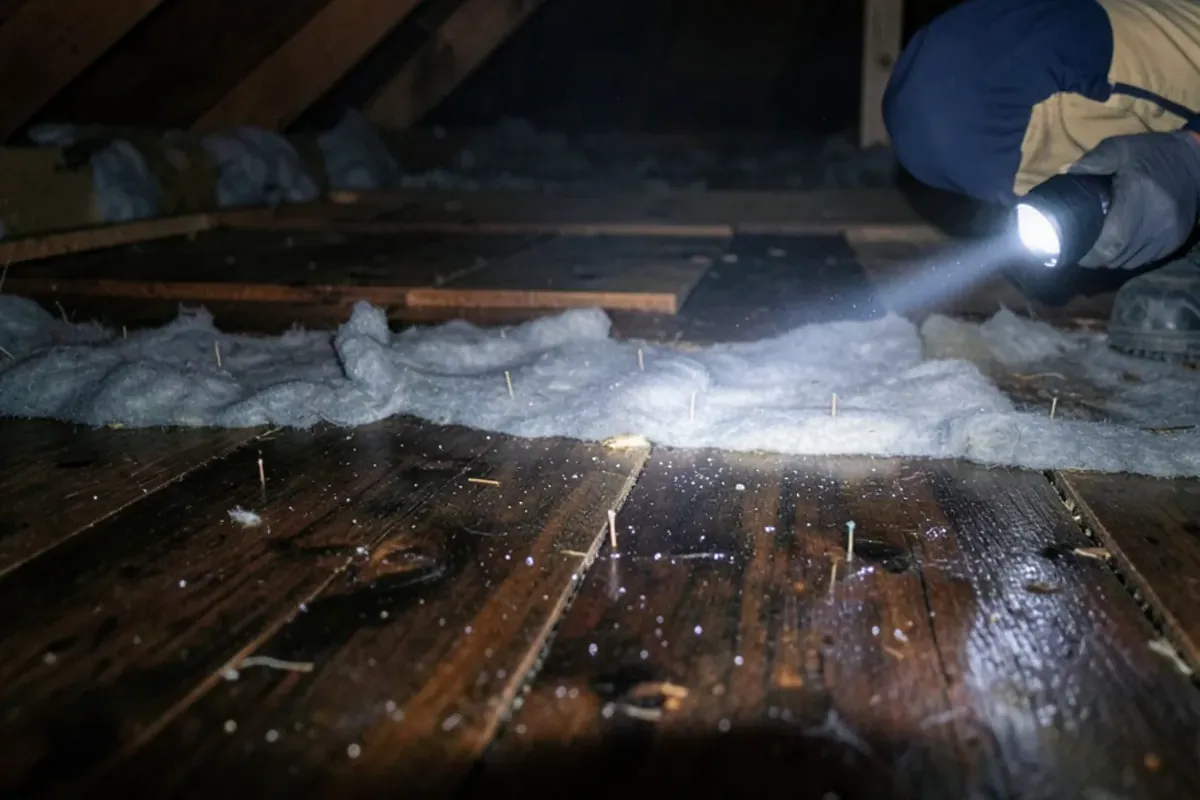
If the attic is accessible and you feel safe, yes. Go on a dry day with a flashlight, step only on joists, and look straight above the stain.
You are looking for:
- Dark trails on rafters or the underside of the plywood decking
- Wet or compressed insulation
- Rust on nail tips, which can mean condensation
- Daylight where there should be none
- Water marks around vent pipes, chimneys or skylights
One Google reviewer said a roofer went up in the attic to see whether any other problem spots had started leaking, something they had not seen done during a roof inspection before. Another said a roofer went into the attic, took photos and found the problem right away. Photos from above the stain are the fastest way to separate roof, duct and plumbing causes.
What if the stain keeps coming back after a repair?
A returning stain usually means the repair addressed one opening and there is another. Common reasons:
- A second entry point. A flashing patch on one side of a chimney does not help a cracked cap on the other.
- Wet insulation or decking that never dried. The old water re-wets the ceiling in the next humid spell.
- A leak that only shows in wind-driven rain. It needs wind from one direction, so a dry-day check misses it.
- A non-roof source. An AC drain, plumbing joint or a bath fan duct that is not connected to the outside.
Go back to the person who did the work with your dated outline and photos. A good repair record narrows the search quickly.
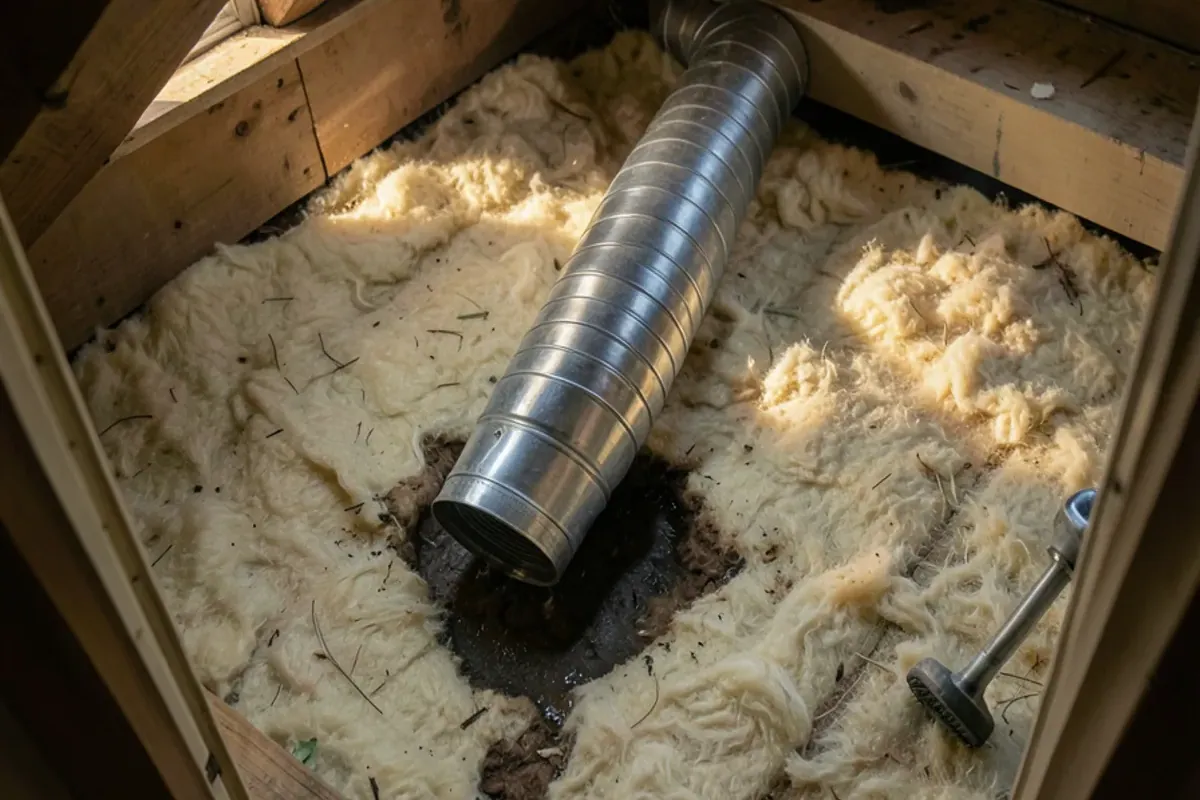
What roofers look for next
Here is what we check and what we tell customers when a stain call comes in:
- The path. Water enters uphill of the stain. We trace along the rafter line to the opening.
- The usual weak spots. Flashing, vent boots, valleys, chimney joints and any cracked or slipped roofing near the entry point. See our post on why vent boots fail.
- The roof's age. Many Torrance roofs are old, with a median home built in 1964, so a stain can be a sign of a worn roof, not a single failure.
We show you photos of what we find and explain repair and replacement options in plain terms. A repair comes first when a repair will do. For context only, 2026 published cost guides put typical roof repairs at roughly $300 to $1,500. That is market data, not a quote.
Is this stain worth a roofer's visit?
If the stain is damp, treat it as live and call. If it is dry, outline it and watch one storm. In either case, a visit to trace the source costs nothing for the estimate and can save a ceiling. A local roofing contractor in Torrance can check the attic, find the opening and show you what is happening before you decide on anything.