
Roof Tear-Off & Removal in Torrance, CA
- 4.8★ from 73 Google reviews
- Free estimates
- Same day or next day service
- Photos of what we find
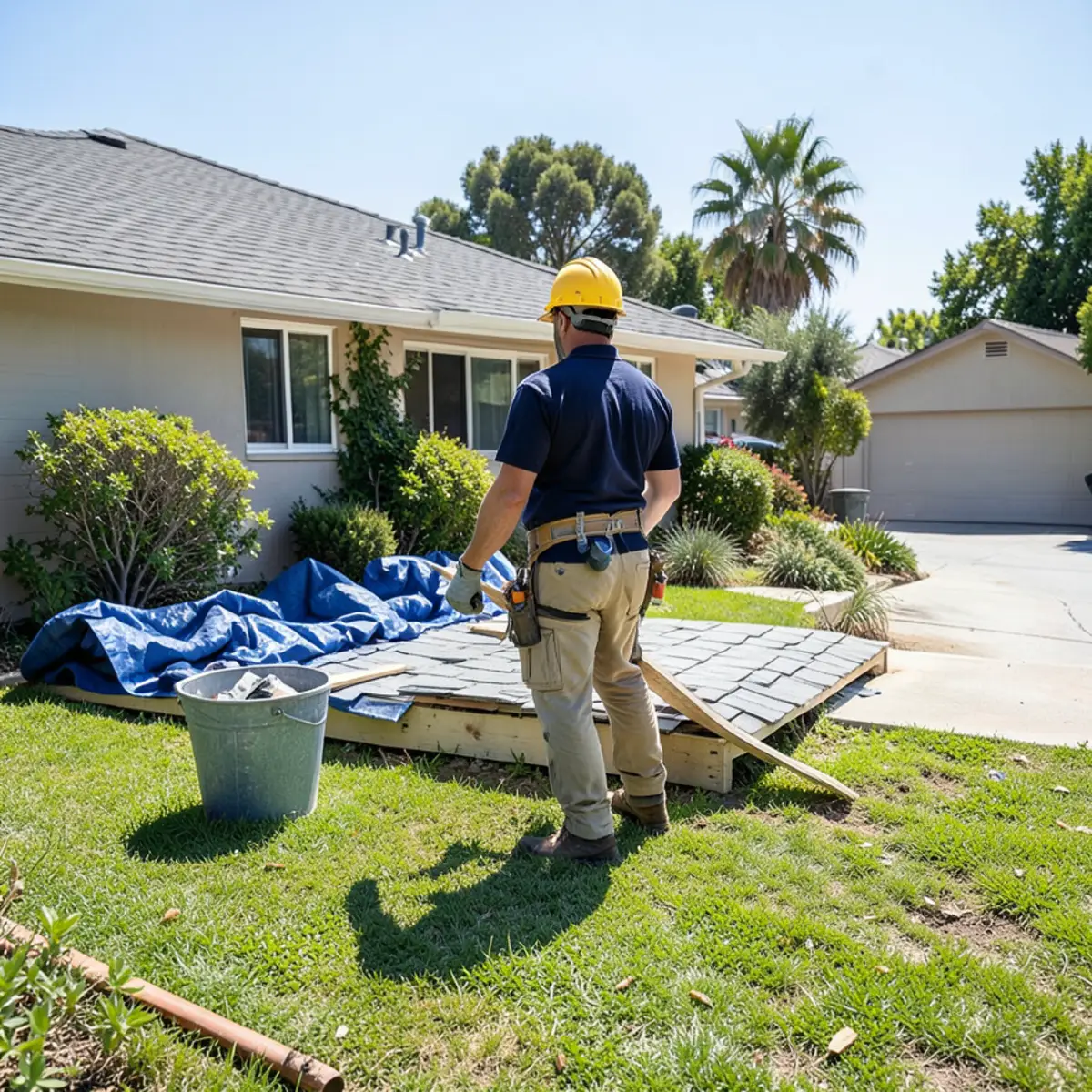
Every new roof depends on what happens before it goes on. A roof replacement starts with the tear-off, and a clean, honest tear-off is where leaks get prevented rather than hidden. Here is what we remove, how we manage the mess, and what the process costs you in time and money.
Roof tear-off in Torrance: what the job includes and what we check beneath it
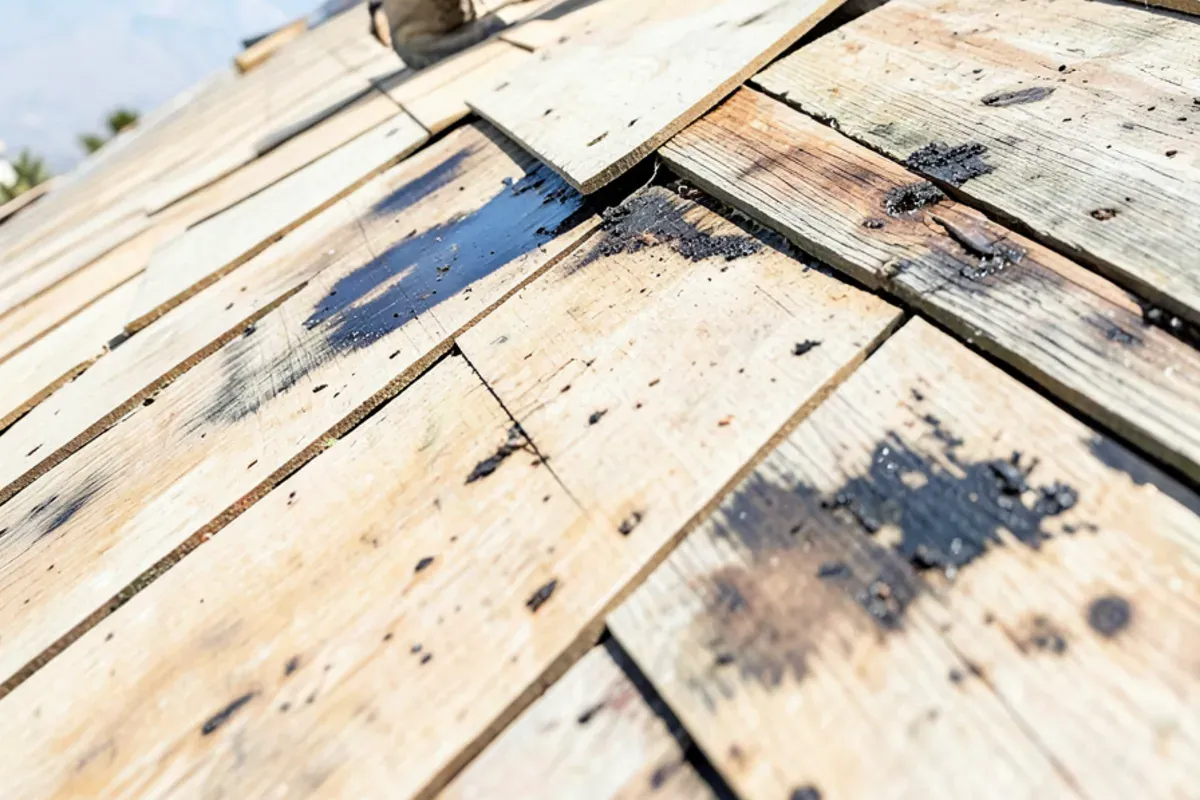
The goal is a bare deck. Shingles, felt, flashing, old nails, loose sealant and failed vent boots all go. Then we walk the deck board by board, because the deck is what the new roof will be nailed to and it is the part nobody can judge from the street. On a 1960s Torrance house that deck may be plywood that has been damp for years, or spaced planks under old shake. Tear-off is the stage where those surprises show up, and where you decide what to do about them with photos in hand rather than a guess.
The scope of a tear-off visit includes:
- Fall protection, tarps over landscaping and a protected driveway before the first shingle moves
- Removal of every layer of roofing, underlayment, old flashing and exposed nails
- A board-by-board deck check, with photos of anything soft, split or stained
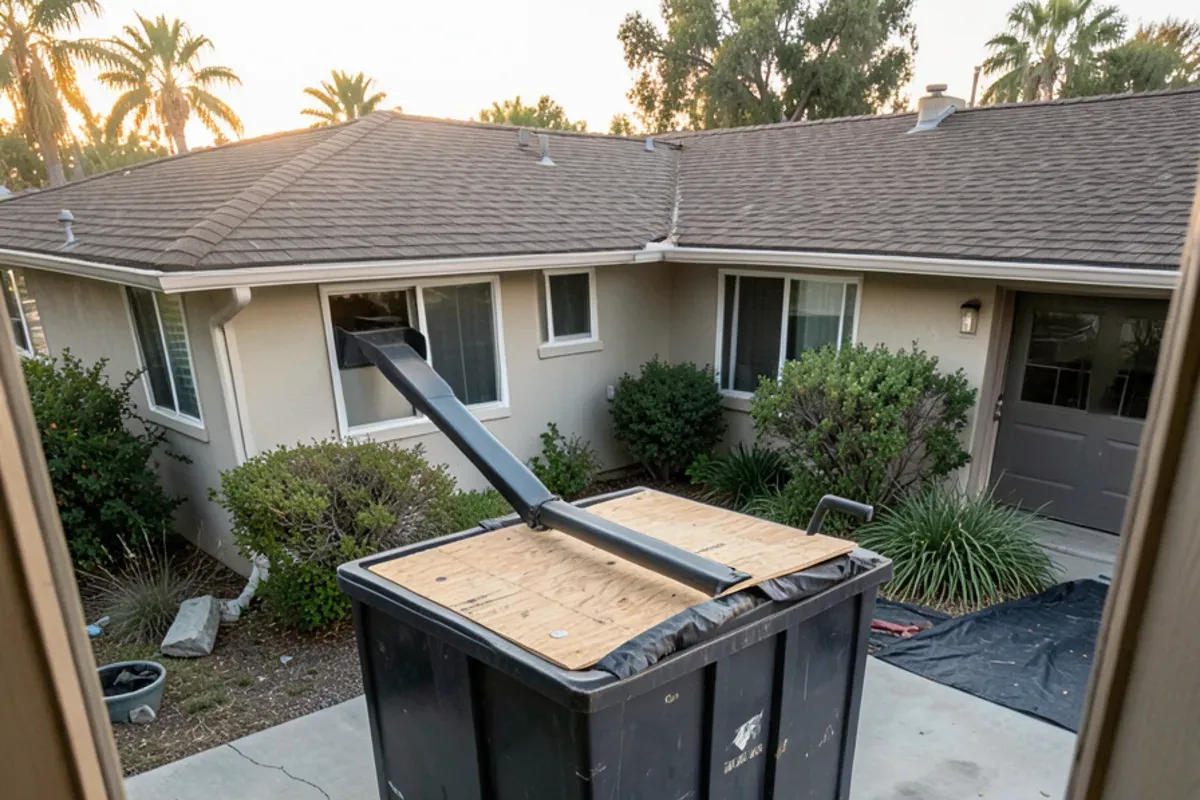
- Debris contained in a bin or truck and hauled away
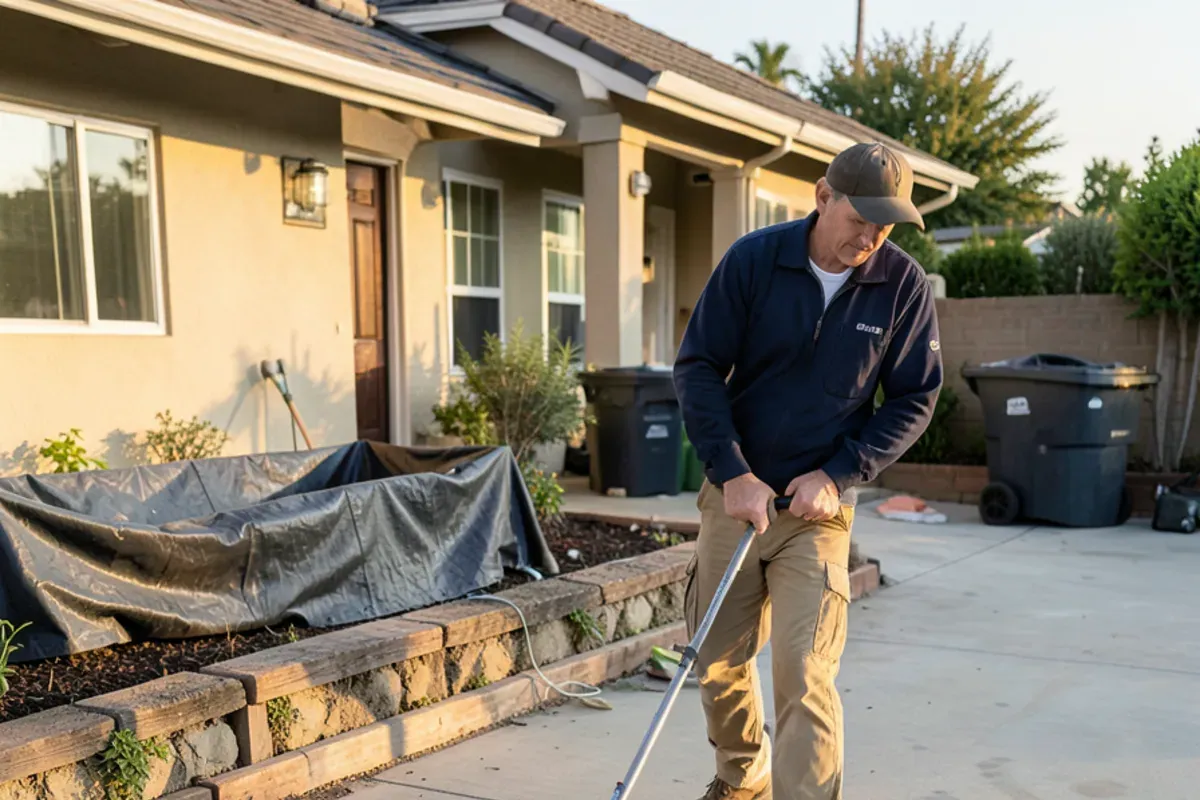
- A magnetic sweep of the yard, driveway, gutters and street
What we look for once the roof is open:
- Soft or dark plywood from old leaks
- Split or warped planks on older houses
- Gaps between boards where the roof meets walls
- Rotted fascia ends and rafter tails along the eave
- Old nail holes and abandoned penetrations from antennas or satellite dishes
- Condensation staining that points to poor attic ventilation
You see photos of every problem we find. Nothing gets replaced without an explanation. That is the main advantage of tear-off over covering the old roof: the deck gets inspected, not assumed.
How many layers can come off, and what do extra layers add?
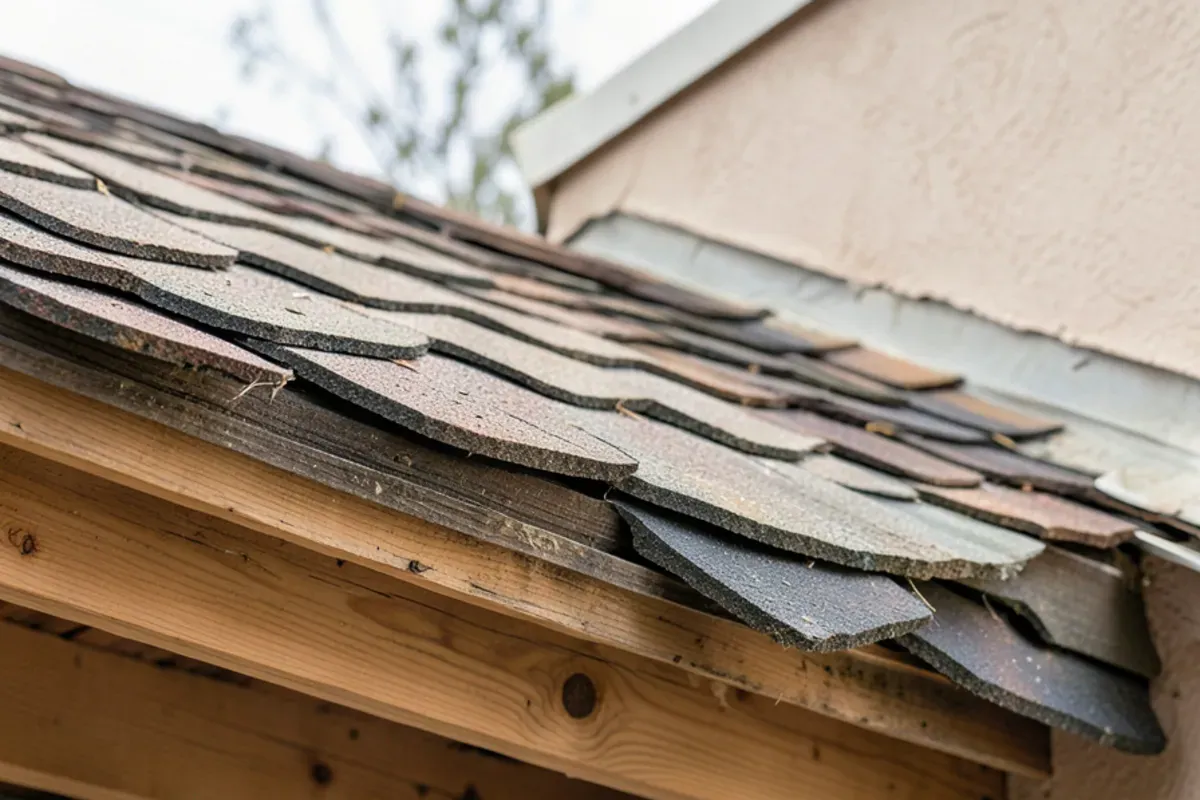
A single layer is the baseline. Many Torrance roofs have more, since the median home dates to 1964 and a previous owner may have added a new layer rather than strip the old one. You can often count layers at the eave edge or rake, where the stack shows like pages in a book.
Extra layers change the job in four ways:
- Labor goes up, because each layer has to be pried loose and the nails pulled
- Disposal volume goes up, which means more bin loads
- The deck is more likely to be damaged, because moisture has been sealed in for years
- The old roof hides the plywood, so you cannot judge its condition until it is open
One Google reviewer said the crew "removed three layers of old shingles" and completed the new roof and gutter installation quickly. A three layer roof tear-off is routine for a prepared crew, as long as the plan accounts for the weight of debris and the time involved.
Taking old shake off a 1960s roof
Some South Bay houses still carry wood shake, or shingles that were laid over it. Shake roofs sit on spaced boards or solid planks, and the tear-off is different from composition shingle. Shake splits into long pieces, the boards underneath may be dry and brittle, and the old felt between courses can be fragile.
We pry the shake off in sections, inspect the plank deck, and decide with you whether the existing boards can carry a new roof or need solid sheathing over them. Skip-sheathed decks are common in this era and usually need new sheathing before most modern roofing goes on. We cover that in our older home roof replacement work as well.
How do we keep roofing debris and nails off your property?
Tear-off debris is heavy and sharp, so we plan the route before we start.
- Protect. Tarps go over shrubs and planters. Driveway and walkways get covered where debris will fall.
- Contain. Old roofing goes into a bin or truck at a position we agree with you, not into a pile on the lawn.
- Dry-in daily. The plan is to have any exposed deck covered by the end of each working day, with the forecast checked first.
- Sweep. At the end we run a rolling magnet over the yard, driveway, gutters and the street in front of the house.
- Check by eye. Magnets miss aluminum and some roofing nails, so we look as well.
What shapes the cost of old roof removal?
We do not post prices; an estimate is free and based on what is actually on your roof. These are the things that move the number:
- Layers. One, two, three, or shake over shingle.
- Roof size and pitch. Steep slopes slow the crew and require more fall protection.
- Material. Tile and shake take longer to remove than composition shingle.
- Access. Narrow side yards, steep driveways and second stories change how debris gets from roof to bin.
- Deck condition. Rotted boards add repair cost once they are found.
- Disposal. Heavy debris means more bin loads.
For wider cost context, our roof replacement cost article covers published market figures and what drives them.
Do you need a tear-off, or can the new roof go over the old one?
Sometimes a new layer is allowed and makes sense, and sometimes it is not. We explain that option on our re-roofing page. A tear-off is the better choice when the old roof is wet or deteriorated, already has more than one layer, covers tile or shake, or sits on a deck that has been leaking.
Signs your roof is ready for a full tear-off rather than another patch:
- Shingles are brittle, curled or shedding granules across most slopes
- The roof has been patched in several places, or leaked in more than one spot during the same winter
- You can count two or more layers at the eave or rake
- The roof deflects or feels spongy underfoot, or the ceiling shows stains in different rooms
- Daylight shows through the boards from the attic, or the plywood looks dark and delaminated
- Fasteners have backed out and lifted shingles, a common sign of old nailing and a tired deck
In Torrance the usual cause is age. With the median home built in 1964, many roofs have already been recovered once, and moisture trapped under the extra layer rots the deck quietly. Ceiling stains in more than one room after a February storm are often the first sign that the problem is the whole roof, not one spot.
If you are building something new, such as an addition, see new roof installation.
Permits, disposal and old materials: who sets the rules?
A tear-off is part of a re-roof, and the City of Torrance Building & Safety Division issues those permits. We handle the permit details on re-roofs, but requirements depend on the address, so confirm them with Building & Safety at (310) 618-5910. In unincorporated pockets near Torrance, the office is LA County Public Works instead.
Disposal has rules too. California's CALGreen building standards, published by the California Building Standards Commission, call for diverting a share of construction and demolition waste from landfill, and cities set how that is documented, so ask your city. Some roofing made decades ago can contain asbestos. If you suspect it on a very old roof, ask before work begins; the South Coast Air Quality Management District and the EPA publish the handling rules.
Why Crown Trim for roof removal?
- A free roof inspection before the estimate, with photos of the layers and any damage.
- Thorough cleanup, with landscaping and driveways protected.
- Plain-language options for repair and replacement, with no push toward more work than the roof needs.
- We handle permit details on re-roofs.
- Same day or next day service for the first visit.
- Reviewers rate us 4.8 stars across 73 Google reviews.
Areas where we remove old roofing
We take roofs down across the South Bay, including Carson, Redondo Beach and Rancho Palos Verdes. Hillside driveways on the Peninsula can limit where a bin goes, so we sort out access before the crew arrives.
Where we do roof tear-off & removal around Torrance
Each place brings its own version of this job.
- Cypress: The 1960s-70s tract homes around Cypress College are on aging roofs, and tear-off shows the decking underneath before new roofing goes on.
- Redondo Beach: Salt air near the Esplanade leaves rusted nails and corroded flashing under the old roof, which the tear-off exposes.
- Rancho Palos Verdes: Steep Palos Verdes Drive driveways limit where a bin can sit, so access is planned before the crew arrives.
- Lomita: Lomita's post-war bungalows sit on tight lots, which makes protecting neighboring fences and shrubs part of the tear-off plan.
- Gardena: Older Gardena homes often hide stacked re-roofs, so the layer count at the edge is checked before pricing.
- Lakewood: Lakewood's early-1950s ranch homes may still have skip-sheathed or plank decks under the first shingles, which need a close deck check.
- Rolling Hills Estates: Large ranch roofs on Peninsula lots produce a big volume of debris, and long driveways allow bins closer to the work.
- Avalon: Catalina gets materials and debris by barge, with tiny lots and golf-cart streets, so tear-off logistics are settled first.
- Hawthorne: Small apartment buildings and 1950s houses in Hawthorne often need a tear-off of both pitched and low-slope sections.
- West Carson: Mid-century homes near Harbor-UCLA fall under LA County permits, so the tear-off follows county inspection steps.
What customers say about this work
Crown Trim Roofers holds 4.8 stars from 73 Google reviews. Read all reviews
“I have hired this roofing company twice—first for some repairs and later for a complete roof replacement—and I highly recommend them for any roofing work.”
“From the first estimate to the final cleanup, the crew handled every step on time and with real professionalism.”
“My home is an older property, and they handled all the necessary paperwork and permits quickly, which made the whole process stress-free for me.”
Roof Tear-Off & Removal: common questions
What happens if my Torrance roof has two or three old layers?
Every layer comes off. Extra layers mean more labor, more weight to haul and more disposal, so they raise the price, but stacking a new roof over three is a bad bet. Layers hide the deck, trap moisture and add load. We count layers at the inspection, show you photos of the edge and put the extra work in the estimate.
How do you keep nails out of the yard and driveway during a tear-off?
We cover plants and protect the driveway before work starts, drop debris into a bin rather than the lawn, and run a rolling magnetic sweeper over the yard, driveway and gutters when the tear-off is done. Nails still turn up sometimes, so we check edges, planters and the street frontage by eye as well.
Do you need to protect my attic during tear-off?
Yes. Tear-off shakes the house, and dust, granules and the occasional nail tip can fall through gaps in the deck. Cover stored boxes and anything you care about, or move it out. On our side we plan to cover any open deck by the end of each day, so an unexpected shower has less chance of reaching it.
Can I stay home while you tear off the roof?
You can, but plan on noise and vibration for a day or two. Pictures may rattle off walls, and a dog or baby may not enjoy it. Move cars off the driveway the night before, and keep children and pets away from the yard where debris falls.
Will you find hidden damage once the old roof is off?
Sometimes. Old leaks leave soft plywood, rotted fascia ends and split boards under the shingles. We stop, photograph them and show you before we replace anything, with the deck repair priced in the estimate as a per-board or per-sheet item where we can.
Related services and guides
Re-Roofing (Overlay)
New Roof Installation
Roof Overlay vs Tear-Off: Which Is the Better Buy?
Roof Replacement Cost in Torrance: What Drives the Price
What Tile Roof Underlayment Replacement Costs and Why
Where we work: Carson, Redondo Beach, Rancho Palos Verdes, Gardena and the rest of our service areas.
Not sure how many layers you have? We will count them.
Call first. A roofer picks it up from there.