
By the Crown Trim Roofers team · Published · Updated
Every plumbing fixture in the house vents through the roof, so almost every roof has a few pipes poking through it. Each one is sealed with a flexible collar, and that collar is a weak point on any roof repair call. If you want the fix explained in full, our vent boot and pipe collar repair page covers it. This post is about why the boot fails in the first place.
Why does a rubber vent boot split in the sun?
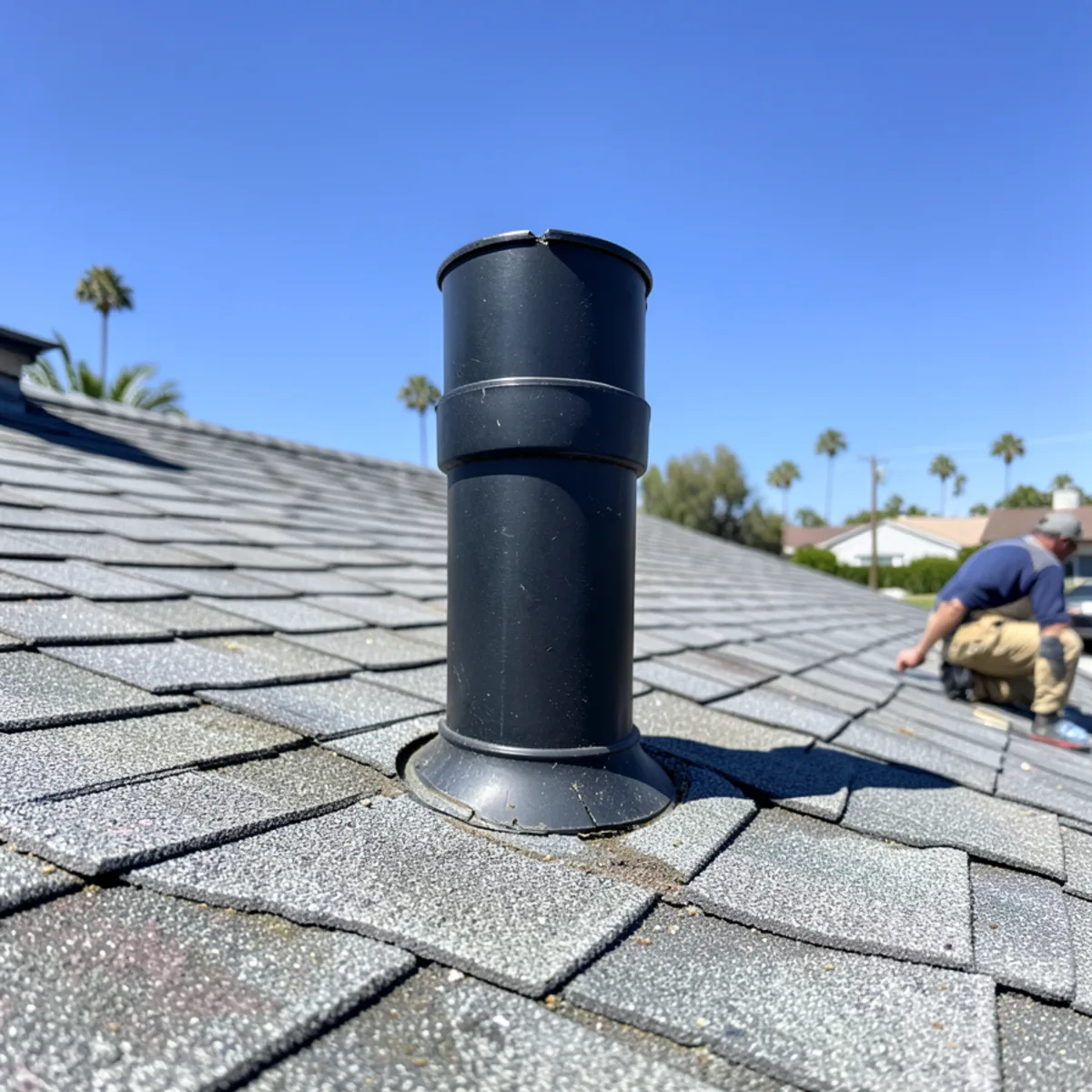
A pipe boot is a metal or plastic base with a rubber ring pressed around the pipe. The base sits under the shingles. The ring is the only part that sees full sun, every day, on every slope.
Southern California is hard on rubber. Roof surfaces run much hotter than the air above them. The sun's ultraviolet light breaks down the rubber a little more each season, and the daily heat and cool-down cycle makes it swell and shrink around the pipe. In time the ring stiffens, shrinks away from the pipe and splits.
Two details speed it up:
- Shrinkage. The ring pulls back from the pipe and leaves a gap you can slide a fingertip into.
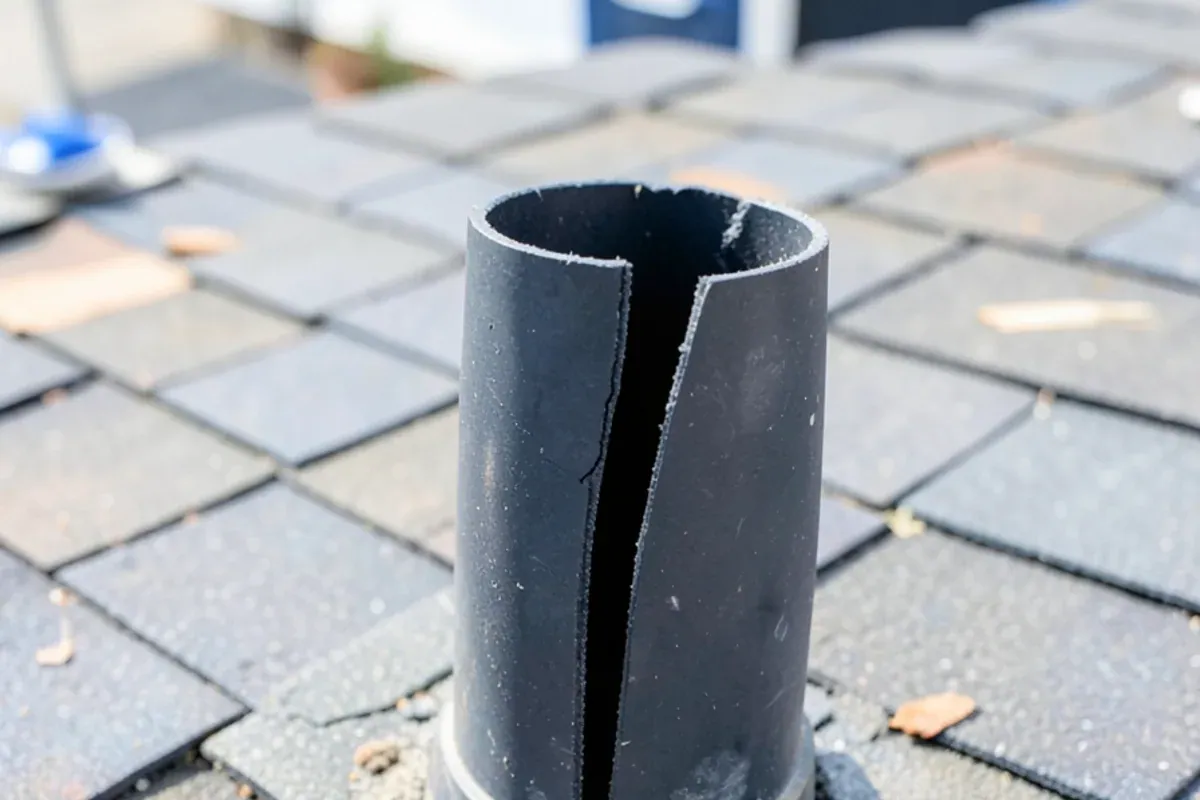
- Splits along the top. The first crack usually runs vertically on the sunny side and lets water straight down the pipe.
The shingles around a boot are often fine. That is why the leak is so confusing: the roof looks healthy and still drips.
How do you know it is the boot and not something else?
Water that enters at a vent pipe follows the pipe down. You can usually read the clues from inside the house.
- The ceiling stain sits near a bathroom, kitchen or laundry, where the vent stacks run.
- The stain gets worse in or right after rain and dries between storms.
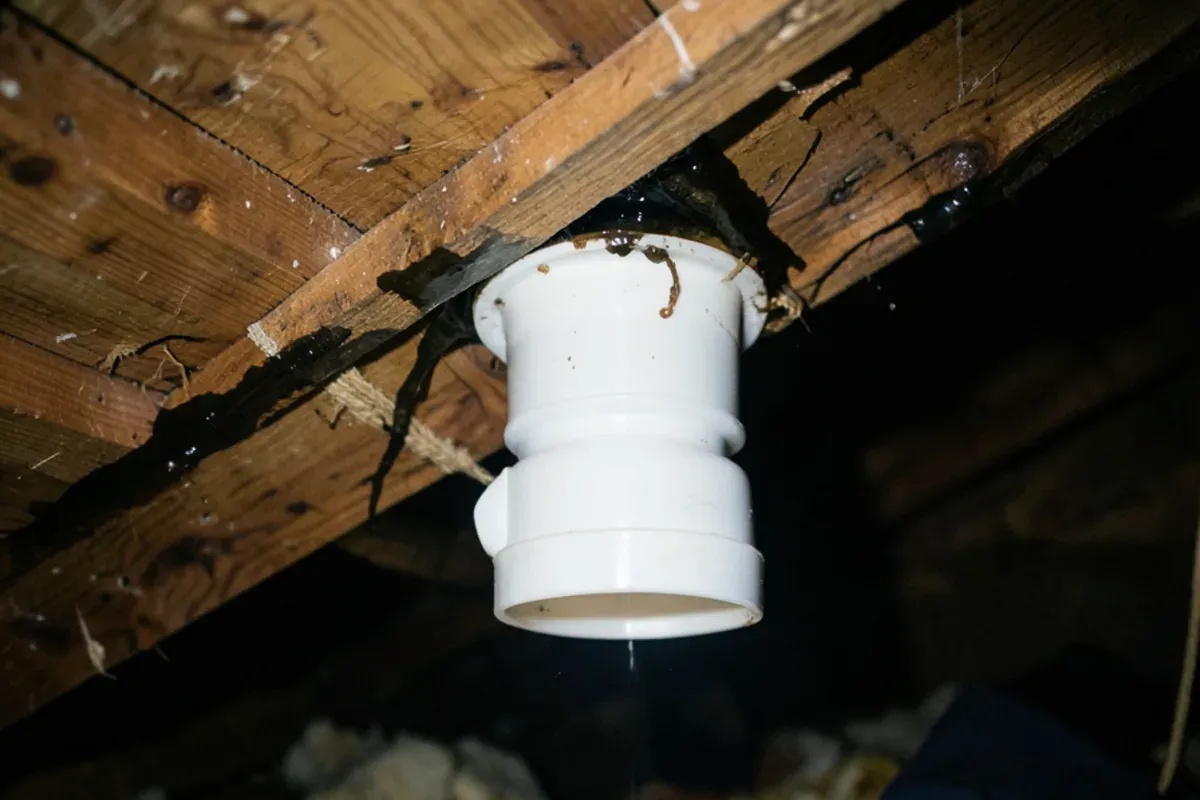
- In the attic, the wood around the pipe is dark or streaked, and a water trail follows the pipe.
- From the ground, a boot looks cracked, pulled back or has a ring of sealant that has gone gray and flaky.
Not every drip at a pipe is rain. A cold vent pipe in a humid attic can sweat, especially on cool, damp mornings. Condensation shows up on dry days too, and the drip is steady, not tied to storms. Our guide on what to do first when a roof leaks helps you sort fast from slow leaks while you wait for a visit.
Why do boots get missed for so long?
A boot is small, grey or black, and set into the shingle field. Most owners never look at one. Roofers see a few patterns again and again:
| Situation | What happens |
|---|---|
| Roof was re-covered but the old boots stayed | The boots are older than the shingles and fail first |
| Pipe was added or moved after the roof went on | A cut-in collar was sealed with caulk instead of flashed in |
| A previous patch of sealant | It hides the split for a season, then fails along the same line |
| Roof used to be painted or coated | Paint over cracked rubber leaves the gap open |
In Torrance, the median home was built in 1964 and 82.3 percent of homes predate 1980 (US Census, ACS 2020-2024). That means many roofs have been replaced at least once, and a boot reused from an earlier roof can be far older than the shingles beside it.
What is a pipe boot made of, and does it matter?
Most boots sold for shingle roofs pair a rigid base of galvanized steel or plastic with a collar of neoprene or EPDM rubber. Both rubbers perform well for a time, then harden under ultraviolet light. That hardening is the failure this post is about.
Lead boots skip the rubber ring altogether. Lead does not crack in the sun, but it is soft. Squirrels and rats chew it, and an old lead sleeve can slump and collapse around the pipe. Newer boots with a metal base and a replaceable or sleeve-style collar exist because the collar is the weak link.
The base matters as much as the collar. The upper half of the flange belongs under the shingles and the lower half over them, so water flows across it and never under it. A boot set the wrong way, or one with nails through the flange face, can leak long before the rubber ages. For a side-by-side of repair options, the vent boot repair page walks through them.
Which roof penetrations get a boot, and which do not?
Not every dark circle on the roof is a rubber collar. Each opening has its own seal, and each seals differently:
| Roof penetration | How it is sealed | Common failure |
|---|---|---|
| Plumbing vent pipe | Rubber or lead boot over a flange | Split or shrunken collar |
| Bathroom or kitchen fan duct | Metal hood with a flange and sealant | Cracked sealant, duct pulled loose |
| Furnace or water heater flue | Metal flashing, storm collar and cap | Open storm collar seam, rust |
| Attic box vent | Metal or plastic hood with a flange | Cracked plastic, popped nails |
If the stain is over a bathroom, the plumbing pipe and the fan duct are both suspects. Telling them apart is part of a proper roof leak repair diagnosis.
How can you check vent pipes from the ground?
You do not need a ladder, and on a hot or wet roof you should not use one. Sun-baked shingles shed granules underfoot, and a fall is a worse outcome than any leak.
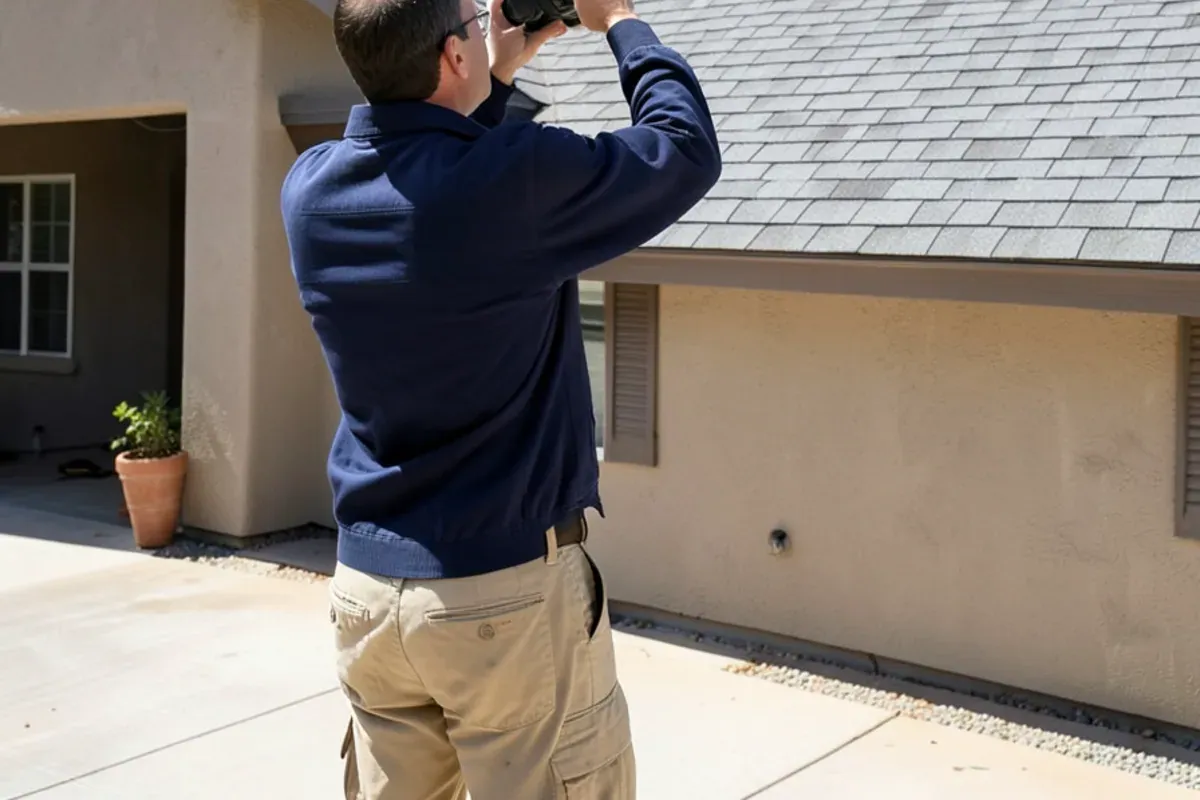
Try this on a dry, bright day:
- Stand where you can see the slopes facing south and west, which take the most sun.
- Use binoculars or the zoom on a phone to look at each pipe collar.
- Look for a dark gap between the rubber and the pipe, or a collar that sits crooked.
- Note any silver or gray ring of old sealant, which means someone has already chased a leak here.
- Count the pipes and write down which rooms sit below them.
- Take photos so a roofer can see what you saw.
Can a split boot cause a stain far from the pipe?
Yes, and that is why people blame the wrong spot. Water follows the pipe down, then runs along a rafter or the top of the ceiling drywall until it finds a low point or a joint. The stain can show up several feet from the pipe, sometimes in the next room. A good diagnosis traces the water up its path rather than repairing whatever is directly above the mark. The attic is where that path is easiest to read, because the wood is darker along the route the water took.
What roofers tell customers about vent pipes
When we check a roof, the vent pipes get the same attention as the valleys and the chimney. This is what we look at and what we pass on:
- Look at every penetration, not only the one over the stain. The cracked boot is often not the closest one to the ceiling mark.
- Press the rubber. If it is stiff, chalky or shrunk back from the pipe, it has done its job. One Google reviewer described a second leak near a vent pipe that turned up after the first repair, a reminder to check every pipe on the roof.
- Check the base. A rusted flange or exposed nail heads under the shingle edge can leak even when the rubber is intact.
- Think about color. Another Google reviewer noted that the crew painted the roof vents and pipes to match the new shingles. That finishing step keeps pipes from standing out.
We show you photos of what we find, and a repair comes first when a repair will do. A boot swap on a sound roof is a small job. Replacing a roof for a failed boot is not necessary.
What to do before the next rain
Take a flashlight into the attic on a dry day and look at the wood around each plumbing pipe. Dark rings, stains or damp insulation tell you the boot has already been leaking. Photograph what you see and note which room is below. A free roof inspection from a local roofing contractor in Torrance can then examine the pipes, show you what is cracked and explain whether a single collar or several need work. Roof repairs commonly run $300 to $1,500 according to 2026 published cost guides, and a boot swap often sits toward the lower end.