
By the Crown Trim Roofers team · Published · Updated
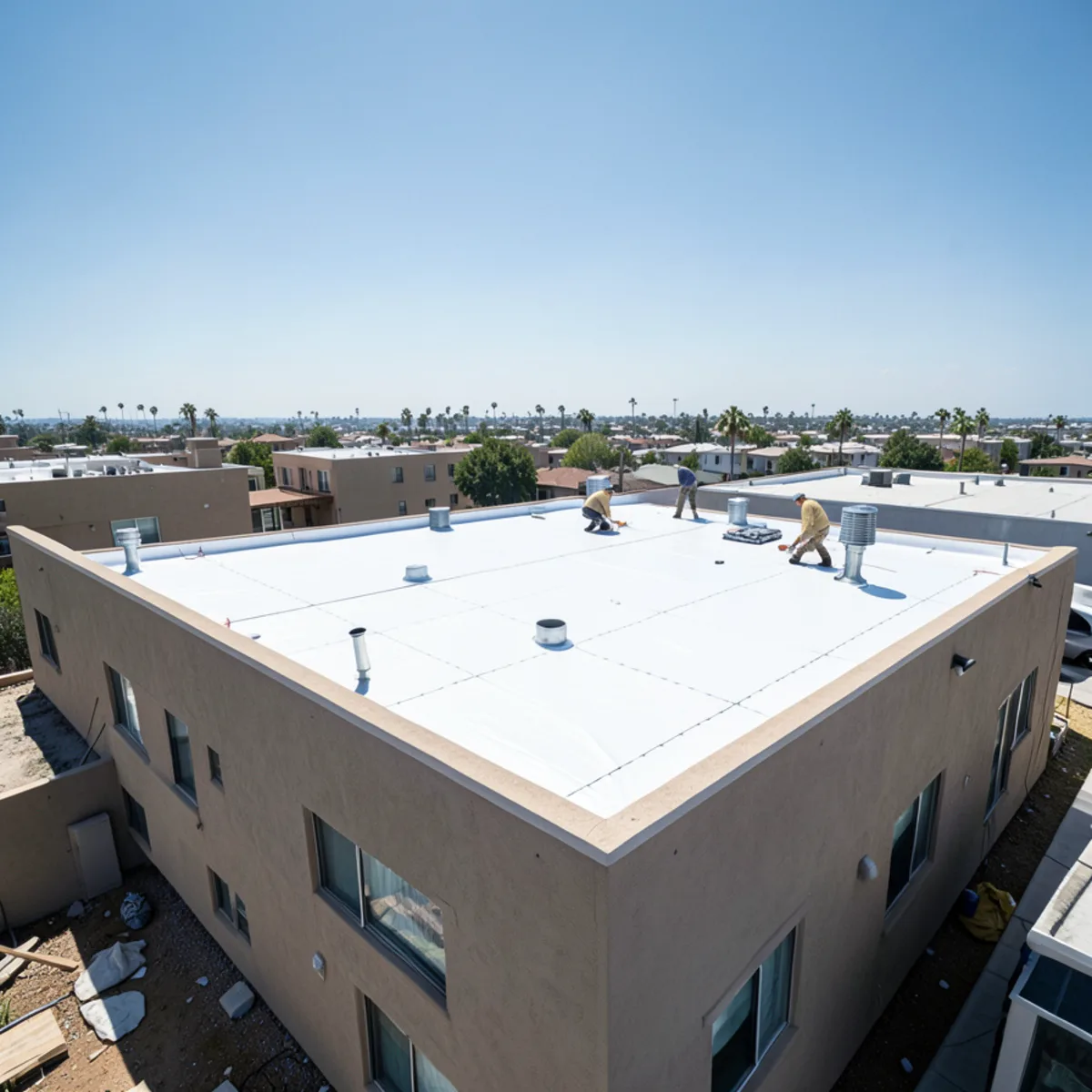
Flat and low-slope roofs on apartments, small commercial buildings, additions and patios do not shed water the way a pitched roof does, so the system matters more. Three options come up most in Los Angeles County: TPO, torch down and hot mop built-up roofing. Our flat roofing hub covers all the services, and the pages on TPO and PVC roofing, torch down roofing and hot mop and built-up roofing go into each one.
How do TPO, torch down and hot mop compare?
| TPO | Torch down (modified bitumen) | Hot mop (built-up) | |
|---|---|---|---|
| What it is | Single-ply white or light membrane, seams heat-welded | Rolled asphalt sheets, usually 2 plies, melted to the roof | Several layers of felt or ply sheet mopped with hot asphalt |
| Typical life | About 15 to 30 years | About 15 to 20 years | About 20 to 30 years |
| Installed cost (market data)* | About $4 to $14 per sq ft | About $4 to $8 per sq ft | About $4 to $10 per sq ft |
| Heat and cool-roof | Reflective by design | Dark unless coated | Dark unless coated or graveled |
| Install risk | Low; no open flame | Open flame unless cold-applied | Hot kettle, fumes and burn risk |
| Repair | Clean and weld a patch | Patch with matching sheet | Patch; leaks can travel between plies |
| Best fit | Apartments, commercial, energy goals | Small roofs, tight budgets, detail work | Heavy-use or redundancy-minded roofs |
*Market data from Angi and HomeAdvisor flat roof guides retrieved in 2026, not our quote. Lifespans are typical ranges, not promises.
Which flat roof system is best for Los Angeles County heat?
Coastal LA County gets a lot of sun and little rain, so heat, not water, usually ages a flat roof first. A reflective TPO sheet runs cooler than a dark asphalt one, which slows aging and trims air-conditioning load on the top floor. Dark systems can be coated white or gray later. California's Title 24 cool-roof rules vary by building type, slope and climate zone, so ask your city or the California Energy Commission what applies to your address before choosing. Our roof coatings page covers the retrofit option.
How is each system actually installed?
Knowing the method explains most of the trade-offs.
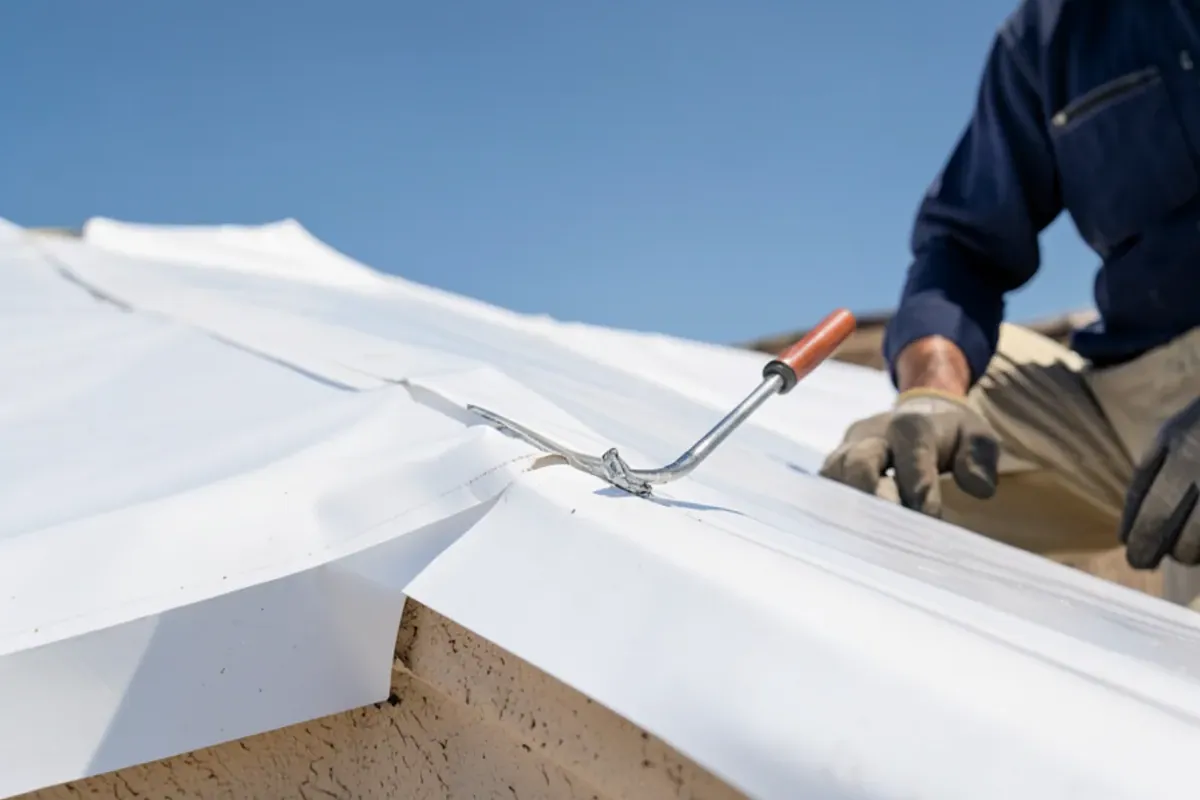
- TPO: rolls of single-ply sheet are laid over insulation or a cover board and attached mechanically, with adhesive or ballast. The seams are welded with hot air, so the roof relies on those welds staying sound.
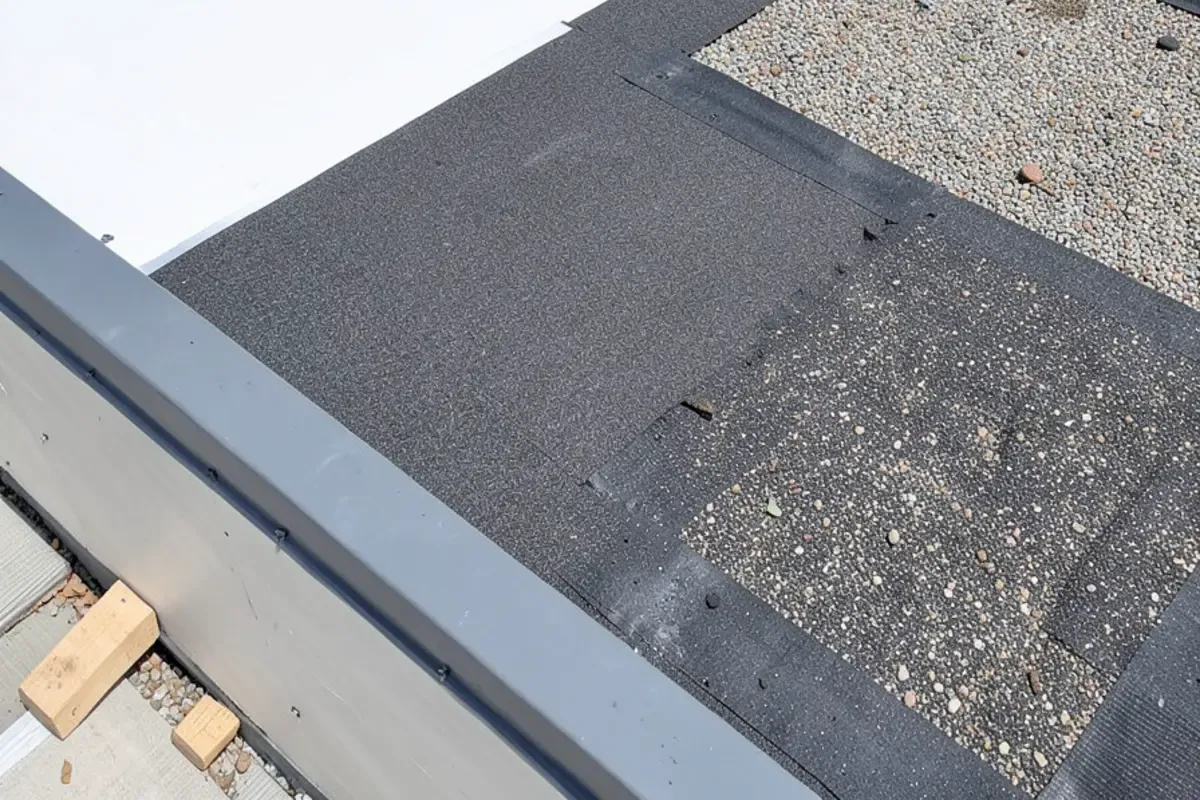
- Torch down: rolls of modified bitumen are bonded to the roof with a flame or, in cold-applied versions, with adhesive. Two plies are common, so there is built-in redundancy at the laps.
- Hot mop: layers of felt or ply sheet are bonded with hot asphalt from a kettle. The layered buildup is slow to install but gives several lines of defense, and the top is often gravel or a coating.
Each method needs sound decking first. Rotted or wet deck will fail any of the three.
What do a TPO sheet's thickness and attachment mean for you?
TPO comes in different thicknesses, measured in mils, and thicker sheet generally tolerates wear and foot traffic better. How it is attached matters just as much. Mechanically fastened sheet is common and economical, adhered sheet gives a smoother finish, and ballasted systems add weight the structure must carry. When you compare quotes, make each estimate state the thickness, the attachment method and the insulation or cover board beneath. A lower price that hides a thinner sheet or a skipped layer is not a bargain. The TPO and PVC roofing page covers the sheet types in more detail.
What matters most for a Hawthorne apartment or home?
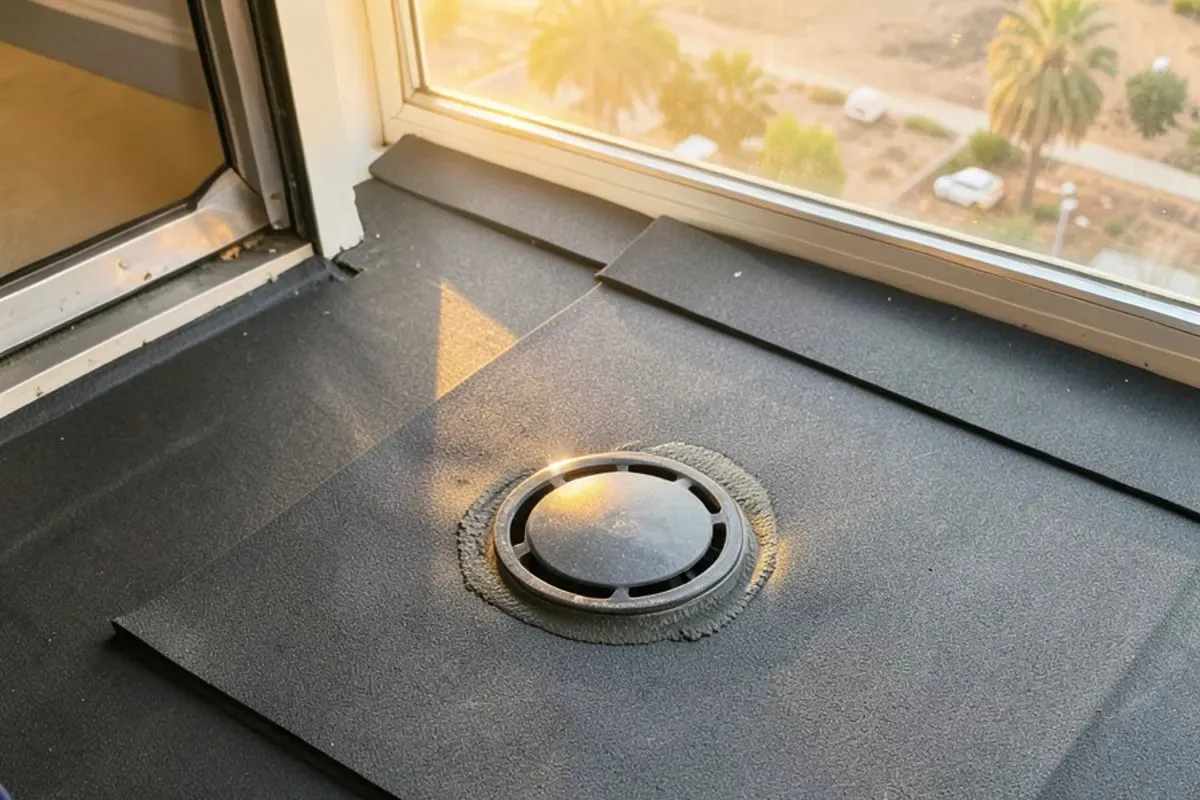
Hawthorne mixes small post-war houses, apartment blocks and light commercial buildings, and many of them have low-slope sections tied into parapets and drains. Details at those edges fail first, whatever the membrane. Permits in the city go through the city's building division, so confirm for your address. Our Hawthorne service area page has the local detail, and the Los Angeles County page explains how permit authorities differ across the county.
How much does ponding water change the choice?
A lot. A flat roof that holds water after 48 hours stresses seams, and hot mop and torch down tolerate it better than TPO seams do over years. Better still is fixing slope with tapered insulation or drains. Read our post on how much ponding on a flat roof is too much before committing to any system.
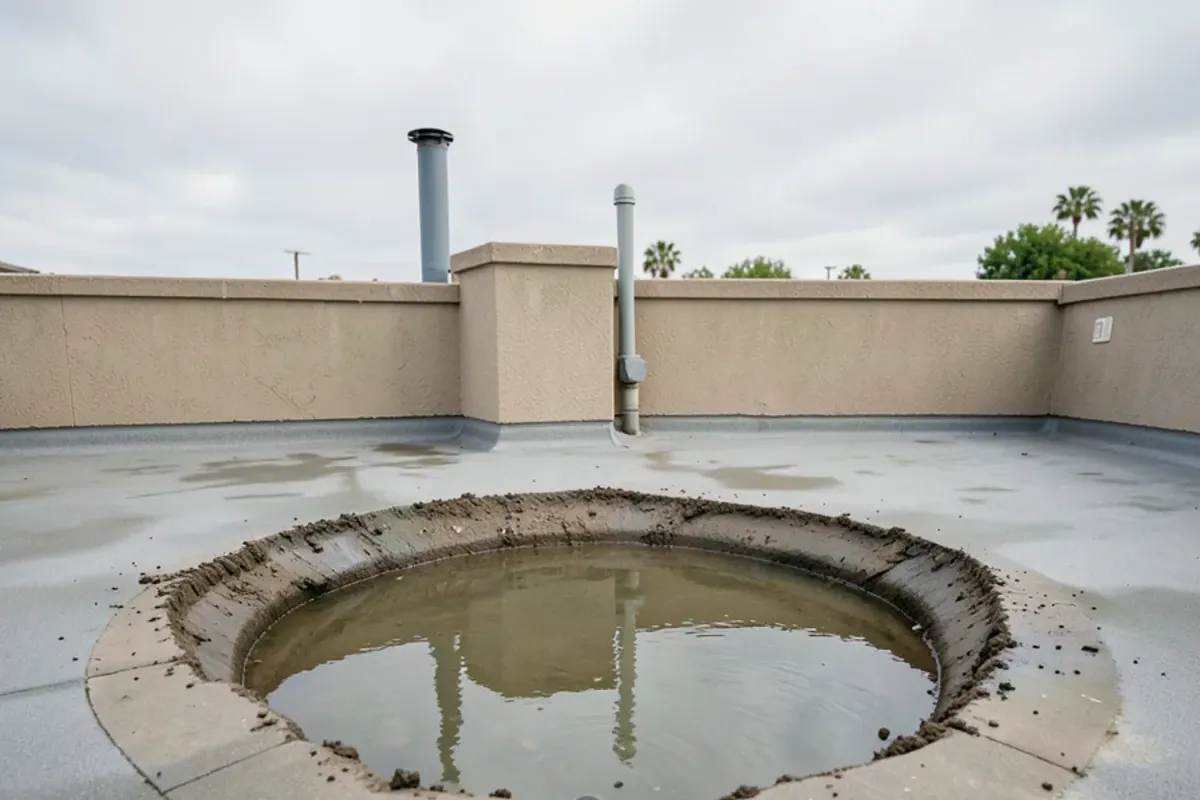
What we check before recommending a flat roof system
Expert insight from our roofers: the membrane is the easy part. We photograph the drains, parapet flashings, seams and any soft decking, then explain what is sound and what is not in plain terms. One Google reviewer described a flat asphalt roof that was rotting and sending water into the gutters, which is a drainage failure more than a material failure. The same pattern shows up on many flat roofs. The honest trade-off we point out: TPO tends to cost more up front on a small, complex roof, while torch down and hot mop can look cheaper but run darker and hotter unless coated. We also tell building owners to ask how the quoted system will be applied, since an open-flame install, a hot kettle and a cold-applied sheet each carry different fire and fume considerations.
Which system suits apartments, storage buildings and small commercial roofs?
Building type shifts the answer. Apartment blocks with many roof penetrations and parapet walls reward a system with clean, repairable details, and white TPO is common where energy cost matters. Storage and light industrial buildings often have large, simple roofs where the main costs are area and drainage. Small residential flat sections, such as an addition or patio cover, sit on tight budgets and awkward geometry, where a modified bitumen patch or cold-applied sheet is practical. For larger buildings, the apartment and HOA roofing page explains how work is scheduled around residents, and flat roof repair covers fixes that do not need a full replacement.
How do repairs and maintenance differ between the three?
TPO seams can be cleaned and welded, which makes small punctures a quick fix when the membrane is still flexible. Torch down repairs mean cutting out the damage and patching with matching sheet, then sealing the edges. Built-up roofs patch the same way, but because water can run between plies, the leak you see inside may sit several feet from the hole. All three need a look after storms and twice-a-year drain clearing. Ask for photos of seams, drains and flashings at every visit.
So which one should you pick?
- Apartment or commercial roof with heat and energy goals: TPO.
- Small residential flat section or patio cover on a budget: torch down, or a cold-applied modified bitumen if open flame is a concern.
- Roof with heavy foot traffic or many penetrations: built-up, since multiple plies tolerate wear.
- Old roof with solid decking and good drainage: consider a coating before a full replacement.
- Unsure: get a free roof inspection and compare two written estimates that name every layer.
Our flat roof replacement cost in Los Angeles County post explains price drivers beyond the membrane.