
Hot Mop & Built-Up Roofing in Torrance, CA
- 4.8★ from 73 Google reviews
- Free estimates
- Same day or next day service
- Photos of what we find
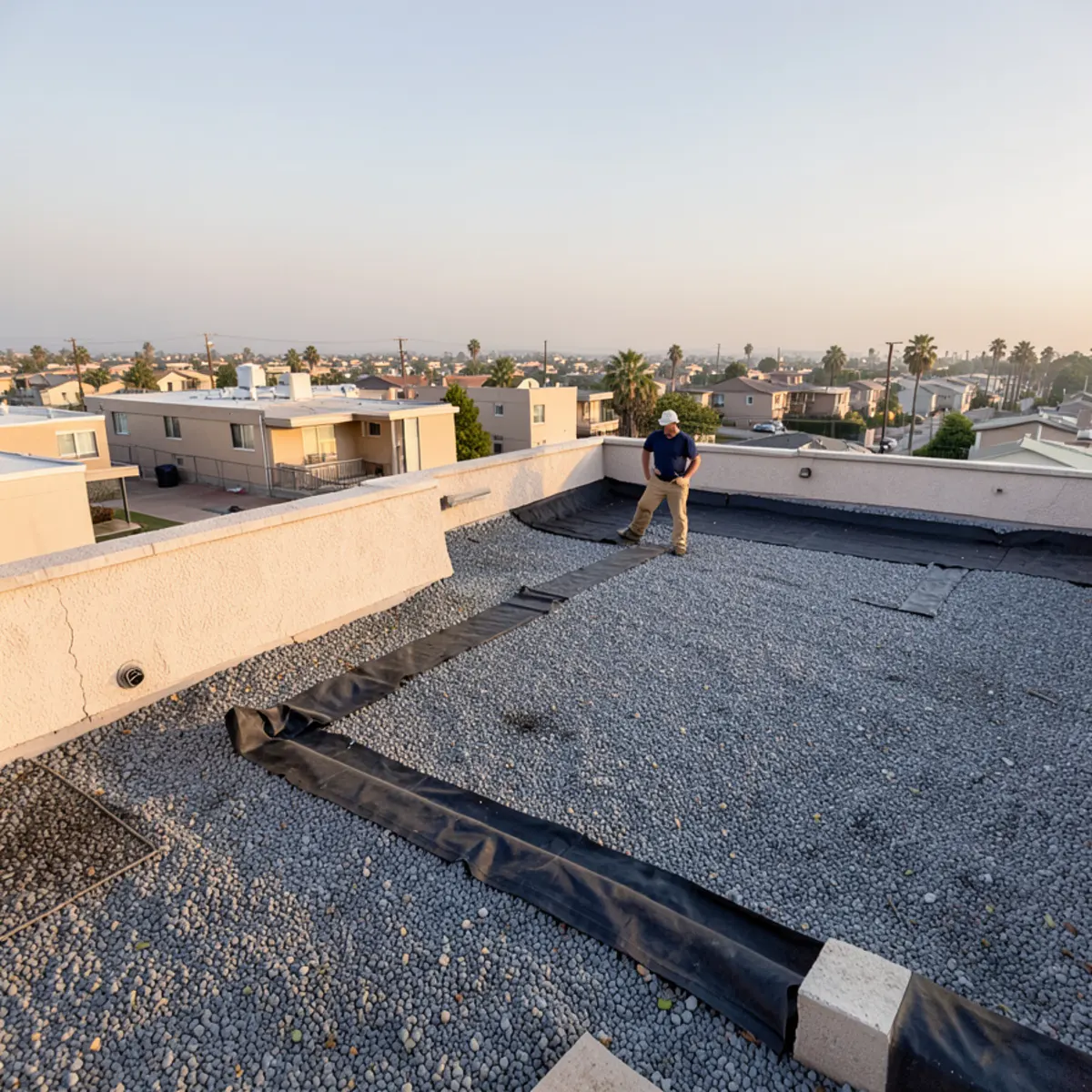
Hot mop roofing, also called built-up roofing or BUR, is the system most people mean when they say tar and gravel. Its layers of felt and hot asphalt were common on Torrance's mid-century homes and apartments, and plenty of them are still there. This page covers the pieces of a built-up roof, how to repair a rock roof and how it compares with other flat roofing systems.
Is hot mop roofing still a good choice for Torrance buildings?
Sometimes. The case for it: multiple plies bonded with asphalt build a thick, redundant waterproofing layer, and gravel shields the surface from sun. The case against: hot asphalt smells, heating it requires a kettle on site, and open heat takes planning on tight lots and next to occupied units.
We usually suggest staying with built-up when the building already has it and the deck is sound, or when gravel ballast suits a large, simple roof. We lean toward torch-down or single-ply for small roofs with many corners or when a cooler, lighter surface is the goal. Our blog post on TPO vs torch-down vs hot mop goes through the differences.
What is a built-up roof made of?
A built-up roof is a stack of layers, built from the deck up:
- Base ply over the deck or insulation
- Two or more plies of felt or fiberglass (multi-ply roofing), each mopped in hot asphalt
- Flood coat of asphalt on top
- Surfacing: gravel in the classic rock roof, or a granulated cap sheet
The asphalt is heated in a kettle until it flows, then mopped between each layer. That heat-bonded sandwich is why the system is thick and why a leak can wander. Water that enters through one crack can travel between plies and exit far away.
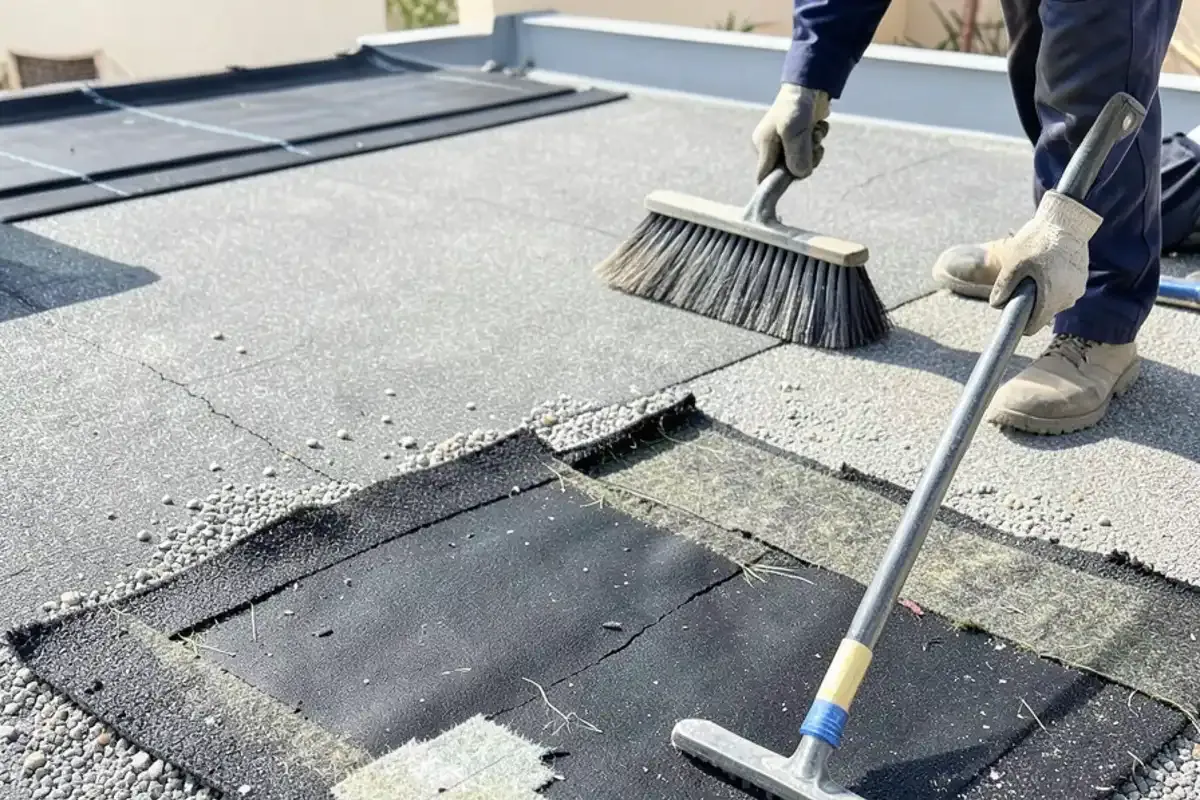
Signs a rock roof is failing
Gravel hides the surface, so watch the symptoms inside and around the roof. Look for interior ceiling stains that return, gravel washed into the downspouts, bare black patches where stones have blown off, and splits along the flashing at walls. Torrance's mid-century apartments and homes had tar-and-gravel installed in the era of the median home built in 1964, so many are on stacked patches. In the rainy season, roughly November through March, a gravel pile that blocks a scupper is the quickest way for a minor crack to become a leak.
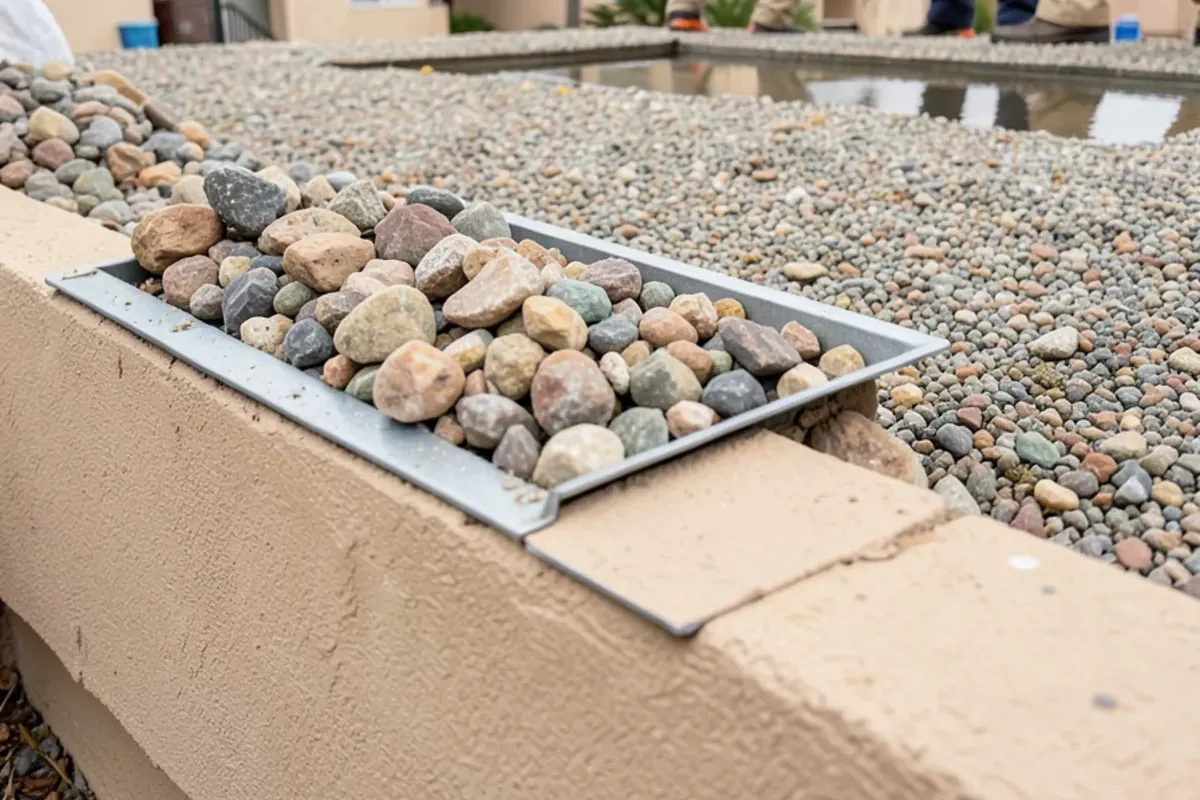
What a hot mop or built-up job includes
Whether you need a repair or a new roof, the written scope should name each layer and detail. For built-up work it covers:
- Gravel removal and disposal, or sweeping and re-spreading for repairs
- Dry-out and replacement of wet insulation and rotted deck
- Base ply, felt plies and flood coat, or a cap sheet system
- New flashing at walls, drains, curbs and pipes, plus edge metal
- Odor and fire planning for the kettle and neighbors
- Photos of the layers and finished details, with cleanup
How do you repair a rock or gravel roof?
Repair follows the damage. Here is the sequence:
- Find the area. Interior stains, then flashings at walls, drains and curbs.
- Sweep the gravel. A broom clears a work area so the surface is visible.
- Probe and cut. Blisters, splits and wet felt are cut out, and we check whether insulation is wet.
- Dry and prepare. The roof must be dry before new layers go on.
- Rebuild. New felt plies with hot or cold asphalt, lapped onto sound material.
- Flash and finish. New flashing at the wall or drain, then the gravel is re-spread.
A rock roof in Los Angeles County has an extra problem: the gravel moves. It clogs drains and scuppers, and it tends to pile against walls, so we clear and re-spread it. Gravel repair is often a smaller job than a whole new roof, and it is where we start when the layers beneath are still sound. For wider patterns, see flat roof repair.
Hot mop vs torch-down: how do they compare?
| Hot mop (built-up) | Torch-down | |
|---|---|---|
| Layers | Several felt plies in hot asphalt | Base sheet plus cap sheet |
| Surface | Gravel or cap sheet | Granulated cap sheet |
| Heat and odor | Kettle on site, noticeable odor | Torch, less odor, flame risk |
| Weight | Heavier with gravel | Lighter |
| Leak finding | Harder under gravel | Easier to see the surface |
| Common on | Mid-century homes and apartments | Small modern roofs and additions |
Is hot tar odor a problem for occupied apartments?
For occupied buildings, it is a planning item. We pick a kettle location away from windows and air intakes where possible, schedule around mild weather, notify residents and fold in alternatives such as cold-applied adhesives when odor is a concern. Fire and building officials may place limits on kettles in some places, so we check before the job. Wind direction on the day matters too: the marine layer and afternoon breeze can carry odor. For an HOA or apartment, see apartment and HOA roofing.
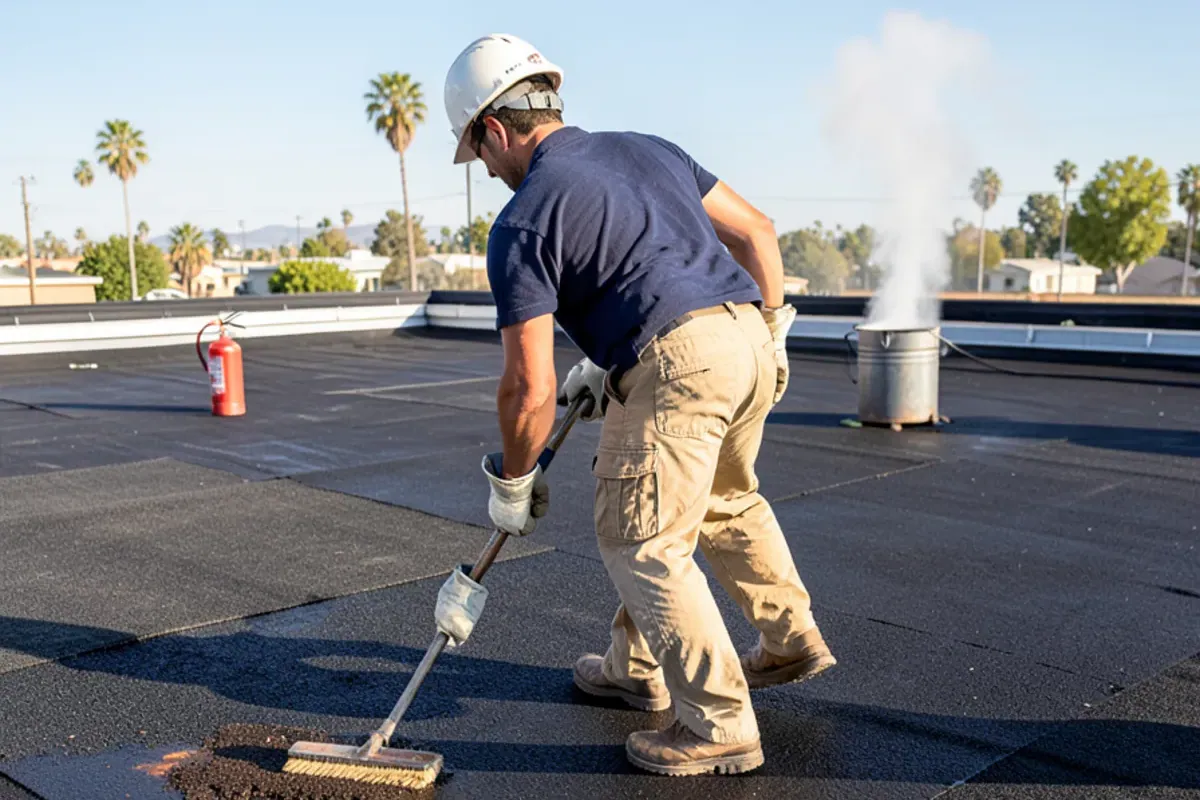
What affects the price of hot mop roofing?
We give free estimates and do not post prices. For context only, 2026 published cost guides place roof repairs between $300 and $1,500, which is market data and not a quote. A hot mop or built-up project moves with:
- Roof area and the number of plies
- Whether the gravel has to be removed and disposed of
- Wet insulation or deck damage found at tear-off
- Number of walls, drains and penetrations to flash
- Access for the kettle and hoisting
- Schedule limits in an occupied building
Which permits, kettle rules and licensing apply to a built-up roof?
A new built-up roof generally needs a permit, and some jurisdictions restrict kettles. City of Torrance Building & Safety, at (310) 618-5910, can confirm what applies to your address, while unincorporated areas use LA County Public Works and the City of Los Angeles uses LADBS. Local fire officials may set their own limits on heating asphalt on site, so ask the permit office who to contact before the kettle is scheduled. The California Energy Commission's energy code also covers low-slope roof surfaces, with requirements that depend on climate zone and building type. Check any roofer's license and classification on the Contractors State License Board site at cslb.ca.gov.
Why Crown Trim for built-up and rock roofs?
- We show you photos of what is under the gravel, so you decide with facts.
- A repair first when a repair will do, and no pressure toward a full replacement.
- Free estimates and free roof inspections, with same day or next day service.
- Apartments, HOAs, storage facilities, commercial buildings and homes.
- Thorough cleanup, protecting landscaping and driveways.
- Reviewers rate us 4.8 stars across 73 Google reviews.
Where we work on built-up roofs
From our Torrance base we serve Carson, Redondo Beach and Rancho Palos Verdes. Carson has many older multi-unit buildings that kept their original rock roofs. In Redondo Beach, odor control and tight street parking shape the plan. On the Peninsula, wind-exposed edges and parapets get extra attention. For a sound roof with only surface wear, roof coatings and roof waterproofing are worth comparing before a tear-off.
Where we do hot mop & built-up roofing around Torrance
Each place brings its own version of this job.
- Carson: Carson's older multi-unit buildings and 1950s-60s tracts kept their original rock roofs, which now need repair or full replacement.
- Hawthorne: Small 1950s Hawthorne apartment buildings often still have tar-and-gravel roofs with gravel clogging old scuppers.
- Gardena: Small industrial lots and post-war buildings in Gardena commonly carry multi-ply built-up roofs with decades of stacked patches.
- El Segundo: Refinery-era and office roofs east of Sepulveda are built-up or cap-sheet roofs where odor planning near neighbors matters.
- Long Beach: Port-side commercial buildings and older apartments in Long Beach rely on built-up roofs, with salt air shortening edge-metal life.
- Inglewood: Apartment blocks from the 1920s-50s near SoFi and LAX noise-insulation zones often carry layered tar roofs due for replacement.
- Redondo Beach: Odor control and tight street parking shape kettle placement for built-up work on Redondo condo and townhome roofs.
- Lawndale: Duplexes and small buildings along Hawthorne Boulevard commonly have older rock roofs on flat additions and rear units.
- Rancho Palos Verdes: Wind-exposed edges and parapets on Peninsula flat roofs get extra attention where gravel can blow loose.
- Santa Ana: Downtown commercial blocks and dense apartments in Santa Ana include flat roofs, where built-up roofing is one option we explain.
What customers say about this work
Crown Trim Roofers holds 4.8 stars from 73 Google reviews. Read all reviews
“we were looking for a reliable company to fix issues with our flat asphalt roof that was rotting and causing water to drain into the gutters.”
“First issue: They fixed a leak around my metal chimney cap.”
“Once everything was approved, the new roof was installed and the finished work looked excellent.”
Hot Mop & Built-Up Roofing: common questions
Is hot mop roofing still a good choice for Torrance buildings?
It can be, particularly where a building already has a gravel-surfaced built-up roof and the owner wants a proven multi-layer system. Odor, heat and fire controls are real drawbacks, and some sites favor torch-down or single-ply. We compare options for your building, including cost and schedule, and tell you which way we lean and why.
How do you repair a rock or gravel roof?
We sweep the gravel back from the damaged area, cut out failed layers, dry the roof, and rebuild with new felt plies and hot or cold asphalt. Blisters and cracks are patched, flashings replaced, then the gravel is re-spread. Because gravel hides water travel, the leak often sits well away from the stain, so finding it takes time.
Is hot tar odor a problem for occupied apartments?
It can be. Heated asphalt smells, and fumes can drift to windows and air intakes. For occupied buildings we plan the kettle location, schedule the work for mild weather, give residents notice and often recommend cold-applied or torch-free methods. Local fire and building officials may also set limits on open kettles, so we confirm what applies.
How long does a built-up roof last?
The number of plies, the gravel or cap sheet on top, slope and drainage all matter, and standing water shortens any built-up roof. Mid-century buildings may have had patches stacked over decades. Ask for the manufacturer's written terms on new materials, and have the roof checked after the rainy season each year.
Can I put a coating over my gravel roof?
Sometimes, but the gravel usually has to come off first, because coatings need a clean, solid surface. That makes a gravel-roof coating more of a project than it sounds. If the roof is dry and sound underneath, coating may still beat replacement. See roof coatings for what a coating can and cannot cover.
Why is it so hard to find a leak under gravel?
Gravel hides the surface, and water can run under the layers for several feet before it finds a crack or a seam. We follow stains from inside, then sweep gravel from likely spots, check flashings at walls and drains first, and use hose tests if needed. It takes patience, and we explain each step as we go.
Related services and guides
Roof Coatings
Roof Waterproofing
Flat Roof Replacement Cost in Los Angeles County
Ponding Water on a Flat Roof: How Much Is Too Much?
TPO vs Torch Down vs Hot Mop: Flat Roofs Compared
Where we work: Carson, Redondo Beach, Rancho Palos Verdes, Gardena and the rest of our service areas.
Rock roof leaking? Get a free estimate.
Call first. A roofer picks it up from there.