Torch Down Roofing in Torrance, CA
- 4.8★ from 73 Google reviews
- Free estimates
- Same day or next day service
- Photos of what we find
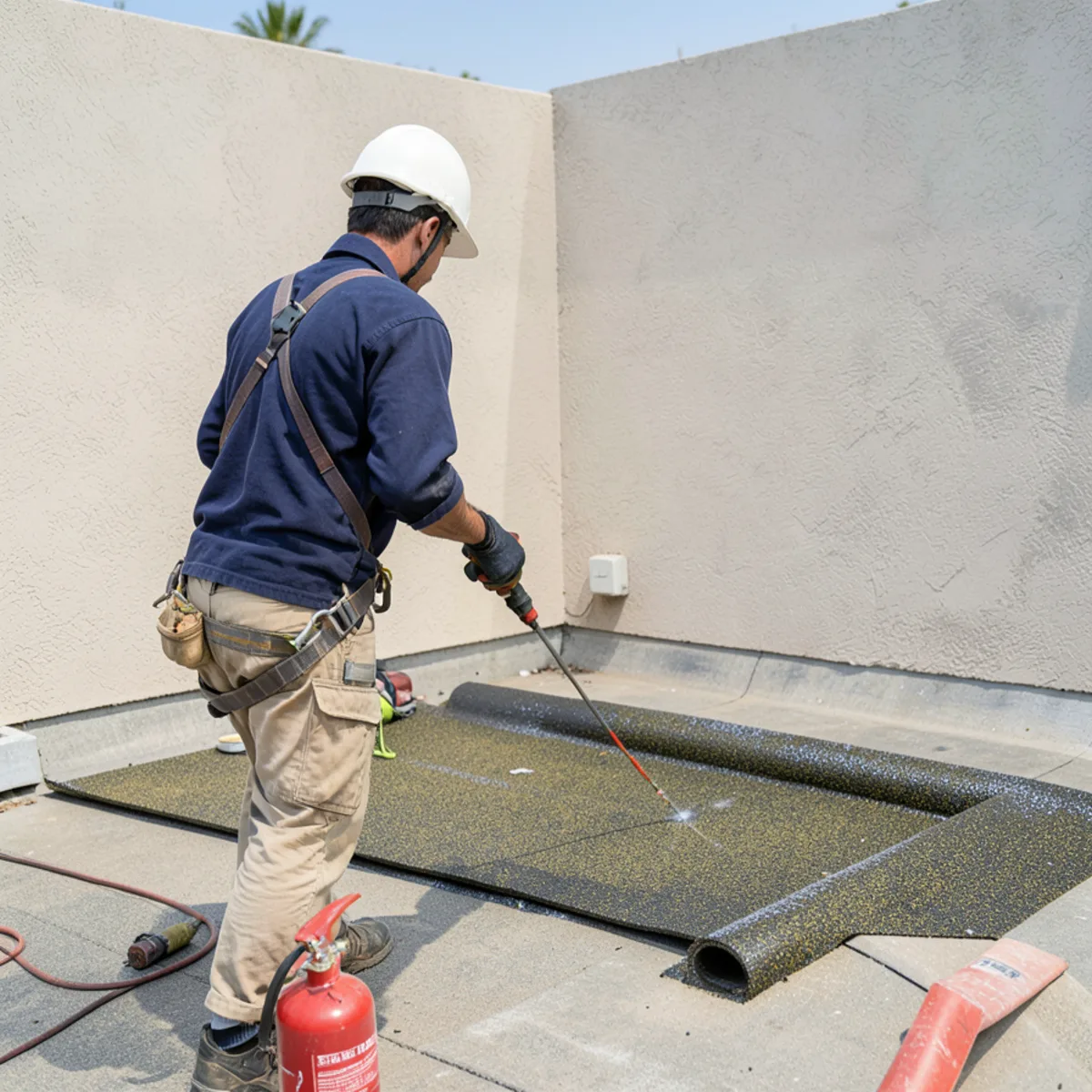
Torch-down roofing earned its place on small flat roofs because the material arrives in rolls, cuts neatly around details and leaves a sealed, continuous surface. It also involves an open flame on a roof, and that deserves a straight conversation. This page explains what torch-down is, how it compares with other flat roofing systems, how we approach safety, and what repairs involve.
What is torch-down roofing, and what is modified bitumen roofing?
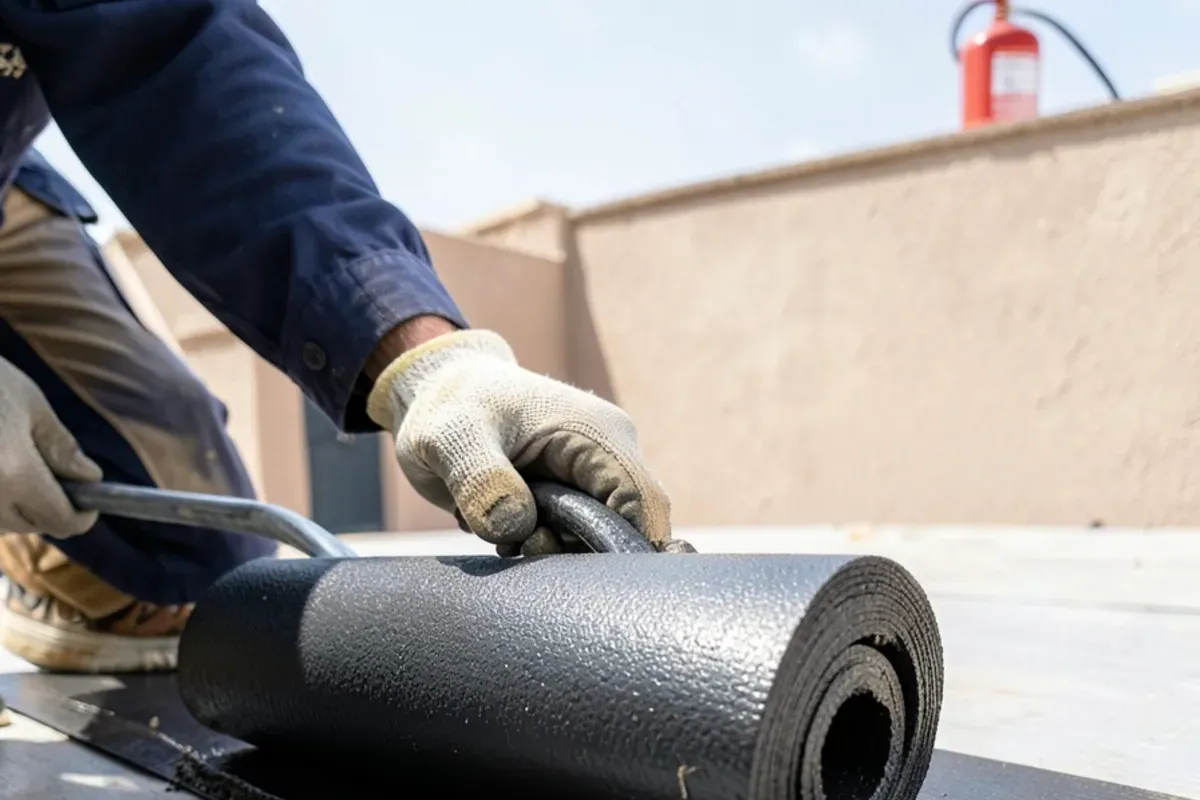
Modified bitumen is asphalt blended with polymers so it stays flexible. In torch-down form, it comes in rolls with a granulated surface. A propane torch softens the underside of the roll and bonds it to the layer below. A typical system has two layers: a base sheet and a granulated cap sheet that faces the sun. You may hear it called a cap sheet roof, torch-on roof or, loosely, rolled roofing, though that last term more properly describes a lighter product.
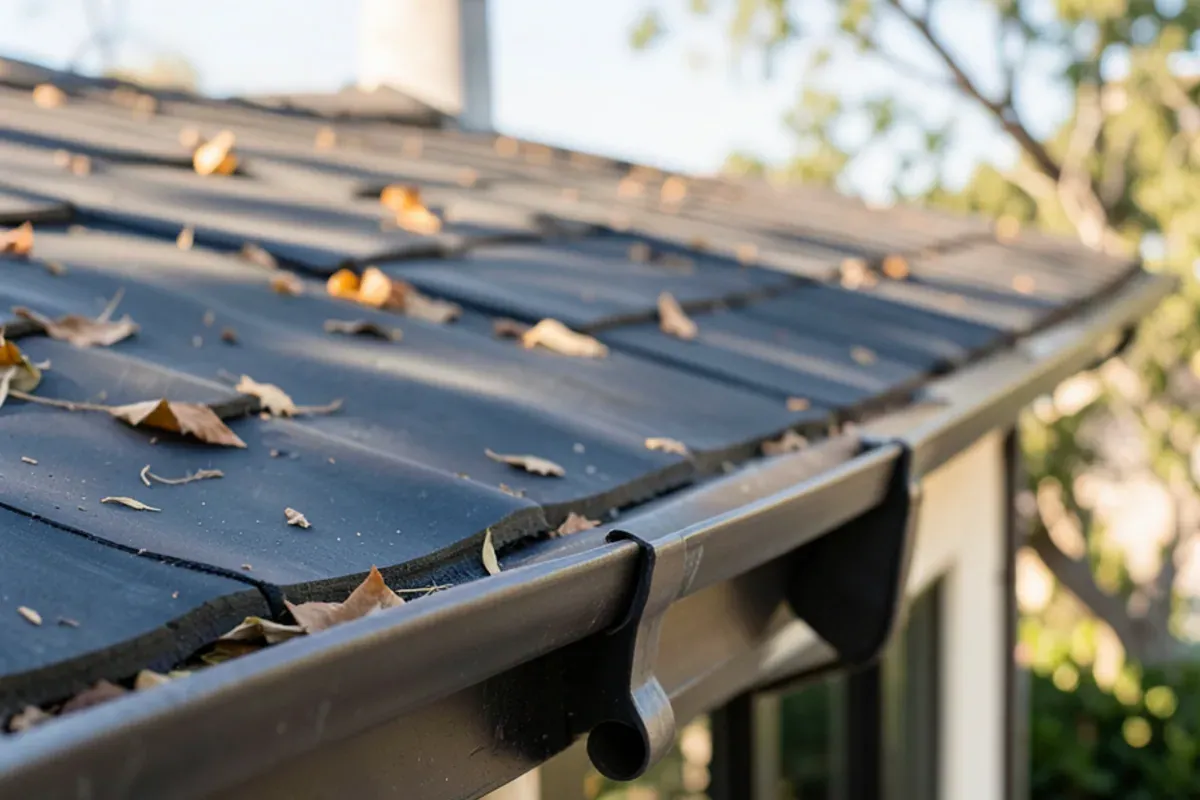
On Torrance homes, it shows up on flat porch tops, rear additions, garage roofs and sections over bay windows. The flat edges where a gutter meets the roof, and built-in box gutters on older homes, often use it too, which brings us to the torch down gutters question below.
What a torch-down job includes
The scope should name every layer, flashing and safety step in writing. For most small flat roofs it covers:
- Tear-off or prep of failed layers, with soft sheathing replaced
- A base sheet and a granulated cap sheet, or a self-adhered alternative
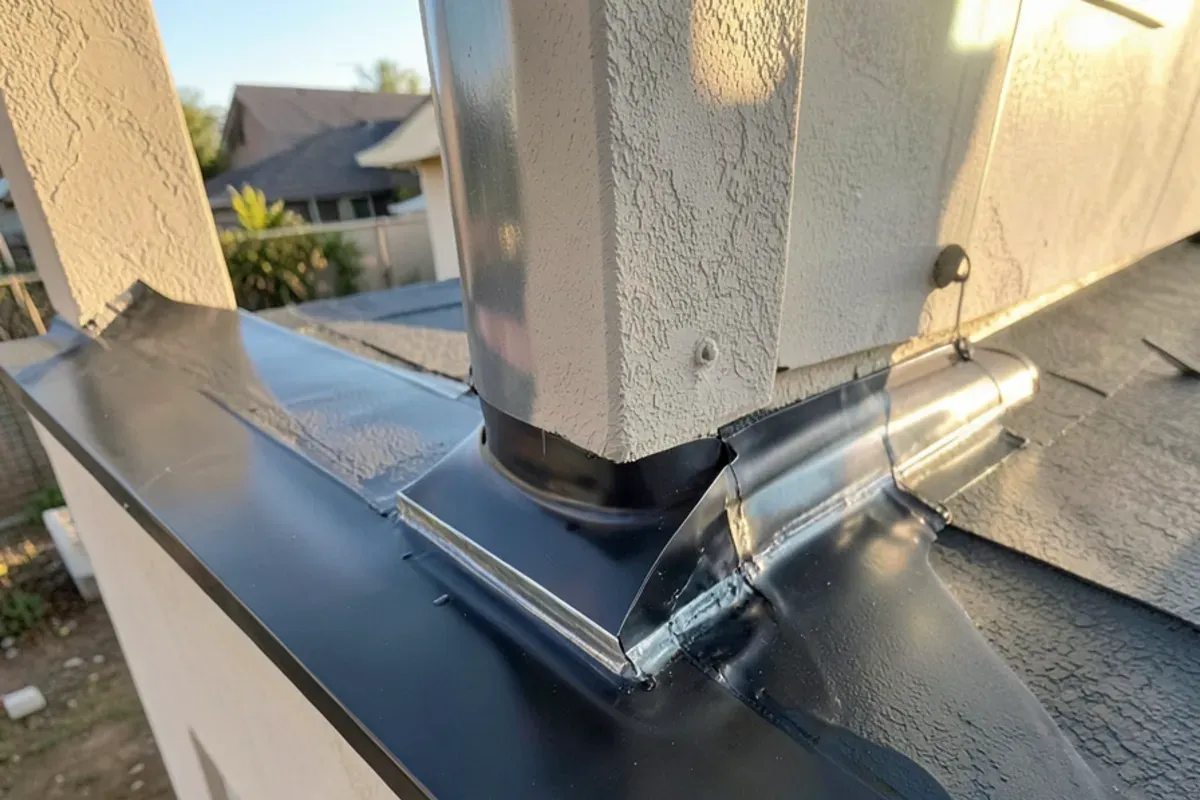
- Wall, vent, curb and edge flashing, set before the cap goes on
- Metal edge flashing, and gutter lining on built-in box gutters
- Fire controls on the roof for the whole job
- Photos of laps and edges, and cleanup
Signs a torch-down roof is wearing out
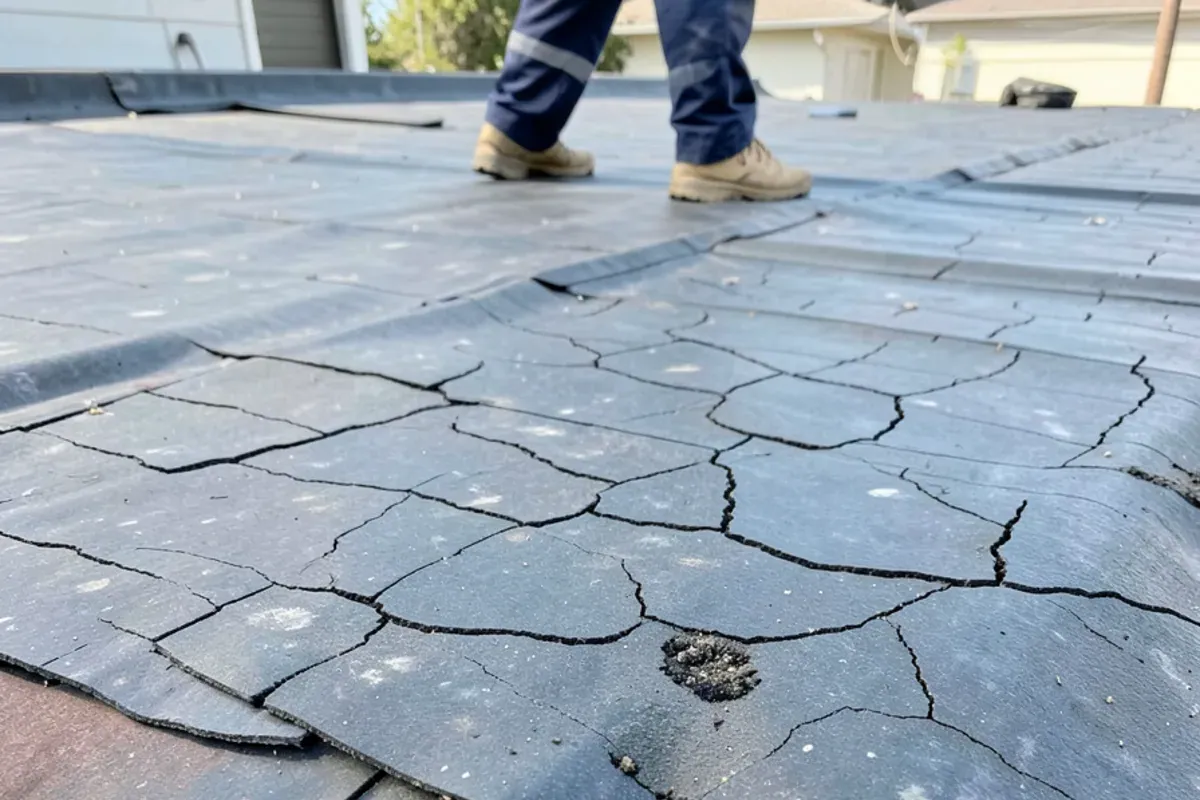
Look for granules washed into the gutter, a cap sheet cracking in a scale pattern, lifted laps and wall flashings pulling away from stucco. Early winter rain, roughly November through March, is when these defects start leaking. Torrance's 1960s housing stock has plenty of flat porch roofs on their second or third cap sheet, and southern exposures age fastest under the sun.
Is torch-down safe to install on a wood-framed Torrance home?
Torrance homes are mostly wood-framed with stucco, and many have tight eaves, attic vents and gaps at walls. A torch can drive heat into those gaps and start a smolder that does not show for hours. That is the real risk, and it is why many installers have moved toward alternatives.
Controls we expect on any torch job:
- No flame near open joints, vents, wood trim or eaves; those spots get hot-air or adhesive methods instead
- Extinguishers on the roof and a person trained to use them
- A fire watch after the last torch is shut off, long enough to catch a slow smolder
- Dry conditions, and a clear plan for the day
Where the structure makes open flame unwise, we recommend self-adhered or hot-air-welded modified bitumen, or a TPO or PVC membrane. You get a plain answer on which method we would use at your address.
How long does torch-down roofing last in Southern California?
We do not give a single number, because no honest one exists. These factors move it:
- Plies: a two-ply system outlasts a single ply
- Cap sheet quality, and whether the granules are intact
- Drainage: a roof that ponds ages faster
- Sun exposure on south and west faces
- Foot traffic, such as HVAC visits or a pet
- Whether flashings at walls and vents were done properly
Ask any roofer for the manufacturer's written terms. Review them yourself. Also look at the roof after each rainy season, roughly November through March. Early catches (a lifted lap, a granule-bare patch) are cheap to fix.
Torch-down vs TPO: how to choose
| Torch-down (modified bitumen) | TPO / PVC | |
|---|---|---|
| Install method | Heat-fused or self-adhered | Hot-air welded, adhered or mechanically fastened |
| Surface | Dark granulated, some light-colored options | White or light, reflective |
| Best on | Small roofs with many corners and details | Large, simple roofs |
| Fire risk during install | Highest with open flame | Low |
| Repair feel | Patchable with fused or cold-applied patches | Weld-patch or adhesive patch |
For the flat roofs on rear additions, modified bitumen is a sensible default when the structure allows the safe method. For a big clear roof or a cool roof goal, single-ply tends to win. Our post comparing TPO, torch-down and hot mop goes into more depth, and the hot mop and built-up roofing page covers the older asphalt layering approach.
How does a torch-down installation go?
- Inspect and photograph. Deck condition, drains, walls, vents and gutters.
- Prepare the substrate. Remove old layers or failed material, repair sheathing, fasten the deck, and install insulation or cover board where needed.
- Base sheet. Nailed or adhered, with laps staggered.
- Flash the details first. Walls, vents, curbs and edges, with metal edge flashing set before the cap goes on.
- Cap sheet. Fused with heat or applied by a safer method, with consistent asphalt flow at each lap.
- Inspect the laps. A bead of melted asphalt should show along each seam.
- Clean up and walk through. Photos of laps and edges, and a note about what to watch.
Can torch-down be repaired or does it need replacing?
Often a repair works. Common repairs:
- Lifted or open lap: re-fused or sealed, then covered with a cap patch
- Blister: cut open, dried and patched with new layers
- Cracked flashing at a wall or vent: removed and replaced with new flashed material
- Gutter lining failure: relined with new membrane and re-flashed at the edge metal
- Alligatored surface: patches only buy time; replacement or a coating is the next step
A roof soaked at the insulation, or cracked and alligatored across most of its surface, usually needs replacing. Our flat roof repair page covers how we diagnose which side of the line you are on. Repairs need a dry surface, so a permanent fix sometimes waits for a break in the weather.
What affects the price of a torch-down roof?
We give free estimates and do not post prices. For market context only, 2026 published cost guides place most roof repairs between $300 and $1,500, and that is not a quote. A torch-down job moves with:
- Roof area, and how many corners, walls and penetrations there are
- One ply, two plies or three
- Insulation, cover board or deck repairs
- Safer-method upgrades such as self-adhered sheets
- Gutter lining and edge metal
- Access and permit requirements
Permits, fire rules and licensing for torch-down work
A new torch-down roof on an existing house generally needs a permit. City of Torrance Building & Safety, at (310) 618-5910, can confirm what applies, while unincorporated areas use LA County Public Works. Open-flame roofing is also a fire-safety matter, and the rules for torch work vary by city and fire department, so ask both your building department and your local fire agency before the day is scheduled. Roof assemblies in hillside fire zones can carry their own fire rating requirements under Cal Fire's maps. California's Contractors State License Board says a license is required for most roofing jobs, so check any roofer's license on the CSLB site at cslb.ca.gov and confirm the rules for your address.
Why Crown Trim for torch-down and modified bitumen?
- We tell you in plain terms whether torch-down is the right method for your structure, and propose a safer one if it is not.
- Photos of the existing roof, the laps and the finished edges.
- A repair first when a repair will do.
- Free estimates and free roof inspections, with same day or next day service.
- Thorough cleanup, protecting landscaping and driveways.
- Reviewers rate us 4.8 stars across 73 Google reviews.
Where we install and repair torch-down roofs
We serve the South Bay from Torrance, including Carson, Redondo Beach and Rancho Palos Verdes. Older homes in Carson and Redondo Beach often have built-in gutters and flat porch sections that suit modified bitumen. Peninsula homes have wind-exposed edges, so edge metal and fastening matter. For maintenance of a sound but worn surface, see roof coatings.
Where we do torch down roofing around Torrance
Each place brings its own version of this job.
- Carson: Carson's 1950s-60s tract homes have flat porch tops and added rooms that suit small, detail-heavy modified bitumen roofs.
- Lomita: Lomita's post-war bungalows pack small flat sections and old layered roofs onto tight lots with little room to stage materials.
- Lawndale: Duplexes and small-lot homes along Hawthorne Boulevard use low-slope additions where fire controls near eaves matter.
- Redondo Beach: Older Redondo homes often have built-in box gutters and flat porch decks where salt air attacks edge metal first.
- Gardena: Post-war Gardena houses with added rooms sit beside small low-slope commercial buildings, both common torch-down candidates.
- Hermosa Beach: Shared walls and tight beach lots make fire safety planning and wall flashing the key issues for any torch work.
- Palos Verdes Estates: Olmsted-planned PVE homes with Art Jury review need low-slope sections detailed so visible changes stay within neighborhood rules.
- Rancho Palos Verdes: Wind-exposed edges on ocean-facing homes make edge metal and fastening the deciding details on a torch-down job.
- Rolling Hills Estates: Peninsula brush-fire mapping makes flame use and fire watch planning especially important on ranch home flat sections.
- Bell: For the small apartment buildings along Atlantic and Gage, torch-down is one option for low-slope roofs, with seams and wall flashing checked closely.
What customers say about this work
Crown Trim Roofers holds 4.8 stars from 73 Google reviews. Read all reviews
“we were looking for a reliable company to fix issues with our flat asphalt roof that was rotting and causing water to drain into the gutters.”
“I had already used a temporary sealant to help stop more leaking, and they clearly understood the situation and focused on the repair that was actually needed.”
“The new roof looks fantastic, and everything has been working perfectly since the job was completed.”
Torch Down Roofing: common questions
How long does torch-down roofing last in Southern California?
Lifespan depends on how many plies the roof has, the quality of the cap sheet, drainage, sun exposure and foot traffic. Standing water and cracked flashings shorten it most. Sunny Torrance weather is hard on exposed asphalt, so a granulated cap sheet matters. Ask for the manufacturer's written terms, and have the roof checked after each rainy season.
Is torch-down safe to install on a wood-framed Torrance home?
It can be done, but only with strict controls: no flame near open gaps, wood or vents, extinguishers on the roof and a fire watch afterward, because a smolder can start out of sight. On a wood-framed house with tight eaves we often favor self-adhered or hot-air-welded options. We tell you which method we recommend and why.
Can torch-down be repaired or does it need replacing?
Most torch-down repairs are local: a blister cut open and patched, a lifted lap re-fused, cracked flashing replaced or a new cap patch around a vent. Replacement is the better answer when moisture has soaked the insulation or the surface is cracked and alligatored across most of the roof. We show you the photos and say which it is.
Is torch-down the same as rolled roofing?
No. Rolled roofing is a single thin mineral-surfaced layer, nailed or cemented, meant for sheds and low-cost covers. Torch-down is a heavier modified bitumen system, normally a base sheet plus a granulated cap sheet fused together. The difference shows in how long it holds up on a roof that sees sun and standing water.
Will torch-down work on my built-in gutters?
Yes, often. Older South Bay homes with built-in box gutters can use a torch-down liner with metal edge flashing, which avoids the seams of sectional gutters. The gutter has to fall toward the outlet, and the outlet and downspout must be clear. Where the wood has rotted, we repair it first. See gutter repair.
How do I know if I need a new roof or only a repair on my flat porch roof?
Look for water that stays, cracks across the surface and soft spots underfoot. A single failed lap or flashing is a repair. A porch roof with brittle, cracked sheet, soaked insulation or a sagging deck usually needs replacing. We inspect, probe and photograph so you can see which side of that line you are on.
Related services and guides
Hot Mop & Built-Up Roofing
Roof Coatings
TPO vs Torch Down vs Hot Mop: Flat Roofs Compared
Flat Roof Replacement Cost in Los Angeles County
Ponding Water on a Flat Roof: How Much Is Too Much?
Where we work: Carson, Redondo Beach, Rancho Palos Verdes, Gardena and the rest of our service areas.
Flat deck or porch roof failing? Get a free estimate.
Call first. A roofer picks it up from there.